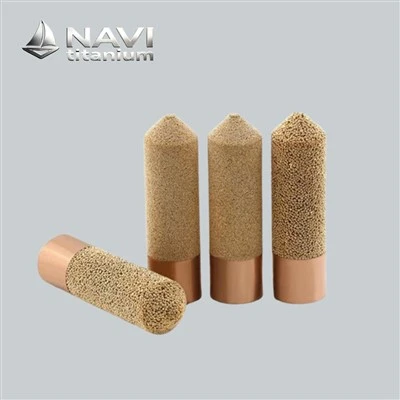
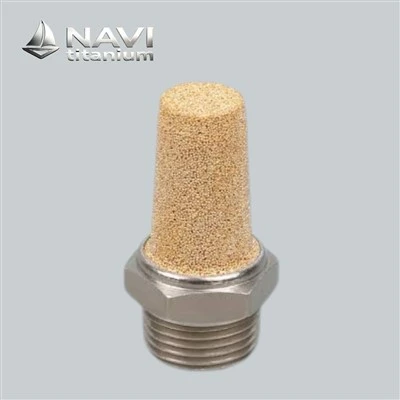
NAVI Titanium presents sintered porous stainless steel filters with a multidisciplinary team of more than 40 specialists spanning materials science, mechanical processing, quality assessment, and application consulting. Several senior personnel bring over a decade of sector-specific experience, with long-term involvement in pore-size control, alloy selection, dimensional verification, and service evaluation. This combination of seasoned practitioners and research-oriented specialists allows each specification to receive focused technical review before fabrication planning.
Solution of NAVI Titanium
NAVI Titanium brings together specialists from materials science, exterior treatment, mechanical processing, analytical testing, and application engineering, creating a broad technical background around fine-pore separation products. enior personnel have accumulated years of project experience involving pore distribution, dimensional control, corrosion assessment, and customized specifications. This accumulated knowledge also extends across product portfolio.
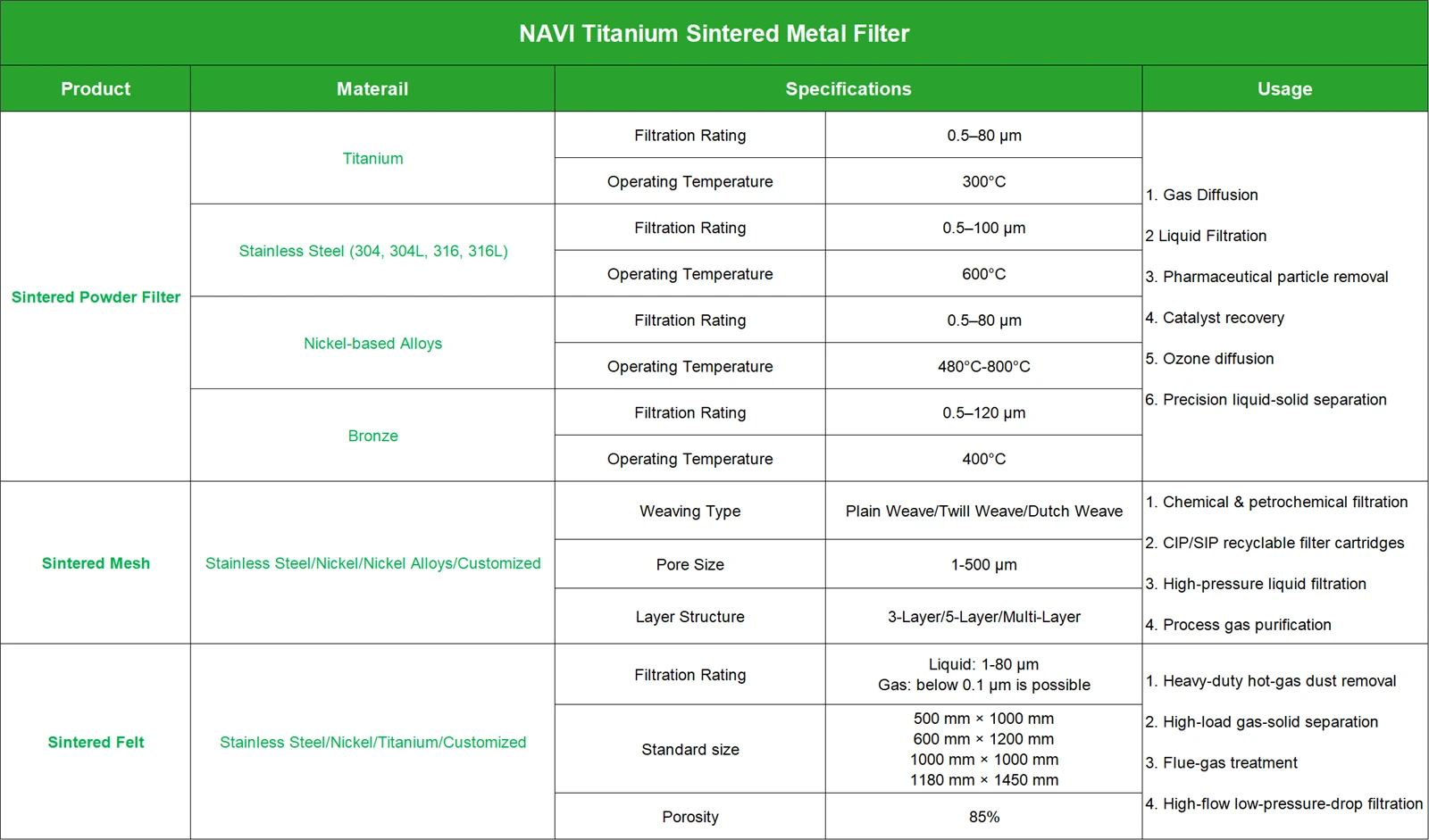


NAVI Titanium approaches porous separation components through quantitative assessment of pore distribution, void fraction, exterior circumstance, and dimensional uniformity. Such characterization is particularly relevant when selecting a chromium-nickel grade for abrasive or chemically aggressive process streams, where material composition and opening distribution jointly determine long-term operating characteristics.


Application
Sintered porous stainless steel filters from NAVI Titanium deliver controlled solid retention and cleanable performance for demanding mineral slurry clarification and catalyst slurry polishing applications.
Mineral slurry clarification demands controlled removal from abrasive fines without frequent retaining element replacement. A cylindrical retaining body produced from a chromium-nickel grade can provide a defined opening range and substantial internal void volume. Such geometry suits streams generated by crushing, grinding, classification, and ore transport, where solids loading may vary considerably between operating stages. Chemical compatibility also deserves attention, particularly with chloride-bearing liquor, acidic wash solutions, or alkaline cleaning agents. When deposits detach readily, reverse-flow cleaning or controlled rinsing can restore open passages and extend service intervals. For abrasive duties, buyers should track flow decline over time rather than judge performance from initial throughput alone. A sintered filter supplier may use microscopic examination after service to identify localized loading, exterior abrasion, or blocked openings. These records help establish cleaning frequency, replacement timing, and suitable operating limits for continuous slurry clarification in mineral concentration circuits, especially where variable solids loading demands repeatable separation performance during long production campaigns under demanding operating schedules.

2. Catalyst Slurry Polishing

Catalyst slurry polishing is another demanding field, particularly in chemical processing loops where fine catalyst fragments, scale, or crystallized residues may circulate with liquid feed streams. A cylindrical retaining element with controlled openings can intercept these unwanted solids before they enter downstream vessels, pumps, valves, or controlled dosing assemblies. The selected chromium-nickel grade should be matched with acidity, chloride concentration, solvent chemistry, and cleaning agents encountered during service. Opening size deserves careful evaluation because nominal retention alone does not describe practical performance. Surface loading, internal void volume, retaining element length, and available exposed area also affect flow response and cleaning frequency. For reusable retaining elements, reverse-flow rinsing, ultrasonic cleaning, or chemically compatible washing may be considered according to residue characteristics. Inspection after each cleaning cycle can reveal blocked passages, localized abrasion, deformation, or changes in exterior state. Maintaining these records gives process teams evidence for establishing replacement intervals and cleaning schedules. This approach is particularly valuable in catalyst preparation, resin-free chemical synthesis, specialty-chemical purification, and fine-chemical fabrication where downstream cleanliness has direct importance.
Purchasing guide

Quality control (QC)
Trust should never be a guess. That's why every unit NAVI Titanium deliver carries an accompanying inspection report-a formal record of how the porous metallic filtration media was produced, verified, and tested to spec. Every consignment gets its own permanent reference code, letting you pull up the sintering circumstances, pore profile, bubble-point value, flow rating, and pressure limits tied to that exact manufacturing run. The evidence is yours to audit, whenever you need it.

Manufacturing Process
Production begins with the selection and classification of chromium-nickel corrosion-resistant feedstock according to chemical composition, particle morphology, and cleanliness. The selected feedstock is blended to establish a consistent distribution before being introduced into a precision mold. Controlled compaction creates the required green geometry while retaining interconnected voids between individual particles. Subsequent consolidation at an accurately controlled heating level promotes metallurgical bonding at contact points without eliminating the intended pore network. Heating parameters are matched to the specific chromium-nickel grade because chromium content, nickel content, and carbon level affect bonding kinetics and resistance to oxidation. After consolidation, machining or sizing operations refine external dimensions and connection features. Surface treatment may then be applied according to the intended service environment. The completed retaining element undergoes dimensional verification, opening-distribution assessment, permeability evaluation, and mechanical examination to confirm conformity with the specified configuration.


Material-Focused Handling Practices
For chromium-nickel alloy filtration components, NAVI Titanium buyers often pay close attention to cleanliness retention, dimensional preservation, and traceability during preparation before dispatch. Inner wrapping materials should avoid introducing dust, fibers, oil residue, or moisture that may affect exterior quality. Individual separation is commonly arranged for cylindrical retaining elements, discs, or custom shapes to prevent friction marks, edge damage, or contact deformation between pieces. Identification labels can include specification references, quantity records, fabrication batches, and inspection notes, allowing receiving teams to verify incoming goods efficiently. For overseas orders, humidity control is especially important because prolonged exposure to condensation may cause exterior discoloration or reduce appearance quality. Wooden cases, reinforced cartons, or customized holders may be selected according to product geometry and destination circumstances. A well-organized preparation method helps maintain the original circumstance of chromium-nickel components from the factory to the customer's warehouse.

Logistics Planning

Long-distance delivery of chromium-nickel filtration components requires careful coordination between fabrication sites, carriers, customs agencies, and final receivers. Cylindrical forms with delicate openings should be positioned securely to prevent vibration, impact, or compression during handling. Documentation accuracy, including commercial records, origin information, and classification details, helps reduce unnecessary delays at border clearance points. Full container loading and consolidated cargo options may be selected according to order volume and destination.
Before departure, logistics planning should also consider route stability, transfer frequency, storage circumstances at transit points, and regional weather variations. For long-distance ocean routes, moisture exposure and repeated handling stages require additional attention during scheduling. For urgent requirements, air freight can shorten delivery periods, while ocean routes may provide greater cost efficiency for larger quantities. Clear communication among suppliers, freight partners, and buyers helps maintain visibility throughout the journey. Tracking milestones from factory release to warehouse arrival allows buyers to arrange fabrication schedules, inventory planning, and incoming inspection procedures with greater confidence.
Where NAVI Titanium Fits Into Everyday Process Equipment
For customers operating mineral-processing equipment, NAVI Titanium offers cylindrical separation retaining elements suited to slurry streams containing abrasive fines from crushing, grinding, classification, and concentration stages. The key concern is often not maximum initial throughput, but how consistently the cartridge performs as solids accumulate during extended use. Opening distribution, available flow area, retaining element length, and wall thickness can therefore be matched with the expected particle-size range and solids loading. A chromium-nickel composition can also be selected according to exposure to acidic wash liquors, chloride-bearing solutions, or alkaline cleaning agents. When deposits build up, reverse-flow rinsing or other suitable cleaning methods may restore accessible passages and extend usable intervals. For end users, this can simplify routine maintenance and make replacement planning more predictable. Recording flow decline, cleaning frequency, and visible exterior changes provides practical evidence for adjusting service intervals. Such information is particularly useful for mining operations, mineral concentration facilities, aggregate processing lines, and slurry-transfer stages where continuous circulation places repeated demands on separation assemblies.

Cleaner Catalyst Slurry Handling

For customers involved in catalyst preparation or specialty-chemical fabrication, NAVI Titanium provides cylindrical retaining elements intended to remove unwanted solids from circulating liquid streams before they reach sensitive downstream equipment. Catalyst fragments, crystallized residues, scale, and other fine debris may gradually accumulate, making retention consistency and cleanability important during repeated manufacturing cycles. Opening distribution should be selected according to the expected particle range rather than relying solely on a nominal value. Retaining element length, exposed area, internal void volume, and fluid characteristics also affect how quickly deposits accumulate. Depending on residue chemistry, reverse-flow rinsing, ultrasonic treatment, or compatible washing methods may be used between operating cycles. Users can record flow behavior before and after cleaning to determine whether the cartridge has recovered its previous operating characteristics. This approach helps establish practical replacement intervals without relying only on calendar-based schedules. The concept is applicable to catalyst preparation units, specialty-chemical purification, fine-chemical synthesis, resin-free processing, and other liquid circulation stages where downstream cleanliness directly affects equipment operation and batch consistency.
Practical Selection Guide
For end users, sintered porous stainless steel filters should be evaluated as reusable separation assemblies rather than simply as replacement parts. NAVI Titanium emphasizes the relationship between opening distribution, void fraction, exposed area, wall thickness, and retaining element geometry because these variables jointly affect throughput, contaminant retention, cleaning response, and service interval. Selection should begin with the expected particle-size distribution and solids concentration, followed by assessment of fluid chemistry, cleaning agents, operating pressure, and abrasion intensity. Chromium-nickel grades may be selected according to corrosion exposure and mechanical demands. For reusable service, users should compare flow decline before cleaning, recovery after cleaning, and dimensional changes across repeated cycles. These records provide a stronger basis for replacement planning than initial throughput alone.
| User Concern |
|
|---|---|
| Opening distribution |
|
| Solids loading |
|
| Chemical exposure | Review liquor and cleaning chemistry |
| Reuse |
|
| Service planning |
|
A technically matched specification can help end users achieve more predictable separation performance, easier maintenance planning, and longer usable intervals.
FAQ
1. Can working circumstances be simulated before an order?
+
-
Yes. Representative slurry concentration, particle-size distribution, fluid chemistry, flow rate, pressure differential, cleaning frequency, and operating cycles can be reproduced or approximated during technical evaluation.
2. How are specification iterations managed for repeat projects?
+
-
Specification changes can be recorded against previous project parameters. Feedback from field use can then be compared with earlier records, allowing subsequent versions to be adjusted systematically rather than relying solely on repeated trial orders.
3. What technical documentation can be provided?
+
-
A technical data package may include dimensional drawings, grade information, opening-range data, permeability results, inspection records, recommended operating parameters, cleaning guidance, and customized specification sheets.
4. Is there a technical database for historical projects?
+
-
Historical project records can include specifications, operating circumstance, cleaning cycles, observed flow changes, dimensional measurements, and customer feedback.
5. How are process parameters accumulated over time?
+
-
Key parameters from production and application evaluations can be retained by specification and project type. Records may cover feedstock classification, blending ratios, compaction circumstances, consolidation schedules, machining allowances, opening distribution, and permeability results.
Hot Tags: sintered porous stainless steel filters, China sintered porous stainless steel filters manufacturers, suppliers, factory, inline sintered metal filter, micron rated metal filter element, Microporous Water Filter, Sintered Brass Filter, Sintered Bronze Fuel Filter, Sintered Metal Disc