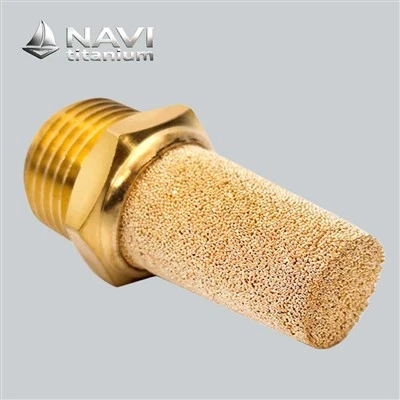
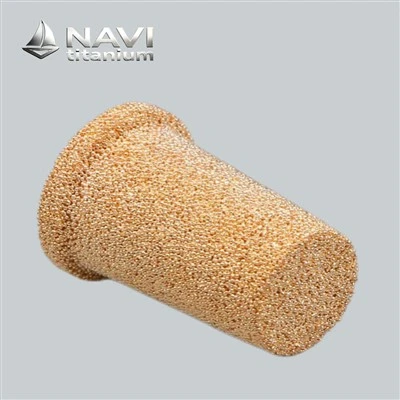
NAVI Titanium offers sintered plate for controlled fluid passage, thermal processing, and demanding separation applications. Founded in 2008, the company began by focusing on material processing and application-specific fabrication for specialized engineering markets. During its early stage, NAVI Titanium concentrated on refining forming consistency, pore distribution, and service use matching through repeated production trials. A key development milestone came with the expansion from standard geometries toward made-to-order configurations for overseas buyers.
Solution of NAVI Titanium
For industrial buyers, NAVI Titanium places particular emphasis on specification consistency and engineering compatibility. Product selection can be based on drawings, samples, working media, flow requirements, electrochemical conditions, installation dimensions, and expected service conditions. The company also provides material documentation, inspection records, customized production, technical consultation, and long-term supply support, which helps procurement teams move from initial sampling to repeat-order production with clearer technical records and traceability.


NAVI Titanium applies controlled consolidation principles to establish interconnected void characteristics and consistent dimensional morphology. Through particle distribution, compaction, thermal treatment, and subsequent finishing, the resulting material can exhibit tailored permeability, mechanical integrity, and thermal response.


Application
NAVI Titanium sintered plate provides tailored flow control for hydraulic assemblies and dependable dimensional performance in high-temperature thermal processing fixtures.
Hydraulic flow-control assemblies require carefully controlled passage characteristics to regulate fluid velocity, pressure drop, and downstream response. A sintered metal plate is particularly useful where conventional perforated surfaces may provide insufficient control over fine-scale passage distribution. Its interconnected void system can be tailored through particle grading, compaction parameters, section depth, and post-processing conditions, allowing designers to establish a defined relationship between flow rate and pressure differential.
In hydraulic circuits, this configuration can be applied to restrictors, damping interfaces, pressure-balancing sections, and protective flow-control inserts. The distributed passage network helps dissipate localized pressure peaks while moderating transient fluid movement, which is valuable in servo systems, actuators, pumps, and valve assemblies. For procurement teams, key evaluation factors include nominal permeability, pressure-drop curves, dimensional tolerance, fluid compatibility, cleanliness, and resistance to cyclic loading.
Customized geometry, thickness, and passage characteristics can therefore be specified according to the hydraulic response required by the finished assembly.

2. High-Temperature Thermal Processing Fixtures

High-temperature thermal processing fixtures must maintain dimensional conformity while repeatedly exposed to elevated temperatures, heat-based gradients, and cyclic heating and cooling. The interconnected voids allow gaseous species to move through the fixture rather than remaining confined to the outer surface, which can assist atmosphere circulation around heat-treated parts.
Typical applications include furnace carriers, diffusion-processing holders, brazing supports, heat-treatment trays, and specialized positioning structures for repeated heat-based cycles. For purchasers, important considerations extend beyond nominal dimensions. Heat-based expansion behavior, creep resistance, surface cleanliness, permeability, section depth uniformity, and dimensional retention after repeated heating cycles should all be assessed against the intended heat-based profile.
Suitable NAVI Titanium configuration can reduce localized gas stagnation and improve atmospheric exchange around critical surfaces. For recurring production, fixture geometry may be tailored to loading patterns, clearance requirements, heat-based gradients, and furnace dimensions.
Purchasing guide

Quality control (QC)
Each production batch is accompanied by a traceable quality record covering material grade, nominal dimensions, density, permeability, and key inspection results. The documented data gives procurement teams a practical reference for checking whether the supplied component matches the agreed drawing and technical specification. Dimensional tolerance, surface condition, structural consistency, and functional test values can be reviewed against the corresponding batch identification before shipment. This approach also simplifies incoming inspection and future repeat orders, as historical production data can be retained for comparison.

Manufacturing Process
The manufacturing route begins with carefully graded feedstock selected according to the required strength, permeability, and service environment. The material is evenly distributed into a flat mold cavity, with filling height controlled to reduce density variation across the broad surface. Controlled compaction then establishes the preliminary section depth and rectangular profile while limiting edge distortion. A programmed heat-based cycle follows, allowing adjacent particles to bond while preserving the intended internal openings. After consolidation, the blank undergoes sizing to correct section depth, flatness, and overall dimensions. Edge trimming removes excess material and establishes clean peripheral geometry for later installation or machining. Surface finishing is adjusted according to the intended assembly method, while dimensional inspection checks length, width, section depth, flatness, and edge condition. The final stage verifies structural consistency and functional characteristics before packing, ensuring that each flat-format component corresponds with the specified drawing and service use conditions.


Individual Protection
NAVI Titanium individual protection begins with physical separation between adjacent pieces. During handling and transit, direct contact may create rubbing marks, edge chipping, or localized abrasion, particularly when several thin or small-format pieces share one outer container. Each unit should therefore have an independent protective layer or dedicated compartment, keeping finished faces apart throughout movement. Contact points at the perimeter deserve additional attention because impact at these locations can produce dents or small fractures that may later affect installation fit. Surface-facing areas should remain free from hard debris, abrasive fibers, and loose fragments that could scratch functional surfaces. For buyers ordering several dimensions, thicknesses, or geometries, each specification should be separated and clearly identified rather than placed together without distinction. Small-format pieces require tighter retention because vibration may cause shifting or scattering. Individual recesses, fitted trays, or secured inner holders can keep such pieces in a fixed position. This approach gives purchasers a clearer incoming-inspection process and reduces uncertainty between dispatch condition and final receipt.

Passage Cleanliness & Fine-Particle Exclusion

NAVI Titanium protection also extends beyond visible surfaces to the interconnected passage network within each piece. Loose fragments, dust, or foreign particles entering these pathways may be difficult to detect externally yet can alter permeability and affect subsequent assembly performance. For this reason, the protective layer should prevent direct exposure of open passage regions while avoiding materials that shed fibers or residues. End faces deserve particular attention because they provide direct access to the internal void system. Separate wrapping or fitted covers can reduce contact with surrounding debris during handling. When several specifications are ordered together, dimensional groups should remain physically separated and individually identified to prevent mix-ups during receiving inspection. Very small pieces call for additional retention measures so that vibration cannot cause scattering, corner contact, or unintended rubbing. For repeat orders, purchasers may also specify unit quantity per inner container, identification format, protective separation method, and cleanliness expectations. Such details create a traceable receiving routine and help preserve the intended physical characteristics from final inspection through installation.
Installation-Oriented Configurations
NAVI Titanium sintered plate offers adaptable flat-format configurations for equipment lining, modular assembly, and bolt-fixed installation where dimensional fit and mounting compatibility are critical.
NAVI Titanium flat-format porous sections can be used as internal liners or separation layers where a process vessel requires a defined interface between adjacent functional areas. For procurement teams, the key consideration is not simply the overall dimensions, but how the section fits against an existing housing, frame, or retaining surface. Section depth, perimeter geometry, corner treatment, and opening locations should correspond with the mating enclosure to prevent unwanted gaps or localized loading. In applications involving gas passage or liquid movement, the liner can also provide a controlled permeable interface while maintaining separation between neighboring regions.
For replacement programs, buyers often require dimensional interchangeability with an existing assembly. Drawings should therefore specify overall length and width, section depth, corner radius, hole diameter, and center-to-center spacing where applicable. Edge finishing is equally important because exposed edges may contact adjacent surfaces during insertion. For multi-section installations, consistent dimensions among individual pieces simplify positioning and reduce adjustment during assembly. Buyers may also request identification by size or drawing number, allowing receiving personnel to distinguish visually similar variants before installation.

Modular & Bolt-Fixed Installation

NAVI Titanium modular installations place greater emphasis on repeatable interfaces between individual sections. Flat rectangular, square, circular, or ring-shaped configurations can be arranged within a frame, cartridge, housing, or removable cassette according to the required process layout. From a purchasing perspective, bolt-hole positioning is often as important as the overall outline because even a small positional mismatch can complicate assembly or create uneven clamping pressure.
Bolt-fixed mounting is particularly useful where periodic inspection or replacement is expected. Fasteners can hold each section against a retaining frame while allowing removal without dismantling the entire assembly. The contact face should remain sufficiently uniform to promote even load distribution around the fastening points. For larger formats, purchasers may also evaluate the number and location of fixing points to reduce localized stress during tightening. Modular layouts can further simplify inventory management because identical sections may be allocated across several assemblies. Clear identification of orientation, hole pattern, and installation sequence can reduce receiving errors and shorten field assembly time, which is valuable for OEM production and scheduled maintenance programs.
Edge Quality and Functional Performance
For NAVI Titanium, the edge condition of a sintered plate is a functional parameter rather than a cosmetic detail. Edge flatness affects contact continuity when the part is seated against a mating surface, while burrs and machining marks may create localized stress concentrations or interfere with sealing. Chipping deserves particular attention because removal of material at the perimeter can expose larger voids and alter local passage characteristics. Edge deformation may likewise produce uneven clamping, positional deviation, or unintended leakage paths. In applications involving pressure differentials, local pore exposure at the perimeter should therefore be assessed alongside section depth and overall geometry. The edge may also perform several mechanical duties simultaneously, including sealing, mounting, load transfer, and positional alignment. A properly finished perimeter distributes fastening pressure more evenly and helps maintain the intended interface between adjacent surfaces. For B2B purchasing, inspection criteria should specify flatness, burr height, chipped-area limits, dimensional tolerance, surface marks, and acceptable edge morphology. Such parameters allow incoming inspection teams to distinguish harmless surface variation from defects capable of affecting assembly fit, sealing continuity, or localized flow isolation.

FAQ
1. What capabilities are available on site?
+
-
A dedicated production base provides a centralized setting for forming, heat-based consolidation, machining, finishing, inspection, and order coordination. For overseas purchasers, this arrangement is useful because material preparation, dimensional processing, surface treatment, and final inspection can be handled within a controlled manufacturing system.
2. How is the production workshop organized for dimensional consistency?
+
-
Workshop organization has a direct relationship with dimensional repeatability. Dedicated workstations, defined process routes, calibrated measuring instruments, and intermediate checks help identify dimensional deviation before final completion.
3. What inspection resources are available before goods leave the workshop?
+
-
A professional inspection area should evaluate both visible characteristics and measurable physical parameters. Typical checks may include dimensional verification, flatness assessment, mass measurement, surface examination, pore-related characteristics, and permeability testing where specified.
4. Can different specifications be managed within the same production base?
+
-
A flexible workshop can handle multiple dimensions, section depth, geometries, and fastening patterns without treating every order as a completely separate production route.
5. How does the workshop handle dimensional or drawing requirements from overseas buyers?
+
-
For drawing-based procurement, technical information should be converted into measurable manufacturing and inspection criteria before production begins. The workshop can then use these parameters as references during forming, machining, finishing, and final inspection.
Hot Tags: sintered plate, China sintered plate manufacturers, suppliers, factory, Bronze Filter Element, Porous Stainless Steel Plate, Sintered Air Filter, Sintered Bronze Sheet, Sintered Metal Powder Filter, Sintered Powder Filter