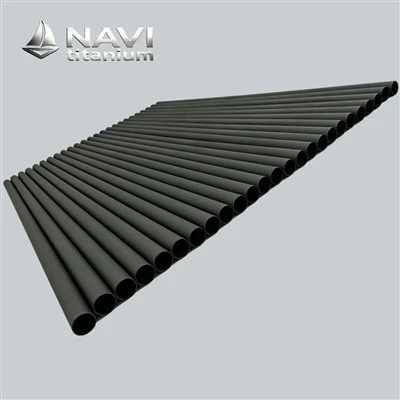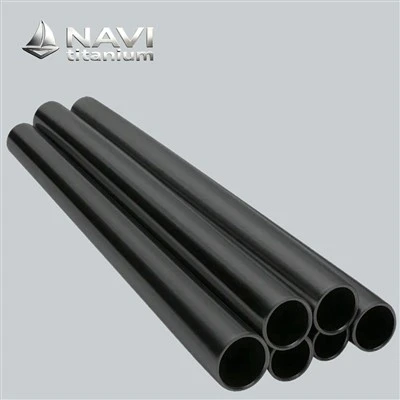


NAVI Titanium develops each platinum coated titanium anode around the relationship between current density, electrolyte chemistry, reaction kinetics, and electrode geometry. The substrate condition and platinum loading influence charge-transfer behavior, while dimensions and connection geometry affect resistance, current distribution, and heat generation during operation.

Solution of NAVI Titanium


NAVI Titanium relates electrode geometry to the electrical and mass-transfer conditions within an electrolytic cell. For catalytic surfaces, the selection of shape and dimensional parameters therefore needs to correspond with cell geometry, electrode spacing, current load, and reaction requirements.


Application
NAVI Titanium platinum coated titanium anode is selected when the electrochemical cell must accommodate demanding combinations of current load, electrolyte chemistry, and reaction precision. The Ti–Pt configuration separates the mechanical support function from the catalytic surface, allowing electrode dimensions and active-area distribution to be adapted to the cell layout.
Pt-coated titanium electrode are increasingly deployed in hydrogen production systems, particularly for wind–solar hybrid energy storage and other fluctuating power scenarios. In these applications, electrolyzers must continuously respond to intermittent and rapidly varying electrical inputs while maintaining consistent electrochemical behavior under dynamic load conditions. The surface of the anode provides a highly responsive catalytic interface, enabling efficient conversion of variable renewable electricity into hydrogen without significant performance degradation during frequent power fluctuations. Through optimized interfacial engineering, the electrode maintains uniform current distribution and minimizes efficiency losses caused by transient operating conditions, making it a key enabling component for scalable, grid-interactive green hydrogen storage systems.

2.High-precision electroplating

Advanced electroplating electrode assemblies are extensively utilized in semiconductor-grade electroplating processes where atomic-level control of metal deposition is required for advanced interconnect structures and microelectronic devices. In these ultra-clean manufacturing environments, even minimal instability in electrochemical conditions can lead to defects such as void formation, line width variation, or non-uniform grain growth. The catalytic surface provides extremely low polarization resistance and highly stable charge-transfer kinetics, ensuring consistent ion flux distribution across complex wafer geometries. This enables precise deposition of copper and noble metals in sub-micron and nanometer-scale features. Meanwhile, the substrate maintains dimensional stability and chemical resistance in aggressive acidic plating baths.
Purchasing guide

Quality control(QC)

| Titanium Base Material Suppliers: | Coating Precursor Suppliers: |
|
|
|


(2)COA of product
The sample COA is provided for reference only. Each shipment is accompanied by an individual Certificate of Analysis (COA), issued according to the inspection and testing results of the purchased products.

Manufacturing process

Safe Shipping
- Each unit is checked before packing to confirm the surface condition, dimensions, connection areas, and visible finish.
- The coated working surface is separated from direct contact with hard packing materials to reduce the risk of scratches, dents, or surface marks during handling.
- Soft wrapping and cushioning materials are placed around exposed areas, especially for thin sections, edges, rods, and customized shapes.
- For long-distance shipments, moisture protection can be added according to the destination, transport duration, and shipping method.
- Individual wrapping is available for small quantities or high-value custom orders.

2. Secure Fixing During Transportation

- Customized supports are used according to the size and shape of each shipment to limit movement inside the outer case.
- Larger units can be secured at several contact points to reduce bending, shifting, and impact during loading and unloading.
- Suitable cushioning is placed between individual pieces when multiple units are shipped together.
- Long or slender parts receive additional support at key points to help maintain their original dimensions during transportation.
- Packing can be adjusted for express delivery, air freight, LCL, or full-container shipments according to order quantity and destination.
- Export-grade plywood cases or other suitable outer packaging can be selected according to shipment size and destination requirements.
- Package labels can include item code, quantity, dimensions, batch number, handling marks, and customer reference information.
- Packing lists can be matched with carton or case identification to make receiving and warehouse checking easier.
- Moisture-control materials can be added for extended sea transportation or humid routes.
- For wooden cases, export-related treatment and marking can be arranged when required by the destination market.

4. Shipping Documents & Delivery Support

- Before dispatch, the packing condition can be checked against the order specifications and confirmed with the buyer.
- Photos of the packed goods, outer cases, labels, and loading condition can be provided for shipment confirmation.
- Commercial invoices, packing lists, certificates of origin, COA, and other requested documents can be prepared according to the order.
- Express, air, sea, and other international shipping methods can be coordinated according to quantity, delivery schedule, and destination.
- Buyers can provide their preferred forwarder or shipping instructions, while our team coordinates the necessary packing and dispatch details accordingly.
Application
NAVI Titanium platinum coated titanium anode can be evaluated from the voltage balance of an operating electrochemical cell.
NAVI Titanium electrode configurations for highly corrosive precision processes are assessed by how well they tolerate chemical exposure, current loading, and prolonged electrolysis. Localized coating damage, excessive current density, contamination in the electrolyte, or unsuitable electrode spacing can alter the electrical load carried by different areas of the electrode and gradually affect process uniformity. For this reason, the selection process considers electrolyte composition, operating temperature, current density, exposed area, and cell geometry together when determining an appropriate configuration. This operating-window approach helps reduce localized overloading and provides more predictable electrode behavior during continuous use.

2.Electrolysis of trace precious metals

NAVI Titanium determines electrode configuration by relating the available reaction area to the physical layout of the electrochemical cell. Electrode size, active-area distribution, spacing between electrodes, and current input collectively affect the local electrical load and electrolyte circulation around the reaction zone. Connection geometry also needs to accommodate the required current path without creating unnecessary resistance at contact points. For processes with changing production loads or cell dimensions, NAVI Titanium can use these relationships to establish a configuration that fits the available installation space while keeping the electrical load distributed more evenly across the working area.
Product development
Research on engineered electrochemical interfaces focuses on how interfacial catalytic architecture governs macroscopic current distribution behavior under complex operating conditions. In plating cells, spatial non-uniformity of electric fields often induces localized current crowding, leading to uneven reaction rates and process instability. The platinum-functionalized surface provides highly active and spatially uniform charge-transfer sites, reducing local polarization gradients and stabilizing electrode potential across the reaction interface. The open structure further promotes more balanced electrolyte accessibility and minimizes edge effects caused by uneven electrical resistance. As a result, ion flux becomes more uniformly distributed throughout the cell, improving deposition consistency in advanced industrial electroplating systems.

2.Reduced Polarization Resistance

Research by NAVI Titanium on platinum coated titanium anode in industrial systems focuses on how interfacial catalytic mechanisms reduce overall polarization resistance and improve energy conversion efficiency. In electrochemical reactions, polarization losses arise from activation barriers, charge-transfer limitations, and interfacial concentration gradients. The catalytic layer provides densely active reaction sites that facilitate rapid electron transfer and stabilize adsorption–desorption intermediates. This enhances charge-transfer kinetics at the electrode–electrolyte interface and reduces voltage losses under high current density operation. NAVI Titanium applies these principles to electrode optimization, helping stabilize local electrochemical potential and minimize kinetic hindrance.
FAQ
Q1.How long does a platinized Ti electrode typically last?
-
The operating life is governed mainly by the applied current load, functional-layer thickness, electrolyte chemistry, temperature, polarity, and reaction environment. When these parameters remain within the specified operating window, the catalytic layer can retain its electrochemical activity and dimensional integrity over prolonged service.
Q2.In which operating conditions do platinum plated titanium anode show the most stable performance?
+
-
They demonstrate optimal stability in systems requiring continuous electrochemical operation under high current density, variable load conditions, and chemically aggressive electrolytes, where maintaining controlled interfacial reaction kinetics is critical for process reliability and output consistency.
Q3.How can I determine when a platinum-functionalized titanium electrode needs to be replaced or recoated?
+
-
Recoating or replacement is generally evaluated from several operating indicators rather than surface appearance alone. Surface inspection can identify visible defects, but it cannot always reveal a decline in electrochemical activity at an early stage. Reviewing voltage and current records together with coating observations and previous operating data provides a more practical basis for deciding whether the electrode can remain in service, requires recoating, or needs to be replaced.
Q4.What factors affect the service life and performance stability?
+
-
The service life is mainly influenced by interfacial coating integrity, operating current density, electrolyte composition, and long-term electrochemical stress conditions. Performance stability depends on how effectively the catalytic layer maintains reaction uniformity and resists degradation mechanisms such as localized potential fluctuations and interfacial activity loss during continuous operation.
Q5.How can buyers evaluate the quality of a Pt-coated titanium electrode?
+
-
A practical assessment should cover both the physical condition of the electrode and its behavior during electrochemical operation. Buyers should verify the substrate grade, precious-metal layer thickness, surface coverage, bonding condition, dimensional tolerance, electrical contact, and overall surface finish. When replacing an existing electrode, matching the original dimensions, connection points, and operating characteristics is particularly important, as even small deviations may affect current distribution and process behavior.
Hot Tags: platinum coated titanium anode, China platinum coated titanium anode manufacturers, suppliers, factory, DSA Anode, Insoluble Anode, Platinum Coated Titanium Electrodes, Platinum Plated Titanium Anode, Titanium Anode Baskets for Electroplating, Titanium Cathode