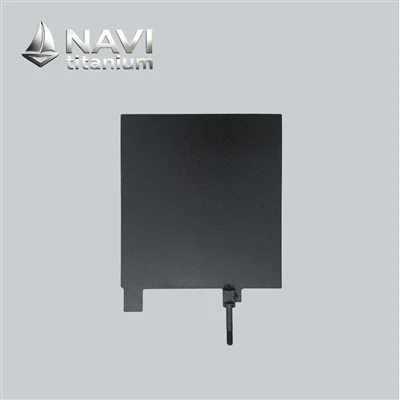
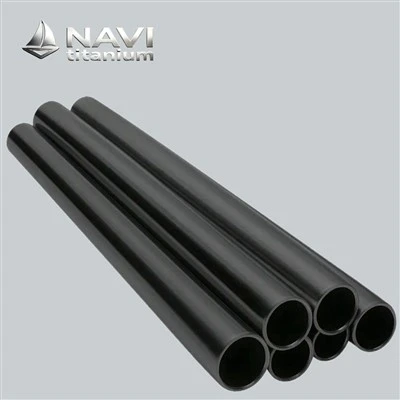
NAVI Titanium platinum plated titanium anodes combine a high-purity titanium substrate with a controlled platinum layer for demanding electrochemical service. Designed for oxidation duties, liquid treatment, and power-assisted applications, they offer consistent current transfer, strong adhesion, and dependable durability. NAVI Titanium customized dimensions and surface specifications are available, supported by strict quality control and responsive technical assistance for application-specific requirements.
Solution of NAVI Titanium
Choosing the right anode is critical when treating seawater, high-salinity wastewater, strong acids, bases, and other demanding electrolysis conditions. NAVI Titanium's titanium anodes deliver stable coatings, even current distribution, and customized non-standard designs for diverse electrochemical needs. Designed specifically for water treatment, they cut costs and boost efficiency. Please see the table below for details.


NAVI Titanium supplies specialized Pt-treated Ti components for demanding electrolytic conditions that require controlled oxidation and consistent power transfer. Customized fabrication is available for plates, mesh, tubes, rods, and other forms, with Pt loading adjusted according to load intensity, solution chemistry, temperature, dimensional requirements, and expected service conditions.


Application
Electroplating and Metal Surface Treatment
Platinum plated titanium anode is extensively employed in premium metal-finishing duties requiring accurate positive-potential regulation and a contamination-free chemical medium. Throughout metal deposition, the conductive unit governs power transmission, ionic-medium circulation, and the quality of the deposited metallic film. The Pt active zone accelerates ionic exchange while limiting impurities originating from conductive-unit consumption. Unlike conventional soluble metallic conductors, Pt/Ti conductive units retain their original profile through repeated production cycles, helping manufacturers achieve steadier production results. These conductive units are commonly utilized for precious-metal finishing, decorative surface treatment, electronic-part fabrication, and high-accuracy production, where even slight functional variation may influence the final product.


Electrochemical Research, Water Treatment and Specialized
Beyond conventional plating duties, these conductive assemblies are integrated into dedicated electrochemical reactors requiring precise functional response and repeatable operating characteristics. In research laboratories, they are frequently selected as working units for oxidation studies, synthetic pathways, and investigations involving molecular transformation mechanisms. Within water purification systems, Pt-functionalized Ti assemblies generate reactive species under controlled electrical loading to accomplish oxidation objectives. Strong chemical durability permits reliable use in complex electrolytes containing diverse dissolved constituents. For compact electrochemical equipment, the lightweight support framework offers considerable design flexibility, enabling customized conductive configurations for flow reactors, analytical platforms, and modular treatment systems.
Purchasing guide

Quality control(QC)
Every NAVI Titanium anode is backed by ISO 9001 certified manufacturing and 100% raw material inspection. Unauthorized materials are rejected. For full transparency, we share supplier information for reference only. Click the button to view the COA and verify our quality control.
| Certificate of Analysis | ||
| Titanium Base Material Suppliers: | Coating Precursor Suppliers: | COA of product: |
|
|
|
|


Manufacturing Process
NAVI Titanium's manufacturing process for titanium anodes begins with strict raw material selection and 100% incoming inspection. Titanium substrates are precision machined, degreased, and etched to ensure surface uniformity. Platinum is then electrodeposited through controlled plating baths, building a dense, uniform, and highly conductive coating. Each batch undergoes dimensional checks, coating thickness testing, and electrochemical performance verification. Final inspection includes adhesion testing and current distribution evaluation. Only fully compliant anodes are released, ensuring reliable performance in seawater, high-salinity wastewater, and strong acid/alkali electrolysis.


Technical Characteristics and Engineering Analysis
Electrochemical Characteristics
The anodic response of platinum plated titanium anodes depends largely on the interaction between catalytic sites and the surrounding electrolyte environment. Pt contributes to electron exchange reactions, while the base provides a conductive pathway throughout the electrode body. Factors such as Pt distribution, microscopic features, and the Ti-Pt interface influence reaction behavior and electrical response during operation. NAVI Titanium engineers typically examine potential variation, polarization trends, and reaction conditions when selecting electrodes for specialized anodic processes. For specific anodic processes, engineers analyze parameters including electrode potential changes, polarization characteristics, and interfacial response to verify compatibility between electrode design and the targeted reaction environment.


Pt-Ti Interface Characteristics
The contact relationship between Pt and the Ti carrier directly affects positive-potential functionality throughout repeated service cycles. Repeated ionic transformation together with chemical exposure may alter the interaction of the two metallic elements. Preparation begins with carrier pretreatment followed by noble-metal incorporation and contact refinement before final fabrication.
A tightly connected contact zone retains uninterrupted energy transmission while minimizing localized separation. NAVI Titanium has shifted from simple noble-metal deposition toward an integrated concept emphasizing fabrication techniques, chemical coordination, and suitability for intended working media.
Manufacturing Process and Technology Control
Preparation of Pt-bearing conductive units requires close coordination between carrier treatment and intended production objectives. The metallic carrier undergoes cleaning and activation before noble-metal incorporation through dedicated techniques. Final verification includes conductive capability, overall size, and physical condition. This strategy makes it possible to produce conductive units suited to different vessel layouts instead of relying on one universal format.
Unlike conventional metalworking, fabrication of these conductive units requires cooperation between metallurgy and ionic transformation principles. Profile, noble-metal allocation, connection methods, and production targets are reviewed together. Such planning results in customized conductive units corresponding with different vessel arrangements rather than one fixed specification.


Customization Capability for Industrial Applications
Tailored electrode solutions are developed according to reactor dimensions, connection arrangements, and specific operating requirements. NAVI Titanium can adjust electrode shape, mounting methods, and platinum quantity to correspond with different equipment designs, offering flexibility for OEM projects, laboratory equipment, and production installations. Parameters including electrode dimensions, fixing methods, current supply arrangements, and geometric design can be adjusted according to reactor conditions. Mesh-type electrodes are often selected for processes requiring greater electrolyte movement, whereas plate formats may better fit compact equipment layouts. Project-oriented engineering allows controlled adjustment of platinum quantity and electrode geometry according to different process targets. This approach serves OEM manufacturers, laboratory developers, and industrial operators seeking specialized electrode solutions.
Quality Inspection and Performance Verification
Evaluation of platinum plated titanium anodes conductive units employs multiple analytical methods to confirm physical quality. Inspection includes conductive resistance, size verification, microscopic examination, and simulated duty trials. These analytical techniques generate comprehensive information for quality confirmation before shipment.
Inspection records may include noble-metal bonding verification, resistance measurement, size confirmation, and ionic transformation testing under regulated laboratory settings. Microscopic examination reviews noble-metal allocation together with the contact zone, while accelerated service trials reveal physical changes after repeated duty cycles. For overseas customers, documentation packages together with batch traceability records facilitate project acceptance and installation approval.

Why Use Titanium as Platinum Carrier?

Mechanical Support Capability
A Ti metallic carrier serves as the primary load-bearing body for Pt-functional conductive units, combining low mass, mechanical strength, and resistance to deformation under severe working scenarios. Inside electrolytic installations, overall shape influences energy flow, liquid circulation, and vessel functionality. Variations caused by chemical exposure, thermal fluctuation, or external loading may influence production efficiency.
The Ti carrier retains its original profile through repeated service cycles, keeping spacing unchanged and conductive capability steady. Unlike conventional precious-metal conductors, the Ti carrier accommodates mesh, plate, rod, and other custom forms suitable for different vessel layouts.
Ti-Pt Material Integration
The operational response of Pt-functionalized conductive assemblies is closely associated with the interaction zone formed between Ti and Pt. The Ti foundation undergoes controlled pretreatment before Pt incorporation. Through optimized cleaning and activation procedures, engineers establish a well-connected transition region capable of sustaining uninterrupted electrical transfer throughout repeated oxidation cycles. Modern fabrication emphasizes coordination among substrate preparation, Pt incorporation, and operational requirements. This interface-oriented concept minimizes the possibility of localized separation and regional variation within complex electrolyte environments, resulting in predictable functional characteristics.


Lifecycle Benefits of Electrode Design
Despite the use of precious metals and specialized fabrication methods, platinum plated titanium anodes should be evaluated according to their overall lifecycle value rather than purchase cost alone. Factors such as dimensional retention, limited impurity release, predictable anodic response, and reduced maintenance requirements influence the long-term economics of electrolysis equipment. For processes where electrode replacement involves downtime or production interruption, preserving consistent operating characteristics can directly affect scheduling and resource planning. The composite concept combines the catalytic advantages of platinum with the mechanical benefits of Ti, providing a balanced choice for electrolysis processes focused on continuous operation and material utilization.
Customization Details of NAVI Titanium
Our specification service begins with the physical details that determine whether a unit can fit naturally into an existing cell. Rather than working from a general product description alone, our team can refer to your drawing, sample, dimensional sketch, or marked photographs. Mounting direction, hole positions, edge clearances, fixing points, terminal location, and available internal space can be reviewed before fabrication. For mesh formats, opening size and wire arrangement may also be considered when fluid passage or mounting space requires a particular pattern. Circular, rectangular, strip, tubular, and irregular forms can be prepared around the space available to the customer. Where a close fit is required, dimensions and allowable deviations can be documented together to help prevent minor dimensional differences during assembly.


Another factor we review with customers is the amount of precious metal required for the intended duty. Instead of selecting a deposited amount based only on appearance or nominal thickness, we can consider factors such as electrical demand, electrolyte composition, temperature, service hours, and the anticipated replacement interval. These details provide a more useful basis for discussing an appropriate loading range. The base material can be supplied in mesh, plate, strip, rod, or formed configurations according to mechanical requirements and available cell space. If operating data is available, sharing it during the quotation stage allows our technical team to compare the requested dimensions and precious-metal loading with the intended application, rather than treating specification changes as a simple adjustment in size.
For customers adapting a unit to an existing assembly, connection details may require separate review. NAVI Titanium can check terminal dimensions, hole diameters, tab locations, lead arrangements, fastening methods, and protected connection areas before the final drawing is confirmed. If the electrical contact is positioned outside the main working zone, that arrangement can be discussed separately from the active section. For repeat purchases, the approved drawing, base material grade, dimensions, precious-metal loading, connection details, and customer part number can be retained as references for later orders. A physical sample or hand-marked sketch is often enough for unusual requirements. Where application data is incomplete, information such as electrolyte composition, electrical range, temperature, and expected service hours can help narrow the specification for the project.

FAQ
What should buyers in different regions consider when sourcing platinized anodes?
+
-
Regional working conditions can influence product selection, particularly when water quality, solution chemistry, temperature, power loading, and local utility conditions vary. Buyers should provide actual service parameters instead of choosing a unit solely according to dimensions or precious-metal loading. For export projects, documents such as substrate certificates, plating specifications, inspection records, and traceability information may also be required for project approval and incoming quality checks.
How can I tell whether a platinized anode is approaching the end of its service life?
+
-
A noticeable rise in cell voltage, changes in load behavior, reduced conversion performance, or localized discoloration may indicate depletion or damage of the active platinum layer. Periodic checks of voltage, power load, solution conditions, and physical appearance can help identify deterioration before it has a significant impact on production. Actual service duration depends on load intensity, solution chemistry, temperature, and shutdown practices.
When should a platinized anode be replaced, and what should I check before installing a new one?
+
-
Replacement should be determined by actual working performance rather than a fixed calendar interval. Before installation, users should verify dimensions, connection points, polarity, exposed area, spacing from the counter unit, and compatibility with the existing cell. It is also important to determine why the previous unit reached the end of its service period, since excessive load, unsuitable solution conditions, mechanical damage, or incorrect power connections can shorten the service period of the next unit.
How can I verify the quality of a platinized electrode when it arrives?
+
-
Incoming inspection should cover more than visual appearance. Buyers can verify the substrate grade, dimensions, connection area, platinum loading or specified plating parameters, power continuity, and accompanying inspection records. Particular attention should be given to scratches, peeling, exposed substrate areas, damaged edges, and irregularities around welded or connected sections. For critical projects, independent testing or agreed inspection criteria can be established before production.
Is a higher platinum loading always the better choice for my process?
+
-
Not necessarily. Platinum loading should be matched to the solution chemistry, load intensity, temperature, expected service period, and required functional performance. Excessive loading may raise the initial purchase cost without delivering a proportional benefit under mild working conditions, while insufficient loading may shorten service life in demanding environments. A more practical approach is to determine the required loading from the actual service environment and expected replacement interval.
Hot Tags: platinum plated titanium anode, China platinum plated titanium anode manufacturers, suppliers, factory, MMO Coated Titanium Anodes, MMO Mesh, Platinum Coated Titanium Electrodes, Platinum Titanium Electrode, Ruthenium Iridium Titanium Anode, Titanium Mesh Electrode