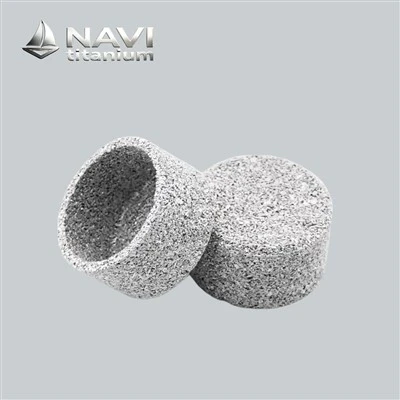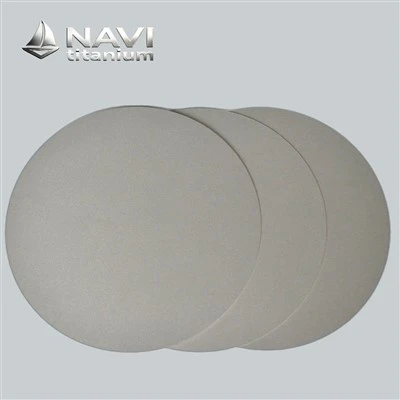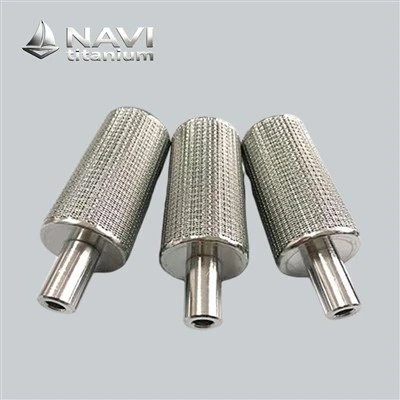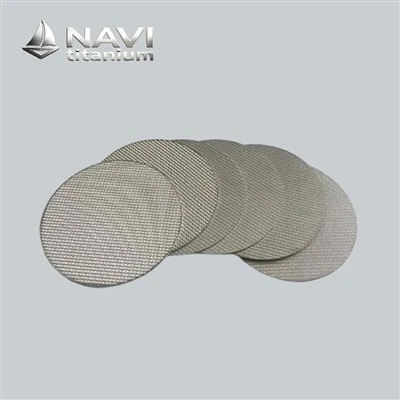

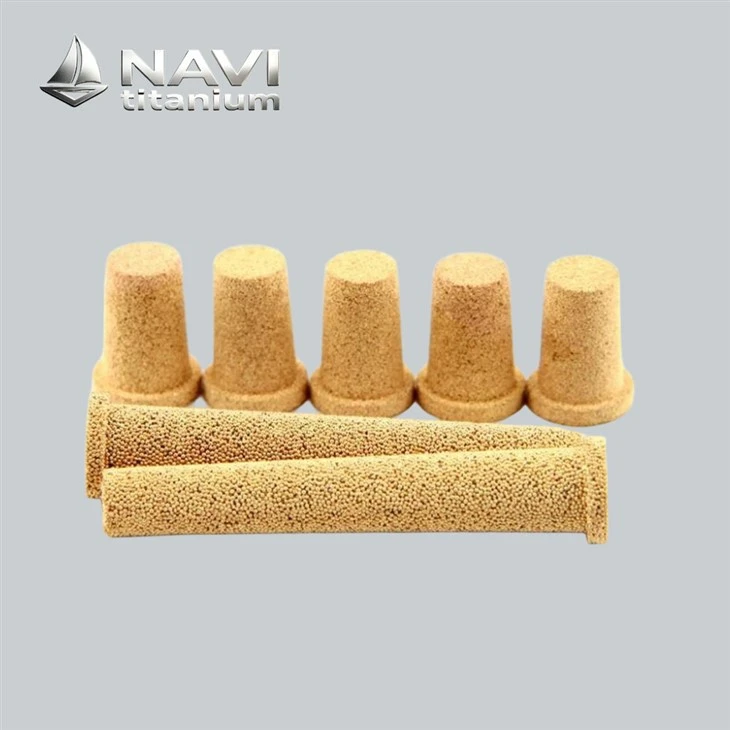
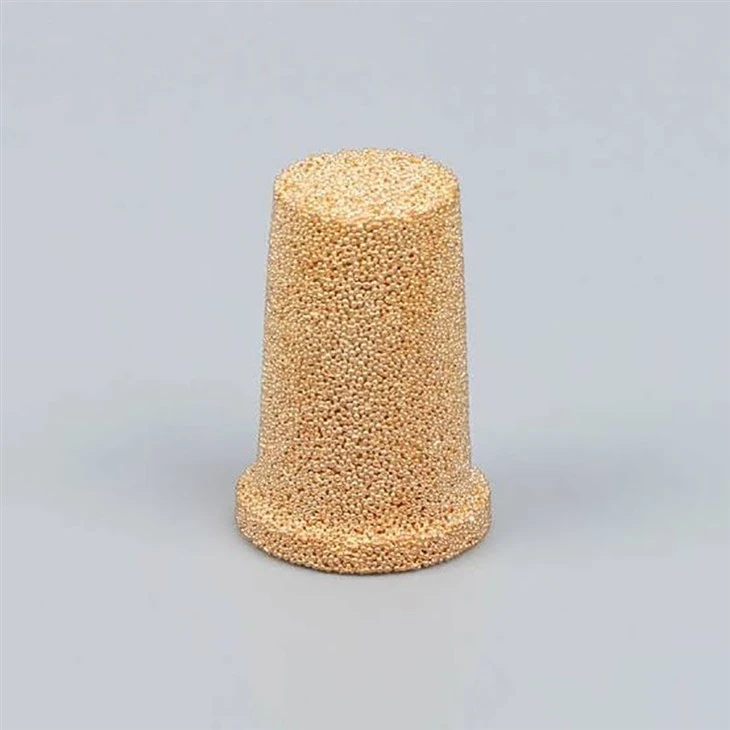
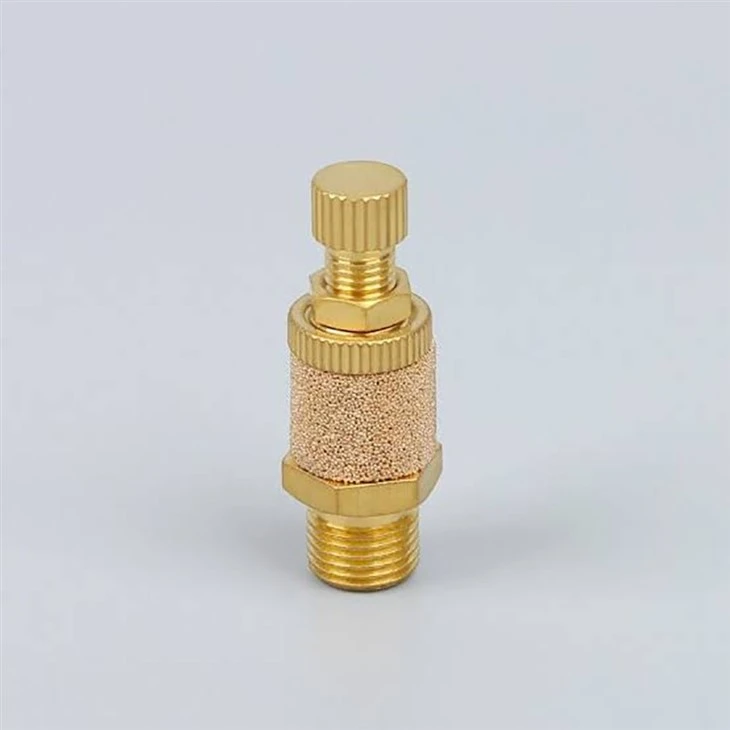
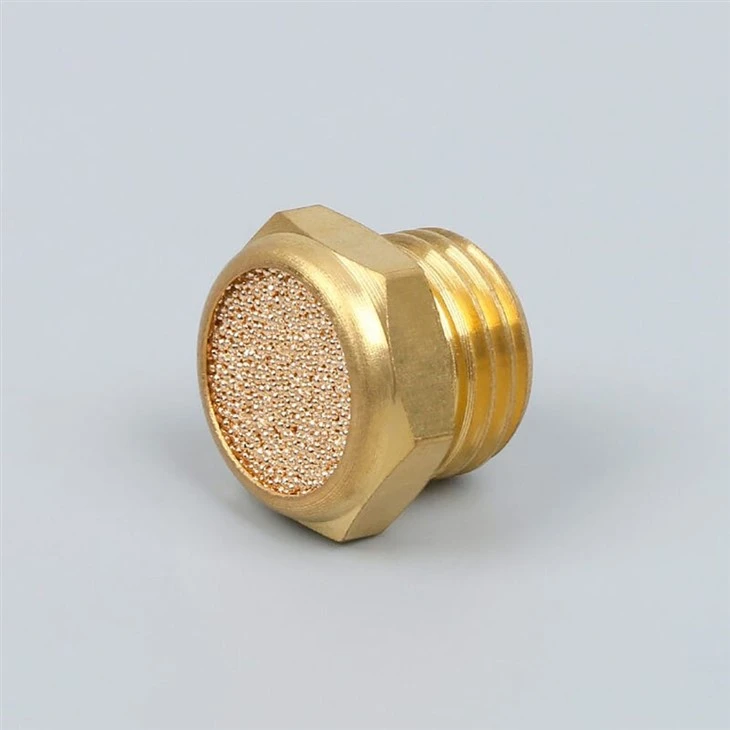
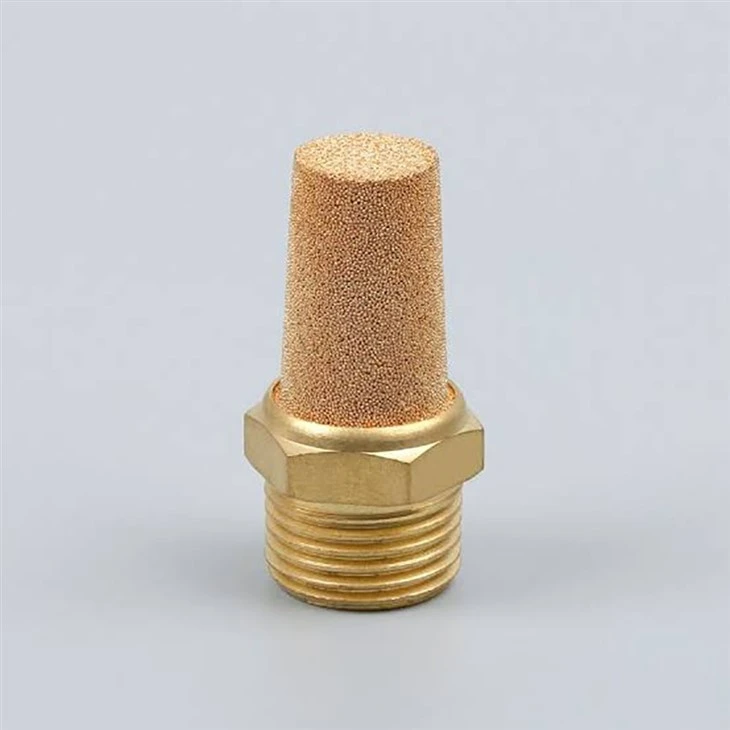
NAVI Titanium sintered muffler is produced for controlled exhaust attenuation in pneumatic and gas-handling assemblies, while its supply capability is shaped by a dedicated management group and a technically focused production team. As order volumes shift from trial quantities to recurring batches, capacity can be adjusted through coordinated scheduling, material allocation, and line balancing rather than relying on temporary expansion. The management team monitors order continuity, specification retention, and batch planning, while technical personnel oversee forming parameters, thermal cycles, machining details, and dimensional verification.
Solution of NAVI Titanium
NAVI Titanium has built its technical and production organization around long-term experience in electrochemical equipment, porous-flow components, precision fabrication, and customized industrial parts. The company has developed a coordinated working model involving technical engineers, production planners, quality personnel, machining specialists, and international sales teams. This structure allows application requirements to be transferred from initial technical communication to material selection, forming, thermal processing, dimensional finishing, inspection, and export preparation with defined responsibilities at each stage.
For pneumatic exhaust and gas-discharge applications, the team evaluates more than nominal dimensions.
The same technical team also supports a broader titanium product portfolio covering electrochemical components, filtration-related structures, and customized industrial parts. To give procurement and engineering teams a clearer reference, the following table summarizes NAVI Titanium's principal titanium products, including specifications, dimensional parameters, performance indicators, material characteristics, suitable operating conditions, and application fields.


NAVI Titanium applies controlled material preparation, thermal consolidation, and subsequent dimensional finishing to produce compact gas-damping units for pneumatic exhaust assemblies. Their interconnected passage network enables gradual pressure dissipation, reducing acoustic intensity while preserving suitable discharge capacity.


Acoustic Attenuation
NAVI Titanium sintered muffler provides compact acoustic attenuation and controlled gas discharge for pneumatic valves, actuators, compressors, vacuum units, and automated exhaust assemblies, with specification matching for connection size, throughput capacity, pressure tolerance.
Mufflers and silencers are widely applied at pneumatic valves, actuators, compressors, vacuum units, and automated exhaust ports where rapid gas release can generate substantial acoustic energy. NAVI Titanium's primary function is to reduce sound intensity while maintaining an acceptable exhaust rate and pressure balance. A sintered bronze body contains interconnected micro-scale passages that divide a high-velocity gas stream into numerous smaller throughput paths. This distributed passage pattern promotes pressure dissipation and reduces turbulent fluctuations at the outlet, thereby lowering perceived noise during repeated discharge cycles. Unlike simple throttling devices, properly selected Noise Attenuators aim to attenuate acoustic output without creating excessive back pressure that could slow actuator response or alter valve timing. For B2B applications, selection should therefore consider thread specification, effective passage area, acoustic attenuation, allowable pressure, gas compatibility, operating temperature, and expected service frequency. Installation points include solenoid valve exhausts, pneumatic cylinders, control valves, vacuum generators, and automated machinery where compact noise suppression is required.

2. From Material Preparation to Application-Specific Finishing

For procurement teams, noise attenuators selection can be evaluated through dimensional specification, pore-size distribution, throughput capacity, pressure tolerance, connection format, surface condition, and batch consistency. Common configurations include threaded cylindrical bodies, compact discs, and specially machined fittings, with dimensions determined by valve port size and available installation space. Typical technical parameters may include nominal thread sizes, overall length, outer diameter, passage rating, operating pressure, and allowable temperature range. NAVI Titanium production generally involves preparation of bronze feedstock, controlled forming, thermal bonding, sizing, and subsequent machining of threads, shoulders, and sealing faces. Secondary operations may include deburring, cleaning, dimensional verification, and functional throughput testing. In use, the unit is normally installed directly at an exhaust port, with thread engagement checked carefully to prevent leakage or mechanical interference. Applications extend across pneumatic automation, packaging machinery, actuator assemblies, compressor controls, vacuum handling, and factory automation. Origin: China. For project procurement, drawings, annual quantity, connection standard, and operating parameters can be supplied for specification matching.
Purchasing guide

Quality control (QC)
NAVI Titanium integrates batch-level quality documentation into the supply process for porous exhaust components, allowing each production lot to be traced through material identification, dimensional verification, and final inspection records. For applications involving pneumatic valves, cylinders, compressors, and automated machinery, the recorded data can cover material grade, external dimensions, connection details, permeability-related characteristics, and other agreed technical parameters.

Manufacturing Process
1. Material Preparation
Select the appropriate particulate grade and alloy according to exhaust flow, temperature, corrosion exposure, and required acoustic attenuation.
2. Particle Classification
Control particle-size distribution to establish the internal passage structure, balancing gas-release capacity with noise-reduction performance.
3. Mold Filling & Compaction
Fill the selected material into a dedicated mold and apply controlled compaction to obtain the required cylindrical, threaded, or custom geometry.
4. Thermal Consolidation
Apply a controlled heating cycle to bond adjacent particles while retaining the interconnected internal passages required for exhaust dispersion.
5. Machining & Interface Finishing
Machine threads, mounting surfaces, apertures, and connection sections according to the equipment interface, ensuring accurate installation on valves, pneumatic cylinders, compressors, or exhaust ports.
6. Final Inspection
Verify dimensions, thread accuracy, surface condition, flow behavior, and structural integrity before packaging, with inspection results matched against the approved drawing and application specifications.
Lead Time
For standard noise attenuators models, lead time is primarily determined by current stock availability, NAVI Titanium order scheduling, order quantity, and verification requirements. Stock availability is checked first, allowing readily available specifications to move directly toward verification and dispatch preparation. When replenishment is required, the processing schedule is arranged according to quantity, existing orders, and required specifications. Larger quantities may require additional scheduling time because forming, thermal treatment, sizing, and dimensional checks must be coordinated across the full batch. Before release, verification may cover dimensions, thread conformity, visual condition, and flow-related characteristics. For recurring procurement team, retaining previously confirmed specifications can simplify order review and reduce unnecessary communication. Procurement team are encouraged to provide the required quantity, thread standard, preferred pore grade, and verification criteria at the quotation stage. This allows the shop-floor team to assess the actual workload rather than relying on a generic lead-time estimate. Standard orders with clear specifications generally move through the purchasing cycle more efficiently than orders requiring specification clarification or additional verification.

OEM Orders

OEM orders normally involve several sequential stages: drawing confirmation → sample approval → tooling, if required → batch production → verification → export preparation. Drawing confirmation establishes dimensions, thread details, tolerances, pore grade, body configuration, and surface requirements before processing begins. Where a new configuration requires dedicated tooling, additional preparation time should be considered. Sample approval then provides a reference for subsequent batches. After approval, order scheduling is based on confirmed quantity and required specifications, followed by dimensional and functional verification. Export preparation begins after verification records and order documentation are completed. Several factors can affect the final lead time: quantity, thread specification, pore grade, body configuration, surface treatment, packaging requirement, and verification requirement. Complex threads, unusual dimensions, tighter tolerances, special surface finishes, individual wrapping, or expanded verification records may extend the schedule. Early submission of drawings and technical requirements therefore helps overseas buyers obtain a more realistic production timeline.
NAVI Titanium – Continuous-Cycle Pneumatic Operation
In continuous-cycle production lines, sintered muffler exhaust silencers may face thousands of repeated discharge events over extended operating periods. Pneumatic valves can actuate at short intervals, creating frequent pressure-release pulses through the acoustic attenuation section. Under 24/7 operation, purchasing teams therefore need to evaluate more than initial noise reduction. Key considerations include throughput consistency, pressure-drop progression, thread retention, outlet condition, and resistance to repeated thermal and mechanical loading. A suitable configuration should dissipate exhaust energy without excessively restricting discharge, since excessive restriction may alter actuator timing or increase cycle duration. High-frequency actuation also makes dimensional retention important at threaded interfaces, particularly where automated valve banks operate continuously. For NAVI Titanium production-line applications, buyers may compare initial throughput characteristics with results obtained after extended cycling to identify whether passage behavior changes over time. Batch records, dimensional checks, and functional testing can provide useful evidence when approving a specification for recurring procurement. This approach allows purchasers to assess long-cycle suitability through measurable operating indicators rather than relying solely on nominal acoustic ratings.

Repetitive Exhaust and Long-Cycle Performance

Continuous pneumatic cycling places repeated mechanical and pressure loading on an exhaust silencer. In automated assembly lines, packaging systems, robotic actuators, and valve manifolds, discharge may occur hundreds or thousands of times per hour. Such repetition makes the relationship between acoustic attenuation and throughput capacity especially important. A restrictive outlet can reduce sound intensity but may also create unwanted back pressure, affecting cylinder return speed, valve response, and overall cycle timing. Procurement team should therefore examine pressure drop at the intended throughput rate, acoustic attenuation across the operating range, connection integrity, dimensional retention, and visual condition after extended cycling. For supplier qualification, useful evaluation may include repeated-actuation trials, throughput comparison before and after cycling, thread verification, and sample-based dimensional verification. Production-line purchasers can also specify expected cycle frequency, daily operating hours, gas type, pressure range, and ambient temperature when requesting quotations. These details allow NAVI Titanium to assess whether the selected configuration is appropriate for continuous pneumatic service rather than short-duration operation. The objective is consistent functional output throughout recurring production cycles.
Balancing Noise Attenuation and Airflow Performance
When selecting a sintered muffler, procurement team need to balance acoustic attenuation with pneumatic performance rather than pursuing the lowest possible noise level alone. NAVI Titanium considers exhaust throughput, pressure drop, back pressure, discharge behavior, and equipment response when matching the noise attenuator configuration to the working conditions. A properly selected porous exhaust unit can moderate discharge noise while maintaining the airflow required for valves, actuators, and other pneumatic equipment.
| Purchasing Consideration | Overemphasis on Silencing | Balanced Selection |
| Balanced Selection | May prioritize maximum attenuation regardless of airflow | Controlled noise output suited to the operating environment |
| Airflow Capacity | Air passage may become overly restricted | Sufficient airflow for the required pneumatic cycle |
| Pressure Drop | Higher resistance may create excessive pressure loss | Pressure drop maintained within an acceptable operating range |
| Exhaust Velocity | Excessive reduction may slow discharge | Airflow is appropriately dispersed while maintaining discharge efficiency |
| Machine Response | Restriction may affect actuator speed or valve response | Pneumatic response remains aligned with equipment requirements |
| Operating Consistency | Performance may vary as the noise attenuators becomes loaded or restricted | Selection considers long-term airflow behavior and maintenance needs |
In practical pneumatic applications, the goal is not simply maximum silencing, but an appropriate balance between noise attenuation, airflow, pressure behavior, and equipment response.
With its focus on application matching and porous exhaust-flow control, NAVI Titanium sintered bronze muffler can be evaluated according to the specific pneumatic system, connection requirements, and operating conditions.
FAQ
1. How large is the team responsible for production and order coordination?
+
-
The operation is handled by personnel assigned to production planning, process supervision, technical assessment, verification, and order coordination. Team allocation can be adjusted according to recurring quantities, specification changes, and project schedules. This helps maintain clear responsibility between commercial communication and shop-floor execution.
2. How is process research carried out for different noise attenuators specifications?
+
-
Technical personnel compare trial results against intended flow and acoustic targets before a specification enters recurring production.
3. What verification equipment is available for quality verification?
+
-
Verification resources may include dimensional gauges, thread gauges, optical measuring instruments, weighing devices, pressure-testing units, and flow-testing apparatus. The selection of verification methods depends on the specification and purchaser requirements.
4. How are finished units inspected before release?
+
-
Finished-unit verification generally covers dimensions, thread conformity, surface appearance, passage characteristics, and functional performance. Sampling frequency can be arranged according to order quantity and client requirements.
5. How are raw materials stored before production?
+
-
Raw materials are stored according to grade, batch identification, incoming quantity, and intended application. Separate identification helps prevent material mix-ups when several specifications are being processed simultaneously. Storage records can include supplier information, batch references, incoming verification results, and usage status. Material movement is monitored from receipt through production allocation, allowing technical and purchasing personnel to trace the source used for a specific order when recurring procurement or quality review requires additional documentation.
Hot Tags: sintered muffler, China sintered muffler manufacturers, suppliers, factory, Sintered Bronze Bar, Sintered Bronze Filter Element, Sintered Bronze Sheet, Sintered Metal Filter Cartridge, Sintered Metal Tube, Sintered Stainless Filter