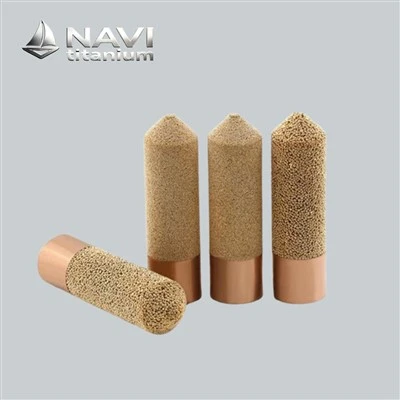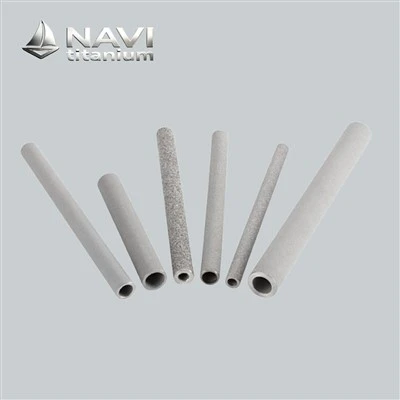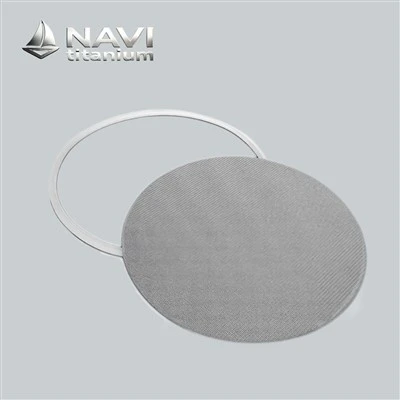

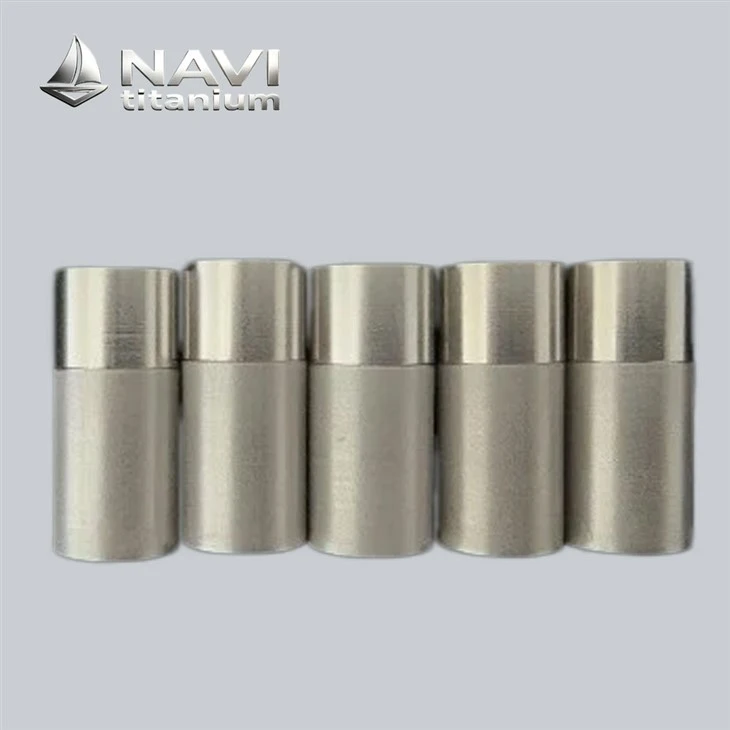
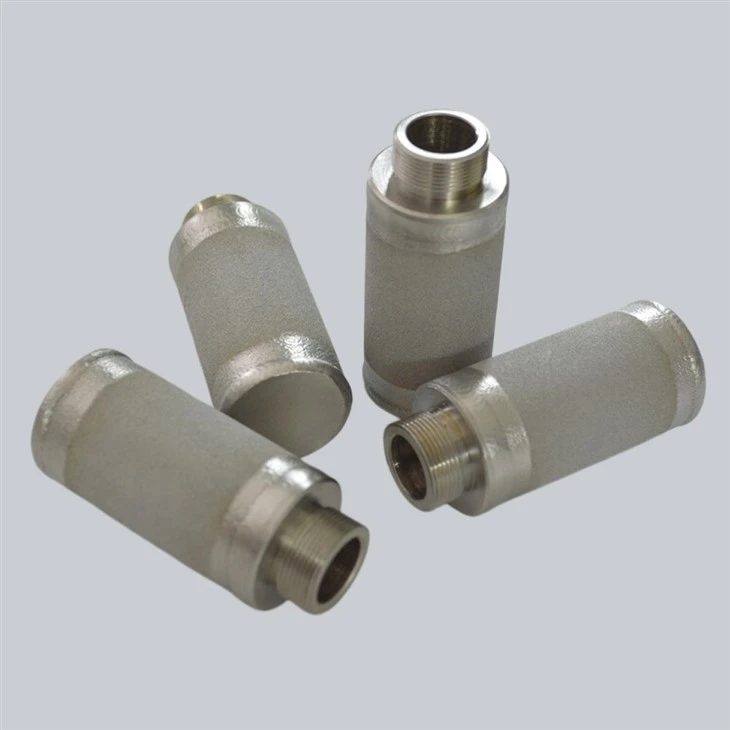
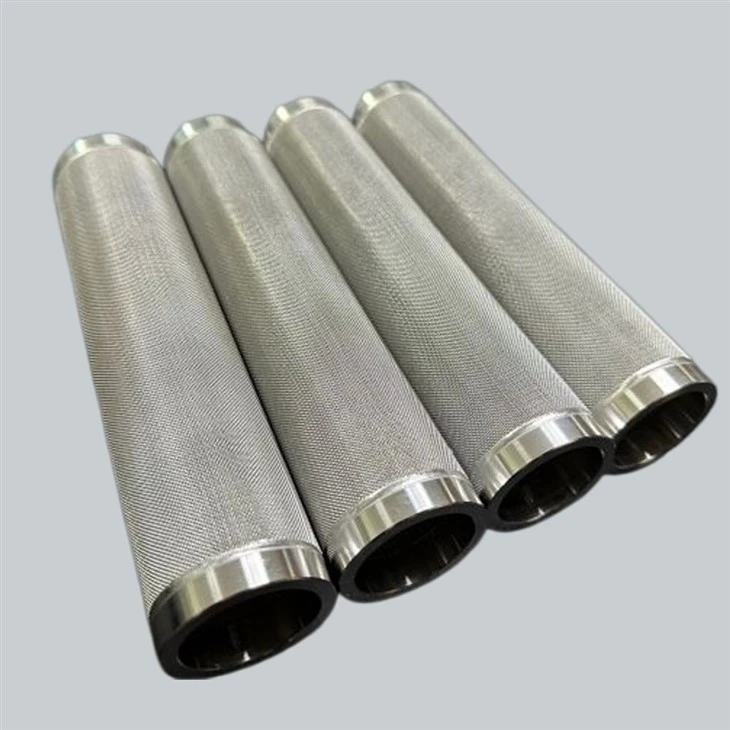
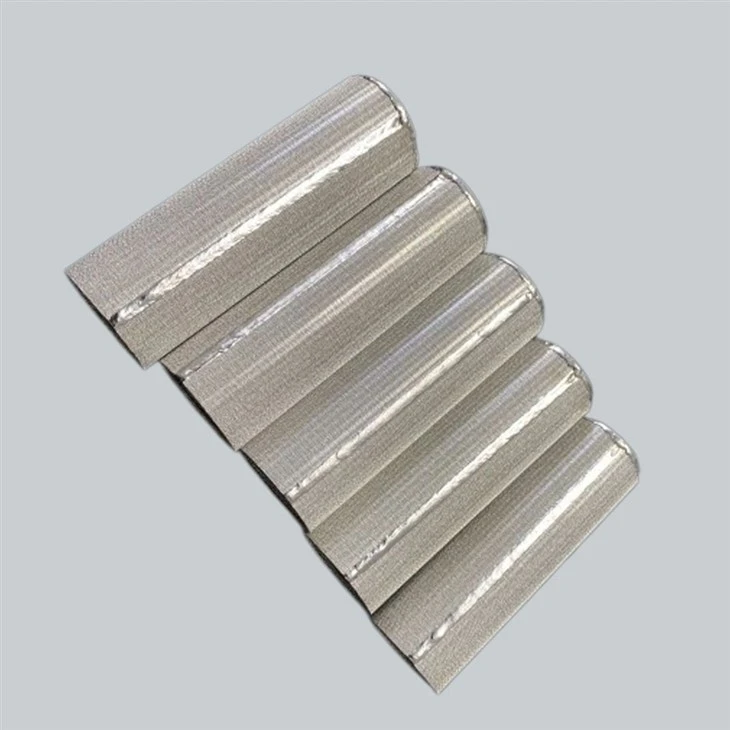
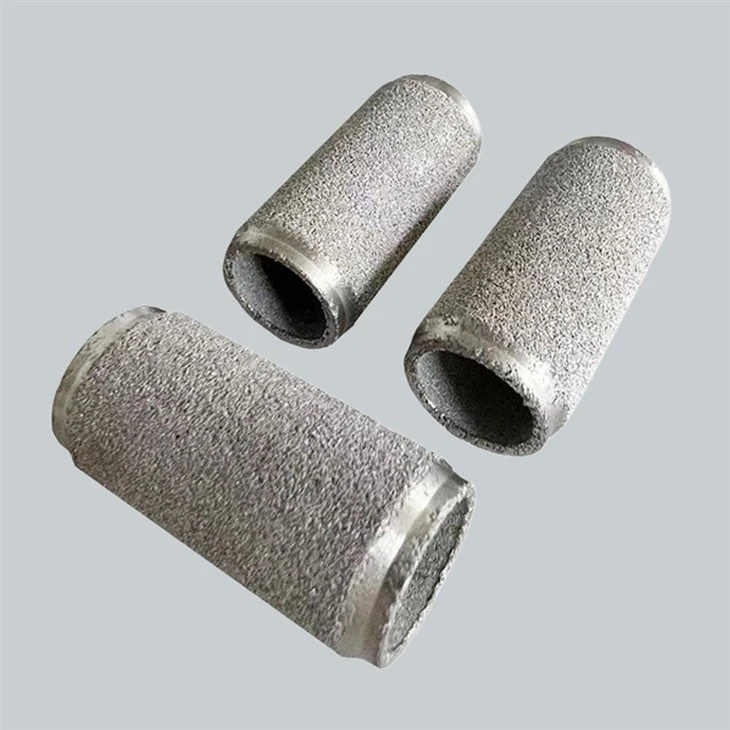
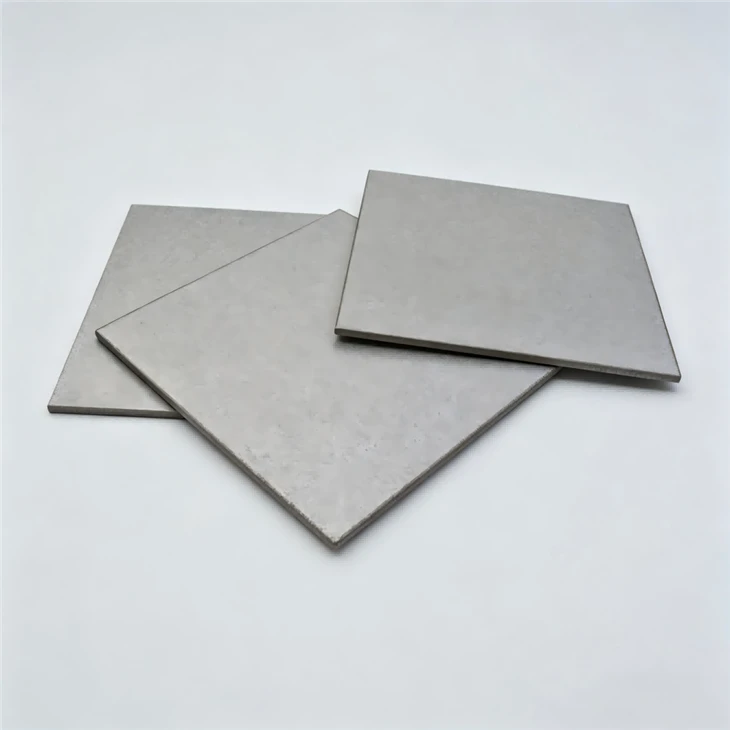
NAVI Titanium's sintered stainless steel is a powder metallurgy material that can be either porous or dense. It's made from pre-alloyed stainless steel powder or multilayer stainless steel mesh through pressing and high-temperature vacuum sintering. As a manufacturer with complete self-research and production capabilities, NAVI Titanium is committed to providing integrated solutions for high-reliability sintered stainless steel filter elements to the global market. Since 2008, NAVI Titanium has delivered sintered stainless steel filters for over 160 industrial projects, covering semiconductor CMP slurry circulation, ultra-high purity gas delivery, and pharmaceutical filtration in Europe, Southeast Asia, and North America.

Solution of NAVI Titanium


NAVI Titanium supplies custom sintered stainless steel components. We produce sheets, discs, flanges and various special-shaped parts. Made by powder metallurgy with uniform porous structure, these parts feature stable permeability, high temperature and corrosion resistance, ideal for filtration, gas diffusion, noise reduction and venting applications.


Application
Sintered stainless steel is a porous metal material formed by the high-temperature vacuum sintering of 304/316L stainless steel powder into a single piece. Its internally interconnected three-dimensional microporous structure allows for precise customization of pore sizes ranging from 0.1 to 100 μm. It combines the unique advantages of metal, including high strength, corrosion resistance, high-temperature resistance, no fiber shedding, cleanability and recyclability, and low metal leaching.
NAVI Titanium's sintered stainless filter elements are the core filtration components in semiconductor ultra-high-purity gas delivery systems. They are typically sintered from 316L ultra-high-purity stainless steel and undergo electropolishing and vacuum passivation to ensure a defect-free surface and prevent impurity leaching. Their primary applications are divided into a three-stage system, comprising front-end pre-filtration, mid-stage precision filtration, and end-stage filtration: Front-end filtration intercepts large particulate impurities, rust, and dust in the piping to protect downstream precision equipment; mid-stage filtration precisely removes submicron-sized particles to maintain stable gas purity; and end-stage filtration is directly connected to the process chamber to ensure that the gas entering the process meets ultra-high-purity standards.


Additionally, for semiconductor applications involving corrosive specialty gases, this product-thanks to its excellent resistance to halogens, acids, and alkalis-can operate stably over the long term in fluorine- and chlorine-based gas environments without being corroded by the medium and generating secondary impurities. Compared to organic filter media such as PTFE and glass fiber, its high-temperature resistance, aging resistance, and non-volatile properties make it perfectly suited for high-temperature gas processes, completely resolving the industry-wide challenge of gas contamination caused by the high-temperature decomposition of organic materials.
Purchasing guide

Quality control (QC)


Manufacturing Process

304 vs 316 vs 316L Sintered Stainless Steel
| Feature | 304 | 316 | 316L |
| General corrosion resistance | Good | Higher | Higher |
| Chloride environment | Moderate | Better | Better |
| Low-carbon grade | No | No | Yes |
| Welding-related corrosion considerations | Standard | Standard | Better |
| Typical applications | General industry | Chemical / marine | Chemical / semiconductor / high-purity |
Application
CMP slurry is not a simple liquid, but a highly complex nanoparticle dispersion system. A typical CMP slurry usually consists of nano-colloidal silica; nano-cerium oxide (CeO₂); nano-alumina (Al₂O₃); oxidants (H₂O₂, Fe(NO₃)₃, etc.); pH adjusters; dispersants; surfactants; inhibitors; and ultrapure water (UPW). The nano-abrasives are what truly perform the mechanical polishing effect. Their particle size is typically controlled between 20 and 100 nm, and the entire slurry system must maintain extremely high dispersion stability. For advanced copper CMP, the vast majority of particles in the slurry must be concentrated in the 30–60 nm particle size range. If particles begin to agglomerate, forming large particles of 300 nm, 500 nm, or even larger than 1 μm, it will cause serious damage to the wafer surface. Therefore, the true target of CMP filters is not normal abrasive particles, but rather the abnormal particles continuously generated during system operation.

Formation Mechanism of Abnormal Agglomerates

During continuous operation in a factory, CMP slurry is not a static system but constantly undergoes circulation, shearing, pressure changes, and chemical reactions. During this process, nanoparticles may gradually aggregate due to van der Waals forces, electrostatic shielding effects, or changes in the chemical environment, forming large agglomerates much larger than the original particles. Factors influencing agglomeration formation include high-speed shearing by the circulating pump leading to local dispersant failure; prolonged slurry storage time resulting in decreased colloidal stability; temperature changes altering the surface charge of particles; increased metal ion concentration in the slurry compressing the electric double layer and inducing particle aggregation; and air entering the circulation system forming microbubbles, promoting particle bridging.
Although these agglomerates are extremely few in number, their size typically reaches hundreds of nanometers or even several micrometers. When they enter the polishing area, due to their much larger size than normal abrasive particles, they create localized high-stress points between the polishing pad and the wafer, ultimately leading to surface scratches. Therefore, CMP filtration systems must continuously remove these abnormal particles without disrupting the normal particle size distribution of the nano-abrasives.


Traditional polymer membranes primarily rely on two-dimensional membrane structures for surface retention. During filtration, particles tend to accumulate on the membrane surface, forming a cake layer, leading to a rapid increase in pressure differential. In contrast, NAVI titanium's sintered stainless steel employs a three-dimensional interconnected microporous structure. Its internal channels are interconnected, allowing particles to not only be retained on the surface but also gradually distribute along the channel depth, achieving typical depth filtration. This filtration method offers several significant advantages. First, the nano-slurry flows uniformly throughout the entire pore network, preventing the formation of localized high-speed scouring zones and reducing abrasive wear on the filter media. Second, larger agglomerated particles are preferentially retained at the channel inlets, while normal nanoparticles can pass through smoothly, thus not significantly altering the slurry particle size distribution.
Third, because contaminants are distributed throughout the entire filter layer, rather than concentrated on the surface, a larger amount of contaminants can be accommodated per unit filtration area, extending the filter's lifespan. Finally, this product possesses high mechanical strength, enabling it to withstand online backflushing. Retained particles are removed via reverse fluid flow, allowing for filter cartridge reuse without frequent replacement.

Application Characteristics in Copper CMP

Copper CMP is a key step in the Damascene (damascene interconnect) process. Its goal is to remove copper overplating while maintaining the copper filling in trenches and vias. Due to copper's high ductility and low hardness, it is susceptible to localized mechanical stress during CMP, making the particle state of the slurry particularly important for process stability. Copper CMP slurries typically use colloidal silica as the primary abrasive, with a particle size generally controlled between 30 and 80 nm, and are supplemented with chemical additives such as hydrogen peroxide and benzotriazole (BTA) to regulate oxidation and corrosion inhibition on the copper surface. The primary task of sintered stainless filters in copper CMP is to remove abnormal particles several times larger than the normal abrasive particle size, rather than intercepting all particles.
If the filter pore size is too small, it will trap a large amount of normal abrasive, altering the slurry composition and reducing material removal efficiency; if the pore size is too large, it cannot effectively remove agglomerated particles.Therefore, industrial applications typically employ gradient filtration structures, allowing the slurry to progressively remove contaminants of varying sizes at different filtration stages while maintaining a relatively stable concentration of nano-abrasive particles. Another crucial function is controlling abrasive metal particles. Pumps, valves, and pipes in copper CMP circulation systems are subjected to long-term abrasive slurry flow, releasing trace amounts of metal debris. These particles are typically harder than the copper surface and easily create deep scratches during polishing. Sintered stainless steel, with its stable three-dimensional porous structure, can effectively trap these metal debris over extended periods without pore size changes due to high-velocity abrasive impact.

Filtration Requirements in Tungsten CMP

Tungsten CMP is primarily used for machining tungsten plugs in contact plugs and planar interconnects. Compared to copper, tungsten is harder, and the removal process relies mainly on a combination of chemical oxidation and mechanical grinding. Therefore, oxidants and high-hardness abrasives are typically added to the slurry. Tungsten CMP filters must withstand significantly higher levels of abrasion. Because the abrasive cutting power in the slurry is stronger, ordinary polymer filter media are prone to pore enlargement or membrane wear after long-term operation. This product, however, features an integral sintered metal skeleton, capable of withstanding continuous high-speed scouring and maintaining filtration accuracy over a long period. Tungsten CMP is highly sensitive to metallic impurities.
If the filter itself has welding residue, insufficiently passivated areas, or metal ion precipitation, it can affect the chemical reaction on the tungsten surface. Therefore, high-end sintered stainless filter elements typically use 316L low-sulfur stainless steel powder, which undergoes electropolishing and ultrapure acid passivation to form a stable chromium-rich oxide film on the filter element surface, reducing the risk of iron, nickel, and other elements precipitating.

The Role of Particle Control in STI CMP (Shallow Trench Isolation CMP)

STI (Shallow Trench Isolation) CMP is mainly used to remove silicon oxide material after trench filling, achieving electrical isolation between transistors. Since STI directly affects subsequent gate formation, its planarization quality requirements are extremely high. STI slurries typically use nano-cerium oxide (CeO₂) as the main abrasive. Its particles have high chemical activity and can synergistically react with the silica surface, improving polishing efficiency. A characteristic of cerium oxide slurries is that the particles have a strong surface charge, making them prone to agglomeration due to pH or ion concentration changes.
If agglomerated particles enter the polishing area, they can not only cause scratches but also lead to over-removal of localized groove areas, causing deviations in the dimensional structure of the isolation structure. This filter continuously removes agglomerates through deep filtration. Simultaneously, due to its uniform internal pore flow field, it reduces local shearing of the slurry during filtration, helping to maintain the dispersion of cerium oxide particles. This is more important for STI CMP than simply improving filtration accuracy, as maintaining stable abrasive dispersion directly improves polishing uniformity.

FAQ
At what differential pressure should cleaning be performed? When must the NAVI Titanium filter element be replaced?
+
-
The initial differential pressure for normal operation of the NAVI Titanium filter element is 0.02–0.06 MPa; when the differential pressure rises to 0.12–0.25 MPa, it is recommended to stop the system and perform regeneration cleaning. If, after multiple cleanings, the differential pressure remains above 0.35 MPa, the flow continuously decreases, or precision leakage occurs, the filter element must be replaced.
What is the standard replacement procedure for the NAVI Titanium filter element?
+
-
Stop the system and release pressure → drain the medium → disassemble the filter cartridge and clean the cavity → inspect and replace aging O-rings/gaskets → install the filter element according to the flow direction → evenly tighten the end caps diagonally → slowly increase pressure at low pressure and conduct a trial run, and confirm no leakage before formal operation.
Filter element service life and disposal standards?
+
-
Under clean operating conditions and proper maintenance, it can be regenerated 25–35 times, with a service life of 3–5 years. If corrosion pits, structural deformation, permanent micropore blockage, or seal surface wear occur, replacement is mandatory.
Do NAVI Titanium sintered stainless steel filter elements meet EU environmental standards?
+
-
All are made of 316L material with no chemical coating, contain no SVHC high-concern substances, comply with REACH and RoHS requirements, and release no metal ions or fibers during operation. Compliance certificates can be provided for factory audits.
How should discarded NAVI Titanium filter elements be handled?
+
-
They are fully metallic recyclable materials and are not considered hazardous waste. They can be collected uniformly for remelting and recycling, meeting EU circular economy regulations, and facilitating customers in establishing environmental operation and maintenance records.
Hot Tags: sintered stainless steel, China sintered stainless steel manufacturers, suppliers, factory, Sintered Bronze Air Muffler, Sintered Bronze Sheet, Sintered Metal Powder, Sintered Nickel Filter, Sintered Stainless Steel Tube, Sintered Steel Filter