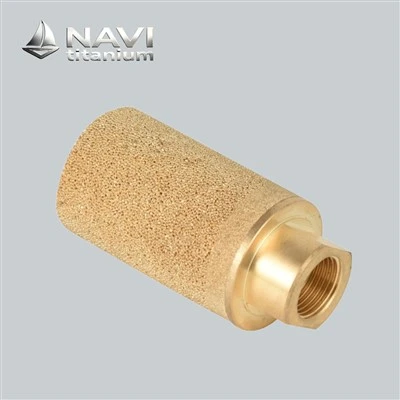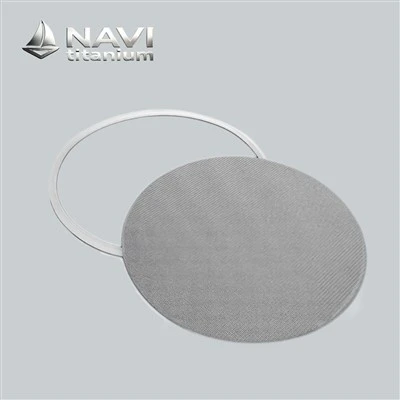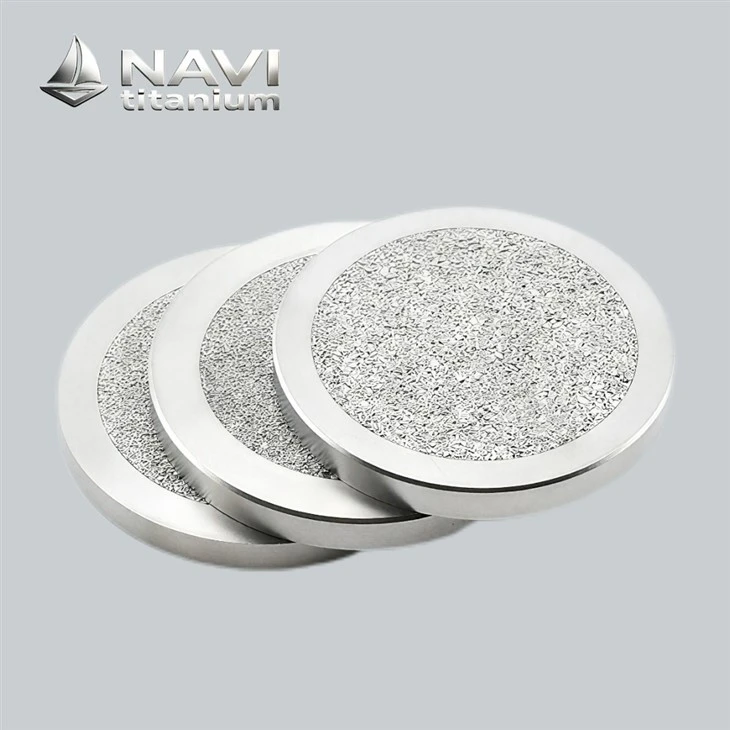
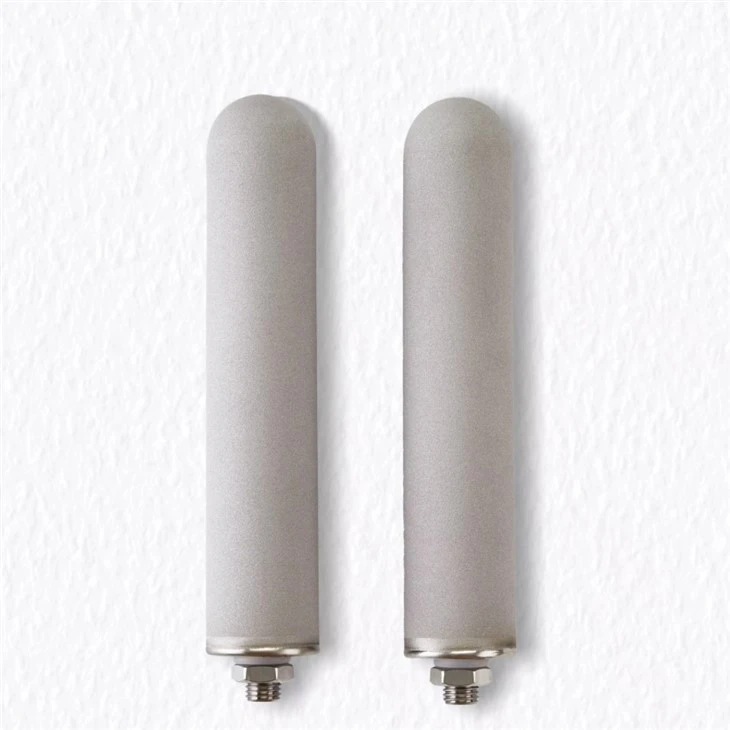
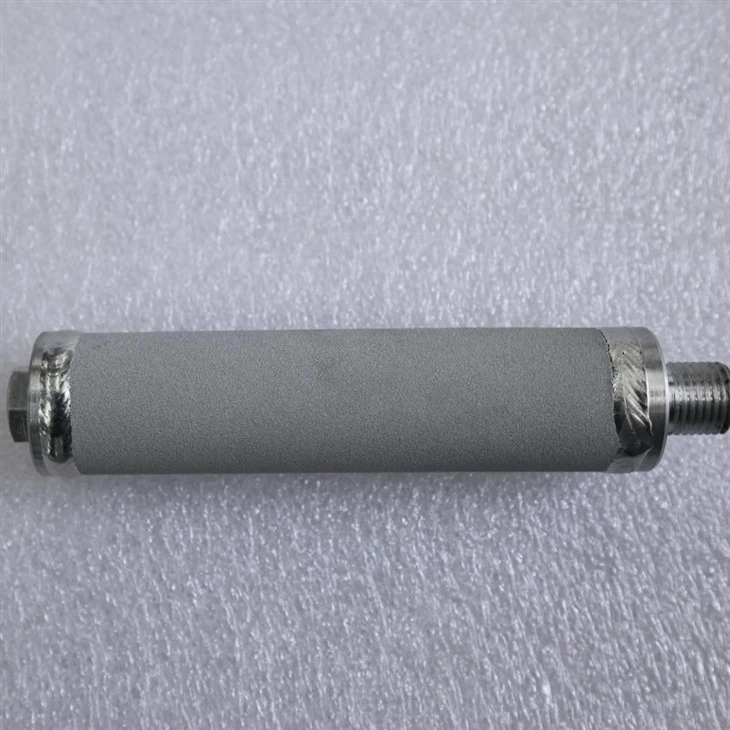
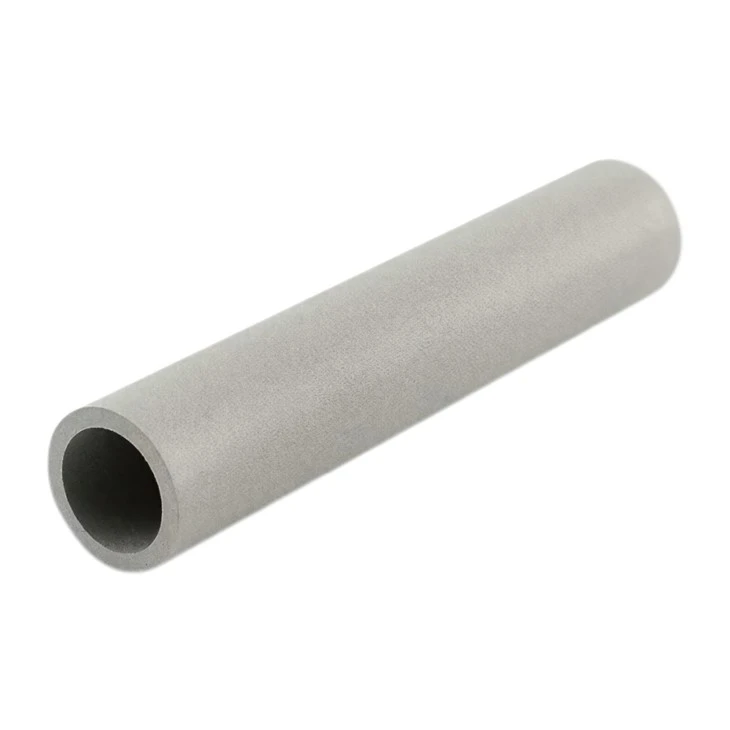
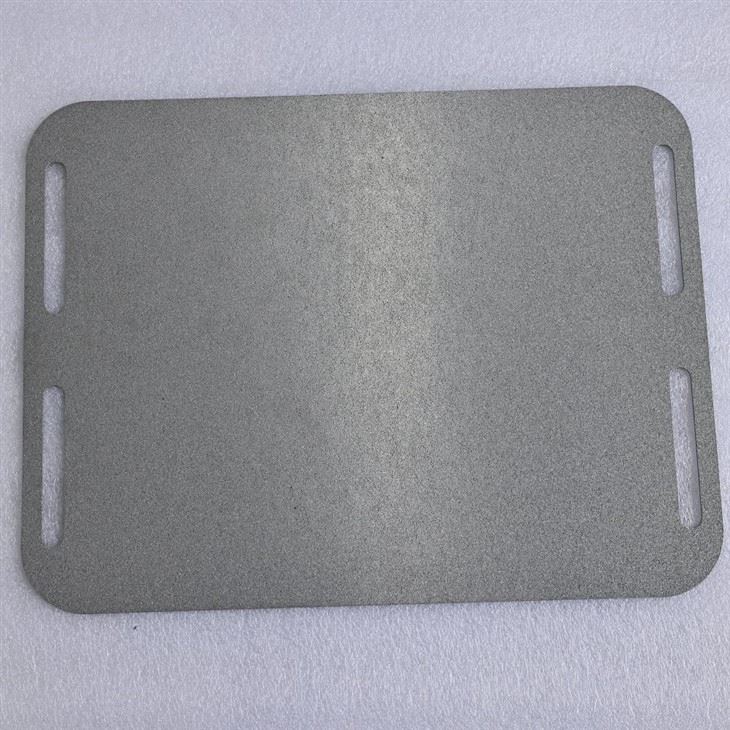
NAVI Titanium sintered porous filter, also known as a sintered metal powder porous filter, is manufactured using high-purity metal powder as the raw material. Through precision material proportioning, mold pressing, and high-temperature sintering under vacuum or inert atmosphere conditions, metallurgical bonding necks are formed between metal powder particles. Unlike conventional filter media that rely only on surface filtration, NAVI Titanium filters combine surface filtration and deep-layer gradient interception mechanisms, enabling efficient separation under various impurity concentration conditions. This filtration mechanism provides NAVI Titanium filter element with four key advantages: high flow capacity, high filtration precision, excellent contamination resistance, and easy regeneration capability. It effectively solves common industry challenges such as rapid clogging of precision filter materials and insufficient filtration accuracy of coarse filter media.
Solution of NAVI Titanium
NAVI Titanium sintered porous metal filters feature stable pore geometry, exceptional mechanical rigidity, and outstanding environmental adaptability, which cannot be achieved by conventional flexible filter media. Compared with disposable filter membranes and woven filter materials that suffer from fragile pore structures and poor regeneration capability, this filter series integrates precise particle interception, stable flow distribution, and long-term anti-fouling performance, enabling reliable operation under high-pressure, high-temperature, corrosive, and sterile environments.
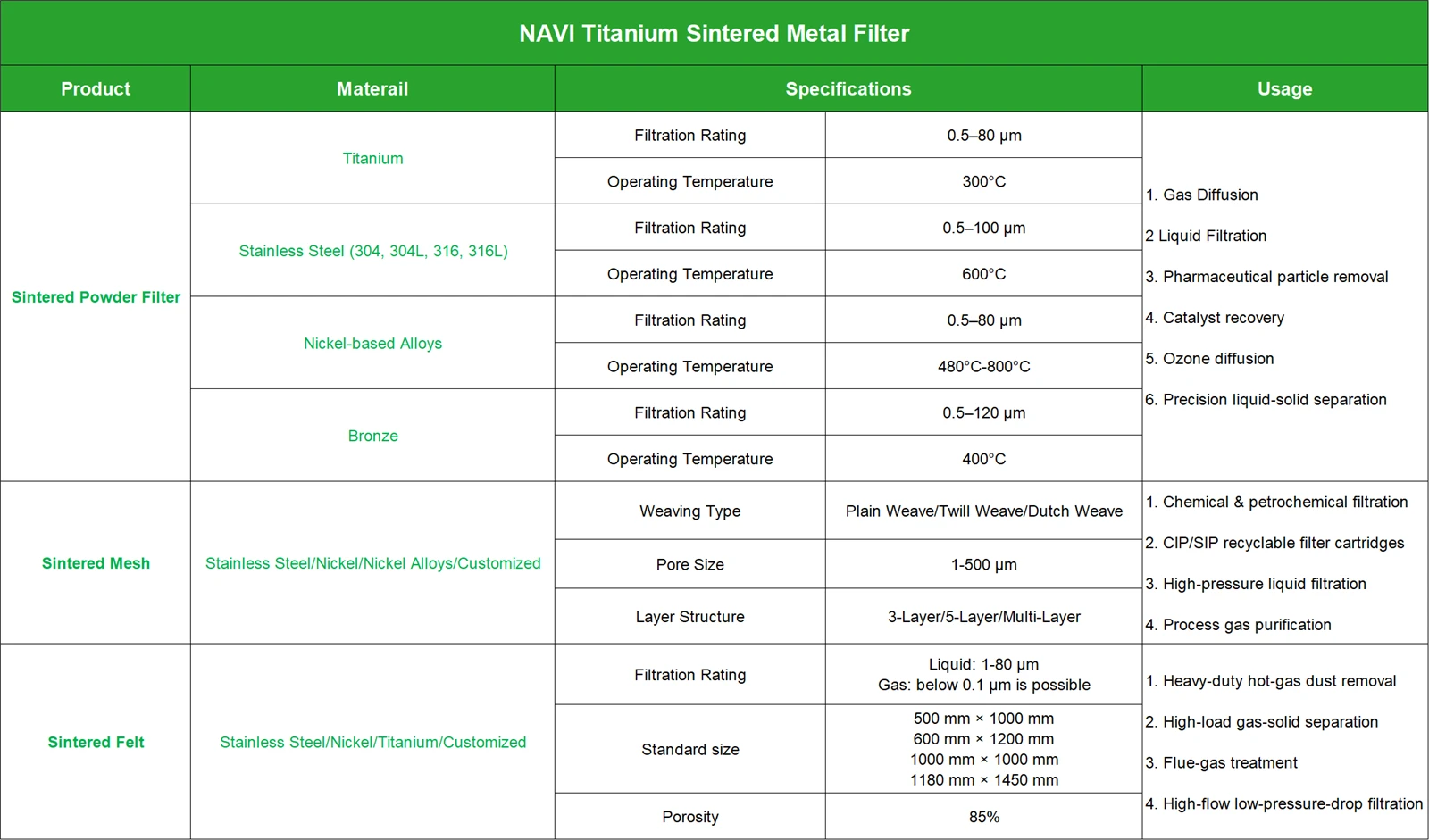

The porosity of NAV Titanium products is controllable, wth a uniform pore size distribution, offering both breathability and strength. They are free of welding and splicing, making the overall structure more reliable. Available forms include round, square and hexagonal sheets, filter tubes, filter rods, rings, cylinders, cones, as well as custom-shaped components. Thickness, diameter, and intertace stzes can a be customized acording to drawings or samples, and they can be washed and reused multiple times.


Application
During fuel cell operation, the high-flow, low-loss, and uniform delivery of hydrogen, air, and other reaction gases is essential for efficient stack power generation, stable operation, and extended service life. With advantages including high permeability, low flow resistance, and controllable porous structures, this equipment enables rapid gas transport, uniform diffusion, impurity filtration, and pressure regulation. Its stable three-dimensional pore structure makes it an ideal component for fuel cell gas systems, widely used in proton exchange membrane fuel cells (PEMFCs) and high-temperature fuel cells.
High-power fuel cells require continuous supply of large amounts of hydrogen and air. Excessive gas flow resistance increases the operating load of air compressors and gas supply systems, resulting in higher auxiliary energy consumption and reduced overall system efficiency. Manufactured through high-temperature integrated sintering technology, our filters provide precisely adjustable porosity ranging from 30% to 80%. Their pore size distribution is uniform, without blocked channels or dead zones. Compared with conventional porous plates and mesh structures, they significantly reduce gas flow resistance and minimize pressure loss. Under continuous high-flow gas supply conditions, the filter reduces kinetic energy losses during gas transportation, allowing fuel cell stacks to achieve peak power output without requiring excessive supply pressure. This helps reduce balance-of-plant energy consumption and improves overall energy utilization efficiency. Meanwhile, the stable porous structure prevents pore collapse, clogging, or deformation under long-term gas flow impact, maintaining consistent low-resistance operation and ensuring reliable fuel cell performance with reduced energy consumption.

Uniform Porous Structure Enables Gas Diffusion and Pressure Stabilization

A key requirement for fuel cell stacks is achieving uniform gas concentration and stable flow conditions across electrode surfaces. Uneven gas diffusion or local concentration differences may cause localized reaction overload, severe polarization, unstable power output, and reduced stack lifetime. Sintered porous filters feature precisely controlled pore sizes and organized pore distribution. Their pore parameters can be customized according to fuel cell specifications and power requirements, enabling effective flow regulation and homogenization of high-speed gas streams. When turbulent high-pressure gas passes through the three-dimensional porous structure, the layered pore network provides buffering, flow guidance, and pressure stabilization, transforming unstable airflow into a more uniform and stable flow state. This allows hydrogen and air to evenly reach membrane electrode assembly (MEA) reaction areas, preventing uneven gas distribution and local concentration fluctuations under high-flow operating conditions. The resulting stable gas diffusion performance improves individual cell consistency, enhances stack reliability, and maximizes electrochemical conversion efficiency.
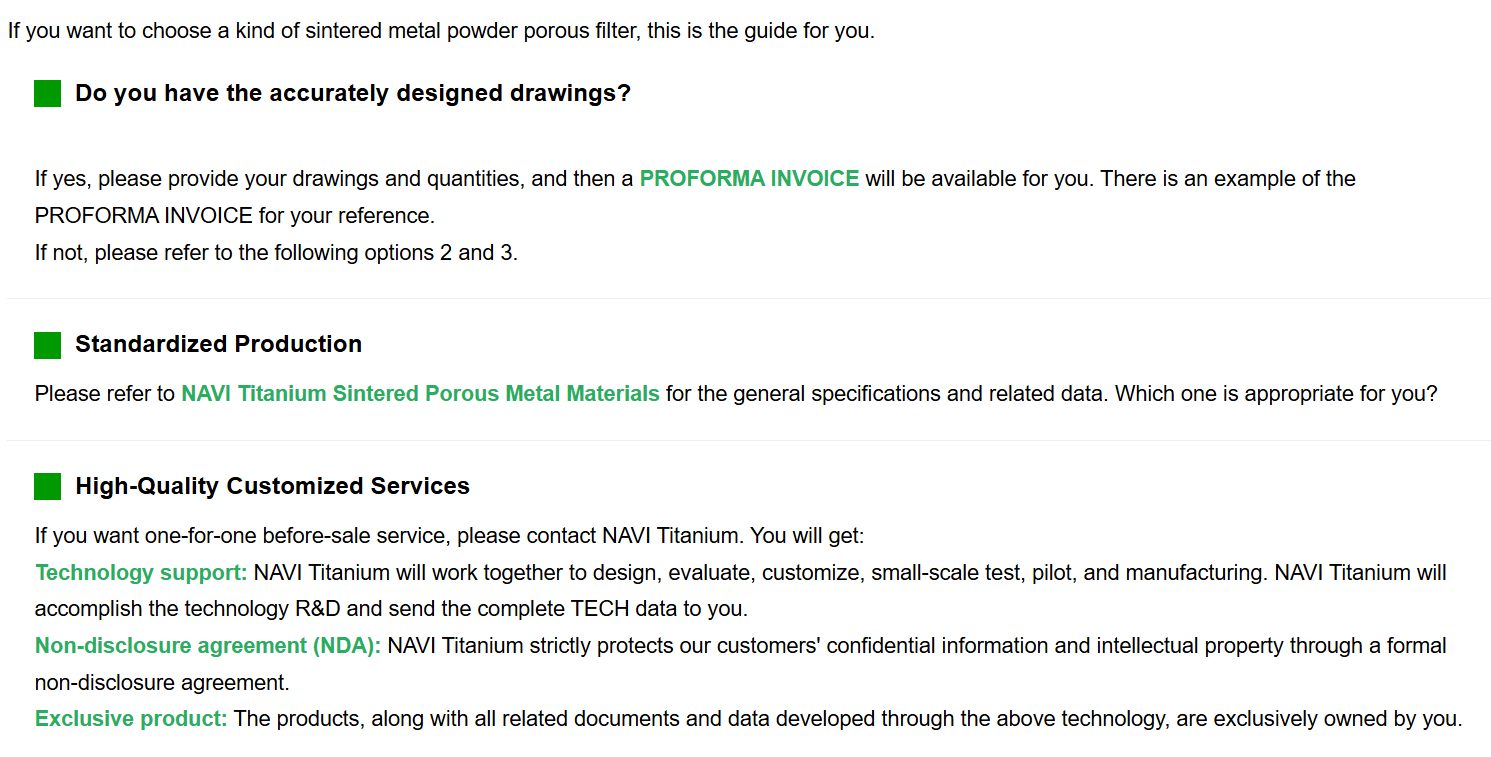
Purchasing guide
Quality control (QC)
NAVI Titanium strictly controls quality throughout the entire process, and every batch of products comes with a complete quality inspection report. From raw material composition analysis and mechanical performance testing to corrosion resistance verification, all test data is real and traceable, providing reliable quality proof for your project selection.
|
|

Manufacturing Process
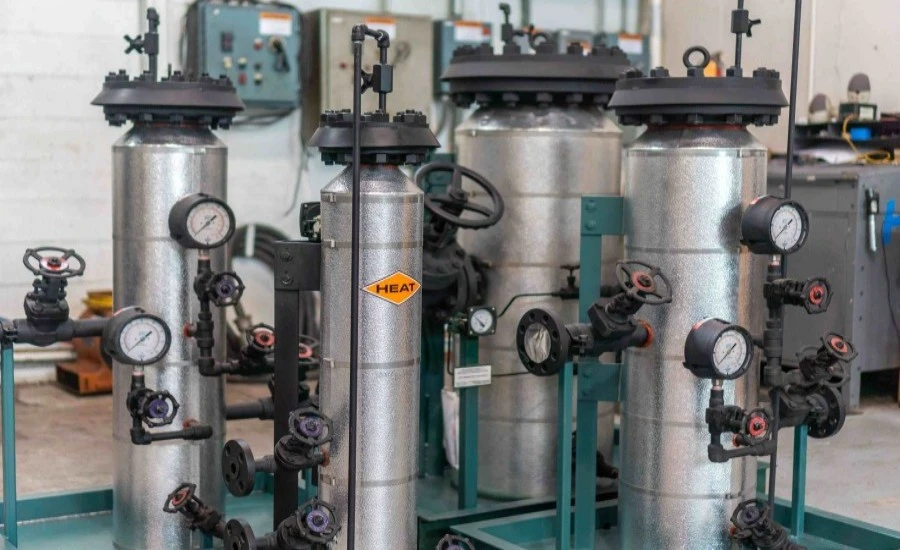
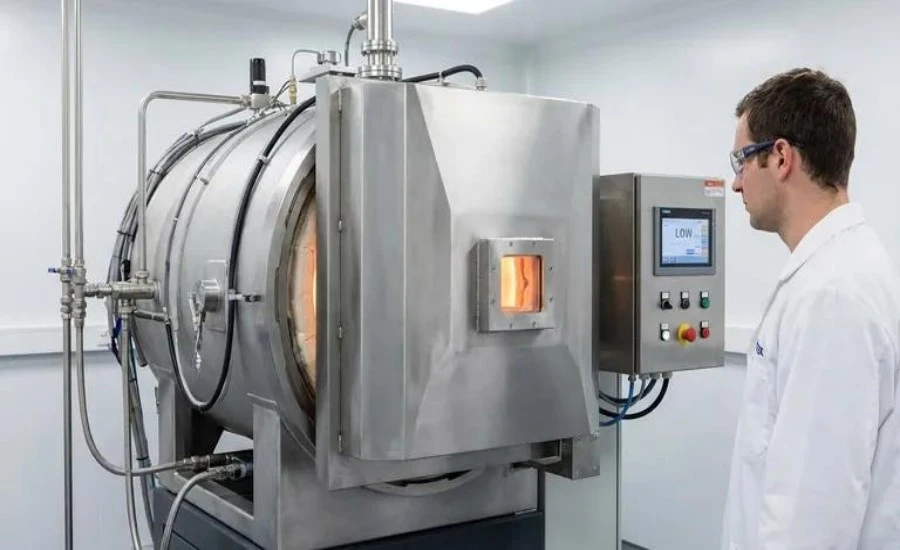
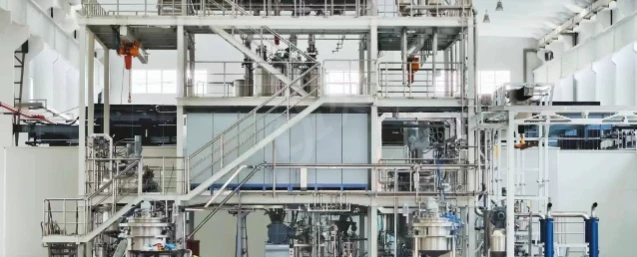
Manufacturing expertise is fundamental to consistent product quality and has been a key strength of NAVI Titanium throughout its development in the titanium industry. From raw material selection and melting to forging, precision machining, surface finishing, treatment, and final forming, each stage is carried out under defined technical requirements and controlled operating procedures. Production parameters can also be adjusted according to specific customer requirements, allowing product dimensions, structural configurations, and performance characteristics to be refined for different applications. The following article provides an overview of the principal manufacturing techniques, production stages, technical advantages, and key considerations across the product range, illustrating how titanium materials are transformed from raw materials into finished components.
 |
|
 |

Products Choice
| Material | Raw-material cost | Corrosion resistance | Temperature resistance | Forming & machining | Effect on the quotation |
| Titanium | Higher | Very high | High | Higher complexity | Grade, powder and surface treatment are scoped with the application. |
| Stainless steel | Moderate | Medium–high | Medium | Standard |
Standard processing; grade verified against the environment. |
| Nickel | High | Very high | High | Specialized | Forming and surface treatment drive the offer. |
| Nickel-based alloys | Highest | Very high | Highest | Highest complexity | Alloy grade, powder and processing dominate cost. |
Application
Fuel cell systems require extremely high gas purity. Dust particles, airborne contaminants, moisture, and trace impurities carried by hydrogen streams may enter the stack and cause irreversible damage, including membrane electrode blockage, catalyst layer corrosion, and proton exchange membrane contamination. Conventional filtration components often struggle to achieve both high flow capacity and high filtration accuracy. They either create excessive resistance that restricts gas supply or fail to effectively remove contaminants. Sintered metal porous filters utilize precisely designed gradient microporous structures to efficiently capture solid particles, suspended contaminants, and trace liquid impurities while maintaining high gas permeability. Their high-throughput design ensures unrestricted gas supply, while the integrated metal structure eliminates fiber shedding and media leakage commonly associated with traditional filter materials. By providing continuous delivery of high-purity reaction gases, these filters protect critical fuel cell components from contamination and significantly improve system stability and service life. They are suitable for intensive long-term applications including vehicle fuel cells, energy storage systems, and distributed power generation systems.

Adaptability to Dynamic Operating Conditions and Wide-Range Gas Flow Requirements
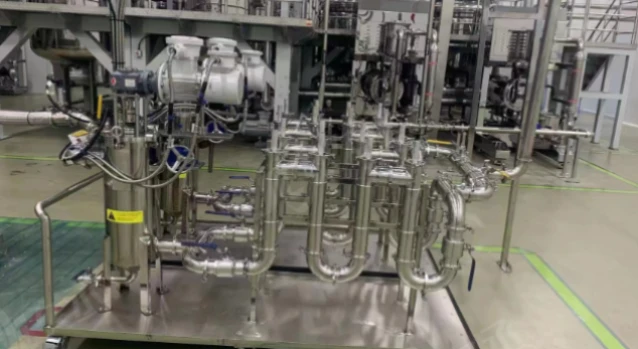
Fuel cell operating conditions are highly dynamic, including startup and shutdown cycles, rapid load changes, and peak power output scenarios. These variations require gas management components with excellent structural stability and adaptability. The porous structure of sintered filters provides outstanding operating flexibility. Their high permeability and low resistance characteristics enable stable gas delivery across idle, normal, and peak-load conditions. Under low-load operation, they provide precise pressure and flow regulation. Under high-load conditions, they maintain stable gas transportation without flow blockage or sudden pressure drops. In addition, these filters feature high mechanical strength, structural rigidity, high-temperature resistance, corrosion resistance, and excellent resistance to gas flow impact. During thermal cycling and pressure fluctuations, pore structures remain stable without performance degradation, ensuring consistent permeability and diffusion efficiency. Compared with traditional diffusion and filtration materials, the products offer superior fatigue resistance and aging resistance, making them suitable for long-term dynamic operation in fuel cell systems.
Large-Flow Gas Delivery and Diffusion Requirements for Fuel Cells
The power generation process of fuel cells is based on the electrochemical reaction between hydrogen and oxygen. The smoothness, uniformity, purity, and adaptability of gas transport and diffusion directly determine the stack's power output, energy conversion efficiency, operational stability, and service life. For high-power fuel cell applications requiring large-volume gas supply, the core requirements can be divided into two major aspects: low-resistance gas delivery with stable flow capacity under all operating conditions, and uniform gas diffusion with high-purity gas supply. Together, these performance requirements ensure efficient, safe, and long-term fuel cell operation.
High-power fuel cells require continuous supply of ultra-large volumes of hydrogen and compressed air during heavy-load operation, peak power output, and dynamic load variations to support intensive electrochemical reactions. Excessive flow resistance in gas filtration and diffusion components can result in significant pressure loss, insufficient gas flow, and reduced stack power output. Meanwhile, high resistance increases the operating load of auxiliary components such as air compressors and hydrogen circulation pumps, raising parasitic energy consumption and reducing overall power generation efficiency. In practical applications such as vehicle-mounted systems and energy storage, fuel cells operate under complex and variable conditions, including frequent start-stop cycles, rapid load fluctuations, and thermal cycling.

Compared with a NAVI Titanium sintered porous filter, traditional filter meshes and porous materials often suffer from poor pore structure stability under fluctuating airflow, leading to pore deformation, clogging, increased pressure drop, and reduced flow capacity. As a result, they cannot meet the requirements of wide-range, high-flow gas supply conditions. Therefore, key gas management components for fuel cells must provide ultra-low flow resistance and excellent structural stability. They should enable rapid, low-loss transportation of large-volume gases, reduce system energy consumption, and support peak performance output. At the same time, they must maintain stable permeability and reliable flow capacity from low-flow to ultra-high-flow conditions, even under pressure fluctuations and long-term gas flow impact.
High-speed, high-volume gas flows are prone to turbulence, flow deviation, and uneven pressure distribution. If gases enter the fuel cell stack without effective flow regulation and homogenization, uneven gas supply between individual cells, localized reaction overload, and inconsistent polarization may occur. These conditions can affect voltage consistency, power output, energy efficiency, and the service life of individual cells. NAVI Titanium provides sintered porous metal components designed for controlled gas distribution, combining a uniform pore structure with stable mechanical performance. By buffering and distributing turbulent gas streams, the porous structure supports more consistent gas concentration, velocity, and pressure across the membrane electrode reaction area. This makes the components suitable for fuel cell gas management systems where stable diffusion, controlled flow, and repeatable operating performance are important technical requirements.


Fuel cell components such as membrane electrode assemblies and catalyst layers also require a controlled and clean gas supply. Dust, solid particles, moisture, and other contaminants can interfere with internal structures and affect catalyst performance. In high-flow gas applications, filtration components must balance gas throughput with filtration efficiency, as excessive pressure drop can restrict supply capacity while insufficient retention may allow contaminants to enter the stack. NAVI Titanium develops sintered porous metal components according to required pore characteristics, dimensions, flow conditions, and connection configurations, providing a practical balance between permeability and particle retention. The porous structure supports continuous gas transportation while limiting contamination and unnecessary flow resistance, helping protect sensitive fuel cell components during extended operation. Customized specifications are available for different gas supply systems, stack configurations, and application requirements.
FAQ
01.How does NAVI Titanium ensure the quality of sintered porous filter materials?
02.How does NAVI Titanium control the consistency of pore size and filtration accuracy?
03.What quality inspections are performed on the products?
04.How does NAVI Titanium ensure consistent quality between production batches?
05.Can you provide quality documents for sintered porous filter products?
Hot Tags: sintered porous filter, China sintered porous filter manufacturers, suppliers, factory, Porous Metal Filter, Sintered Bronze Filter Element, Sintered Bronze Sheet, Sintered Metal Disc, Sintered Metal Powder, Sintered Stainless Steel Sheet