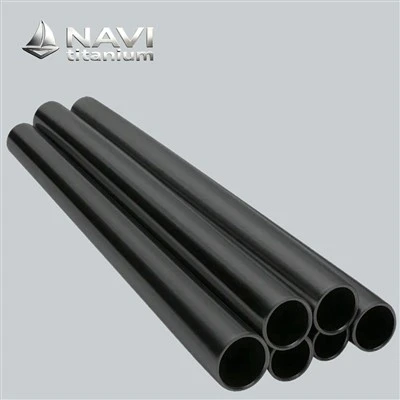


NAVI Titanium's titanium anode rod for water heater combines a titanium substrate with an MMO precious-metal oxide coating to provide continuous corrosion protection through regulated electrical current. NAVI Titanium unlike sacrificial anodes, it is not normally consumed, helping extend service intervals and lower ownership requirements. Suitable for household, commercial, and public hot-water systems, it delivers dependable protection under demanding operating conditions.

Product Introduction


NAVI Titanium has developed titanium anode solutions for water heaters, engineered to provide continuous corrosion protection in hot-water systems across residential, commercial, and industrial applications. We offer customized titanium substrates and MMO coating systems tailored to operating conditions, electrical requirements, heat levels, and vessel structure.


Application

High-Mineral Water Heating Systems
Active protection assemblies are frequently selected for heating vessels supplied by groundwater, well sources, or municipal supplies containing elevated levels of dissolved minerals. Under these conditions, mineral deposits, conductivity fluctuations, and changing solution chemistry may gradually alter the electrochemical state inside the storage tank. An externally energized protection unit continuously delivers protective power that can be regulated according to system demands instead of depending on the gradual consumption of sacrificial alloys. This approach allows the safeguarding strategy to remain effective even as fluid composition changes throughout the year. During system planning, factors such as tank volume, conductivity, operating heat, circulation rate, and local fluid chemistry are carefully assessed before determining suitable output levels and interface layouts for prolonged use.
Large-Capacity Hot Water Storage Equipment
Active protection units are also widely incorporated into large-volume storage vessels where heated fluid remains inside the tank for extended periods before use. Hotels, hospitals, apartment complexes, educational campuses, and business facilities commonly rely on centralized heating systems operating under continuously changing demand. An externally energized protection assembly provides continuous safeguarding without requiring routine replacement of consumable alloy elements, helping simplify servicing plans for systems expected to remain in continuous use. Selection normally takes into account storage volume, vessel construction, piping configuration, fluid turnover frequency, and external power arrangement to ensure compatibility with the complete heating installation.

Purchasing guide

Quality control(QC)

| Titanium Base Material Suppliers: | Coating Precursor Suppliers: |
|
|
|


Manufacturing Process

Why Powered Rod Is Becoming The Preferred Choice

Why More Homeowners Are Choosing Powered Protection
Routine servicing of conventional heated-liquid systems often includes checking and renewing sacrificial metal elements, gradually increasing ownership costs over time. An externally energized protection unit offers an active alternative by continuously supplying regulated power instead of depending on gradual alloy consumption. This method enables users to extend renewal intervals while reducing the likelihood of unexpected repair visits. As homeowners increasingly favor solutions requiring less routine attention after commissioning, externally energized technology has become an attractive option. Instead of treating the protection assembly as a consumable accessory, users benefit from a more convenient ownership experience with fewer scheduled renewals throughout the equipment's usable period.
Consistent Tank Protection During Everyday Heating Cycles
Daily usage exposes hot-fluid storage units to frequent temperature changes, varying liquid levels, and changing consumption habits. These factors create fluctuating conditions within the chamber that require ongoing corrosion control. A titanium anode rod for water heater maintains a predictable electrochemical response throughout these fluctuations rather than relying solely on gradual alloy loss. Whether hot fluid is consumed several times each day or only occasionally, the safeguarding process remains available. Regulated current helps preserve the integrity of the storage chamber while lowering the likelihood of unexpected downtime associated with conventional consumable parts.


A Compact Rod That Fits Existing Water Heaters Easily
Another advantage of this active protection solution is its compatibility with a wide variety of existing heated-fluid systems. Multiple length selections, thread formats, and cable configurations allow distributors and OEM partners to choose versions suited to different vessel volumes. In many situations, upgrading existing equipment requires only limited modification, making modernization practical for both newly built systems and refurbishment projects. Its compact overall size also simplifies packaging, transport, warehouse storage, and international logistics. Flexible fabrication capabilities enable producers to meet regional compliance requirements while serving household, institutional, and business heating systems with greater adaptability.
Technical Guide & Product Insights
How Powered Protection Works Inside A Storage Tank
A compact electronic controller serves as the command module for a titanium anode rod for water heater, delivering carefully regulated current to the conductive section positioned inside the chamber. Rather than relying on gradual alloy consumption, the controller automatically adjusts its output according to changes in fluid conductivity, temperature, and usage frequency. This responsive regulation keeps the electrochemical field balanced without frequent user intervention. Because the conductive section is not designed to dissolve during normal operation, replacement intervals may be substantially extended. The combination of intelligent current management and regulated electrochemical activity helps preserve metallic surfaces while supporting dependable operation over years of everyday service.


The regulated power field established inside the vessel balances electrical potential across immersed metal surfaces instead of depending solely on direct physical contact. As heated liquid circulates during filling, recirculation, and daily consumption, the control module continuously adjusts its output to match changing environmental conditions. Different temperature regions and circulation patterns therefore receive stable power regulation without manual intervention. This adaptive control principle reduces reliance on consumable alloys while allowing the storage vessel to remain in a more balanced electrical state. Consequently, users gain simplified ownership, extended renewal intervals, and dependable long-term functionality across a broad range of everyday usage conditions.
Choosing The Correct Rod Length
Selecting the proper dimensions involves much more than choosing the longest conductive bar available. Vessel capacity, internal layout, connection location, and circulation characteristics should all be considered before making a selection. Compact household units often require shorter models, whereas larger vessels may benefit from extended versions or multiple conductive points positioned in different locations. Proper sizing helps electrical current distribute more evenly throughout the vessel while avoiding unnecessary overspecification. Careful dimensional selection also simplifies product matching for OEM manufacturers, distributors, and replacement projects serving different categories of hot-liquid appliances.


Available working space above the vessel is another important factor during product selection. Ceiling clearance, pipe routing, inspection ports, surrounding fittings, and future accessibility all influence the maximum usable length. Choosing dimensions that correspond with the available installation space makes future replacement much easier because surrounding components rarely require removal. Early planning also reduces fitting time during production and field assembly while helping contractors avoid unnecessary modifications after delivery. For OEM customers, selecting the correct dimensions from the beginning contributes to smoother production planning, simplified inventory management, and improved compatibility across multiple product series.
Compatibility With Different Water Heater Brands
The titanium anode rod for water heater is available with a broad selection of thread patterns, connector styles, cable configurations, and controller combinations, allowing manufacturers to incorporate it into various hot-fluid appliances. Whether installed in electric units, gas-fired models, solar thermal reservoirs, or heat pump assemblies, the configuration can be adapted to various structural layouts without extensive modification. This versatility simplifies OEM engineering while making retrofit projects more convenient for distributors and importers. Multiple dimensional options also allow buyers to select formats that align with regional standards, factory specifications, and customer preferences across international markets.


Global manufacturers often follow varying mechanical standards, power interfaces, and fitting specifications according to local regulations and production practices. To accommodate these variations, suppliers provide alternative thread dimensions, cable lengths, connector formats, controller outputs, and branding options for OEM customers. Such flexibility helps distributors enter new regions without redesigning existing product lines, shortening engineering cycles and supporting faster market response. By accommodating multiple international standards through adaptable configurations, the powered corrosion-control assembly can be incorporated into a broad range of hot-fluid appliances, giving importers and brand owners greater sourcing flexibility for worldwide distribution.
Why More Manufacturers Are Replacing Magnesium Rods
Across the global hot-fluid sector, producers are placing greater emphasis on lowering long-term operating expenses rather than relying on conventional consumable parts. This shift has accelerated adoption of externally energized corrosion-control methods, which operate through regulated power output instead of gradual alloy consumption. Because the metallic working section remains intact during normal operation, maintenance planning becomes easier while unexpected service interruptions are less likely. This simplified service model also helps distributors reduce after-sales support demands while giving end users greater confidence in long-term durability. As market expectations evolve, many brands now regard externally powered corrosion control as a valuable feature that delivers benefits beyond the initial purchase.


Purchasing decisions are increasingly influenced by lifecycle value rather than the lowest acquisition price alone. Buyers often consider replacement intervals, labor expenses, spare-part inventory, warranty commitments, and long-term availability over many years of service. Integrating an externally powered corrosion-control unit enables OEM brands to offer a more favorable ownership experience by limiting routine replacement of consumable parts and lowering future maintenance expenses. This advantage is particularly valuable for projects involving hotels, healthcare facilities, educational campuses, and multi-family residential buildings, where minimizing downtime and simplifying asset administration can deliver greater financial value than focusing solely on the initial purchase price.
NAVI Titanium Packaging for Titanium Anode Rod
At NAVI Titanium, we prepare packaging for titanium anode rod for water heater around the way customers actually receive and handle them. Long formats can be separated individually rather than bundled loosely, with threaded ends and terminal areas kept away from direct contact with carton walls. Soft dividers can be positioned along the length to prevent repeated rubbing when cartons are moved between loading areas, warehouses, and delivery vehicles. For orders containing varied lengths or fitting sizes, we can arrange separate compartments and clear identification so your warehouse team can distinguish each item without measuring every piece after arrival. The goal is to simplify the first handling step while keeping unnecessary contact with the working surface to a minimum.


For customers purchasing multiple powered anode rods, carton movement is an important consideration. NAVI Titanium can arrange restrained holding points so the shafts remain separated during acceleration, braking, and repeated handling. Loose filler is avoided around threaded ends because small particles may enter the threads and make later installation preparation less convenient. Where longer formats require additional support, the packing can include several contact points rather than relying only on the two ends. Varied lengths can also be marked by item code, batch reference, or quantity, depending on the customer's receiving procedure. This is particularly useful for distributors and service teams handling several heater models, because shipments can be sorted quickly without opening every individual package.
For customers keeping powered anode rods before installation or resale, NAVI Titanium can keep the packing practical for later removal and repacking. Individual separators can remain in place so unused items are not left rubbing against one another after the carton has been opened. The package should be kept in a dry, clean location away from loose metal parts, chemical containers, excessive dust, and areas where long shafts could be stepped on or bent accidentally. If your team needs to move part of the shipment to another warehouse or installation area, retaining the original compartments makes secondary handling easier. Labels can remain visible after partial unpacking, helping your staff identify remaining quantities and specifications without repeatedly opening the entire carton.

FAQ
How do I choose the right powered anode for my water heater?
+
-
The correct model depends on the heater volume, tank dimensions, installation position, power parameters, fluid conditions, and mounting method. The length and diameter should correspond to the available space rather than being selected by size alone.
How long can a powered anode for a water heater last?
+
-
The usable period varies with fluid conditions, operating temperature, power parameters, current setting, and frequency of use. Unlike conventional sacrificial anodes, this type operates through an external power source and is not consumed in the same manner. The actual service period should therefore be assessed according to specific working conditions and routine status checks rather than assigned a fixed number of years.
How often should a powered anode rod be checked?
+
-
A periodic check is advisable, particularly during the initial operating period after installation. Inspect the power interface, cable condition, mounting point, shaft position, and any visible deposits or damage. The inspection interval may be shortened where the heater operates at elevated temperatures or where the incoming liquid contains considerable mineral content.
Can NAVI Titanium customize the powered anode rod?
+
-
Yes. We offer customized specifications, shaft length, diameter, mounting interface, terminal arrangement, and other mechanical details according to customer specifications. Customized orders are particularly useful when the original heater uses a non-standard mounting position or when available installation space is limited.
Is a powered anode rod suitable for various countries and fluid conditions?
+
-
There is no single specification that suits every market. For customers in the United States, Brazil, Europe, Southeast Asia, and other regions, we can evaluate operating conditions and tailor the configuration accordingly.
Hot Tags: titanium anode rod for water heater, China titanium anode rod for water heater manufacturers, suppliers, factory, MMO Coated Titanium Anodes, MMO Mesh, MMO Titanium, Powered Titanium Anode Rod, Titanium Anode Basket, Titanium Anode for Water Heater