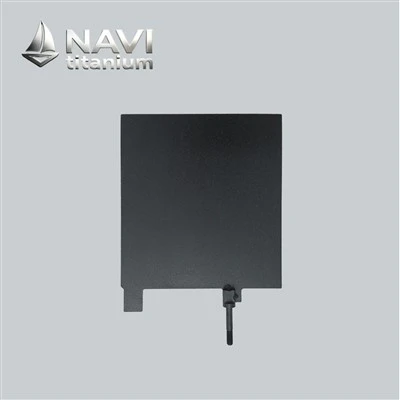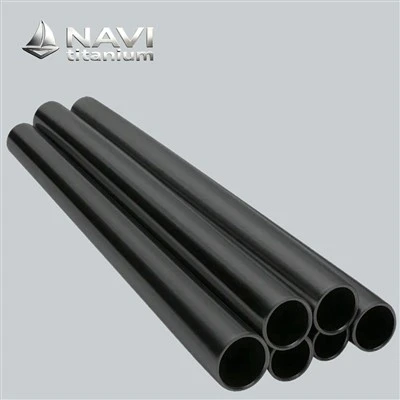


Insoluble anodes from NAVI Titanium are built on high-purity titanium substrates with specialized oxide coatings for continuous electrochemical applications. NAVI Titanium supports prototype, small-batch, and volume orders with experienced technical and sales teams. We provide one-on-one assistance with material selection, operating-condition evaluation, maintenance, troubleshooting, service-life assessment, and replacement planning, helping customers manage anodes from initial specification through long-term operation and replacement.
Solution of NAVI Titanium
Soluble anodes dissolve by design, and that design costs money: the gap to the cathode widens, bath metal drifts, sludge accumulates, and someone tops the basket up again. An anode from NAVI Titanium behaves the opposite way. Geometry stays put, so the gap set at commissioning is the gap you keep running, and deposit thickness stays where quality signed it off. Only the oxide film on the titanium wears, and it wears slowly enough to be planned for instead of discovered mid-shift. Sizes held in stock are set out in the NAVI Titanium Advanced MMO Tiatnium Anode table below.


NAVI Titanium provides customized DSA anodes engineered for different electrolytic environments and reaction requirements. We offer coated titanium solutions in plates, mesh, tubes, and complex geometries, with coating systems tailored to specific electrolytes and operating conditions.


Application
The performance of the insoluble anode in NAVI Titaniumis primarily governed by the boundary-zone transformation it is engineered to control. Different industrial applications require distinct anodic pathways, each demanding specific electrocatalytic characteristics to achieve precise selectivity, controlled electron-transfer routes, and sustained charge-transfer-driven electrochemical conversion. Selecting the appropriate catalytic formulation depends on the target transformation, solution composition, applied electrical load, and service conditions rather than relying on a single universal catalyst.
Electrolyte Composition: Chloride-containing solutions, including sodium chloride and seawater.
Use cases:
- Chlor-alkali production
- Sodium hypochlorite generation
- Swimming pool disinfection
- Seawater electrolysis
- Water treatment
Ruthenium-based MMO formulations are widely applied because they direct chloride conversion toward the chlorine evolution pathway while suppressing competing oxygen generation, leading to higher chlorine output selectivity and lower parasitic energy consumption under chloride-rich service conditions.


Electrolyte Composition: Acidic, neutral, or alkaline aqueous electrolytes with low chloride concentration.
Use cases:
- Water electrolysis
- Metal electrowinning
- Electroplating
- Oxygen generation systems
Oxygen evolution catalysts are selected according to solution composition and manufacturing objectives. As a professional titanium electrode supplier, NAVI Titanium provides optimized oxygen evolution solutions for applications requiring stable long-term service.
Electrolyte Composition: Acidic, alkaline, or neutral aqueous electrolytes containing hydrogen ions or water molecules.
Use cases:
- PEM
- Chlor-alkali electrolysis
- Power-to-Hydrogen (P2H)
- Green hydrogen generation
Hydrogen evolution catalysts are widely applied because they promote proton conversion through optimized electron-transfer routes and facilitate hydrogen generation with reduced kinetic barriers.

Purchasing guide

Quality control(QC)
An anode has one job: hold its surface while the tank works against it. Every unit we ship leaves an ISO 9001 line with a lot code tying together the mill certificate, coating weight, bond strength and hours logged on the life rig. Take the claim from paperwork, not the brochure: press the button below to open our COA.
| Certificate of Analysis | ||
| Titanium Base Material Suppliers: | Coating Precursor Suppliers: | COA of product: |
|
|
|
|


Manufacturing Process
An anode is bought so it stops disappearing. Nothing in the substrate is consumed, so manufacturing risk collects in a single place: the boundary where electrolyte could reach bare titanium. Walk the line in the order below and each stop exists to close that boundar.
Stop 1 · Incoming Titanium and Mill Certificates
Plate, mesh, tube and rod arrive with a mill certificate held against the lot; Gr1 is default, Gr2 where the drawing asks for stiffness. Every bend, expansion and fit-up happens here. Once oxide has been fired, forming is off the table - the film is brittle, and a hairline at a bend becomes an entry point for electrolyte.
Stop 2 · Joints Without Crevices
Frames, lugs and hangers are welded under argon shielding and back-purged so the root never discolours, then dressed flush. A crevice traps electrolyte and attacks the titanium from underneath the film. Straw or blue tint on a joint is rejected here rather than noted as cosmetic - that colour means oxygen has already reached hot metal.

Stop 3 · Etching Against a Hydrogen Budget
Blanks are degreased, then etched in hot oxalic acid until the surface is matte and keyed. Etch duration is logged and capped: titanium absorbs hydrogen in acid, and an over-etched part carries that hydrogen into service, where it surfaces as embrittlement months later. Etched blanks are coated within the same shift, never left overnight.
Stop 4 · Barrier Layer Before the Active Film
Before any active oxide goes on, a thin intermediate layer is fired onto the prepared surface. Its job is unglamorous and decisive: it slows oxygen migration down to the titanium and keeps the interface from converting into insulating oxide, which is the mechanism behind most reports of a film that simply lifted off.

Stop 5 · Furnace Cycles and Crack Pattern
Active oxide is applied in many thin passes, each decomposed at temperature before the next. A fired film always carries a fine crack network - that is normal, it is how the layer sheds stress and gains area. What gets rejected is a continuous crack running through to the substrate; those units are scrapped, never patched over.
Stop 6 · The Three Numbers We Record
Every lot is logged against three figures: coating weight in grams per square metre, bond strength after thermal shock, and hours survived on the life rig at raised current. A defined number of units per batch is sacrificed to the life test so the remainder ships with a result behind them rather than an assumption.

Release · Marking, Packing and a Baseline to Watch
Each part is stamped with its lot code and packed with a card giving the cell voltage measured at test. That gives operators a reference: once running voltage drifts well above the baseline, the film is approaching the end of its campaign and replacement can be scheduled. Crates are photographed before dispatch.
Use in PCB Process Solutions
NAVI Titanium insoluble anode technology significantly enhances PCB copper plating by separating copper replenishment from anodic conversion. This establishes controlled boundary-zone conditions, balanced electrical distribution, and precise solution management, reducing process variation and maintenance requirements. The improved consistency benefits complex PCB structures, supporting higher yields and reliability. As PCB designs advance toward finer lines and HDI architectures, its platforms provide the stability and precision needed for advanced fabrication. Combined with automated replenishment and intelligent control, they enable efficient, repeatable manufacturing for next-generation electronics development.
Traditional acid copper plating relies on soluble copper electrodes that gradually dissolve during electrochemical treatment to replenish copper ions. Although this directly supplies metal ions, it also induces gradual changes in electrode geometry, spacing between conductive components, and local electrical distribution as plating advances. These variations modify the boundary-zone environment inside the plating cell, making it more difficult to maintain consistent service conditions over extended manufacturing cycles. In contrast, NAVI Titanium insoluble electrode separates the electron-removal pathway from copper replenishment, allowing copper concentration to be controlled independently through dedicated replenishment units. As a result, solution chemistry, electrode-to-cathode spacing, and electrical distribution become more uniformly regulated, providing a predictable boundary-zone environment.

2.Current Distribution & Throwing Power

Copper thickness uniformity is largely governed by how electrical flow is distributed across the PCB surface. Because soluble electrodes gradually lose material during service, the electric field gradually shifts, often resulting in non-uniform electrical density and variations in deposited copper thickness. By maintaining a consistent anodic transformation zone throughout manufacturing, the electrode platforms establish a controlled electric field distribution within the plating cell. More uniform electrical distribution supports better throwing capability, allowing copper ions to deposit more evenly on complex geometries such as microvias, through holes, and high-density interconnect structures. The referenced manufacturing data demonstrated significant reductions in plating thickness variation, contributing to greater dimensional consistency and higher fabrication yields for advanced PCB technologies.
Separating copper replenishment from the anodic oxidation process fundamentally changes bath chemistry management. Instead of relying on continuous anode dissolution, copper concentration is regulated through controlled replenishment equipment, enabling more precise adjustment of electrolyte composition. This approach limits contamination associated with dissolving anodes while lowering fluctuations in copper sulfate concentration. NAVI Titanium insoluble anode systems can suppress oxidation of critical organic additives, including brighteners, levelers, and carriers, helping maintain additive balance during continuous production. Similar electrolyte management strategies are widely adopted in MMO coated titanium anodes developed for precision plating processes.

4.Process Simplification & Yield Improvement

Replacing soluble copper electrodes eliminates several routine adjustments traditionally required in PCB plating lines. Since the anodic assembly no longer relies on ongoing metal dissolution, activities such as balancing electrodes, replacing consumed components, removing copper sludge, and performing dummy plating are significantly minimized or no longer required. The resulting boundary-zone transformation pathway exhibits greater manufacturing consistency and becomes easier to standardize across multiple fabrication lines. According to the documented manufacturing results, lower variation in plated copper thickness also decreases plating-related defects and strengthens capability for producing increasingly complex circuit boards. NAVI Titanium more consistent service conditions support higher manufacturing throughput while lowering operator intervention and maintenance requirements.
Modern PCB manufacturing increasingly relies on automated vertical plating systems operating under tightly controlled service parameters. Boundary-zone transformation conditions maintained under regulated working regimes are essential for ensuring consistent product quality throughout extended fabrication cycles. NAVI Titanium supports this objective by strengthening manufacturing repeatability, minimizing copper thickness variation, and optimizing copper utilization behavior.
Manufacturing data further indicate more uniform plating results, lower defect rates, and stronger capability for advanced PCB fabrication, including high-density interconnect (HDI) and fine-line circuit development. These manufacturing advantages explain why MMO titanium electrode products are increasingly adopted in advanced PCB fabrication facilities.

Packaging & Shipment Considerations
Packing According to Shape and Quantity

Packaging for insoluble anodes is not necessarily identical for every shipment. Flat pieces, strips, mesh forms, and irregular parts can require different internal supports to prevent movement inside the outer case. Separating sheets or soft spacers may be placed between individual pieces when direct contact could cause marks or unwanted pressure during transit. For longer parts, support points can be positioned along the package rather than relying only on the ends. Small quantities may be placed in divided compartments, making each item easier to identify after opening. Larger consignments can use reinforced cases with internal blocking to limit shifting during lifting and road transportation. The packing method can therefore be selected according to dimensions, quantity, weight, and the expected handling route.
Long-distance shipment introduces a less obvious packaging concern: condensation. Anodes may pass through ports, warehouses, trucks, and containers where temperature and humidity change considerably. A closed package can therefore experience moisture accumulation even when the cargo was dry before dispatch. Depending on the transportation route, packaging may include moisture-resistant wrapping, desiccant, and internal separation from wooden or cardboard materials. The quantity of desiccant can be considered according to package volume and expected transit duration. For cargo arriving after a major temperature difference, gradual acclimatization before opening may also be useful. These precautions are particularly relevant for sea freight, where cargo can remain enclosed for an extended period before reaching the receiving warehouse.

Identification Inside Export Packages

Package identification is another practical detail that can be overlooked when preparing anodes for shipment. External markings can include the purchase order reference, item number, quantity, package sequence, net weight, gross weight, and destination information. For shipments containing several sizes or shapes, an internal packing sheet can help warehouse personnel match each item with the corresponding order line after the outer case is opened. Individual labels can also be useful when products are separated into multiple compartments. Matching package markings with the commercial invoice and packing list reduces the time needed to locate a particular item during receiving. This becomes especially useful when several cases arrive together and the warehouse team needs to distribute different pieces to different production or maintenance areas.
Insoluble Anodes vs. Soluble Anodes
To help you select the most suitable anode for your electrochemical system, the table below compares insoluble anodes and soluble anodes from multiple dimensions, including working principle, reaction stability, current distribution, energy efficiency and total cost of ownership, for your reference.
|
Comparison Item |
Insoluble Anodes | Soluble Anodes |
|---|---|---|
| Electrochemical Principle | Acts as the oxidation interface; metal ions are replenished independently. | Functions as both the oxidation interface and the metal source. |
| Reaction Stability | Maintains stable electrochemical conditions for consistent operation. | Continuous dissolution causes gradual process variation. |
| Current Distribution | Delivers a stable electric field and uniform current distribution. | Current distribution changes as the anode dissolves. |
| Electrolyte Control | Metal ion concentration is controlled independently of the anode. | Electrolyte chemistry depends on anode dissolution. |
| Energy Efficiency | Lower polarization supports reduced cell voltage and energy consumption. | Higher polarization may increase operating energy demand. |
| Process Continuity | Eliminates interruptions caused by anode consumption. | Periodic anode replacement interrupts production. |
| Total Cost of Ownership | Higher initial cost, but lower long-term operating costs. | Lower initial cost, but higher lifecycle operating costs. |
| Typical Applications | Ideal for continuous, high-precision electrochemical processes. | Suitable for processes requiring continuous metal dissolution. |
FAQ
1. How long can an insoluble anode last in continuous operation?
+
-
There is no fixed service period that applies to every installation. The usable lifetime is affected by factors such as workload, solution composition, temperature, operating frequency, and the way the electrode is handled. For this reason, expected lifetime should be evaluated against the customer's actual working environment rather than based on a standard number of hours. Providing previous operating data can help the manufacturer estimate a more realistic replacement interval.
2. How should an insoluble anode be cleaned and maintained?
+
-
Routine care usually involves checking the working surface, electrical connections, and surrounding components for deposits, physical damage, or unusual changes. If material accumulates on the surface, the cleaning method should be selected according to its composition and the specific process. Harsh mechanical treatment or unsuitable chemicals may damage the active surface, so cleaning procedures should be confirmed before use. Keeping basic maintenance records can also help identify gradual changes over time.
3. Can I replace my existing insoluble anode with a new one from another supplier?
+
-
In many cases, a replacement can be produced to match an existing installation, but physical dimensions alone are not enough. The supplier may need information such as the electrode drawing, mounting method, connection position, working area, power requirements, and solution characteristics. Sharing photos or samples of the existing part can also help confirm compatibility before production and reduce the risk of installation problems after delivery.
4. What should I do if the insoluble anode shows abnormal performance during use?
+
-
First, check whether there have been recent changes to the power supply, solution, temperature, operating schedule, or electrode positioning. Loose connections, surface deposits, physical damage, and changes elsewhere in the equipment should also be inspected. If the problem remains, recording the operating voltage, current, working time, and visible condition of the electrode can give the manufacturer useful information for diagnosis. Early troubleshooting may prevent unnecessary replacement of an otherwise usable electrode.
5. How can I verify the quality of an insoluble anode before installation?
+
-
Customers can request inspection information covering dimensions, substrate material, surface condition, connection details, and relevant production or testing records. Depending on the application, additional checks may include coating adhesion, surface loading, dimensional tolerances, or electrical continuity. For customized orders, it is also useful to confirm the drawing, material requirements, inspection criteria, and acceptance standards before production so that the delivered part can be checked against clearly defined requirements.
Hot Tags: insoluble anode, China insoluble anode manufacturers, suppliers, factory, DSA Coating Titanium Anode, Oxygen Evolution Anode, Platinum Coated Titanium Anode, Titanium Anode for Water Heater, Titanium Anode Manufacturer, Titanium Anode Mesh Basket