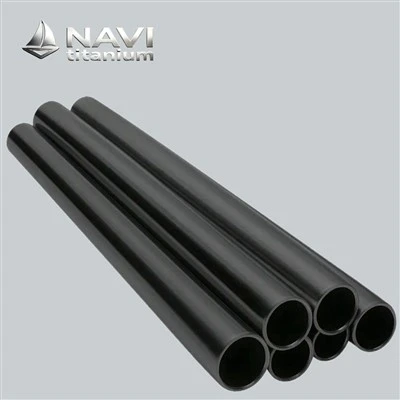


Powered titanium anode rod is made of industrial pure titanium as the substrate, and the surface is sintered with mixed metal oxide catalytic coatings of different systems. It relies on an external power source to achieve stable electrochemical reactions. With its core advantages such as low tank pressure, high current efficiency, strong corrosion resistance, and long service life, it is becoming the core hardware in the fields of municipal upgrading and industrial wastewater deep treatment. The processing technology of NAVI Titanium is driving the entire industry to transition from traditional high energy consumption and high maintenance processing modes to new modes of high efficiency, low carbon, and low secondary pollution. Please send me your requirements for the Living Design Proposal.
Solution of NAVI Titanium
MMO coated tanium anodes are core electrocatalytic componens ued across various industries. They are widely applied in a vanety of fields. The table below summarizes the different fields of application for various coating.


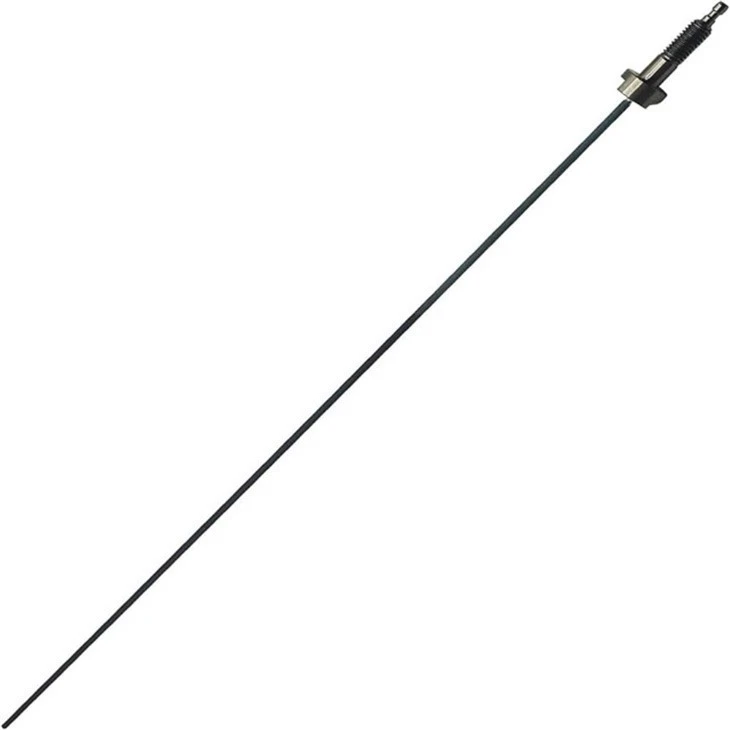
NAVI Titanium presents a close view of a sacrificial rod intended for heated vessel protection. Its slender cylindrical profile permits convenient placement within confined tank interiors, while the threaded end facilitates attachment to the heating assembly. The visible surface finish reflects controlled material preparation for prolonged immersion.


Application
The core function of powered titanium anode rod in sewerage is to serve as an inert conductive substrate and electrocatalytic center, generating strong oxidants (such as hydroxyl radicals and active chlorine) through electrolysis to directly mineralize organic matter, kill pathogenic microorganisms, and assist in the removal of heavy metals and suspended solids by electrocoagulation.

Core functional mechanism
Electrochemical oxidation degradation of COD: Surface coated mixed metal oxides (MMO, such as IrO₂-Ta₂O₅ or RuO₂-IrO₂) have high oxygen evolution overpotential, catalyzing water molecules to generate hydroxyl radicals (·OH) or directly transferring electrons, completely oxidizing recalcitrant organic compounds into CO₂ and H₂O.
In situ sterilization and sterilization: When electrolyzing chlorine containing water bodies, active chlorine (Cl₂/HClO/OCl ⁻) is released, which efficiently inactivates bacteria, viruses, and algae without the need for external chemical agents, avoiding secondary pollution.
Electrocoagulation collaborative purification: Combined with soluble anodes or specific potential control, it promotes the dissolution of metal ions to form flocculation groups, adsorbs and removes heavy metal ions, colloids, and color substances.
Key application scenarios
Advanced treatment of sewerage: For high COD and difficult to degrade organic sewerage from chemical, pharmaceutical, printing and dyeing industries, end of pipe control or biochemical effluent upgrading is carried out.
On site chlorine sterilization: used for swimming pools, hospital sewage, and circulating cooling water economy, electrolyzing salt water to instantly generate sodium hypochlorite, replacing hazardous chemical storage and transportation.
High salt/special water quality treatment: suitable for pre-treatment of landfill leachate, oilfield reinjection water, and seawater desalination, resistant to high chloride ion erosion and efficient removal of ammonia nitrogen.
Domestic water and emergency purification: rapid sterilization and water quality stabilization treatment in high-rise water tanks and emergency water supply scenarios.

Purchasing guide

Quality control(QC)
NAVI Titanium's manufacturing facilities hold ISO 9001 certification. Every batch of raw materials undergoes 100% inspection to guarantee full compliance; no unauthorized materials are accepted.
| Certificate of Analysis | ||
| Titanium Base Material Suppliers: | Coating Precursor Suppliers: | COA of product: |
|
|
|
|


Manufacturing Process
Curious about what makes a high-performance coated titanium anode? Explore the complete 7-stage production workflow right now.
|
|
|
|


Please click here to learn more
Application
In the technological iteration process of municipal and industrial sewerage industries, the long-standing pain points of classical graphite anodes and lead based anodes, such as short lifespan, high energy consumption, and easy precipitation of heavy metals to pollute water bodies, have always been the core bottleneck restricting the large-scale implementation of electrochmical processes.

In the upgrading and deep procedure scenrios of municipal sewerage, the original processes of the vast majority of municipal sewage process plants in China are mainly based on "biochemistry+sedimentation+filtration". With the continuous upgrading of domestic water enviroment discharge standards, many water plants are facing the pressure of upgrading their effluent from Class A standard to Class IV or even higher standards. Tradition procedurees are difficult to further reduce low concentration and difficult to degrade COD and total nitrogen without increasing the area occupied. The electrochmical deep process economy built with charged powered titanium anode rod perfectly meets the upgrading needs of municipal water plants.
In such scenrios, the substance commonly uses a ruthenium iridium tin ternary composite coating, which is suitable for the water quality characteristics of moderate salt content in municipal effluent. Through electrocatalytic oxidation, trace recalcitrant organic compounds that cannot be degraded by biochemical units, such as enviromental endocrine disruptors and trace drug residues, are directly oxidized and decomposed, while assisting in decline the total nitrogen concentration of the effluent.
A municipal sewage process plant with a processing capacity of 150000 tons per day in China has added an electrochmical deep sequence unit with charged titanium rods as the core in the upgrading and renovation project. Without adding more than 100 square meters of land, the effluent COD has been steadily reduced from 50mg/L to below 30mg/L, the total nitrogen concentration has been synchronously reduced by 15%, and the effluent quality has reached the Class IV standard. The charged it in this economy is designed to have a lifecycle of over 8 years under continuous operation conditions, far exceeding the lifecycle of tradition graphite anodes by 3-5 years. The energy consumption per ton of water in the entire economy is controlled within 0.2 kWh, fully meeting the low-cost requirements for large-scale continuous operation of municipal water plants. At the same time, in the sterilization sequence of municipal sewage, the in-situ sodium hypochlorite generation economy built with charged rods is rapidly replacing the classical liquid chlorine sterilization sequence.


It produces sodium hypochlorite disinfectant by electrolyzing dilute salt water on site, completely avoiding the safety risks of liquid chlorine leakage during transportation and storage. The sterilization sequence does not produce carcinogenic by-products such as trihalomethanes, and the microbial safety of the effluent is greatly improved. Currently, more than a hundred municipal water plants in China have completed the transformation of such electrolytic sterilization economy, and the charged it is the core operating component of this economy.
In the sewerage and deep procedure scenrios of high difficulty industrial organic effluent, the effluent genrated by industries such as printing and dyeing, pharmaceuticals, and chemical engineering contains a large number of structurally complex and difficult to degrade organic pollutants with extremely poor biodegradability. Directly entering the biochemical economy can easily lead to microbial poisoning and collapse.
The tradition Fenton oxidation sequence produces a large amount of iron sludge hazardous squander, with complex operation and maintenance processes and high risk of secondary pollution. The electrochmical oxidation economy built with a charged powered titanium anode rod can be driven by an external power source to generte highly oxidizing hydroxyl radicals on the anode surface, directly breaking down the molecular chains of recalcitrant organic compounds and decomposing large molecule benzene rings and heterocyclic pollutants into small molecule easily biodegradable substaces, greatly improving the biodegradability of effluent. A large pesticide production enterprise in Shandong Province discharges effluent containing a large amount of highly toxic organic phosphorus pollutants. The COD concentration of the raw water exceeds 12000mg/L, and the B/C ratio is less than 0.1, making it impossible to directly enter the biochemical economy. The enterprise adopts an electrochmical pre-procedure economy with it as the core. After 2 hours of electrolytic sequence, the COD removal rate of the effluent reaches over 40%, and the B/C ratio is increased to 0.35, smoothly entering the subsequent biochemical economy.


The entire economy does not add any chemical agents and hardly genertes additional hazardous squander. The charged tproduct has been continuously and stably operated for more than 5 years under extreme conditions of high pollution and high salt, without coating peeling, erosion and perforation problems. Compared with the tradition Fenton sequence, the annual operating cost has been reduced by 40%. In the advanced procedure of this type of effluent, the effluent treated by the biochemical economy still contains some recalcitrant chromaticity substaces and trace amounts of COD. The electro oxidation effect of the charged rod can further decompose them, ensuring stable and compliant effluent. Many effluent deep sequence stations in chemical industrial parks have made the electrochmical sequence of charged rod the core unit, becoming a key defense line to ensure stable and compliant discharge of effluent in the park.
In the collaborative sequence scenario of industrial circulating water and reclaimed water reuse, many steel and chemical enterprises' industrial circulating water economy have long faced problems of bacterial and algal growth and pipelins scaling.
The tradition mode of adding fungicides and scale inhibitors not only has high operating costs, but also leads to the discharge of circulating water containing a large amount of chemical agents, increasing the burden of subsequet sanitary engineering. By electrolyzing circulating water, trace amounts of sodium hypochlorite and hydroxyl radicals can be generted in situ, achieving continuous sterilization and algae removal without the need for additional chemical agents, while inhibiting the formation of calcium carbonate scale. A domestic steel enterprise with an annual output of tens of millions of tons has installed an electrolytic sanitary engineering device with charged it as the core in all circulating cooling water economy. The control rate of bacteria and algae in circulating water has reached over 99%, the scaling rate of pipelins has been reduced by 80%, the concentration factor of circulating water has been increased from 2.5 to 5, and the annual consumption of new water has been reduced by more than 2 million tons, significantly decline the water cost of the enterprise.


In the deep desalination sewerage stage of irrigation reuse, residual trace organic matter and scale inhibitors in the irrigation can be removed through electrochmical action, greatly improving the lifecycle of reverse osmosis membranes and decline the operation and maintenance costs of irrigation reuse machinery. Currently, this technology has been applied in dozens of large-scale irrigation reuse projects in China, becoming the core technology choice in the field of industrial water conservation.
Compared with tradition graphite anodes and lead based anodes, charged powered titanium anode rod have outstanding advantages in the full life cycle of municipal and industrial sanitary engineering: their current efficiency exceeds 95%, saving more than 30% electricity compared to tradition anodes, and significantly decline long-term energy consumption costs; During the work procedure, harmful substaces such as lead-free and carbon particles precipitate, eliminating the risk of secondary pollution from the source; The designed lifecycle can reach 5-10 years, which is 3-5 times that of tradition anodes, significantly decline downtime and maintenance costs for electrode replacement.
Why choose NAVI Titanium
NAVI Titanium ® | Established in 2008, Baoji is a local full stack independent production source factory for electrified titanium anode rods. The core technical team has an average of over 16 years of experience in the research and development of electrolytic anodes for sewage treatment. The entire process is ISO9001 certified, and the products can operate stably and continuously for more than 5 years without any risk of failure. Please feel free to send us an inquiry.


FAQ
How long does the powered titanium anode rod last?
+
-
The titanium anode is designed for long-term service and normally does not require periodic replacement like sacrificial magnesium or aluminum anodes.
Does the titanium anode rod need to be replaced every 3–5 years?
+
-
No. Unlike sacrificial anodes, the powered titanium rod is not consumed during normal operation, so routine replacement is generally not required.
What maintenance is required?
+
-
Maintenance is minimal. Periodically check the power supply, indicator, cable connections, grounding, and the installation area for damage or corrosion.
How often should we inspect the anode system?
+
-
We recommend checking the system at least once a year, especially the power adapter, cable connections, and indicator status.
How do I know if the powered anode is working?
+
-
Check the power indicator and electrical connections. Depending on the controller design, operating current or system status can also be checked.
Hot Tags: powered titanium anode rod, China powered titanium anode rod manufacturers, suppliers, factory, MMO Titanium Anode, Platinized Titanium Anode, Platinum Titanium Electrode, titanium anode, Titanium Anode Basket, Titanium Anode for Water Heater