

Purchasing Guide
Looking for the right sintered plastic filter? NAVI Titanium guide will help you choose the most suitable material, pore size, shape, and configuration for your application.
Quotation
Have a Drawing or Existing Specification?
If you already have a technical drawing, specification, or sample, simply send it together with the required quantity. NAVI Titanium can review the requirements and prepare a quotation or PROFORMA INVOICE based on your project details.
If not, please refer to the following options 2 and 3.
Looking for a Standard Solution?
Start with our standard porous plastic products. Review the available NAVI Titanium Sintered Plastic Filter to identify a suitable option. NAVI Titanium can also recommend a standard configuration based on your working conditions.
Need a Custom-Engineered Component?
For applications with specific performance or installation requirements, NAVI Titanium provides support from initial concept to finished product.
Technology support: Technical specifications and relevant documentation can be provided according to the agreed project requirements.
Non-disclosure agreement (NDA): For projects involving proprietary designs, specifications, or technical information, NAVI Titanium can sign a formal NDA to protect confidential information and intellectual property.
Exclusive product: Customized products are developed and manufactured according to the agreed drawings, specifications, and project requirements. Related technical documents and product data can be provided as agreed with the customer.




Manufacturing Sintered Plastic Filter
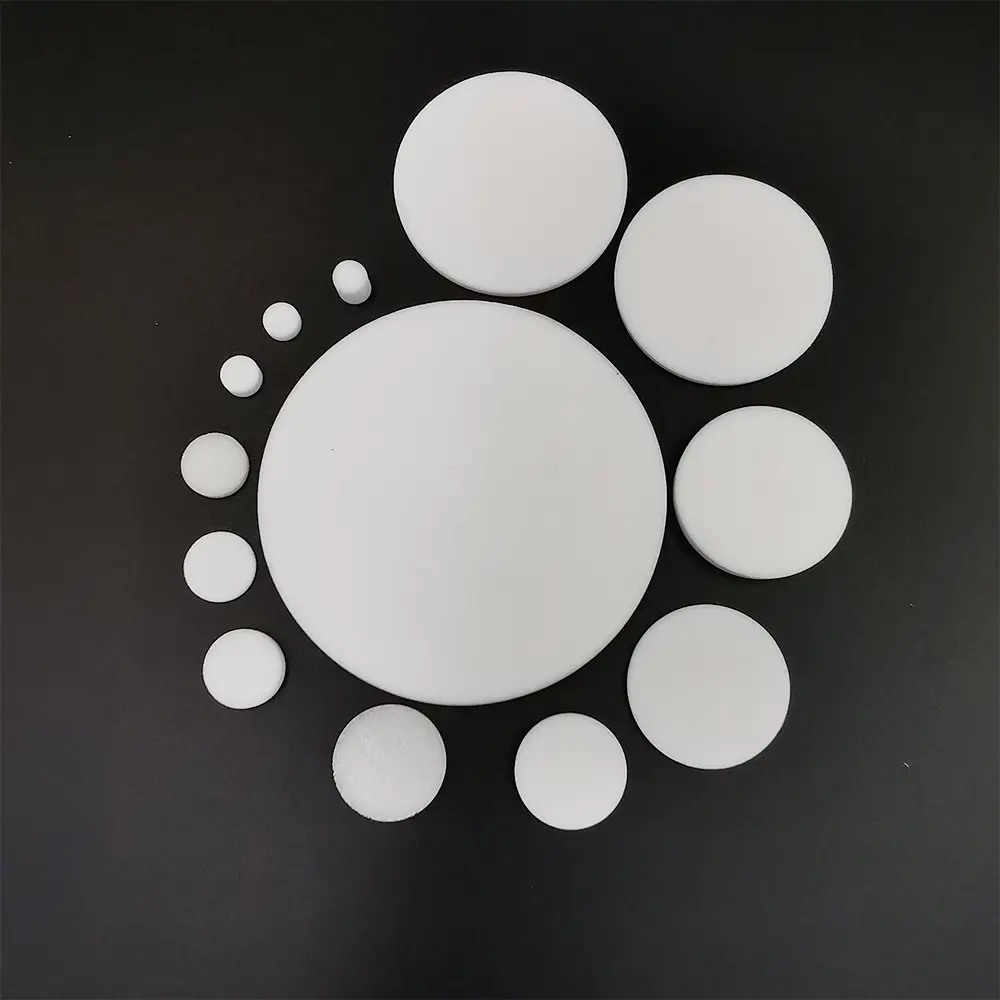
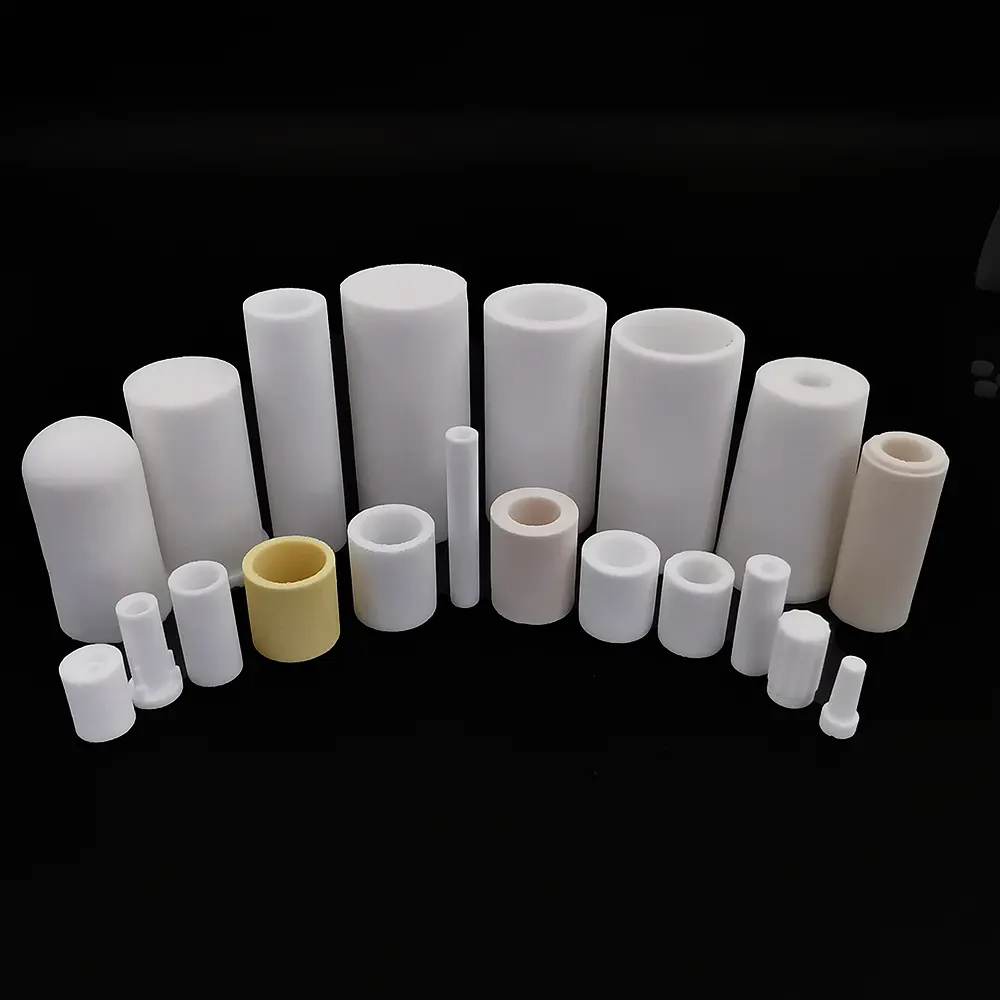
Sintered plastic filters are manufactured through material preparation, molding, sintering, and finishing. Controlled processing creates the required pore structure, dimensions, and filtration performance for different industrial applications.
1. Material Selection: Select suitable materials such as PP, PE, PA, PTFE, or PVDF according to the filtration medium, operating temperature, chemical environment, and additive compatibility requirements.
2. Powder Preparation: Plastic powders or granules are screened and classified to control particle size and distribution, helping achieve the required pore size and permeability. Particle size is a key factor affecting pore size, porosity, and flow performance.
3. Mold Filling: The prepared plastic powders or granules are evenly loaded into the mold, with the filling quantity and distribution carefully controlled to achieve the required product dimensions and pore structure.
4. Sintering: The material is heated under controlled temperature conditions, allowing the plastic particles to soften and bond at their contact points while avoiding complete melting. This process preserves the interconnected porous structure.
5. Cooling & Demolding: After sintering, the product is cooled under controlled conditions to stabilize its dimensions and structure before being removed from the mold.
6. Secondary Processing: According to customer drawings and requirements, secondary operations such as cutting, drilling, turning, heat bonding, and other machining processes can be performed to produce discs, plates, sheets, tubes, and custom-shaped components.
7. Inspection: Finished products are inspected according to application requirements, including dimensions, pore size, porosity, air/liquid permeability, appearance, and sealing performance.
Why Choose NAVI Titanium Sintered Plastic Filter?

Chemical-Resistant Materials
PP, PE, PA, PVDF, and PTFE provide different levels of chemical resistance, making the filters suitable for aggressive liquids, gases, and corrosive process environments.
No Fiber or Media Migration
The porous structure is formed directly from sintered plastic particles, eliminating separate filter media and reducing the risk of fiber shedding or media migration during filtration.
Custom Porosity & Geometry
Pore size, porosity, thickness, diameter, shape, and overall dimensions can be engineered for specific flow rates, filtration requirements, and equipment designs.