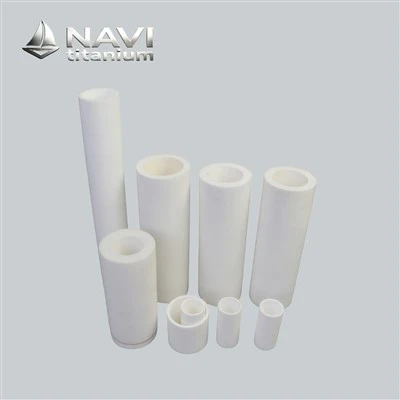
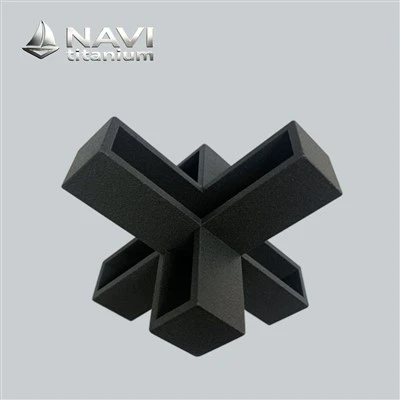
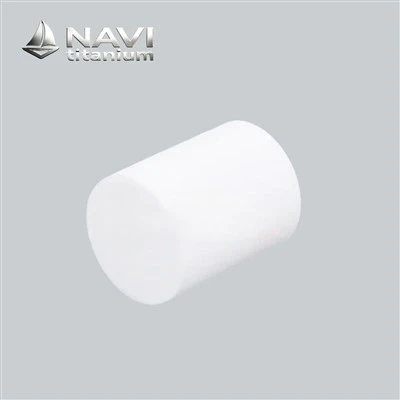
Sintered polyethylene filter, also commonly known as sintered PE filter element or high molecular weight polyethylene sintered filter element, is a high-performance porous filter element formed by high-temperature sintering process using ultra-high molecular weight (UHMWPE) or high-density(HDPE) powder as raw material. Compared to traditional melt blown filter cartridges, wire wound filter cartridges, filter cloth and other filtration products, it have essential structural advantages: their overall structure is sintered as a whole, without fiber shedding or filter wire displacement problems, and there will be no secondary pollutants during the filtration process. The filtration accuracy is stable for a long time. NAVI Titanium produces various high-precision polyethylene parts and can send us messages at any time to obtain the latest style data.
Solution of NAVI Titanium


NAVI Titanium applies controlled polymer processing to produce polypropylene forms with carefully defined permeability, surface characteristics, and dimensional profiles.


Use

Corrosive fluid filtration in the chemical industry: In chemical production, sintered polyethylene filters are widely used for precision filtration of corrosive liquids and recycling of precious metal catalysts. Compared with traditional filter materials, it can operate stably in strong corrosive environments for a long time, avoiding product pollution and production interruption caused by filter element corrosion and damage. At the same time, it can recover high-value catalyst particles, creating additional economic benefits for chemical enterprises.
Pharmaceutical industry liquid clarification and filtration: Pharmaceutical production has extremely high requirements for the cleanliness of filter media, and does not allow any foreign objects to fall into the liquid. The zero fiber shedding characteristics of sintered PE filter element perfectly match this demand, and can be used for clarification and filtration of large infusion solutions, raw materials, and traditional Chinese medicine extracts.
It fully meets the requirements of GMP production standards and is the preferred solution for clean filtration scenarios in the pharmaceutical industry.
In the field of water treatment and environmental protection: it can effectively remove suspended solids and colloidal impurities in industrial wastewater deep treatment, reverse osmosis RO pretreatment, and reclaimed water reuse, greatly reducing the fouling rate of subsequent RO membranes and extending the service life of membrane components. At the same time, their reusable characteristics can significantly reduce the long-term operation and maintenance costs of water treatment systems, and have a higher comprehensive cost-effectiveness than disposable melt blown filter cartridges.

Purchasing guide

Quality control (QC)
For industrial buyers, product consistency is closely linked to the traceability of each manufacturing batch. NAVI Titanium incorporates batch-level inspection and documentation into its delivery process, allowing key material grades, dimensional results, coating or surface conditions, and specified performance data to be checked against the agreed technical requirements. This documentation also creates a practical reference for incoming inspection, production records, repeat purchasing, and quality review. For customized orders, drawings, material requirements, inspection criteria, and shipment records can be coordinated as part of the project documentation, giving procurement and engineering teams a clearer basis for evaluating delivered products.

Manufacturing Process
NAVI Titanium approaches polymer-based porous component manufacturing from a material-and-process perspective, with particular attention to powder characteristics, forming conditions, thermal behavior, dimensional stability, and the final functional requirements of the component.
Typical Manufacturing Flow:
Raw Material Selection
1
>>
Powder Preparation
2
>>
Particle Classification
3
>>
Blending
4
>>
Mold Filling
5
>>
Pre-Compaction
6
Thermal Fusion
7
>>
Controlled Cooling
8
>>
Demolding
9
>>
Multi-Channel Shipping
10
>>
Dimensional Inspection
11
>>
Final Cleaning & Packaging
12
Sintered Polyethylene Filter: Comparison of Different Grades
| Comparison Dimension | Industrial General Grade | Food & Pharmaceutical Grade | Semiconductor / Electronic Grade | High Temperature Reinforced Grade |
| Filtration Precision Range | 5μm ~ 120μm | 0.2μm ~ 100μm | 0.1μm ~ 20μm | 1μm ~ 80μm |
| Maximum Continuous Operating Temperature | 60℃ | 80℃, compatible with short-term 121℃ steam sterilization | 60℃ | 120℃ continuous operation, withstands 150℃ short-term exposure |
| Chemical Corrosion Resistance | Resistant to common acids, alkalis and salt solutions, suitable for general industrial wastewater and conventional chemical scenarios | Resistant to common acids, alkalis and solvents used in food & pharma industries, fully meets GMP cleanliness requirements | Resistant to electronic-grade high-purity acids, bases and organic solvents, with extremely low metal ion leaching | High-temperature corrosion resistance, suitable for high-temperature chemical and flue gas treatment thermal fluid scenarios |
| Core Target Applications | Industrial wastewater pretreatment, circulating water side filtration, general chemical fluid filtration, ordinary pneumatic conveying dust filtration | Pharmaceutical liquid clarification filtration, food & beverage liquid filtration, biological fermentation broth treatment, front-end filtration of large volume injections | Ultrapure water terminal filtration for semiconductor manufacturing, wet electronic chemical filtration for photovoltaics, lithium battery electrolyte filtration, electronic-grade gas purification | High-temperature flue gas dust removal, thermal fluid filtration, high-temperature chemical solution filtration, high-temperature oil filtration |
| Customization Options | Dimensions, pore size, interface type, surface groove structure | Dimensions, pore size, interface type, groove structure, custom cleaning & packaging process | Dimensions, pore size, interface type, clean room vacuum packaging, exclusive leaching test report | Dimensions, pore size, interface type, temperature resistance grade customization |
| Included QC Documentation | Raw material COA, dimensional & visual inspection report | Food contact material compliance certificate, raw material COA, sterile cleanliness test report | Metal ion leaching test report, clean room cleanliness grade report, particle shedding test report | Temperature resistance performance test report, raw material COA, high-temperature service life test report |
| Price Tier | Entry tier, highest cost performance | Mid-to-high tier, 40%-60% higher than industrial grade | Premium tier, 2-3 times higher than industrial grade | Mid-to-high tier, 50%-80% higher than industrial grade |
| Typical Service Life | 6-12 months under conventional working conditions | 12-24 months under standardized maintenance | 12-18 months under clean working conditions | 6-12 months under high-temperature working conditions, far exceeding the 1-2 month lifespan of ordinary PE filters at high temperature |
Core performance differentiation advantage
PE material itself has extremely strong chemical stability and can withstand corrosion from most acid, alkali, and salt solutions. Under strong corrosion conditions such as hydrochloric acid, dilute sulfuric acid, and alkaline wastewater, its service life is 3-5 times that of sss strainer cartridges and polypropylene melt blown strainer cartridges, which can significantly reduce the cost of consumable replacement for customers in the chemical and environmental protection industries.
Sintered polyethylene filters support repeated regeneration and use, and can remove impurities from pores through various methods such as backwashing, ultrasonic cleaning, and chemical immersion to restore filtration performance. Under normal working conditions, they can be regenerated and used dozens of times, reducing long-term consumable costs by more than 60% compared to disposable melt blown strainer cartridges, while significantly reducing production line downtime losses caused by strainer cartridge replacement.
The pore accuracy of the product can be precisely customized within the range of 0.1 μ m-120 μ m. The outer diameter, length, end interface form, and outer surface groove structure can be flexibly adjusted according to the customer's equipment installation space and flow requirements. Small batch scientific research samples and large-scale industrial batch orders can be flexibly undertaken.
The overall weight of the polymer material is only 30% of that of the same specification metal sintered strainer element. Installation and replacement do not require large lifting equipment, and can be completed by a single person, greatly reducing the labor cost of on-site operation and maintenance, while not causing additional load pressure on the strainer housing.
FAQ
Q: Can sintered PE filter be customized with special dimensions and pore sizes?
+
-
A: Absolutely. We support full customization of outer diameter, length, pore precision, end interface type and outer surface groove structure. Even small-batch lab sample orders are accepted with no strict minimum order quantity requirement. Simply provide your working condition parameters or design drawings, and you will receive your exclusive customized solution within 48 hours.
Q: What is the typical service life of a sintered PE filter under normal operating conditions?
+
-
A: Under conventional working conditions with regular backwashing maintenance, the service life of a PE strainer can reach over 12 months, which is 3-8 times longer than ordinary disposable melt-blown strainer cartridges. The exact service life varies with impurity content, temperature and pH of the strainer medium, and our engineers can provide an accurate lifespan estimate based on your actual working conditions.
Q: Can sintered PE filter be reused after being clogged with impurities?
+
-
A: Yes. PE strainer support multiple regeneration methods including backwashing, ultrasonic cleaning and chemical agent soaking, which can effectively remove impurities trapped inside the pores and fully restore filtration performance. Under reasonable maintenance, they can be regenerated and reused dozens of times, significantly reducing long-term consumable costs.
Q: What scenarios are sintered PE filters most suitable for?
+
-
A: They are ideal for corrosive chemical fluid filtration, pharmaceutical liquid clarification, industrial wastewater pretreatment, new energy battery slurry filtration, and pneumatic conveying gas purification scenarios. Their zero fiber shedding and excellent chemical corrosion resistance make them outperform traditional strainer materials in harsh industrial environments.
Hot Tags: sintered polyethylene filter, China sintered polyethylene filter manufacturers, suppliers, factory, micron rated PP filter, sintered plastic filter core, sintered plastic filter insert, sintered polypropylene filter insert, sintered porous plastic filter tube, sintered PTFE filter vent