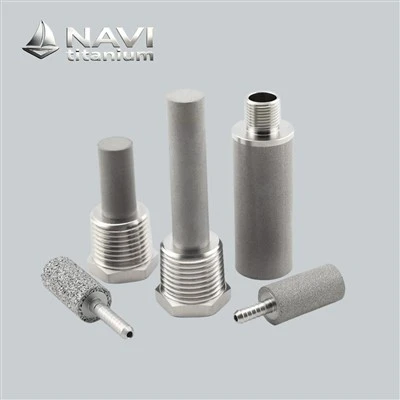

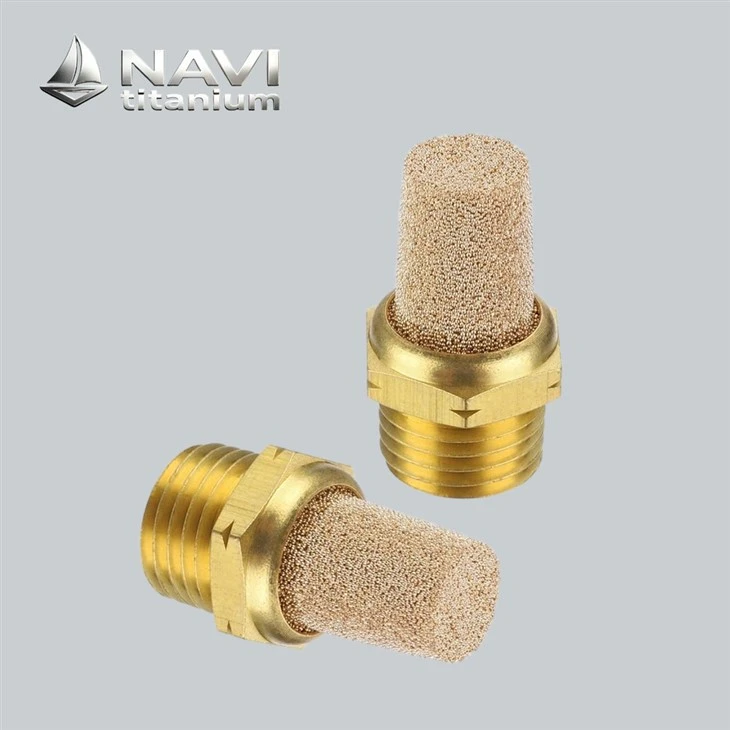

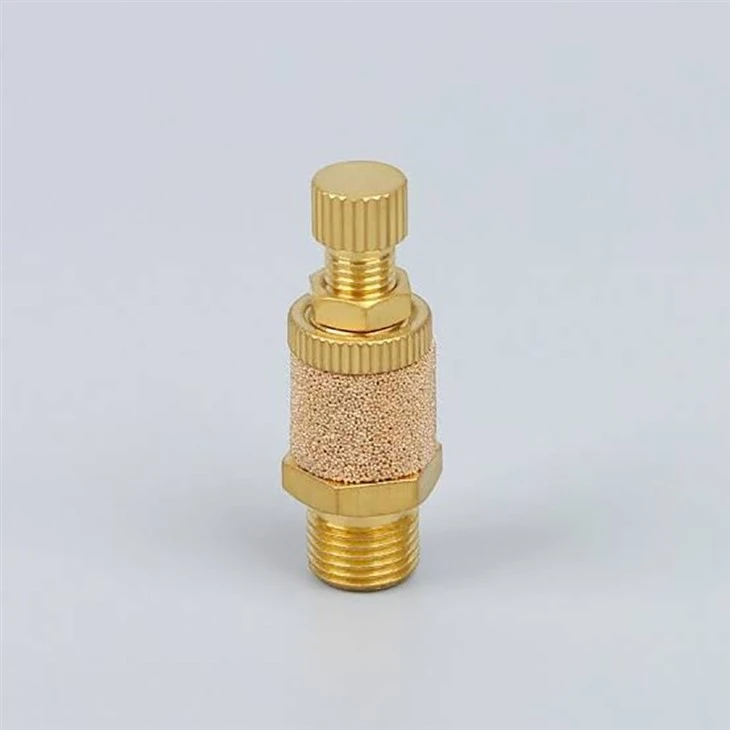
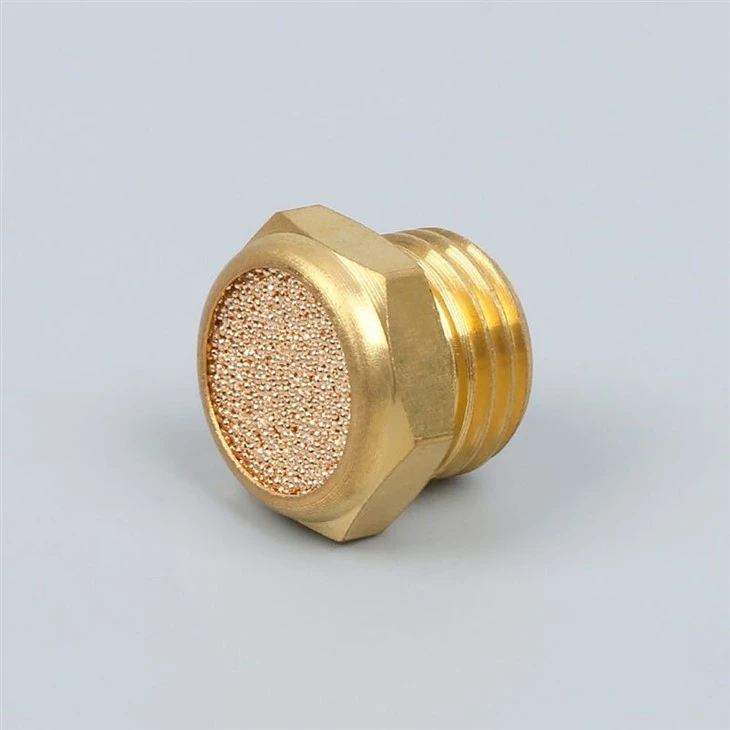
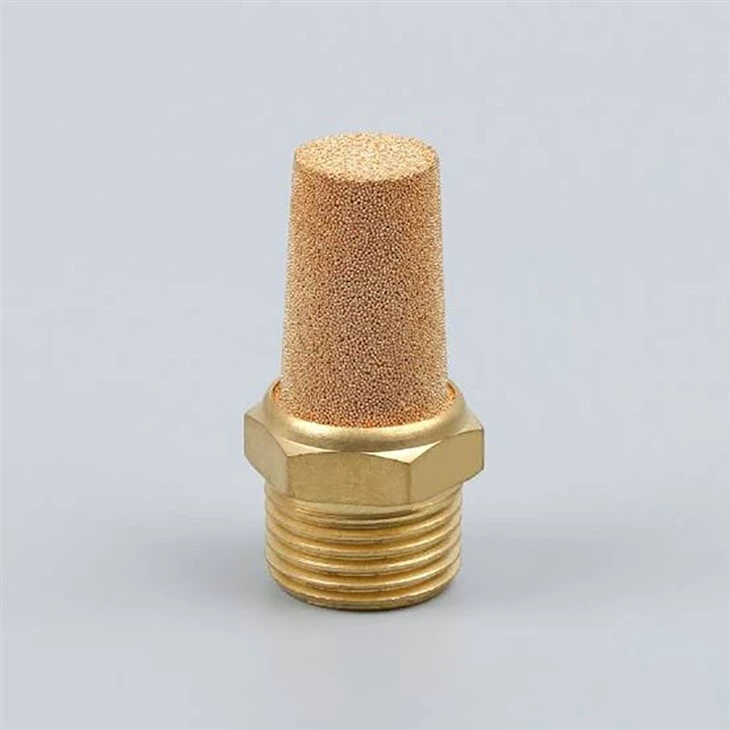
NAVI Titanium provides sintered brass gas flter for controlled gas purification and particulate retention. Behind each order is a coordinated team covering technical planning, R&D, fabrication, quality assurance, international trade, pre-sales consultation, and after-sales care. This cross-functional arrangement gives overseas buyers a clear contact path from initial inquiry through repeat procurement. A dedicated technical group assists with application matching, while quality personnel oversee inspection records and consistency checks. NAVI Titanium therefore presents itself as a team-based supplier with defined responsibilities rather than a single-point trading operation.
Solution of NAVI Titanium
NAVI Titanium has established an integrated R&D framework covering material evaluation, formulation development, process verification, dimensional analysis, and application-oriented performance assessment. Analytical resources include direct-reading spectrometers, metallographic microscopes, universal testing equipment, ultrasonic flaw detection, and coordinate measuring systems, allowing material composition, microstructure, mechanical behavior, dimensional conformity, and manufacturing consistency to be examined systematically.
These variables are evaluated together rather than treating filtration accuracy or flow capacity as isolated specifications. Based on this research and analytical foundation, the following table consolidates the core information of NAVI Titanium's current titanium product portfolio.


NAVI Titanium focuses on precision-formed brass-based porous bodies. Their interconnected void distribution enables gradual pressure dissipation while maintaining defined permeability across compact flow assemblies.


Application
NAVI Titanium provides utilization-specific sintered brass gas flter solutions with controlled pore distribution, consistent stream passage, and specification-focused customization for demanding stream purification and flow-regulation assemblies.
Gas purification modules often require more than simple particulate interception. The critical task is to maintain a defined passage route while retaining unwanted particulates across repeated repeated load cycles. A compact porous bronze body provides a distributed pathway in which stream passes through numerous interconnected voids rather than a single open channel. This configuration promotes gradual flow-energy dissipation and reduces the risk of localized high-velocity streams. In pneumatic circuits, instrument stream lines, vacuum modules, pressure regulators, and stream dispensing units, pore distribution directly affects flow resistance, retention capability, and response consistency. The interconnected pathway also provides a broad contact area for particle capture, while the brass matrix offers practical machinability for threaded, cylindrical, disc, or specially shaped formats. For stream-handling applications, procurement team should therefore evaluate nominal aperture size together with permeability, dimensional tolerance, wall thickness, and connection geometry. These parameters determine whether the finished part can maintain the intended stream throughput without creating excessive resistance or premature blockage during continuous operation.

2. Procurement Criteria and NAVI Titanium Advantage

For professional procurement team, procurement criteria extend beyond nominal aperture size. They typically examine aperture consistency, permeability, dimensional repeatability, connection compatibility, surface cleanliness, load tolerance, batch-to-batch uniformity, and the availability of utilization-specific specifications. NAVI Titanium positions its brass-based porous components for procurement team who require controlled stream passage rather than a generic off-the-shelf item. A key selling point is the ability to adjust pore distribution, thickness, external geometry, and connection details according to the required flow range and installation interface. This allows one material platform to address compact regulators, stream diffusers, vacuum modules, pressure-regulation units, and analytical stream circuits without forcing the purchaser to redesign the surrounding assembly. Particular attention can also be given to edge integrity and end-face conformity, since damaged boundaries may create preferential leakage routes or alter local flow resistance. For OEM and distributor procurement, NAVI Titanium emphasizes specification traceability, dimensional consistency, utilization matching, and repeat-order continuity, positioning the offering as an utilization-specific stream purification and flow-regulation solution rather than a commodity porous part.
Purchasing guide

Quality control (QC)
NAVI Titanium accompanies qualified shipments with documented inspection data. Particular attention is given to factors such as residual elements, geometric tolerances, surface condition, and internal flow characteristics, especially where the component is incorporated into gas-handling equipment. Each documented result forms part of the traceability chain from incoming material verification through final inspection and shipment release, helping engineering and sourcing teams review consistency across repeat orders.

Manufacturing Process
The manufacturing route begins with careful selection and preparation of copper-zinc alloy feedstock, where chemical composition and particle characteristics are reviewed according to the intended operating environment. The prepared material is then classified to establish a controlled particle-size distribution, followed by uniform blending to reduce segregation during forming. After filling a precision mold, controlled compaction establishes the required geometry and green density while preserving the intended internal passage structure. Thermal consolidation follows under a carefully regulated atmosphere and temperature profile. This stage bonds adjacent particles while retaining interconnected openings required for gas transmission. After cooling, sizing and surface finishing correct dimensional deviations introduced during thermal processing. Critical characteristics such as external dimensions, mounting interfaces, surface condition, flow behavior, and structural integrity are subsequently examined against the specified engineering criteria. Batch identification is retained throughout these stages, allowing process records and inspection results to remain traceable through final release and shipment.


Procurement & Supply Assurance
Small-format sintered brass gas flter require more than ordinary bulk packaging because loose movement during transit may cause edge impact, surface rubbing, thread damage, or dimensional variation. NAVI Titanium pays attention to separation between individual pieces, particularly when several small units share one outer carton. Individual wrapping, compartmental placement, cushioning layers, and controlled stacking can reduce direct contact between finished surfaces. For threaded versions, connection ends deserve additional protection because minor deformation may affect installation fit or sealing performance. Quantity verification is also important for procurement departments handling multiple specifications within one order. Clear identification by size, aperture grade, drawing number, or batch reference helps warehouse personnel distinguish similar-looking items without unnecessary unpacking. For overseas procurement team, packaging should therefore be considered part of procurement regulation rather than a simple logistical detail. A well-planned packing method can reduce handling-related defects, simplify receiving inspection, and make inventory allocation easier once the goods arrive at the client's facility. This approach is particularly valuable for OEM procurement team managing numerous small-format stream-handling parts.

2. Long-Term Replacement Supply

For recurring applications, procurement planning often extends beyond the initial order. NAVI Titanium can organize repeat procurement around established specifications, historical order records, planned quantities, and replacement cycles. Buyers may prepare annual consumption estimates, reserve quantities, maintenance schedules, and emergency stock according to actual usage patterns. Retaining previous dimensional and specification records reduces repeated clarification when the same item is reordered. For equipment makers and replacement-part distributors, phased quantities can also be arranged around throughput schedules instead of requiring the entire annual requirement at one time. Scheduled batch throughput helps procurement teams coordinate warehouse capacity and replenishment timing while reducing the risk of unexpected shortages. Before placing recurring orders, buyers commonly review aperture grade, dimensions, connection details, inspection requirements, quantity tolerance, and record continuity. Its brass-based stream purification range is positioned for purchasers seeking a repeatable sourcing route, with emphasis on specification retention, planned replenishment, batch-to-batch consistency, and long-term availability rather than a single transaction.
NAVI Titanium – Gas Filtration
Gas purification modules require controlled particulate retention without creating excessive resistance across the intended flow path. For procurement teams, evaluation commonly begins with aperture grade, permeability, geometric tolerance, connection compatibility, surface cleanliness, and pressure capability. NAVI Titanium positions its brass-based porous units for applications where repeatable stream passage and dependable particle interception are more important than generic catalog availability. Client feedback can be assessed through practical indicators such as installation fit, flow resistance consistency, replacement frequency, and cleanliness after extended use. Such evidence gives purchasers a clearer basis for comparing specifications before approval. For OEM procurement team, samples may also be reviewed against existing installation interfaces and operating requirements. Attention to threaded ends, terminal faces, and dimensional conformity is particularly important because small deviations may affect sealing or alignment. By focusing on measurable procurement criteria rather than broad performance claims, NAVI Titanium presents its offering as a specialized stream-purification choice for demanding flow modules, replacement applications, and repeat procurement programs.

Procurement Standards

Professional purchasers often judge a stream purification part through several linked criteria: permeation path classification, flow capacity, load tolerance, dimensional repeatability, connection form, surface cleanliness, inspection records, and consistency across recurring orders. They may also examine specimen approval, specification retention, replacement compatibility, quantity planning, and communication efficiency before adding a supplier to an approved list. NAVI Titanium differentiates its brass-based range through specification-oriented preparation, allowing procurement teams to define measurements, aperture grade, threaded interfaces, and utilization requirements before recurring orders are arranged. This positioning is particularly relevant where a small stream-handling part must fit an established assembly without unnecessary modification. Customer evaluations can therefore focus on tangible procurement outcomes: straightforward specification confirmation, consistent measurements, clear inspection documentation, and repeat-order continuity. Rather than presenting a generic catalog item, this range is positioned as a specialized stream-purification and flow-regulation part for utilization-specific procurement, giving procurement teams a clearer framework for technical comparison, specimen approval, replacement planning, and long-term sourcing decisions.
Production & Processing Capability
NAVI Titanium
Applies a coordinated processing route to sintered brass gas flter production, linking forming, machining, thermal treatment, and high-temperature consolidation.


The interaction among temperature profile, holding duration, particle packing, and cooling rate determines pore distribution and stream permeability. This process-oriented configuration enables utilization-specific regulation over dimensional conformity, passage resistance, and mechanical integrity, providing a technical foundation for consistent stream purification performance across recurring specifications.
FAQ
1. How does your international business team handle overseas inquiries?
+
-
Our international business team provides specification clarification, quotation coordination, technical communication, order follow-up, and export documentation assistance. Team members are familiar with overseas procurement practices and can coordinate technical details with factory personnel, helping customers reduce communication gaps between inquiry, evaluation Unit approval, and recurring orders.
2. Can you handle project-based procurement requirements?
+
-
Yes. A project-oriented team can coordinate commercial, technical, fabrication, and quality tasks around one procurement program. For larger or recurring requirements, dedicated personnel can follow specification confirmation, sampling, quantity planning, inspection records, and scheduled batches, creating a clearer responsibility path throughout the procurement cycle.
3. What factory capabilities are available for brass-based stream purification parts?
+
-
The factory covers forming, machining, thermal treatment, dimensional inspection, and final preparation. Different fabrication stages are assigned to corresponding personnel and equipment, allowing permeation path characteristics, geometry, connection details, and surface requirements to be assessed according to the intended application.
4. How is conformity regulation managed across different throughput stages?
+
-
Quality checks can cover incoming materials, forming measurements, thermal parameters, finished geometry, permeation path classification, surface condition, and final inspection records. Key specifications are reviewed against approved requirements before release, while batch information is retained to facilitate traceability and subsequent procurement verification.
5. How do you maintain continuous improvement for recurring orders?
+
-
Client feedback, inspection findings, fabrication records, and repeat-order observations can be reviewed to identify areas for improvement. Adjustments may involve dimensional control, thermal parameters, handling methods, inspection frequency, or documentation. This ongoing review helps refine consistency across subsequent batches without unnecessarily changing approved specifications.
Hot Tags: sintered brass gas filter, China sintered brass gas filter manufacturers, suppliers, factory, Microporous Filter, Microporous Water Filter, Sintered Bronze Bar, Sintered Bronze Muffler, Sintered Metal Plate, Sintered Porous Metal Filter