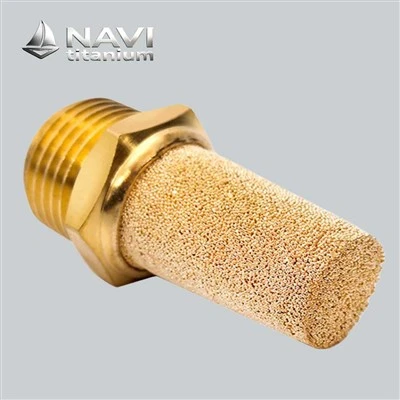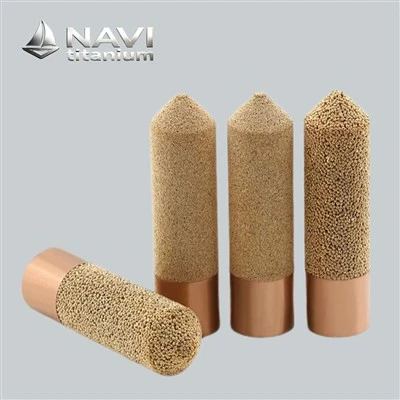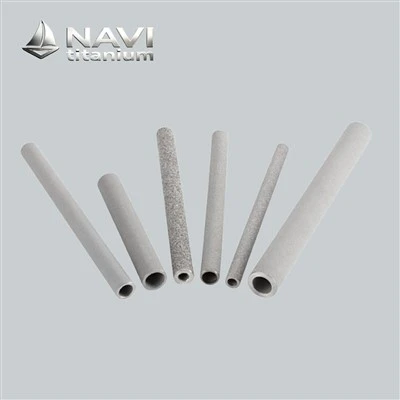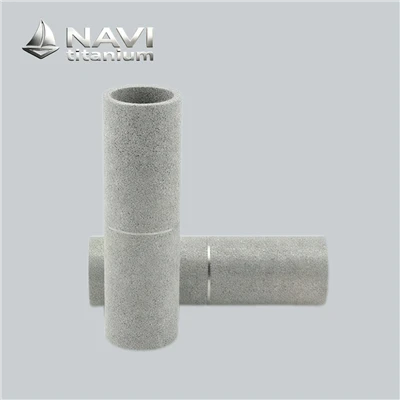

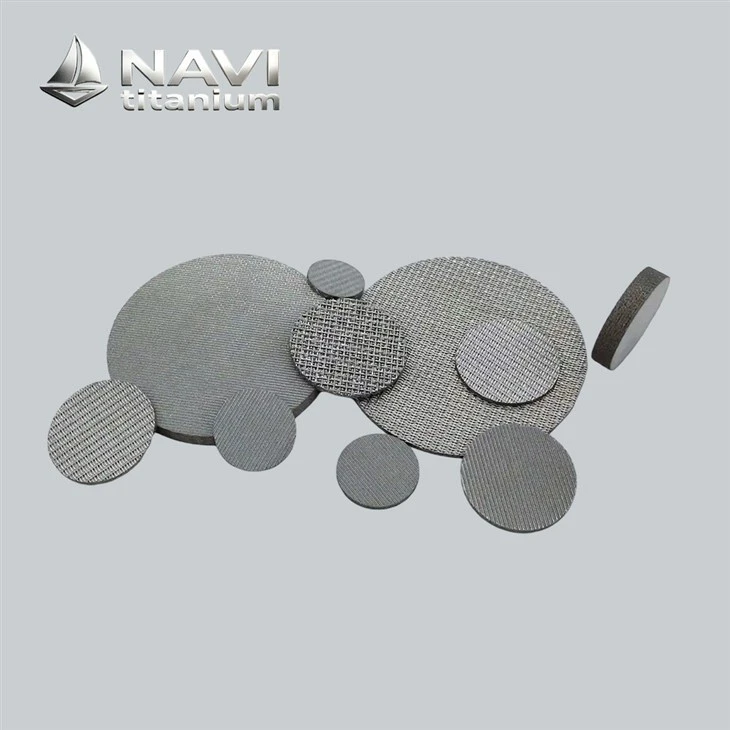
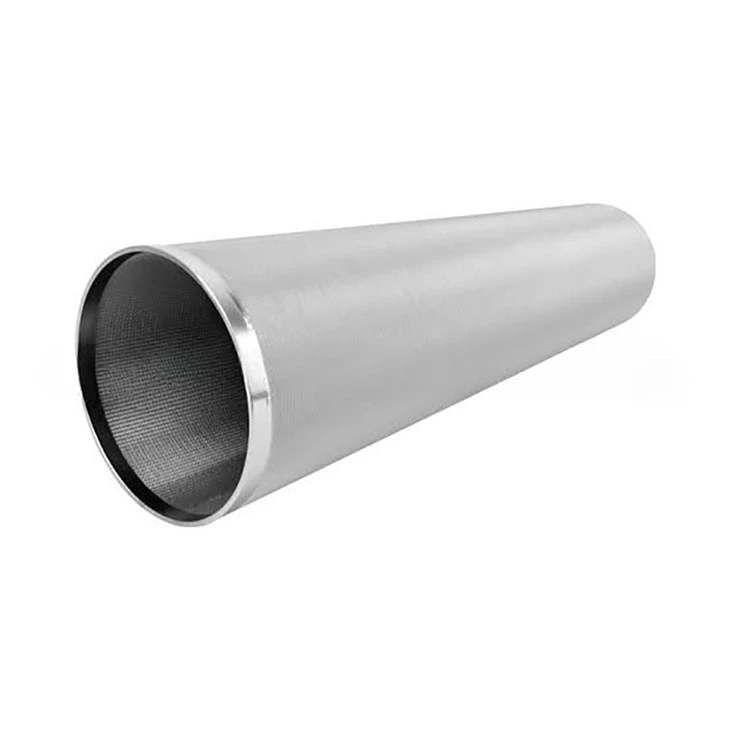

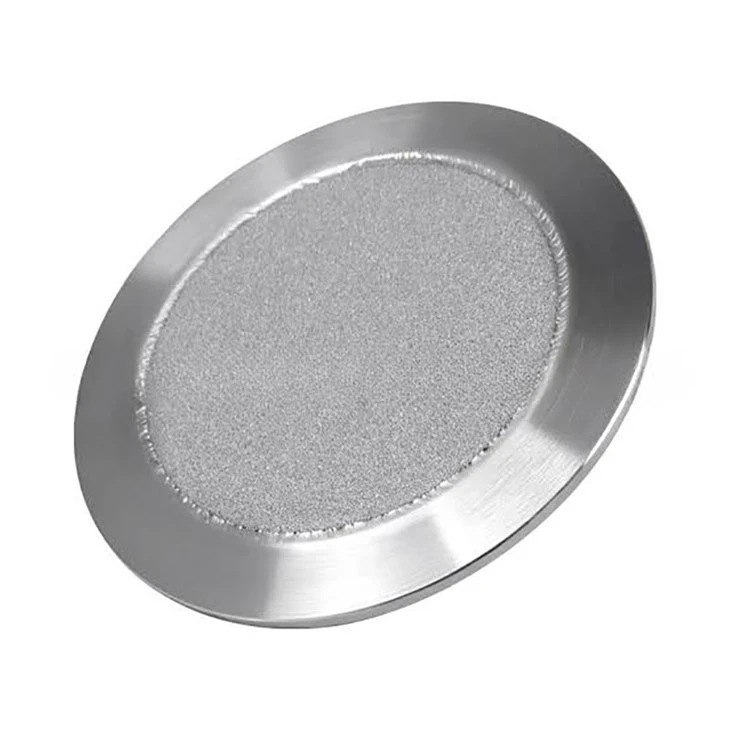
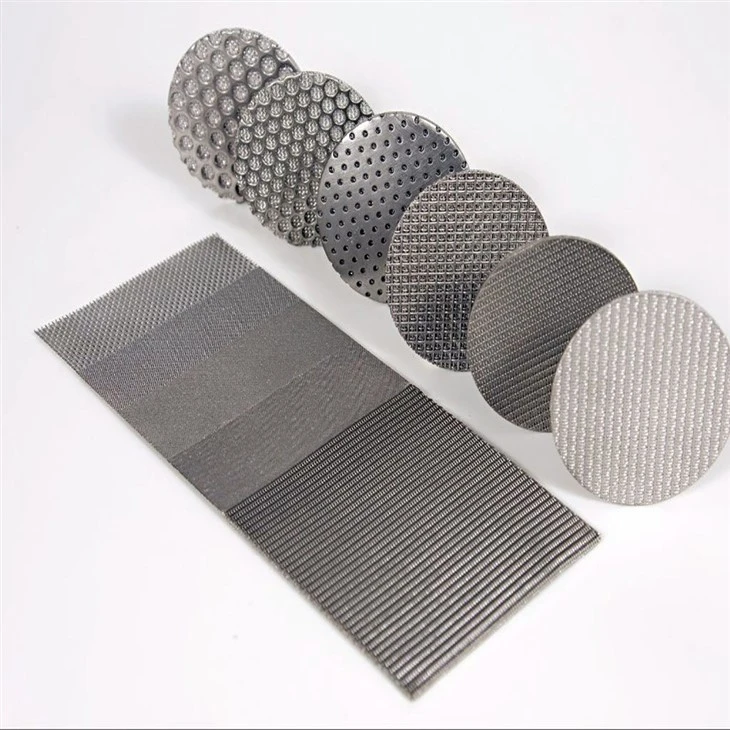
NAVI Titanium sintered mesh filter element is supplied for controlled particulate separation where pore grading, flow passage, and service continuity matter to purchasers. Our long-term approach emphasizes consistent material selection, disciplined process control, traceable inspection, and practical communication rather than short-term sales volume. We prefer partnerships built through repeat orders, technical feedback, and transparent specification review.

Solution of NAVI Titanium


NAVI Titanium presents a precision-formed porous body featuring interconnected openings and a controlled three-dimensional passage.


Application
NAVI Titanium sintered mesh filter element supports controlled particulate removal in high-purity gas processing and hydraulic or lubricating oil circulation, balancing contaminant retention, flow permeability, pressure-drop control, and long-term service requirements.
In high-purity gas processing, particulate control is essential for protecting valves, regulators, flow controllers, and downstream analytical instruments from contamination. Gas streams may carry fine debris generated during cylinder handling, pipeline assembly, compression, or repeated thermal cycling. NAVI Titanium provides a sintered permeable cylindrical medium that can intercept these particulates while preserving a comparatively open passage for gas movement. Its interconnected voids create tortuous pathways, allowing particle retention to occur through interception, inertial impaction, and depth capture rather than relying solely on a thin surface barrier. This mechanism is particularly useful for nitrogen, argon, hydrogen, oxygen, and other process gases where excessive pressure loss can disturb flow regulation.
For B2B purchasers, key selection factors include nominal pore rating, permeability, wall thickness, connection geometry, cleanliness level, and resistance to repeated pressure pulses. The pore distribution should be matched with gas velocity and allowable differential pressure, since an excessively fine grade may restrict throughput. Cylindrical or tubular configurations can also be adapted to inline housings, pressure regulators, gas manifolds, and sampling assemblies according to installation requirements.

2. Hydraulic & Lubricating Oil Circulation

Hydraulic and lubricating oil circuits require continuous removal of abrasive particulates because suspended debris can accelerate wear at pumps, servo valves, bearings, gears, and narrow flow passages. NAVI Titanium provides a permeable medium that provides depth-based contaminant capture while allowing oil to pass through a distributed three-dimensional void system. Compared with a simple surface barrier, this configuration can retain particles throughout its thickness, which helps accommodate fluctuating contaminant loading during circulation. Its mechanical rigidity also makes it suitable for repeated pressure differentials, vibration, and cyclic flow encountered in mobile hydraulics, machine tools, gearboxes, and centralized lubrication units.
Pore grading must correspond with the hydraulic circuit's cleanliness target without imposing excessive resistance on the pump. Cylindrical, disc-shaped, and tubular forms can be specified according to housing geometry. Welded, brazed, threaded, or other connection arrangements may also be selected where appropriate. For long-running circulation loops, purchasing teams should additionally evaluate cleanability, dimensional consistency, pressure endurance, and compatibility with the selected hydraulic or lubricating formulation.
Purchasing guide

Quality control (QC)


Logistics Visibility
For overseas purchasing teams, logistics risk begins before the goods leave the fabrication site. A clear dispatch schedule should therefore distinguish fabrication completion, final inspection, packing readiness, documentation preparation, carrier booking, and departure confirmation. Purchasing teams can request agreed milestones for quantity verification, dimensional inspection, identification marking, protective preparation, and commercial documentation before the cargo enters the forwarding process. This gives procurement teams a defined reference point instead of relying on a single estimated arrival date. For repeat purchasing, retaining records of previous lead times, carrier performance, destination requirements, and handling arrangements can further improve forecasting. Purchasing teams may also establish a communication protocol covering inspection completion, readiness confirmation, booking status, customs documentation, and exceptional delays. Such visibility allows purchasing departments to coordinate inventory levels and downstream scheduling earlier, reducing the likelihood that an unexpected logistical gap will interrupt fabrication planning. The objective is not simply faster movement, but greater visibility across every transition between factory completion and final receipt.

"Production Complete" Does Not Mean"Customer Received"

A common purchasing misunderstanding is treating production completion as the final fulfillment point. In practice, these are two different dates with several intervening stages. Once fabrication is finished, the goods may still require final inspection, quantity verification, identification review, protective preparation, documentation, cargo handover, customs procedures, international transit, destination handling, and final transportation to the buyer's nominated location. Each stage can have its own time requirement, meaning that a factory completion notice should not automatically be interpreted as an arrival commitment. NAVI Titanium encourages purchasing teams to distinguish between manufacturing completion, release readiness, departure, customs clearance, and final receipt when establishing procurement schedules. This distinction is particularly useful for projects involving fixed installation dates or replenishment cycles, where even a small timing deviation may affect internal planning. By presenting fulfillment as a sequence of identifiable milestones rather than a single date, purchasers can allocate contingency time more rationally and communicate realistic expectations to their own teams. Clear milestone management also creates a more traceable basis for discussing delays, responsibilities, and subsequent order planning.
Process-Critical Separation Applications
NAVI Titanium sintered mesh filter element supports process-critical separation by enabling controlled melt back-flushing and efficient catalyst fines recovery with attention to pressure drop, retention, thermal tolerance, cleanability, and lifecycle performance.
In polymer processing, melt purification depends on maintaining consistent pressure, throughput, and contaminant retention during extended fabrication runs. A back-flush configuration allows accumulated debris to be displaced by a controlled reverse-flow pulse, reducing pressure escalation without requiring frequent assembly replacement. For purchasing teams, attention should focus on open-area ratio, nominal retention rating, thermal tolerance, pressure differential, and connection dimensions. These parameters determine whether the assembly can remain compatible with an existing melt line and whether cleaning intervals align with fabrication scheduling. For high-viscosity polymers, flow resistance can rise rapidly as retained gels, carbonized residues, or foreign particles accumulate. A well-selected permeable assembly from NAVI Titanium can therefore support predictable melt passage while tolerating repeated thermal cycling and reverse-flow cleaning. Procurement specifications should also state melt temperature, polymer grade, expected contaminant loading, back-flush pressure, and acceptable pressure-drop range. This information gives suppliers a practical basis for recommending pore configuration and dimensional tolerances, while helping purchasing teamscompare quotations according to operating requirements rather than unit price alone, with clearer commercial justification under continuous fabrication demands.

Catalyst Fines Recovery

Catalyst fines recovery is relevant to chemical processing lines where valuable catalyst particles may leave a reactor or circulation loop with the stream. A fine-retention assembly can separate recoverable solids from the carrier phase, allowing collected catalyst to be returned to the process or directed toward regeneration. For B2B purchasers, the concern extends beyond nominal particle capture; pressure loss, solids loading, cleanability, and recovery efficiency must be evaluated together. Excessive resistance may reduce circulation capacity, while an overly open pore arrangement can permit valuable fines to escape. A permeable assembly with a defined three-dimensional pore path can provide repeated separation performance under cyclic loading and cleaning. Purchasing teams should specify catalyst type, particle-size distribution, carrier composition, temperature, differential pressure, expected solids concentration, and connection format. These data help suppliers establish an appropriate pore grade and service configuration. It also creates a basis for lifecycle comparison, because recovered catalyst value, cleaning frequency, pressure-drop control, and replacement intervals can be assessed alongside purchase price and operating expenditure. NAVI Titanium provides this type of separation assembly for demanding process requirements.
Molecular Sieve Dust Retention
In molecular sieve processing, fine crystalline debris generated during loading, regeneration, attrition, or pneumatic transfer can migrate downstream and impair valves, adsorbent beds, and instrumentation. NAVI Titanium sintered mesh filter element is suited to this separation duty by providing a controlled pore path for retaining sieve fines while permitting the carrier stream to pass with manageable pressure loss. From a technical perspective, retention should be assessed against particle-size distribution rather than a single nominal rating, since irregular fragments and submicron dust may exhibit different migration tendencies. Key selection variables include pore grade, void fraction, thickness, operating temperature, differential pressure, dust loading, and cleaning frequency. For adsorption units, excessive resistance can alter flow distribution across the bed, whereas insufficient retention may allow fines to circulate into downstream equipment. Procurement teams should therefore specify molecular sieve type, particle diameter range, expected dust concentration, regeneration temperature, flow rate, and allowable pressure differential when requesting quotations. This approach enables NAVI Titanium to match the sintered mesh filter cartridges with the actual separation duty and anticipated maintenance cycle.

FAQ
1. How can purchasing teams specify the required retention grade accurately?
+
-
Buyers should provide the target particle-size range, allowable pressure differential, flow rate, operating temperature, solids loading, and connection dimensions. These parameters offer a more meaningful basis for grade selection than relying solely on a nominal micron value.
2. Can the pore grade and physical dimensions be adjusted for existing assemblies?
+
-
Yes. Pore rating, thickness, diameter, length, aperture configuration, and connection details can be discussed according to the purchaser's installation requirements.
3. What does your service philosophy emphasize during technical communication?
+
-
The service philosophy centers on requirement clarification rather than simply recommending a standard specification. Technical information, operating parameters, dimensional drawings, and acceptance criteria are reviewed together so that both parties establish the same purchasing basis before commercial confirmation.
4. How does the company approach technical improvement?
+
-
Technical improvement focuses on measurable relationships between pore distribution, flow resistance, retention capacity, dimensional tolerance, and cleaning requirements.
5. What business principles guide long-term B2B cooperation?
+
-
The core principles emphasize transparent communication, consistent specification control, accountable quality commitments, and practical cost awareness.
Hot Tags: sintered mesh filter element, China sintered mesh filter element manufacturers, suppliers, factory