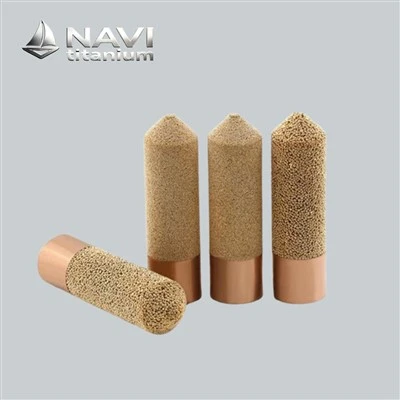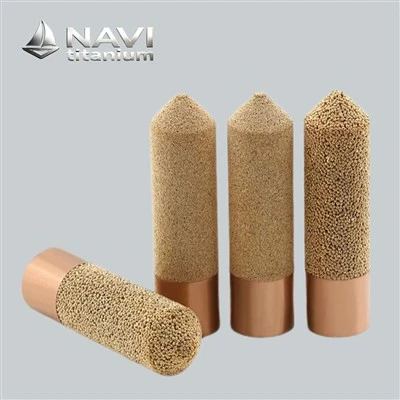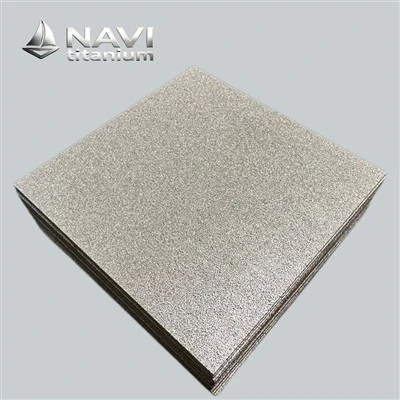


Sintered brass filter from NAVI Titanium is manufactured from brass alloy feedstock that is consolidated into a rigid structure containing countless microscopic channels. Instead of relying on woven media, the material forms a three-dimensional passage network that guides fluids or air through the element while intercepting unwanted contamination. NAVI Titanium combines structural rigidity with predictable media transmission, making it suitable for ventilation, acoustic damping, media conditioning, and fluid management.
Solution of NAVI Titanium
NAVI Titanium's sintered bronze filter is manufactured using a proven metal powder sintering process, delivering uniformly distributed, controllable pore structures for precision filtration, gas diffusion, and fluid separation applications. It offers excellent corrosion resistance, machinability, and in-situ regeneration capability, ensuring long-term stable operation under demanding conditions. NAVI Titanium also provides customized solutions to meet diverse industrial filtration, air permeability, and flow requirements. Detailed specifications are shown in the table below.
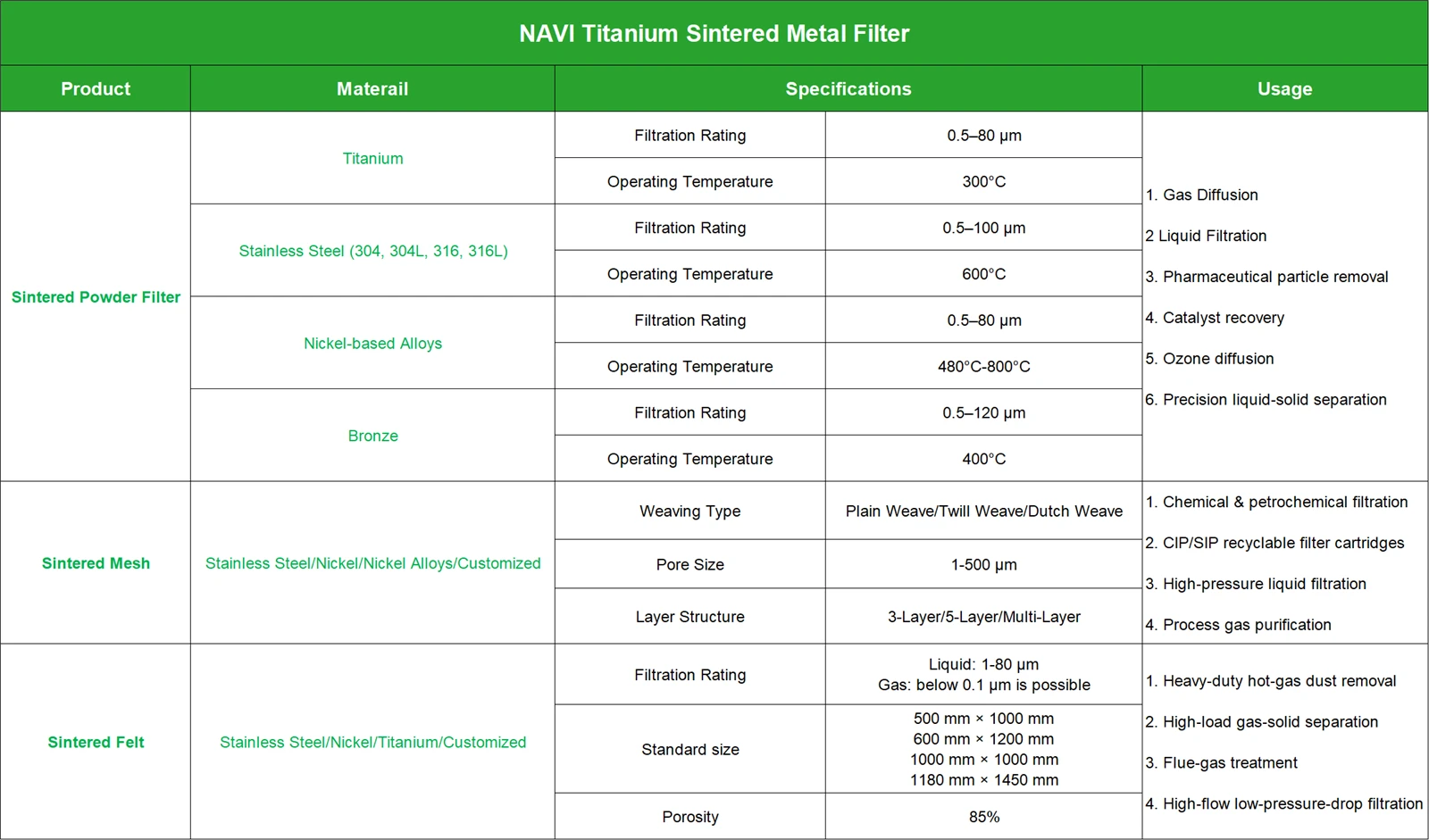


NAVI Titanium has developed specialized sintered bronze filters for applications requiring reliable particle separation, controlled fluid flow, and durable filtration under demanding operating conditions. We offer customized manufacturing for a wide range of filter elements, cartridges, discs, tubes, and other porous components in different dimensions, pore ratings, and configurations, providing consistent filtration performance while supporting long-term operation and easy integration into industrial systems.


Application
Rather than functioning only as a separation medium, NAVI Titanium sintered brass filter also serves as a media-conditioning element in automation devices, ventilation assemblies, lubricant circuits, and instrumentation. Engineers often integrate these products into silencers, valve assemblies, actuators, distributors, and breathing devices where controlled media movement and stable operating behavior are required.
Within compressed-air circuits, brass porous elements moderate exhaust behavior after valve switching and actuator movement. Instead of releasing air as a concentrated jet, countless microscopic pathways disperse the discharge, reducing turbulence while creating smoother exhaust characteristics.
NAVI Titanium engineers frequently install these elements on solenoid valves, air cylinders, FRL units, and automation assemblies because they combine acoustic attenuation with contamination interception in a single mechanical part.
Their compatibility with standardized threaded fittings also simplifies installation across a wide variety of automated machinery. Within compressed-air circuits, brass porous elements steadily moderate exhaust behavior after valve switching and mechanical actuator movement to optimize pneumatic working performance.

2.Liquid Filtration and Flow Control

Besides air-management duties, it also performs effectively in lubricant delivery units, auxiliary hydraulic devices, dosing assemblies, and general-purpose liquid transfer equipment. Robust sintered brass construction conditions media movement while limiting the entry of unwanted contaminants into sensitive downstream hardware.
Within lubrication circuits and dispensing equipment, brass elements stabilize media transport instead of simply acting as a screening medium. This characteristic makes them suitable for applications requiring predictable delivery behavior without relying on disposable filtration media.
For engineering projects emphasizing dimensional consistency, mechanical durability, and serviceability rather than chemical resistance or ultra-fine separation, brass remains a practical material choice for many general-purpose fluid-handling assemblies across diverse industrial operating environments.
Purchasing guide

Quality control (QC)
NAVI Titanium's manufacturing factory is ISO 9001 certified, and every sintered filter undergoes strict quality inspection covering porosity, permeability, and pressure resistance. To demonstrate our rigorous quality assurance system, we present these inspection reports for reference. Click the button below to view the COA and see the certified quality behind every filter.

Manufacturing Process
Our sintered brass filter is produced through a strictly controlled multi-stage process:
1. Raw Material Selection
High-purity brass (copper-zinc alloy) powders are carefully selected and graded to ensure consistent particle size distribution and stable alloy composition.
2. Powder Screening & Batching
Powders are precisely sieved and blended according to target filtration ratings and porosity requirements, guaranteeing uniform, controllable pore structures.
3. Forming / Compaction
The powder is cold-pressed or molded into discs, tubes, or custom shapes using specialized dies, achieving uniform green density and precise dimensions.
4. Sintering
Sintered at controlled high temperatures in a protective atmosphere, the brass particles bond firmly at contact points, forming a strong, interconnected porous network without clogging the pores.
5. Post-Processing
Machining, cutting, drilling, and surface treatments are performed per customer requirements, including integration with threaded fittings, end caps, or frames.
6. Quality Inspection & Testing
Each filter is tested for bubble point, permeability, porosity, compressive strength, and dimensional accuracy, ensuring full compliance before shipment.
Advanced Technical Insights
Engineers often associate brass porous media with contamination removal, yet its influence extends to the transient behavior of valve circuits. Every actuator stroke releases compressed air at a specific rate, and that discharge profile affects cylinder deceleration, response consistency, and motion stability.
Installing NAVI Titanium sintered filter at the exhaust outlet introduces distributed resistance instead of allowing an unrestricted air jet. As the discharge becomes more gradual, abrupt chamber unloading is moderated, reducing impact loads generated during rapid actuator travel.
For high-cycle automation, even subtle variations in exhaust characteristics can influence positioning repeatability, vibration intensity, and long-term wear. Because of this, brass elements frequently serve as passive motion-conditioning devices in addition to their separation function.

2. Porosity Distribution and Its Influence on Acoustic Performance

Noise attenuation depends on far more than discharge velocity alone. The microscopic channel architecture inside a brass element redistributes the escaping air into numerous smaller streams, preventing the formation of concentrated jets that generate high sound intensity.
Different structural architectures modify how acoustic energy is dissipated across various frequency ranges. An exhaust silencer designed for a miniature valve therefore requires a different channel geometry from one installed on a large actuator. From an engineering standpoint, NAVI Titanium brass elements function as passive acoustic diffusers rather than simple separation media, allowing exhaust energy to disperse before reaching the surrounding environment.
Contaminants do not always stop at the outer surface after entering a brass element. Instead, debris gradually migrates through the three-dimensional channel network, where velocity variation, directional changes, and pathway narrowing influence where individual contaminants eventually settle.
This staged retention process distributes accumulated debris throughout the internal structure rather than concentrating it at the entrance. Consequently, service characteristics differ significantly from conventional screen-type media.
Evaluating this migration behavior helps engineers determine whether supplementary upstream protection is necessary or whether the brass element alone can satisfy the intended operating environment.

4. Cleaning and Regeneration Considerations of Porous Brass Components

A relatively overlooked advantage of metallic porous components is their potential for cleaning and reuse in suitable environments. Unlike disposable polymer filters, some sintered brass filter elements can be cleaned depending on contamination type and operating conditions.
Common cleaning methods may include:
- Compressed air back blowing;
- Ultrasonic cleaning;
- Solvent cleaning;
- Mild chemical cleaning.
However, cleaning effectiveness depends on particle size, contaminant adhesion, and whether pollutants are located near the external area or deeper inside the porous body.
This makes maintenance evaluation important. In equipment where replacement downtime is costly, reusable porous components may offer advantages compared with disposable filter media.
Another less common application of sintered filter is pressure balancing. Some industrial devices require gradual pressure equalization between chambers to prevent sudden pressure differences.
NAVI Titanium porous brass elements can act as passive restrictors by controlling gas movement between separated spaces. This principle is used in:
- Instrument housings;
- Pneumatic control modules;
- Pressure compensation devices;
- Protective ventilation assemblies.
In these situations, the component is not selected primarily for filtration but for predictable gas exchange behavior. This expands the role of porous brass from a simple filter element into a functional flow-control component.

6. Why Brass Powder Is Preferred for Certain Porous Components

Among copper-based alloys, brass offers a balanced combination of manufacturability, dimensional consistency, and structural rigidity, making it suitable for numerous engineered products.
Its forming characteristics support threaded sections, miniature geometries, and complex mechanical interfaces that would be more difficult to achieve with alternative alloys.
Where installation convenience and mechanical integration outweigh the need for exceptional corrosion resistance, brass remains a practical engineering choice for silencers, breathing devices, and media-conditioning accessories.
A smaller pore size is not always the best choice. In real industrial systems, excessive filtration restriction can increase pressure loss and force equipment to operate under less favorable conditions.
For pneumatic systems, higher resistance may slow actuator exhaust and change movement characteristics. For liquid systems, excessive restriction may increase pump load or reduce flow stability.
Therefore, engineers often select a balanced pore design rather than the smallest possible pore size.
The correct design approach is matching the NAVI Titanium sintered brass filter with the complete system requirement, including flow rate, pressure variation, contamination level, and maintenance schedule.

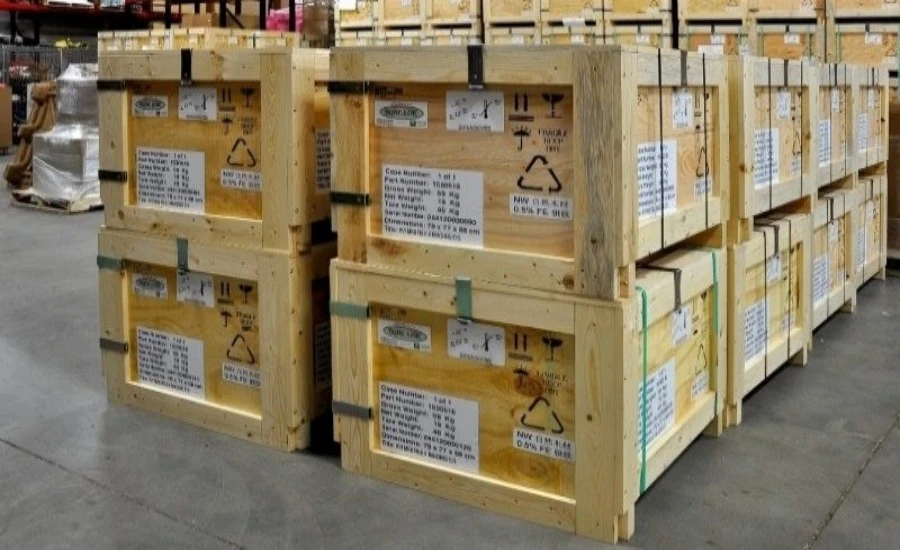
NAVI Titanium – Secure Packaging, Global Delivery
NAVI Titanium's sintered filter elements are manufactured from high-purity CuZn30 and CuZn40 brass powders using precision vacuum sintering technology, producing a robust, corrosion-resistant porous structure with excellent ductility and thermal conductivity. With filtration ratings spanning 10 to 200 microns, these filters deliver consistent permeability, high mechanical strength, and superior resistance to dezincification in aggressive water and steam environments. The uniformly controlled pore network ensures stable differential pressure and high dirt-holding capacity, making them the preferred choice for compressed air dryers, steam traps, water treatment pre-filtration, and pneumatic instrumentation systems where reliability and longevity are essential for continuous plant operations.
At NAVI Titanium, we understand that product integrity does not end at the factory gate-it extends to every stage of logistics and delivery. Every sintered filter is individually wrapped in anti-corrosion VCI paper and sealed in heavy-duty PE bags to prevent moisture ingress and surface oxidation during transit. Multiple units are then nested within custom-engineered foam-cut cartons or plywood crates, depending on shipment size,
to eliminate impact damage from vibration or stacking. We conduct drop-test simulations and random package integrity audits on each shipping batch to ensure your filters arrive in pristine condition, even for air-freight or ocean-freight routes spanning continents. For critical expedited orders, we offer reinforced double-wall box packaging and GPS-tracked door-to-door express options, giving you full visibility and peace of mind from our warehouse to your receiving dock.
Our commitment to packaging excellence is matched by our global logistics network and transparent shipping protocols. With distribution hubs in Asia, Europe, and the Americas, NAVI Titanium maintains rapid dispatch capabilities and real-time inventory visibility, ensuring accurate order fulfillment regardless of destination. We partner exclusively with tier-one freight forwarders and provide complete customs documentation, commercial invoices, and material certificates with every shipment, simplifying your import clearance process. For bulk orders, we offer sea-worthy fumigated wooden pallets and container load planning to maximize shipping economy while maintaining product safety.

Backed by our dedicated logistics team and ISO-certified quality processes, we guarantees that every filter you order arrives on time, in perfect condition, and ready for immediate installation-because our responsibility to your success does not stop at production.
Frequently Asked Questions
How can I confirm that the brass filter I receive matches the specification I ordered?
+
-
Customers can check the part number, dimensions, material grade, pore specification, quantity, and inspection documents against the purchase order. For customized orders, we recommends confirming the approved drawing or specification before production so both sides use the same reference during final inspection.
Can a brass filter be supplied with different shapes or connection features?
+
-
Yes. Sintered brass parts can be produced in forms such as discs, tubes, sleeves, cartridges, and other customer-defined shapes. Connection details, dimensions, and mounting features can also be discussed according to the customer's requirements. Providing a drawing or sample is usually the easiest way to communicate a customized request.
What signs indicate that a brass filter has reached the end of its usable period?
+
-
There is no universal replacement interval. More useful indicators include a persistent change in flow, pressure behavior, inability to restore performance after cleaning, physical damage, or a change in filtration results. Keeping basic maintenance records makes it easier to distinguish normal contamination from a part that should no longer be used.
Does long-term storage affect sintered brass filters?
+
-
Storage conditions can influence the condition of the parts, particularly when they are exposed to moisture, contaminants, chemicals, or physical impact for extended periods. Keeping filters sealed in suitable packaging and storing them in a clean, dry location is recommended until installation.
How can I reduce unnecessary replacement costs when using sintered brass filters?
+
-
Instead of focusing only on the purchase price, buyers should consider cleaning frequency, expected service period, inspection requirements, and the consequences of premature replacement. Selecting a specification that matches the actual operating conditions can help avoid buying an unnecessarily fine or unsuitable filter.
Hot Tags: sintered brass filter, China sintered brass filter manufacturers, suppliers, factory, Sintered Bronze Sheet, Sintered Porous Filter, Sintered Porous Metal Filter, Sintered Stainless Steel Plate, Sintered Stainless Steel Sheet, Sintered Steel Filter