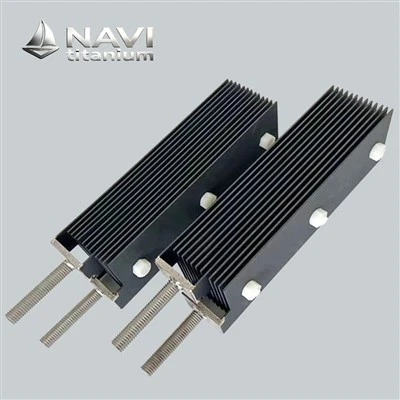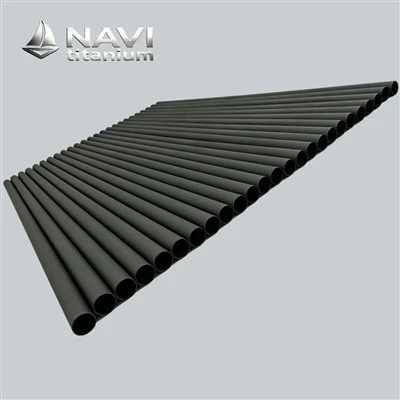


Iridium oxide coated titanium anodes made by NAVI Titanium are the most active precious metal oxides for oxygen evolution reactions (OER) in strong acid environments. Since 2008, NAVI Titanium has delivered IrO₂‑coated titanium anodes for over 200+ projects covering PCB waste‑liquid copper recovery, organic electrosynthesis pilot‑to‑commercial scale, electrolytic copper‑foil production across Europe, Southeast Asia and North America.

Solution of NAVI Titanium


NAVI Titanium iridium oxide titanium anodes support a variety of custom shapes like titanium mesh, titanium plates, oval pieces, and special-shaped electrodes, with high-performance precious metal coatings that provide reliable anode solutions for all kinds of electrolysis processes.


Application
NAVI Titanium's iridium oxide coated titanium anodes is a high-performance electrode material specifically designed for the industrial electrolysis and electroplating industry. It has strong corrosion resistance, stable electrochemical performance, long service life, doesn't produce anode sludge, and maintains a constant electrode spacing. Because of these advantages, it's widely used in key industrial areas like PCB waste metal recovery, electrolytic copper foil production, and continuous steel plate electroplating.
The electrolytic system for metal recovery from PCB waste liquid is divided into an anodic oxidation zone and a cathodic deposition zone. A cation-exchange membrane separates the anodic and cathodic electrolytes. At the cathode, Cu²⁺ is reduced to produce high-purity metallic copper. The coated product is placed in the anodic zone, where it drives two primary anodic reactions: the oxidation and regeneration of Cu⁺ and the evolution of oxygen from water. All electrochemical reactions are based on the double layer at the electrode interface and the kinetics of electron transfer.


On the anode side, three types of reactions occur with differing potential gradients, listed in ascending order of potential from low to high: Cu⁺ oxidation, oxygen evolution from water, and chlorine evolution from chloride ions. The core function of the Ti/IrO₂ coating is to reduce the overpotential for Cu⁺ oxidation, widen the potential differences among these three reactions, prioritize the directed oxidation of Cu⁺, and suppress chlorine gas generation.
Purchasing guide

Quality control(QC)


| Titanium Base Material Suppliers: | Coating Precursor Suppliers: |
|
|
|


Manufacturing Process

Sample Service
There are obvious differences in customer industry structures, R&D models, and project processes across different regions. NAVI Titanium sample specification service system is adjusted to meet the needs of customers in different regions, better matching the local industrial ecosystem.
In Southeast Asia, there are many small and medium-sized OEMs for electrolytic equipment. Many of these companies lack dedicated electrochemical R&D teams, and sample needs mostly revolve around hypochlorite disinfection equipment, aquaculture electrolytic devices, and prototype pool electrolysis equipment. Most customer samples are medium-sized custom structures, often requiring the replication of old equipment electrode structures. We offer free mapping and simple structural optimization during the sample stage, along with easy-to-understand operating guides to help OEMs quickly complete prototype debugging.


In the European and American markets, the focus is on precision electroplating, PEM water electrolysis, university research labs, and large chemical companies. Customers demand strict sample testing reports, material traceability, REACH compliance, and experiment documentation, with many parallel comparison samples needed. We strictly follow ASTM and EN industrial standards to deliver samples with complete compliance documentation, supporting multiple parallel samples to meet the rigorous comparative testing requirements of laboratories.
For industrial clients in Russia and Central Asia, many projects involve the localization of imported equipment. Samples often need to match older imported anode models. We accept original old samples sent by customers, carry out mapping, produce benchmarking customized samples, and provide bilingual technical documentation in Russian to align with local project review processes.


In the Middle East, the focus is mainly on large EPC water treatment and seawater-related projects. Samples are often used for technical evaluation in the early stages before project bidding. The samples need complete stamped technical documents for internal technical review by contractors. NAVI Titanium can provide paper copies with scanned stamps to meet project bidding and documentation requirements.
In Latin America and Africa, customers are mostly small and medium municipal water treatment projects with limited budgets. Sample work focuses on validating basic operating feasibility. While ensuring the sample process aligns with mass production standards, we offer cost-effective trial solutions and practical operating recommendations to help clients control early-stage R&D verification costs.
Application
Organic electrochemical synthesis uses electrons as a residue free green redox medium, replacing highly polluting chemical oxidants such as dichromate and permanganate. It is the mainstream process route for low-carbon manufacturing of pharmaceutical APIs, fine fragrances, organic acids, and heterocyclic intermediates. Iridium Oxide Coated Titanium Anodes, as a chlorine free acidic organic electro oxidation specific oxygen evolving DSA size stable anode, relies on the intrinsic catalytic activity of rutile phase IrO₂ to achieve directional anodic oxidation of alcohols, aromatic hydrocarbons, and amine substrates. The entire process is free of halogen by-products and impurity components, making it suitable for intermittent and pilot grade high-purity organic electrolysis scenarios.
Core Principles of Organic Electrosynthesis
All organic electro oxidation reactions using NAVI Titanium anodes are essentially based on electrochemistry at the electrode/electrolyte interface; The double-layer theory and electron transfer kinetics provide a foundation for the directed transformation of organic molecules.
When a direct current electric field is applied to the electrolysis system, solvent molecules, supporting electrolyte ions, and organic substrate molecules get adsorbed onto the surface of the NAVI titanium anode, forming an interfacial double layer 1-100 nanometers thick. This double layer consists of a compact layer and a diffuse layer. The electron-loss oxidation of organic molecules can only occur within the compact layer. The electronic structure on the surface of the nano IrO₂ coating directly changes the charge distribution of the double layer and the adsorption configuration of the substrate.


Proximal layer: Closely attached to the surface of the nano IrO₂ crystal, with molecules less than 1 nanometer away from the electrode; the interface electric field strength can reach 10⁶–10⁹ V/cm. Such a strong electric field significantly lowers the activation energy needed for breaking organic molecular bonds, allowing high-temperature reactions that usually require traditional thermal synthesis to occur at room temperature. The coating evenly distributes a large number of Ir⁴⁺/Ir³⁺ reversible redox active sites, which can preferentially and directionally adsorb electron-rich functional groups like hydroxyl, benzene rings, and amino groups. By fixing the adsorption angle of molecules, it can achieve selective oxidation of a single functional group, thereby avoiding indiscriminate reactions of multifunctional organic compounds.
Diffusion Layer: Located on the outer side of the tight layer, organic substrates diffuse into the reaction zone driven by concentration gradients, while oxidation products diffuse in the opposite direction away from the electrode interface. The thickness of the diffusion layer is controlled by the electrolyte circulation flow rate, stirring intensity, and substrate concentration. Excessive diffusion resistance leads to substrate depletion at the interface, inducing the oxygen evolution side reaction from water dissociation and reducing the Faradaic efficiency of the target product. NAVI Titanium offers mesh-like and porous felt-type anode substrates that expand the diffusion and exchange area, reduce the thickness of the diffusion layer, and mitigate mass transfer limitations.


When a positive oxidative potential is applied to a titanium anode, the interface becomes overall positively charged, continuously attracting anions and electron-rich organic substrate molecules, which drives organic compounds like alcohols, phenols, and aromatic amines to migrate toward the electrode surface. Precise control of the potential can adjust the oxidation state of iridium sites, fine-tune the adsorption strength of the substrates in the double layer, and accurately control the oxidation level of organic molecules, preventing aldehyde and imine intermediates from being over-oxidized into carboxylic acid byproducts.
Principle of Interface Five Step Electron Transfer Dynamics
The oxidation conversion of organic substrates on the surface of iridium oxide coated titanium anodes is divided into five consecutive steps, and the total reaction rate is controlled by the slowest step, which directly determines the electrolysis energy consumption and production efficiency
Step 1: Organic substrates in the main electrolyte migrate to the anode diffusion layer via convection and diffusion;
Step 2: Substrate molecules pass through the diffusion layer to reach the dense layer of the nano-IrO₂ coating, where they are directionally adsorbed onto Ir active sites via intermolecular forces;
Step 3: Interfacial electron transfer occurs between the IrO₂ crystal and the organic substrate; the substrate loses electrons to form carbon cations and radical intermediates, while lattice Ir⁴⁺ captures electrons and is reduced to Ir³⁺;
Step 4: Under the positive anode potential, Ir³⁺ is rapidly reoxidized to Ir⁴⁺, completing the catalytic cycle; the organic intermediates undergo secondary reactions such as dehydrogenation, rearrangement, and cyclization to form the target oxidation products;
Step 5: The product molecules desorb from the IrO₂ active surface and diffuse back into the bulk electrolyte.
Reaction rates are governed by three distinct control mechanisms:
Charge Transfer Control: The activation energy for electron transfer is high, and the current density increases significantly as the potential rises. The high-density active sites in the nano-IrO₂ coating substantially reduce the activation energy, thereby enhancing the reaction rate under low-temperature, low-current, intermittent operating conditions;
Diffusion and Mass Transfer Control: Insufficient substrate diffusion leads to substrate depletion at the interface under high current densities, causing water molecules to be preferentially used for oxygen evolution. The porous mesh anode enhances mass transfer by increasing the specific surface area, thereby alleviating this issue;


Mixing Control: Resistance to both charge transfer and diffusion coexists. In small- and medium-sized intermittent electrolysis systems, anodes are typically operated at medium-to-low current densities to balance reaction efficiency and anode lifespan.
Electron transfer strictly follows Faraday's law; the theoretical yield of organic products is directly proportional to the total charge passed through the electrolytic cell. Leveraging the stable and controllable catalytic properties of the anode, the single-pass conversion rate of the substrate can be limited by precisely controlling the total charge applied, thereby ensuring that the oxidation reaction stops at intermediate products such as aldehydes and ketones and preventing the formation of byproducts resulting from deep oxidation.
General Equation for the Basic Anodizing Reaction
The iridium series of NAVI titanium anode brand dominates the anodic oxidation reaction, and the organic substrate loses electrons at the interface to complete functional group modification. The general reaction equation is:

The inherent competitive side reaction on the anode side is the oxygen evolution of water molecules:

,The core function of the nano pure IrO ₂ coating is to reduce the overpotential of organic substrate oxidation, widen the potential difference between organic oxidation and water desorption oxygen, enhance the selectivity of the target reaction, and reduce the ineffective consumption of electrical energy for oxygen evolution side reactions.
Frequently Asked Questions
Does NAVI Titanium's iridium oxide anode have a standardized daily maintenance SOP?
+
-
A: Yes, there is a standard maintenance procedure. Keep the electrolyte clean and free of suspended impurities daily, record voltage and current data every shift; inspect the coating integrity monthly; perform a low-pressure backwash quarterly. Overcurrent, overheating, and dry running are strictly prohibited. The whole process complies with North American industrial equipment maintenance standards, and an official English maintenance manual can be provided.
How often should it be cleaned under oxygen evolution conditions? Does it need frequent maintenance?
+
-
A: For clean electroplating and pure water conditions, cleaning once every 3–6 months is sufficient; for wastewater and trace impurity conditions, cleaning every 1–2 months is recommended. The iridium oxide coating is extremely stable, requiring no frequent maintenance, and normal care can ensure stable operation for 8–12 years.
Will cleaning damage the iridium oxide coating? Which cleaning methods are prohibited?
+
-
A: Standard weak acid soaking, rinsing with clean water, and low-pressure backblowing do not damage the coating. Mechanical grinding, wire brushing, high-pressure rinsing, and long-term strong acid soaking are strictly prohibited, as these actions will directly destroy the surface active iridium oxide structure and cause premature degradation.
Does running continuously for 24 hours require extra maintenance?
+
-
A: For continuous operation, just increase monitoring frequency, maintain stable electrolyte pH, and ensure temperature stays within limits. Iridium oxide anodes are designed for continuous oxygen evolution conditions, and stable operation actually extends their lifespan compared to frequent start-stop cycles.
Without professional maintenance staff, what's the simplest way to take care of it?
+
-
A: Iridium oxide anodes are highly tolerant. The simplest maintenance: keep the water clean, avoid sediment buildup, don't leave it soaking for long periods, and don't exceed current limits. Rinse with clean water every 1–2 months-no complex chemicals needed, making it very suitable for small and medium-sized factories in Southeast Asia.
Hot Tags: iridium oxide coated titanium anodes, China iridium oxide coated titanium anodes manufacturers, suppliers, factory, Platinized Titanium Mesh Anode, Platinum Coated Titanium Anode, Titanium Anode Basket, Titanium Anode Baskets for Electroplating, Titanium Anode Group, Titanium Anode Rod for Water Heater