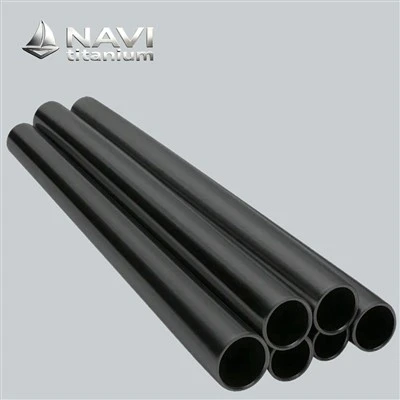

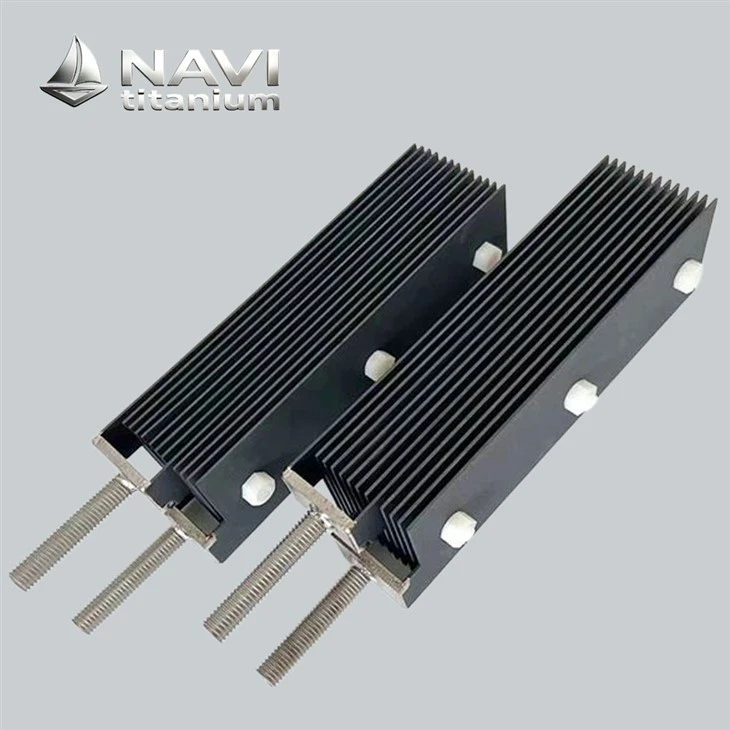
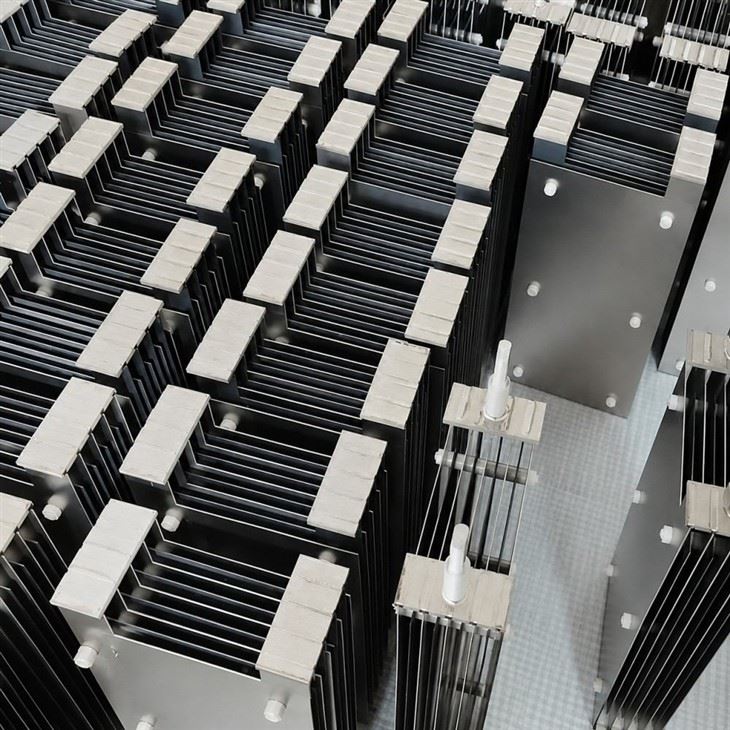
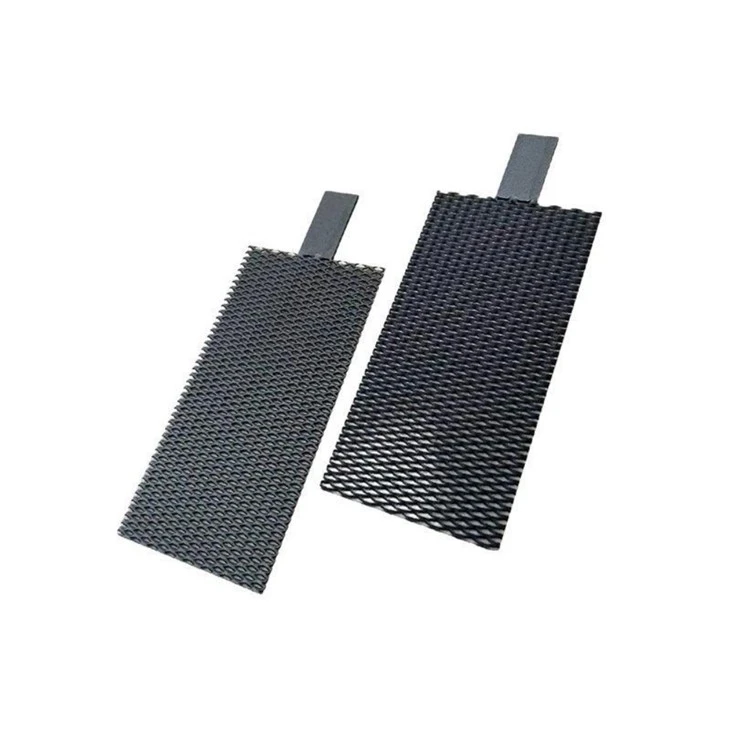
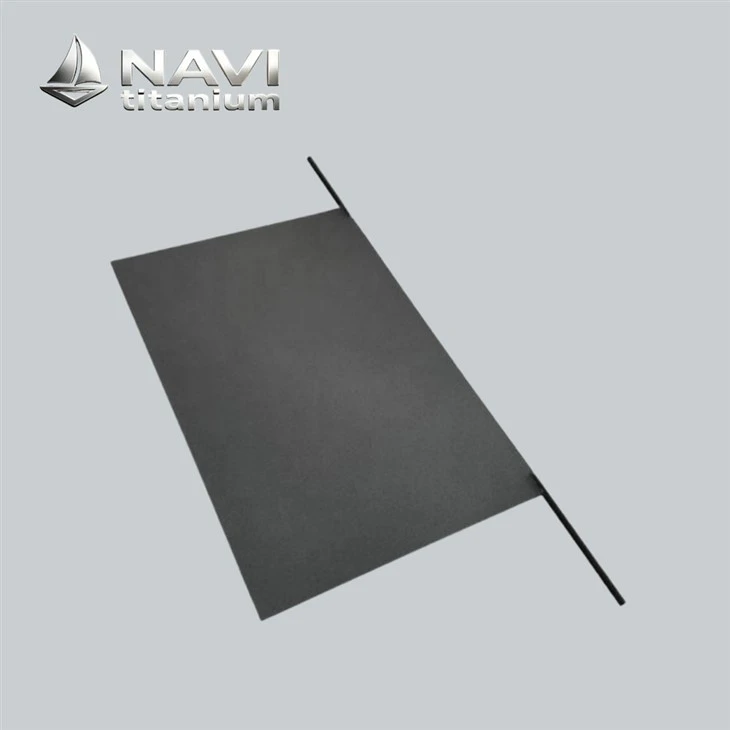
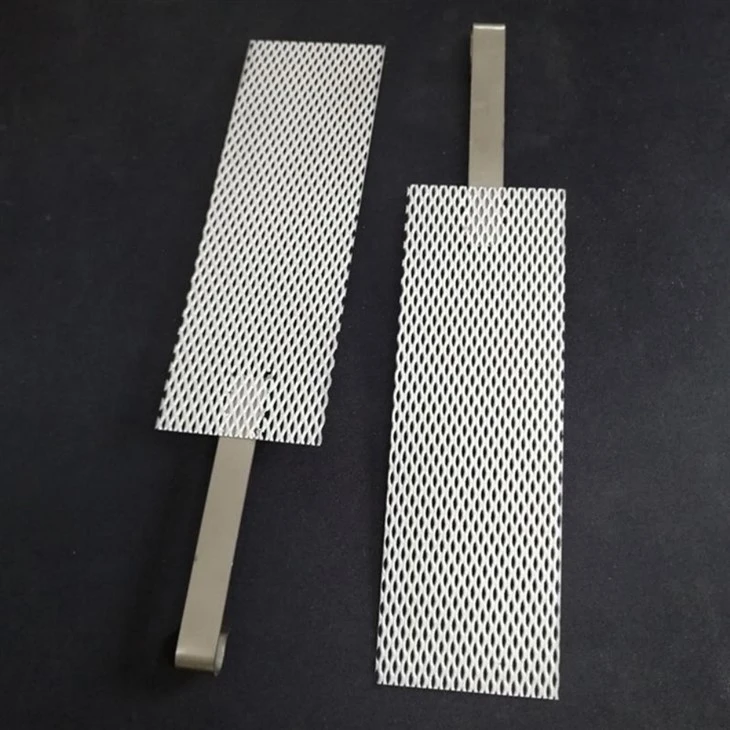
MMO titanium anode of NAVI Titanium is a dimensionally stable anode(DSA) composed of high-purity titanium substrate coated with precious metal oxides such as iridium and ruthenium. They can operate stably and continuously even in harsh environments with high salt, strong acid, and high current density, and are widely used in cathodic protection, water treatment, and electrochemical industries. At the same time, NAVI Titanium maintains strict production quality control with experienced sales and technical team to provide one-on-one support and problem-solving for customers.
Solution of NAVI Titanium
MMO coated titanium anodes are core electrocatalytic components used across various industries. They are widely applied in a variety of fields. The table below summarizes the different fields of application for various coatings.


NAVI Titanium has developed specialized coated titanium anodes tailored for various electrolytic conditions (such as chlorine, hydrogen, and oxygen evolution). We offer custom processing for a wide range of plates, mesh, tubes, and components of various shapes, effectively reducing electrolytic energy consumption while ensuring long-term, stable operation.

Hydrogen evolution reaction

Chlorine evolution reaction

Oxygen evolution reaction
Application
NAVI Titanium's MMO titanium anode are classified into three major categories based on their active coating systems: ruthenium-iridium composite coatings (RuO₂-IrO₂, specifically for chlorine evolution), iridium-tantalum composite coatings (IrO₂-Ta₂O₅, specifically for oxygen evolution), and platinum-plated titanium anodes (Ti/Pt, specifically for hydrogen evolution). These different coatings exhibit significant differences in catalytic activity, media resistance, and potential characteristics, and are tailored to specific industry applications.

Ruthenium Iridium Titanium Anode
1. Chlor-alkali industry uses these as the main anodes in electrolytic cells for the ion-exchange membrane/diaphragm process to produce caustic soda, sodium chlorate, and other products.
2. Sodium hypochlorite generators is used for wastewater treatment/swimming pool disinfection.
3. ICCP (impressed current cathodic protection)
4.Other chloride salt electrolysis applications.
Iridium Tantalum Titanium Anode
1. PCB (printed circuit board) electrolytic copper foil.
2. PEM (proton exchange membrane water electrolysis), high oxidation resistance, ultra-long service life.
3. Advanced treatment of low-chlorine, persistent organic industrial wastewater.
4. Hard anodizing and decorative chrome plating industries.
5. Marine and offshore large-scale cathodic protection.


Platinum Coated Titanium Anode
1.Electrolysis for hydrogen.
2.high-precision electroplating.
3.highly corrosive and high-precision service conditions.
4.electrolysis of trace precious metals.
Purchasing guide

Quality control (QC)
(1) The COA (certificate of analysis) of raw materials
Each batch of raw materials is 100% inspected to ensure full compliance; no unqualified materials are accepted. All information provided is for reference only.
| Titanium Base Material Suppliers: | Coating Precursor Suppliers: |
|
|
|


(2) COA of product
NAVI Titanium provides previous COAs for reference, and issue a COA for each purchased product based on its test results.
 |
|||||||
| Certificate of Analysis | |||||||
| Certificate No.: HL2026-06-0001 | Inspection Date: Jun 10th, 26 | ||||||
| Product Name | Lot No. | Mfg. date | Quantity | Specification | |||
| Titanium Anode | NAVI-20260623-0001 | Apr 26th, 23 | 20 | Φ1.5*16mm | |||
| Technology Requirements | 1. All titanium substrates conform to TA1 grade. 2. Ru-Ir mixed metal oxide coating thickness: 6.5–8.0 μm. 3. Manufacturing with per customer-supplied drawings. |
||||||
| No. | Acceptance Criteria | Status | |||||
| 1 | Material Grade meet ASTM B265 Grade 1 | PASS | |||||
| 2 | No burrs or sharp edges | PASS | |||||
| 3 | No distortion, warping or deformation | PASS | |||||
| 4 | No scratches, dents or impact damage | PASS | |||||
| 5 | Cut edges smooth and free of sharpness | PASS | |||||
| 6 | Annealing process completed as specified | PASS | |||||
| 7 | Surface oxide scale completely removed | PASS | |||||
| 8 | Hole quantity conforms to drawing | PASS | |||||
| 9 | Sheared edges properly ground | PASS | |||||
| 10 | Surface clean and contamination-free | PASS | |||||
| 11 | MMO coating uniform and defect-free | PASS | |||||
| 12 | Sintering process completed satisfactorily | PASS | |||||
| Final Judgement | All Inspection Items Have Passed. | ||||||
| Remark: 1.The certificate only includes basic inspection items that conform to NAVI Titanium's internal quality standards. 2.For comprehensive evaluation involving mechanical properties, coating adhesion, and other performance criteria, kindly consult with NAVI Titanium's technical department. 3.Furthermore, NAVI Titanium is committed to providing comprehensive technical solutions and robust application support to clients. |
|||||||
| Signature of QC |
|
||||||
| This Inspection Certificate is issued in accordance with the Quality Management System of SHAANXI NAVI Titanium METAL TECHNOLOGY CO., LTD. The information contained herein is derived from NAVI Titanium's quality inspection records and shall not be construed as a legal warranty. This Inspection Certificate is not transferable and is intended solely for the use of the customer to whom it is issued. No rights shall be conferred upon any third party by virtue of this Inspection Certificate. |
|||||||

Checked by: |
Approved by:  |
|||
Manufacturing Process
Manufacturing Process of Titanium Anodes
MMO Titanium Anode consist of two types of raw materials: titanium substrate and surface coating material.
Ⅰ. Cutting & Fabrication: Fabricate parts per customer drawings: develop machining drawings, laser cut Grade 1 titanium sheets, and weld to form finished substrates. Grade 1 (TA1) titanium is selected for its low iron impurity content, delivering superior corrosion resistance.
Ⅱ. Sandblasting: Increasing the specific surface area of the titanium substrate; enhancing surface roughness; removing the native smooth titanium oxide film
Analogy: this process follows the same logic as wall painting or tire patching. Roughening eliminates the mirror-smooth surface to guarantee strong coating adhesion and prevent peeling.

Ⅲ. Oxalic Acid Etching: Etch and loosen the surface titanium dioxide film to boost bonding of noble metal coating.
Process parameters: soak substrate in 10% oxalic acid solution under gentle boiling for 2 hNAVI Titanium'ss.
Ⅳ. Alcohol Rinse & Ultrasonic Cleaning: Remove residual titanium oxalate from etching to avoid impurities weakening coating adhesion.

Ⅴ. Noble Metal Coating:
Raw materials: ruthenium(III) trichloride and chloroiridic acid
Operation: dissolve the two noble metal salts in dedicated solvent to prepare coating liquid, then evenly coat the pretreated titanium surface.
Ⅵ. Drying: Evaporate solvent completely with hot air blowers, leaving a solid noble metal precursor film on titanium.

Ⅶ. High-Temperature Sintering:
Temperature range: 450-500℃
Reaction principle: precious metal and titanium matrix oxidize when reacting with ambient oxygen (12 cycles for titanium plate anodes; 10 cycles for titanium mesh anodes).
Final microstructure: composite crystalline phases of RuO₂, IrO₂ and TiO₂ are formed. The three oxides bind tightly together, granting the titanium substrate electrolytic electrode properties including electrocatalysis, conductivity and corrosion resistance.
Ⅷ. Precautions:
Every coated layer must cool naturally and fully down to room temperature before the next coating operation. If recoated prematurely without full cooling, the coating will suffer mottled discoloration, which drastically degrades anode service life and electrochemical performance.
Coating raw material specifications: chloroiridic acid: 35% saturated solution; ruthenium(III) trichloride: crystalline powder with 37% ruthenium content.

Microscopic Layered Architecture of Titanium Anode Coating System
The coating of the MMO titanium anode under the NAVI Titanium brand is not a single uniform mixed oxide film; The thermal decomposition coating process naturally forms a three-layer functional structure: a pre treated titanium substrate anchoring interface layer, a noble metal composite oxide intermediate catalytic core layer, and a dense protective surface layer. In different coating systems (neodymium titanium system, ruthenium iridium gradient system, iridium tantalum oxygen evolution system, and tin antimony modified special coatings), strict lattice constraints are imposed, limiting the molar ratio of each layer component. These constraints directly determine the total amount of precious metals that the coating can withstand (upper limit of load) and the minimum continuous film thickness (lower limit of thickness), as the basic limiting conditions for load carrying capacity and thickness parameter range.
The Implicit Roles of the Coating's Three-Layer Functional Architecture
The 0.1-0.5 micron thick interface transition layer on the titanium substrate used in NAVI Titanium is the decisive factor determining the minimum load threshold and minimum coating thickness. It has two core implicit functions:
1. Mitigating the mismatch in thermal expansion coefficients between the titanium substrate's TiO₂ passivation layer (5–10 nm) and the precious metal oxides: The coefficient of thermal expansion for industrial-grade pure titanium is 8.5×10⁻⁶/K, while that for IrO₂ is 6.2×10⁻⁶/K, for RuO₂ is 4.8×10⁻⁶/K, and for Ta₂O₅ is only 3.6×10⁻⁶/K. Direct sintering of pure noble metal oxides would result in through-cracks due to thermal stress; therefore, a high proportion of Ta₂O₅ and TiO₂ must be introduced into the interface layer to form a buffer lattice. The minimum noble metal loading at the interface must not be less than 1.2 g/m²; otherwise, the buffer lattice will be discontinuous, allowing micropores to directly connect to the titanium substrate, leading to passivation breakdown failure within 3,000 hNAVI Titanium'ss of operation;


2. Preventing high-temperature sintering diffusion of Ti atoms from the titanium substrate: During the sintering process at 450–550°C, the titanium substrate tends to diffuse into the coating, forming a Ti-Ru/Ir mixed phase with no catalytic activity, which depletes the active sites of the surface precious metals. The minimum thickness of the interface layer must not be less than 0.3 μm; otherwise, the formation rate of the mixed phase increases threefold, resulting in a decrease of more than 25% in the effective utilization rate of the nominal loading.
The intermediate catalytic layer serves as the core of the anodic electrochemical reaction, accounting for more than 90% of the catalytic activity for chlorine and oxygen evolution, and is the primary layer carrying the precious metal loading; The surface protective layer is a low-porosity, dense film composed primarily of high-iridium and tantalum oxides, which inhibits the inward penetration of electrolyte ions. If the protective layer is too thin, it loses its protective function; if it is too thick, it significantly increases interfacial resistance and elevates electrolytic energy consumption. The three-layer structure collectively forms the parameter constraint framework of the coating system; any deviation in the thickness or loading of any single layer from the specified range will trigger a chain reaction leading to the failure of the entire coating.

Ruthenium titanium (RuO₂ - TiO₂) chlorine evolution coating system

The standard molar ratio of Ru:Ti is 3:7 to 4:6. RuO₂ and TiO₂ can form a continuous rutile solid solution with a lattice mismatch of less than 3%, which offers optimal film-forming properties and results in uniform, fine pores. This is the only coating system suitable for high-chloride-ion media.
Natural parameter limits imposed by lattice constraints:
Ru is the only precious metal present. The stability range of the solid solution limits the Ru oxide content to no more than 45 mol%, corresponding to a nominal loading limit of 14 g/m² for a single-layer coating.
If the loading is forcibly increased to 16 g/m² or higher, RuO₂ undergoes phase separation, resulting in the precipitation of elemental ruthenium, which rapidly and selectively leaches out during operation;
The minimum continuous film thickness is 4 μm. When the thickness is less than 4 μm, the rutile solid solution cannot completely cover the etched anchor points on the titanium substrate, resulting in an island-like film structure. Localized areas without precious metal coverage form corrosion-active sites.

The shipping advantages of NAVI Titanium
NAVI Titanium has been deeply involved in the titanium industry for over a decade and has a thorough understanding of the product characteristics and transportation damage issues of MMO titanium anodes. Unlike the common simple cardboard and foam packaging used in the industry, we have set up a full-process, multi-level, customized protection packaging system to create tailored packaging solutions for titanium anodes of different shapes, sizes, and coating systems, ensuring zero damage, zero oxidation, and zero coating peeling during transportation, fully protecting product quality.
NAVI Titanium has established long-term strategic partnerships with major global shipping companies, securing stable space and priority loading rights. We operate dedicated industrial equipment shipping routes from China to North America, Europe, the Middle East, Southeast Asia, Australia, Latin America, and Africa. Unlike regular general cargo shipping, our routes are customized for precision industrial components, avoiding risks like mixed bulk cargo, heavy stacking, and long-term salt spray corrosion. Our shipping space is stable, container drop rates are extremely low, and the transit times are standardized.


For large industrial orders to North America and Europe, we offer full-container FCL transport, with independent containers throughout, no mixing, and no compression, ensuring consistent quality for large batches of anodized products. For small to medium orders, we use LCL for precise splitting, with independent reinforced compartments to prevent damage from mixed cargo. For routes to the Middle East and Australia with high-salt-sea conditions, we employ special anti-moisture and anti-corrosion maritime solutions, including fully vacuum-sealed wooden crate reinforcement and waterproof wrapping to withstand long-distance high-humidity and high-salt corrosion environments.
NAVI Titanium leverage the China-Europe, Central Asia, and Pan-Asia mainline networks to create rapid delivery channels within the Eurasian continent, perfectly compensating for the slow speed of sea transport and high air freight costs. Covering the whole of Europe, Russia, and the five Central Asian countries, we provide stable direct rail transport, shortening transit times by more than 50% compared to sea shipping, unaffected by extreme sea weather, congested routes, or port strikes, with stable year-round navigation and high punctuality. For Southeast Asia inland markets, using the China-Laos and China-Vietnam railway lines, we achieve direct delivery to cities in the Indochinese Peninsula, avoiding the bumps of traditional road transfers and border congestion issues.

Air Transport System

NAVI Titanium have opened dedicated emergency air transport channels for industrial parts, suitable for urgent scenarios such as global sample testing, equipment repairs, and accelerated project launches. Leveraging major domestic international airports and global aviation hub resources, we provide standard air transport, expedited air transport, and door-to-door express air delivery services, completing global delivery in 3-7 days. This perfectly addresses urgent needs like sudden industrial equipment malfunctions, immediate replacement of anodized parts, and expedited testing of research samples. All air cargo uses dedicated positions for precision instruments, prohibiting stacking of heavy items or rough handling, ensuring careful handling and zero damage to precision coatings throughout the process.
Frequently Asked Questions
What is the daily standardized maintenance process for MMO titanium anodes? Are there any practical SOP documents?
+
-
NAVI Titanium has a complete standardized maintenance SOP compatible with North American industrial operation systems. Daily maintenance only requires keeping the electrolyte clean and free of large amounts of sediment and impurities, checking the tank voltage and current stability weekly, inspecting the anode surface for scaling and coating condition monthly during power-off, and performing a professional cleaning every 3–6 months. Overcurrent, overheating, and reverse current operation are strictly prohibited. No complex high-frequency maintenance is needed, and an English standardized maintenance manual can be provided for factory compliance records.
Does the MMO titanium anode substrate meet the ASTM B265 standard? Can you provide MTC material certification and batch life test reports?
+
-
All titanium anode substrates of NAVI Titanium are made of TA1/TA2 pure titanium, strictly following the ASTM B265 industrial pure titanium standard. Each batch of products comes with the original MTC material certificate, factory electrochemical performance test report, and accelerated life test report. Third party authoritative institutions also support a re examination. The material and coating performance are fully traceable, with no batch deviation.
Are the weld joints of the titanium substrate prone to corrosion failure? Is a complete pre-treatment process performed after welding?
+
-
A titanium alloy-specific argon arc welding process is used, resulting in full welds without porosity or oxide inclusions. The weld corrosion resistance is consistent with the substrate and will not become a priority corrosion point. All anodes undergo a complete pre-treatment process after welding, including degreasing, sandblasting, strong acid etching, and activation, ensuring extremely strong coating adhesion and preventing peeling and flaking.
Can I replicate the old anode 1:1? If only the image size is provided, can a production quotation be provided?
+
-
NAVI Titanium supports 1:1 customized replication of all titanium anode specifications. Customers can provide actual product pictures, sizes, or old samples for quick and accurate quotation, mold opening, and production. The products of NAVI Titanium are fully compatible with various domestic and imported sodium hypochlorite equipment and electroplating equipment, without the need for any modifications to the customer's equipment structure.
Do the products meet local industrial standards? Can you provide a complete set of customs clearance documents?
+
-
NAVI Titanium's products meet internationally recognized industrial standards and are compatible with local industry regulations in Latin America, such as Brazil's ABNT. We can provide a complete set of customs clearance documents free of charge, including material certificates, test reports, certificates of origin, packing lists, and invoices, to fully assist customers in smooth customs clearance and avoid delays.
Hot Tags: mmo titanium anode, China mmo titanium anode manufacturers, suppliers, factory, MMO Mesh, MMO Ribbon Anode, Platinum Titanium Electrode, Powered Titanium Anode Rod, Titanium Anode for Water Treatment, Titanium Anode Group