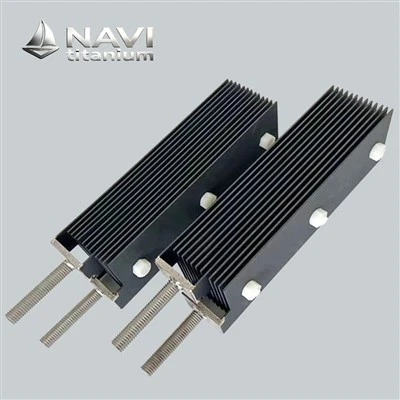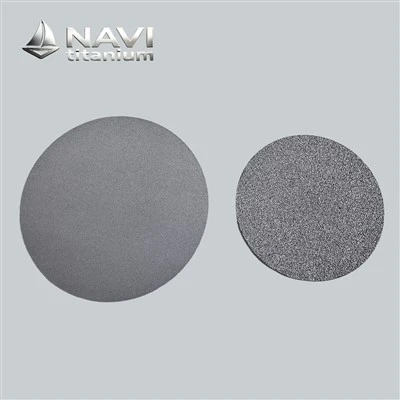

PEM water electrolysis is one of the most essential technologies for creating long-lasting energy due to the global shift toward green hydrogen generation. The titanium anode is crucial to high-performance PEM electrolysers. Interface engineering is one of the best techniques to increase electrolyser performance, lifespan, and cost. Interface engineering improves the physical and chemical boundaries between the titanium anode, catalyst coating, and proton exchange membrane. This innovative technology tackles PEM system issues such as contact resistance, restricted mass transfer, and catalyst degradation, which directly impact hydrogen production and energy efficiency.
1.Specification
General Shapes: Plate, Rod, Mesh, Tube or customization
Coating: The classical formula of IrO2-Ta2O5, Ru-Ir, Pt, or customization
Electrochemical reaction: Oxygen/Chlorine/Hydrogen evolution reaction
Internal Code: NAVI-1-001
Brand: NAVI Titanium®
Basic Material: Pure Titanium Gr1
Advanced fields of NAVI: PEM, PCB, wastwater treatment etc.
2.Purchasing guide
(1)Process
NAVI Titanium(since 2008) can process according to your design drawings
(2)Free sample
NAVI Titanium supply free sample for general specifications
(3)Technology support
Professional one-for-one service, design free, welcome to contact us

Recent titanium anode design modifications have improved PEM electrolyser performance. By managing surface form, gradient porosity structures, and sophisticated multi-layer coating technologies, manufacturers may achieve unprecedented efficiency and endurance. As the hydrogen economy evolves, electrolysers that perform consistently under varied load situations and utilise as little precious metal as feasible are crucial. Project developers, engineers, and procurement experts who wish to maximise PEM electrolyser investments should study how interface engineering enhances titanium anodes. This in-depth study examines the processes, technologies, and tangible advantages that make interface engineering a game-changer in hydrogen production systems.
How Does Titanium Anode Interface Engineering Improve PEM Electrolyzer Performance?
By fixing important operational problems, interface engineering completely changes how titanium anodes work in PEM electrolyzers. The spot where the titanium base meets the electrocatalyst layer is a place with a lot of electrochemical activity. If something goes wrong there, it can affect the whole system.

Reducing Contact Resistance Through Surface Modification
Minimizing electrical contact resistance is one of the main ways that interface engineering improves performance. Flat titanium surfaces that are used in most devices don't make enough contact points with catalyst layers, which can cause hotspots and uneven current flow. Advanced surface texturing methods create microscale and nanoscale features that make the effective contact area a lot bigger. This optimization cuts down on ohmic losses, which directly leads to lower working voltages and better energy economy. Studies on commercial PEM stacks have shown that interfaces that are properly designed can lower contact resistance by 40–60%. This lowers the voltage by 50–80 millivolts at normal operating current densities.
Enhancing Mass Transfer Efficiency
Limitations on mass movement that affect electrolyzer performance are another important part of interface engineering. To keep the electrolyte and catalyst surface in constant contact during water electrolysis, the oxygen bubbles that form at the anode must be quickly removed. When interfaces aren't built well, bubbles can build up in stagnant zones, blocking busy sites and lowering the effective reaction area. Gradient porosity structures in the titanium substrate make it easier for bubbles to escape while still keeping the structure strong. It's been engineered to have more holes in it so that water can get to the reaction sites more easily and quickly. This stops gas layers from forming, which would make mass transfer more difficult.


Improving Catalyst Layer Adhesion and Stability
How long precious metal catalyst coatings last depends a lot on how well the titanium substrate and the electrochemically active layer stick together. Weak adhesive causes delamination when temperatures change and when there is mechanical stress, which is a terrible loss of performance. In advanced interface engineering, materials like titanium nitride or tantalum oxide are used to make intermediate transition layers. These layers connect the base and catalyst chemically and mechanically. Different temperature expansion factors can be taken into account by these gradient transition layers, which also act as barriers that don't rust and stop the base from passivating. As a result, operational lifetimes are greatly increased, with properly engineered titanium anodes continuing to work properly after 10,000 hours of continuous operation.
Titanium Anode Interface Engineering for Enhanced PEM Electrolyzer Efficiency and Stability
The goal of making PEM electrolyzers more efficient and stable has led to a lot of new ideas in titanium anode interface design. Modern methods use more than one engineering strategy to make speed gains that are stronger than what single-parameter optimization can do.
Multi-Scale Porosity Architecture
Modern titanium anode designs use hierarchical porosity structures to get the best performance in a variety of operating conditions. Macropores (50–200 micrometers) let water and oxygen move through the bulk material while keeping pressure low in the porous transport layer. Mesopores (2–50 micrometers) set up networks of spread-out current collectors that lower lateral resistances and make sure that current flows evenly. Micropores (less than 2 micrometers) increase the surface area that can be used for catalyst deposition, which improves the efficiency of using precious metals. This multi-scale design is made possible by carefully controlled sintering processes that make the titanium base have different levels of density. The structure that was made is still strong mechanically and works better with electricity and chemicals than regular materials with equal pores.


Interface Wettability Control
Managing the water at the interface of the titanium anode has a big effect on how well and how stable the electrolyzer works. Hydrophilic surfaces allow water to enter and keep electrolytes in contact with active sites, while hydrophobic regions that are placed in the right places make it easier for oxygen bubbles to separate and be removed. Advanced surface processes change the interfacial energy properties of titanium substrates, which makes the way they wet better. Plasma treatment, chemical etching, and selective coating application make it possible to precisely control the chemistry and texture of the surface. These treatments make surfaces that keep their best water contact angles even after being used for thousands of hours in environments that are acidic and oxidizing. These changes to the surface are stable, which means that the electrolyzer will keep working well. This stops the gradual loss of efficiency that happens in systems with poorly designed interfaces.
Thermal Management Through Interface Design
When they work, PEM electrolyzers make a lot of heat, and differences in temperature inside the cell can cause mechanical stress and speed up the breakdown process. Interface engineering helps with thermal management by making the best paths for heat to move through the titanium anode structure. The ability of porous titanium to conduct heat relies on both the mass of the material and the structure of the pores. Gradient porosity designs can be improved for thermal management mass transfer, and electrical conductivity. This means that structures can be made that efficiently move heat away from the membrane electrode assembly and toward cooling systems. This thermal optimization lowers local temperature changes that can harm membrane materials and speed up the breakdown of catalysts. This makes the system more stable and extends the life of individual parts.

Titanium Anode Interface Structure Optimization for Better PEM Electrolyzer Operation
To make the titanium anode interfaces work better, we need to know how geometrical features affect electrochemical processes and the overall performance of the system. New research has found certain structural parameters that make operational improvements that can be measured.
Titanium substrates' surface roughness has a big effect on both how catalysts deposit and how well they work electrochemically.
Controlled roughening methods make surface topographies with the right feature sizes to help catalyst layers mechanically connect while also making the most of the electrochemically active surface area. Surfaces with a roughness level between 2 and 5 micrometers (Ra) have worked better than surfaces that are either smoother or rougher. This is because they find the best mix between increasing the touch area and keeping the catalyst layer intact.
The distribution of pores of different sizes in the titanium substrate is another important structural factor.
Narrow pore size distributions make flow behavior predictable and uniform, while wider distributions can cause channeling effects where gas and liquid move more through bigger pores and less through smaller pores. Modern production methods allow for precise control over the spread of pore size, resulting in structures with 80–90% of pores falling within a desired size range. This means that the performance of large-format electrolyzers is the same across the whole active area. This keeps localized degradation from happening, which can cause system-wide failures.
The thin titanium layer's thickness needs to be carefully optimized based on different needs.
Thicker layers make it easier for gases to move through and are stronger mechanically, but they also make it harder for electricity to flow and cost more in materials. Thinner layers reduce the amount of electricity that is lost, but they might not be able to carry enough gas when there is a lot of current. Depending on the working current density and system pressure, the best thickness is usually between 0.5 and 1.5 millimeters. Using gradient porosity in interface engineering lets structures be thinner by focusing transport capacity where it's needed most, close to the catalyst interface.
How Titanium Anode Surface Modification Improves PEM Electrolyzer Stack Performance
When surface modification techniques are used on titanium anodes, they make the PEM electrolyzer stack work much better by fixing problems at the interfaces that lower efficiency and shorten life. These changes happen on the nanometer to micrometer scale and change the chemistry and structure of the surface to make electrical processes work better.

When titanium surfaces are treated electrochemically before the catalyst is deposited, the native oxide layers that stop electricity from flowing are removed. This leaves weak bonding interfaces. Using controlled etching methods makes surfaces more reactive with coating precursors, which leads to better catalyst adhesion. This step before treatment is especially important for coatings made of precious metals, since delamination is a very bad and expensive way for them to fail. When surfaces are properly activated, they form strong chemical bonds with catalyst layers. This keeps the interface's integrity even when temperature cycling and gas evolution cause mechanical stresses.
Plasma-based surface modification methods add functional groups and change the energy properties of the surface without having a big effect on the properties of the bulk material. Plasma treatment in the atmosphere oxidizes titanium surfaces in controlled ways that make them easier to wet and create reactive sites for later covering processes. These treatments go deeper into surface flaws and porous structures than liquid-phase methods, making sure that changes are made evenly across complex three-dimensional anode structures. Plasma-modified surfaces have been proven to last in acidic PEM working conditions by subjecting them to accelerated testing methods that mimic years of practical exposure.


Hybrid approaches to surface modification use more than one technique in a certain order to get benefits that work well together. A typical process might start with mechanical polishing to make the surface rough on a large scale, then move on to chemical etching to make features on a micro and nanoscale, and finally end with plasma treatment to improve the surface chemistry. This method takes more than one step to make surfaces with layered features that cover a range of lengths, with each scale being best for a different aspect of interface performance. Because these processes are so complicated, they need to be carefully controlled and validated. However, the performance gains make the extra manufacturing complexity worth it.
Advanced Titanium Anode Interface Engineering Technologies for PEM Hydrogen Systems
The next-generation PEM hydrogen production systems are made possible by cutting-edge interface engineering technologies used in titanium anode development. These cutting-edge methods use knowledge from materials science and the ability to make precise parts to make anodes with properties that were not possible before.
Atomic layer deposition (ALD) techniques make it possible to make very thin, conformal coating layers that let you precisely control the composition of the interface. ALD processes deposit materials one atomic layer at a time, making coatings that are very uniform and can be controlled in thickness down to the nanometer level. When ALD is used on porous titanium substrates, it can make protective layers that stop the substrate from rusting without having a big effect on mass transfer or electrical conductivity. These protected layers are especially useful for making anodes last longer in tough environments where other coating methods break down quickly. Because ALD coatings are conformal, they cover all of a surface's complex topography, leaving no weak spots where rust could start.


Another advanced method is gradient composition interfaces, in which the chemical make-up changes easily from the titanium substrate to the end electrocatalyst coating through intermediate layers. Instead of discrete layers with sudden changes in composition, gradient surfaces make ongoing changes in composition that get rid of sharp edges where chemical and mechanical stresses build up. To make these gradient structures, you need to use complex deposition methods, like co-sputtering with target compositions that change over time or multi-step thermal breakdown processes that carefully control the ratios of precursors. When compared to regular layered structures, the interfaces that are made are more mechanically stable and last longer electrically.
Self-healing interface technologies use materials that can fix damage on their own while they're working, which greatly increases the lifetime of components. Rare earth oxide additives in coatings can move to damaged areas while they are being used, filling in the gaps and recovering the protective qualities. The chemical and electrochemical gradients that exist during electrolyzer operation set off this self-healing behavior, which can happen without any outside help or shutting down of the system. Self-healing titanium anode technologies are still new and being tested in labs, but they have the potential to change the economics of PEM electrolyzers by reducing the need for upkeep and replacing them more often.
Computational modeling and simulation now make it possible to improve interface designs virtually before making a physical prototype.


Multiphysics models combine electrochemical processes, fluid dynamics, heat transport, and mechanical stress analysis to estimate how certain interface designs will work in real-life situations. These tools shorten the time it takes to make something by finding good design ideas and getting rid of bad ones before expensive testing is done. When you combine machine learning algorithms with simulation frameworks, you get adaptive optimization workflows that can look through huge design spaces and find solutions that don't make sense that human engineers might miss. As these computing abilities get better, new ideas in titanium anode interface engineering keep coming up faster.
Conclusion
Interface engineering has changed the performance, durability, and cost of titanium anodes in PEM electrolysers. Gradient porosity topologies, multi-layer coatings, sophisticated surface modifications, and computational optimisation demonstrate how PEM technology has evolved from a lab curiosity to a large-scale hydrogen production solution.
Well-designed titanium anode connections help the electrolyser system. Lower contact resistance lowers operating voltage and energy usage. Better mass transfer maintains performance at high current densities. Much better catalyst binding prevents costly early failures. These enhancements make PEM electrolysers more efficient and reliable, speeding up commercial green hydrogen usage.
Future interface engineering innovations will improve performance and minimise costs. Computer-optimized designs and self-repairing coatings might test the boundaries. Titanium anodes with sophisticated interface engineering will help clean energy generation become efficient, long-lasting, and cost-effective as the hydrogen industry expands worldwide.
FAQ
1. What makes interface engineering so important for titanium anode performance in PEM electrolyzers?
Interface engineering optimises border zones between titanium surfaces, catalyst coatings, and membrane assemblies. Interfaces regulate contact resistance, mass transfer efficiency, and coating adherence. All of these affect energy efficiency, hydrogen generation, and component longevity. Even if other sections are well-designed, poor interfaces may delay the system. Advanced interface engineering including controlled surface modification, gradient porosity structures, and multi-layer coating designs may increase electrochemical performance and minimise breakdown mechanisms.
2. How does gradient porosity in titanium anodes improve PEM electrolyzer operation compared to uniform porosity structures?
Gradient porosity architectures provide the optimal transport channels for varied anode demands. Mass transfer issues are reduced by higher porosity at the catalyst contact, which helps remove oxygen bubbles and allow water access reaction sites faster. Strength and current collection come from lower porosity deeper in the structure. This functional gradient outperforms uniform porosity designs, which must pick between demands. This lowers operating voltages, increases current density, and stabilises long-term performance under changing circumstances.
3. What are the primary advantages of multi-layer transition coatings on titanium anodes versus single-layer catalyst coatings?
Multi-layer transition layers chemically and mechanically connect the titanium base and precious metal catalyst layer, preventing many failure modes. The intermediate layers protect the titanium base from the acidic workplace. This prevents passivation, increasing resistance. They account for substrate and coating temperature expansion, which reduces mechanical stress and delamination. Gradient composition changes distribute electrochemical potential decreases, preventing local corrosion. Single-layer coatings may break down after 2,000 to 3,000 hours in the same conditions, but these improvements extend operating lifetimes beyond 10,000 hours.
Ready to Optimize Your PEM Electrolyzer with Advanced Titanium Anode Technology?
NAVI Titanium is the leader in titanium anode innovation. They offer state-of-the-art interface engineering solutions that improve the performance of PEM electrolyzers. Our platinum/iridium-coated titanium anodes use fourth-generation low-precious metal composite coating technology with unique gradient transition layers.
This produces amazing results: precious metal loading is cut by 30–60%, the Pt/Ir coating can be adjusted (0.05–0.5 mg/cm²) to fit your specific operating conditions, and the anodes perform consistently for more than 10,000 hours of continuous operation. As a top provider of titanium anodes, NAVI Titanium blends groundbreaking advances in interface engineering made at universities with well-established mass production methods to offer cost-effective solutions that don't sacrifice longevity or efficiency. Whether you're working on megawatt-scale industrial electrolyzers or specialized hydrogen production systems, our technical team can help you get the most out of your project by optimizing it for its specific use.
Get in touch with our knowledgeable staff right away to talk about how NAVI Titanium's advanced interface-engineered titanium anodes can help your PEM electrolyzer project. You can email us at Sales@bloomtechz.com for full technical details, performance information, and custom solutions that meet your exact operational needs.
References
1. Carmo, M., Fritz, D.L., Mergel, J., and Stolten, D. "A Comprehensive Review on PEM Water Electrolysis." International Journal of Hydrogen Energy, Vol. 38, No. 12, 2013, pp. 4901-4934.
2. Babic, U., Suermann, M., Büchi, F.N., Gubler, L., and Schmidt, T.J. "Critical Review-Identifying Critical Gaps for Polymer Electrolyte Water Electrolysis Development." Journal of the Electrochemical Society, Vol. 164, No. 4, 2017, pp. F387-F399.
3. Bernt, M., Siebel, A., and Gasteiger, H.A. "Analysis of Voltage Losses in PEM Water Electrolyzers with Low Platinum Group Metal Loadings." Journal of the Electrochemical Society, Vol. 165, No. 5, 2018, pp. F305-F314.
4. Schuler, T., Kimura, T., Schmidt, T.J., and Büchi, F.N. "Towards a Generic Understanding of Oxygen Evolution Reaction Kinetics in Polymer Electrolyte Water Electrolysis." Energy and Environmental Science, Vol. 13, No. 7, 2020, pp. 2153-2166.
5. Grigoriev, S.A., Fateev, V.N., Bessarabov, D.G., and Millet, P. "Current Status, Research Trends, and Challenges in Water Electrolysis Science and Technology." International Journal of Hydrogen Energy, Vol. 45, No. 49, 2020, pp. 26036-26058.
6. Ayers, K.E., Dalton, L.T., and Anderson, E.B. "Efficient Generation of High Energy Density Fuel from Water." ECS Transactions, Vol. 41, No. 33, 2012, pp. 27-38.