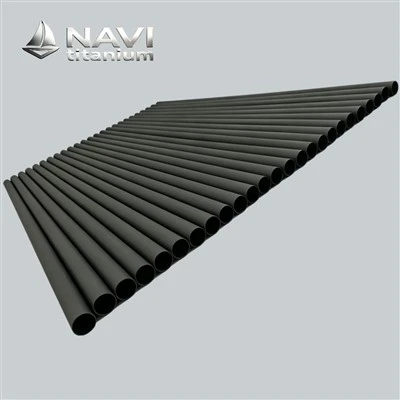
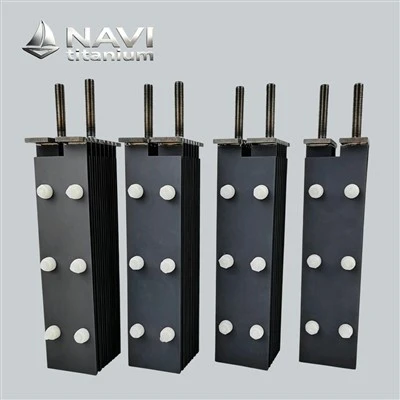
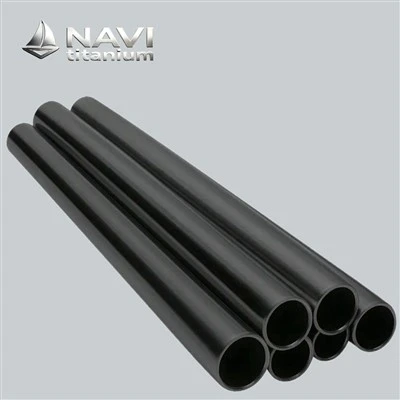
For electrochemical equipment, electrode spacing, connection points, current paths, and mounting dimensions directly affect how an titanium anode group fits into the cell and responds to electrical load. NAVI Titanium prepares the electrode arrangement according to specified cell geometry, connection requirements, and operating parameters rather than relying on a fixed format. During service, NAVI Titanium can assist with electrode inspection, surface cleaning, coating condition evaluation, refurbishment decisions, and replacement timing based on actual service observations.
Solution of NAVI Titanium
Rather than relying on a fixed layout, the supplied arrangement by NAVI Titanium can be specified according to the required cell geometry and installation method. The specification table lists the principal dimensional, material, and electrical parameters, allowing buyers to compare the supplied unit with their equipment drawings and process requirements before procurement.


Electrode spacing, connection points, and available mounting space govern the installation of a titanium anode group, rather than a universal format. NAVI Titanium positions individual electrodes to match equipment dimensions-whether the installation uses a fixed frame, suspended supports, or a designated connection assembly. And also determines electrode positioning and active-area distribution from the electrical load and cell layout specified for the installation.


Application
The installation of a titanium anode group depends on electrode spacing, connection points, and available mounting space rather than on a universal format. NAVI Titanium can arrange individual electrodes to suit equipment dimensions, whether the installation uses a fixed frame, suspended position, or designated connection assembly. This approach allows the electrode set to be removed for inspection or replacement without requiring the entire treatment unit to be reconfigured.
Swimming pool, water parks, hotels, and other continuously operated aquatic facilities require uninterrupted disinfectant generation to maintain water quality under around-the-clock operation. The electrode serves as the primary conductive element within the assembly, supporting reliable electrical connection under continuous duty. Repeated thermal variation, mechanical loading, and changing water conditions increase structural stress over time. To address these challenges, the unit incorporates gradient stress-management technology, optimized functional layer architecture, and advanced bonding methods to improve structural flexibility and installation compatibility. These engineering features help reduce component wear, lower maintenance frequency, decrease energy consumption, and support dependable water sanitation across diverse aquatic treatment facilities.

2.electrochemical catalysis

Volatile organic compounds (VOCs) generated from printing, chemical processing, and other manufacturing activities require effective purification before atmospheric discharge. NAVI Titanium unit often contain complex organic molecules that are difficult to decompose completely, while incomplete treatment may lead to harmful by-products and increased environmental impact. To address these challenges, the NAVI Titanium supplied unit promotes the in-situ generation of hydroxyl radicals (•OH), active oxygen species, and other transient oxidants that continuously break down C–C, C–H, and C–X bonds within VOC molecules.
As contaminants are progressively converted into carbon dioxide and water, the NAVI Titanium system supports thorough pollutant removal, reduced secondary contamination, strong engineering adaptability across different exhaust treatment configurations, and broad compatibility with varying gas compositions and operating conditions.
Purchasing guide

Quality control(QC)
Assembled as a matched set of coated anodes mounted on a shared frame or rail, this grouping delivers balanced current distribution and simplified installation in cathodic protection and industrial treatment systems. The modular layout allows flexible spacing, easy replacement of individual elements, and consistent performance across the array. Every lot is supported by documented verification of coating loading, assembly dimensions, and electrical continuity for full traceability.
| Certificate of Analysis | ||
| Titanium Base Material Suppliers: | Coating Precursor Suppliers: | COA of product: |
|
|
|
|


Manufacturing process
Production begins with the preparation of individual anode units according to the required arrangement, allowing multiple active pieces to operate as one coordinated assembly. Each unit is prepared with carefully controlled geometry so that spacing remains consistent across the complete set. Connection points are then established between the individual units and the common conductive route, with attention given to contact stability and current distribution. Mounting components are fitted according to the specified installation layout, ensuring that each section remains properly aligned when assembled into the complete group. The active surface is subsequently treated with the designated catalytic system, while the exposed areas around joints and contact zones are kept clean to preserve reliable electrical continuity. Before dispatch, the assembled unit undergoes dimensional checks, connection verification, appearance review, and functional assessment. This group-oriented production method is particularly suited to electroplating, water treatment, electrolytic generation, and other systems requiring several coordinated anode units within one installation.


Global Export & Shipping
Each group is prepared according to its quantity, surface requirements, and destination. Individual wrapping, cushioning, fixing supports, and suitable outer cases can be arranged to reduce shifting, impact, scratches, and deformation during handling. Package marks can include item code, quantity, dimensions, batch information, and buyer references, while cargo itemization can be matched with case identification for easier receiving and warehouse checking. For international orders, NAVI Titanium can also prepare commercial invoices, packing lists, certificates of origin, COA, and other requested trade documents. Clear and complete paperwork is important because international shipments may require customs invoices and destination-specific documents.

Freight Coordination & Delivery

Transportation arrangements can be matched with order quantity, destination, urgency, and preferred delivery method. Express, air freight, ocean freight, LCL, and full-container options can be coordinated according to the cargo profile. Buyers may nominate their own freight forwarder or provide specific transportation instructions, while our team coordinates outer-case details, dispatch preparation, loading information, and dispatch verification. Cargo photos, case labels, and loading records can be provided before dispatch, giving overseas buyers a clearer view of the consignment before it leaves the facility. This preparation-to-arrival workflow helps simplify purchasing coordination and makes tailored electrode orders easier to receive at the destination.
Application
Titanium anode group integrates optimized coating architecture, gradient stress-relief design, and precisely controlled substrate preparation into a coordinated engineering solution. Each element is developed to support uniform coating formation, improve structural flexibility, and enhance compatibility with diverse installation and service environments. By combining these design principles, the anode group helps reduce energy consumption, minimize maintenance requirements, extend component service life, and provide greater engineering adaptability across water treatment, disinfection, chemical processing, and environmental applications.
Gradient Stress-Relief Structure:
1. Scenario: Sodium hypochlorite generation equipment is often required to operate continuously under changing temperatures, mechanical loading, and varying water conditions. These demanding service environments place repeated stress on the coating structure.
2. Challenge: Repeated thermal variation and mechanical loading can accelerate fatigue accumulation, reduce bonding quality between functional layers, and increase the likelihood of coating damage, resulting in more frequent maintenance and reduced compatibility with different operating environments.
3. Solution: To overcome these challenges, NAVI Titanium adopts a gradient stress-relief structure that gradually disperses internal stress throughout the coating system.


Substrate Passivation Pretreatment:
1.Scenario: Variations in surface characteristics at the preparation stage can affect coating uniformity, adhesion, and overall service performance in different application environments.
2.Challenge: Without proper surface conditioning, differences in substrate characteristics may lead to uneven coating growth, localized defects, and premature deterioration, increasing maintenance requirements and limiting compatibility with diverse operating conditions.
3.Solution: Backed by extensive application validation, NAVI Titanium integrates proprietary substrate pretreatment technology into its manufacturing process to deliver coating systems with greater engineering adaptability and dependable performance.
Product development
NAVI Titanium, together with its partner leading universities, conducts ongoing research on advanced coating technologies for sodium hypochlorite generation. As water treatment and disinfection systems continue to demand lower precious metal consumption, reducing material usage while maintaining disinfectant output has become a key development objective. Achieving this balance under varying water quality and operating conditions presents significant challenges for coating design.
To address these requirements, advanced multi-component coating formulations are developed to enable complementary functions among different active phases, allowing each material to contribute according to its specific role. This design philosophy reduces precious metal demand, improves material utilization, enhances compatibility with diverse application environments.

2.Energy saving of chlorine evolution electrode

As water treatment applications place greater emphasis on lower energy consumption,and higher chlorine output, coating development must balance these requirements across diverse water qualities and equipment configurations. To meet these demands, the titanium anode group incorporates optimized coating architecture and multi-component material design to improve molecular conversion and maximize the utilization of functional materials. Combined with computational simulation and in-situ characterization, these development methods support coating optimization, expand compatibility with a wide range of application environments, strengthen engineering adaptability for different system layouts, and promote more sustainable water disinfection applications.
FAQ
1. Can the anode set be replaced without modifying the existing equipment?
+
-
Replacement is generally straightforward when the new unit follows the original mounting dimensions, connection points, and active-area arrangement. Before ordering, buyers should confirm the frame size, fixing method, terminal position, and spacing of the existing installation.
2. What technical information should be provided for installations with demanding process requirements?
+
-
For complex applications, useful information includes electrolyte composition, current load, temperature range, duty cycle, cell dimensions, and connection method. These parameters help determine the appropriate substrate geometry, active surface area, and mounting arrangement.
3. What inspection information should be requested before purchasing an anode assembly?
+
-
Buyers should ask for dimensional inspection records, material documentation, coating inspection results, and electrical connection checks where applicable. For customized orders, drawings or agreed dimensional tolerances should be used as the reference for final inspection. This approach gives the purchaser traceable information for comparing the supplied unit with the original specification and internal quality requirements.
4. How can buyers balance purchase cost with service performance?
+
-
The lowest initial price does not necessarily represent the lowest operating cost. A practical comparison should include active-area requirements, precious-material loading where applicable, expected replacement intervals, electrical demand, and servicing frequency. Evaluating these factors together gives buyers a clearer estimate of total ownership cost rather than comparing the quotation price alone.
5. How should the anode set be maintained in hot and humid environments with continuous operation?
+
-
Frequent inspection is particularly important when the unit operates at elevated temperature, high humidity, or extended duty cycles. Deposits should be removed using a cleaning method compatible with the coating, while abnormal voltage changes, current fluctuations, surface deposits, and visible coating deterioration should be recorded.
Hot Tags: titanium anode group, China titanium anode group manufacturers, suppliers, factory, DSA Anode, MMO Mesh, Platinized Titanium Mesh Anode, Platinum Anode, Powered Titanium Anode Rod, Titanium Cathode