

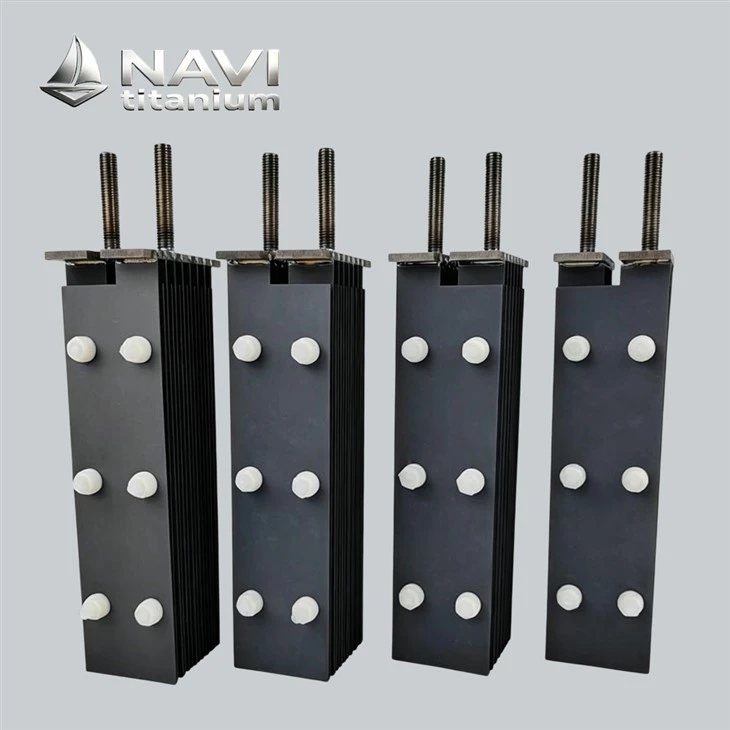
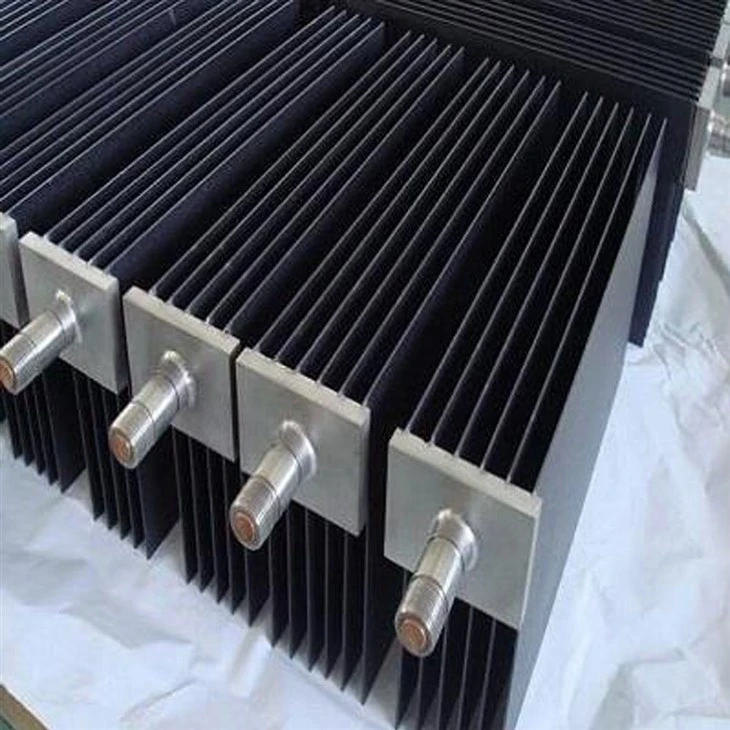

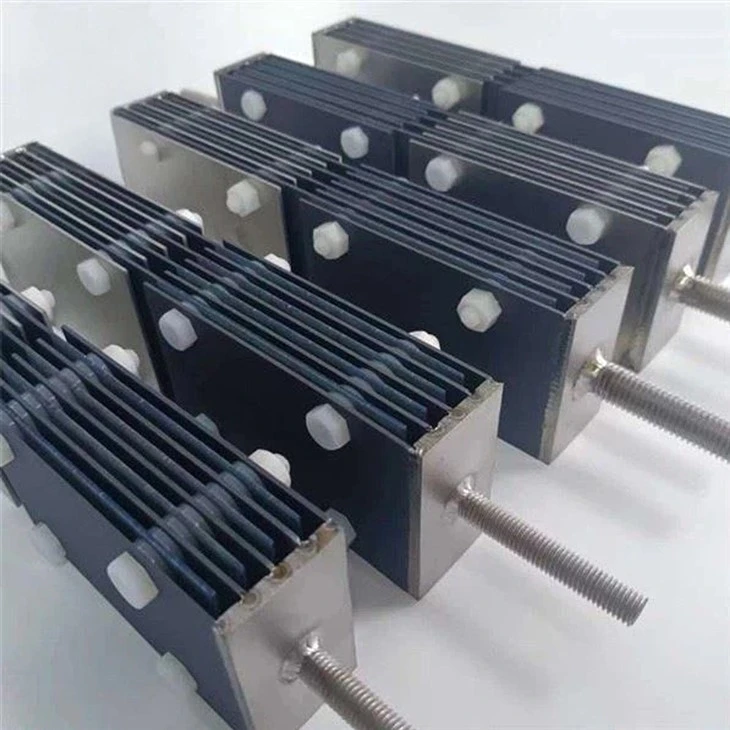

DSA anode (Dimensionally Stable Anode) is a functional electrode material formed by coating the surface of industrial pure titanium with precious metal oxides (RuO2, IrO2, Ta2O5, Pt, etc.). High conductivity, corrosion resistance, and electrochemical stability have been widely used in fields such as electrolysis, electroplating, electrolytic water treatment, electrolytic hydrogen production, and electrolytic metal extraction. NAVI Titanium strictly requires the production process of its products, controls product quality, and is committed to providing the best experience for all customers.
NAVI Titanium not only provides the ruthenium-iridium and platinum-coated titanium anode, but also all kinds of coating materials for MMO titanium anodes.
Solution of NAVI Titanium
It has high conductivity, corrosion resistance, and electrochemical stability. It has been widely used in fields such as electrolysis, electroplating, electrolytic water treatment, electrolytic hydrogen production, and electrolytic metal extraction.


NAVI Titanium has developed specialized coated titanium anodes tailored for various electrolytic conditions (such as chlorine, hydrogen, and oxygen evolution). We offer custom processing for a wide range of plates, mesh, tubes, and components of various shapes, effectively reducing electrolytic energy consumption while ensuring long-term, stable operation.


DSA Anode Application

Electroplating industry
Electroplating industry
DSA titanium insoluble anode is used for:
Zinc plating
Nickel plating
Chromium plating
Copper plating
PCB (Printed Circuit Board) electroplating
Stable current distribution improves coating uniformity and product quality.
Water treatment industry
DSA titanium insoluble anode is used for:
Electrolytic disinfection systems
Sodium hypochlorite generator/ Electroctalytic oxidation systems/ Industrial wastewater treatment/ Circulating cooling water sterilization/ Chlor alkali industry
In the chlor alkali production process, DSA insoluble titanium anode improves the efficiency of chlorine gas evolution, reduces tank voltage and operating costs.


Electrolytic hydrogen production
DSA insoluble titanium anode is suitable for:
PEM (Proton Exchange Membrane Water Electrolysis) for hydrogen
Alkaline water electrolysis for hydrogen
Industrial hydrogen production system
Nonferrous metal electrolysis
Be used for:
Copper electrodeposition
Zinc electrodeposition
Nickel electrodeposition
Precious metal recycling process
Improve metal deposition efficiency and product purity.

Purchasing guide

Quality control(QC)
NAVI Titanium's manufacturing facilities hold ISO 9001 certification. Every batch of raw materials undergoes 100% inspection to guarantee full compliance; no unauthorized materials are accepted.
| Certificate of Analysis | ||
| Titanium Base Material Suppliers: | Coating Precursor Suppliers: | COA of product: |
|
|
|
|


Manufacturing Process
This content breaks down the full manufacturing journey of coated titanium anodes - from titanium substrate selection and precision forming, through surface treatment, coating preparation and application, high-temperature heat treatment, to final quality inspection. Click the button below to explore how each stage shapes anode performance, coating adhesion, and service life.
|
|
|
|


Application
The full name of DSA is dimensionally stable anode, commonly translated as Dimensional Stable Anode in Chinese, also known as Titanium based Metal Oxide Coated Anode. It is a new generation of insoluble electrode material born in the late 1960s. It is based on industrial pure titanium (TA1/TA2) and coated with a 2-15 micron thick platinum group precious metal oxide active paintcoat on the surface through high-temperature thermal oxidation process. With extremely low electrode resistance, excellent electrocatlytic activity, and strong corrosion resistance, it completely replaces traditional lead alloy anodes, graphite anodes, and timet, becoming the core electrode component of modern electroplating industry. After more than half a century of technological iteration, it have penetrated into every sub process of the electroplating industry, from general hardware electroplating to high-end electronic electroplating, from functional electroplating to decorative electroplating, all demonstrating irreplaceable technological value, promoting the entire electroplating industry to complete industrial upgrading towards low energy consumption, high precision, long life, and green enviromental protection.

Core technical characteristics and adaptability to the electroplating industry
The core of electroplating technology is the reduction and deposition of metal ions in the electrolyte on the surface of the workpiece under the action of a direct current electric field, forming a uniform and dense metal paintcoat. As the core component of the electric field, the anode directly determines the stability of the tank voltage, the consistency of the paintcoat quality, production energy consumption, and operation and maintenance costs. Traditional anode materials have gradually exposed many shortcomings under the harsh working conditions of modern electroplating: lead alloy anodes are prone to dissolution in acidic plating solutions, producing lead ion impurities that contaminate the paintcoat and increase its brittleness.
After long-term use, severe electrode deformation leads to uneven surface current distribution on the workpiece;
Graphite anodes have low mechanical strength and are prone to slagging at high current densities, causing pitting defects in the paintcoat and poor conductivity, resulting in high cell voltage; Soluble timet such as pure nickel anodes and pure copper anodes have the problem of mismatched anodic dissolution rate and cathodic deposition rate. The concentration of metal ions in the plating solution fluctuates greatly, requiring frequent addition of additives to adjust process parameters. The emergence of DSA anodes perfectly solves these industry pain points, and its core technical characteristics are deeply adapted to electroplating conditions.
Firstly, there is the ultimate dimensional stability. The titanium substrate itself has high mechanical strength and almost no electrochemical dissolution occurs during the electrolysis process.


The electrode spacing changes by less than 1% during tens of thousands of hours of operation, completely avoiding the current distribution deviation problem caused by traditional anode deformation. This is the basic guarantee for achieving uniform paintcoat thickness in high-precision electroplating scenarios.
Secondly, it has excellent electroctalytic selectivity. By adjusting the elemental composition of the surface precious metal oxide paintcoat, the product can precisely regulate the electrochemical reaction pathway. It can reduce the reaction overpotential by more than 0.3V in different electroplating enviroments such as chlorine and oxygen evolution, significantly reducing the energy consumption of the electrolysis process, while suppressing the occurrence of side reactions and reducing the generation of harmful impurities in the plating solution.
The third is extremely strong adaptability to working conditions.
By adjusting the paintcoat formula, it can work stably in acidic, neutral, alkaline, and even highly corrosive plating solutions containing fluoride ions for a long time. The working temperature covers the conventional plating temperature range of 5-60 ℃, and the carrying current density range is from 10A/m ² to 5000A/m ², fully covering the full scene requirements from low current density decorative plating to high current density high-speed plating.
Finally, the ultra long service life of product can reach several thousand to tens of thousands of hours under conventional electroplating conditions, which is 5-10 times longer than traditional lead alloy anodes. After paintcoat failure, the anode can be regenerated by re paintcoat with an active paintcoat, greatly reducing the overall cost of use for users.

By adjusting the paintcoat formula, it can work stably in acidic, neutral, alkaline, and even highly corrosive plating solutions containing fluoride ions for a long time. The working temperature covers the conventional plating temperature range of 5-60 ℃, and the carrying current density range is from 10A/m ² to 5000A/m ², fully covering the full scene requirements from low current density decorative plating to high current density high-speed plating.
Finally, the ultra long service life of product can reach several thousand to tens of thousands of hours under conventional electroplating conditions, which is 5-10 times longer than traditional lead alloy anodes. After paintcoat failure, the anode can be regenerated by paintcoat with an active paintcoat, greatly reducing the overall cost of use for users.
Application in the field of general decorative electroplating
Decorative electroplating is the largest subdivision of the electroplating industry, widely used in surface treatment of products such as hardware and bathroom, automotive parts, home building materials, and consumer electronics casings. The core requirements are a bright and uniform appearance of the paintcoat, compliance with corrosion resistance standards, and stable composition of the plating solution during long-term production. The application of product in this field has completely reconstructed the traditional decorative electroplating process system and solved many process problems that have long plagued the industry.
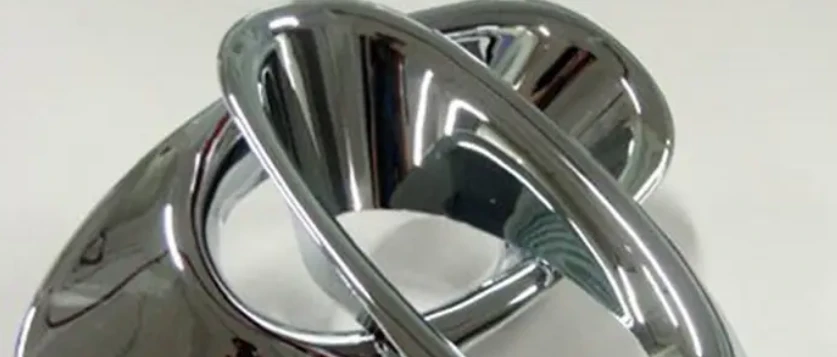

In the decorative chrome plating process, the traditional lead tin alloy anode works in a high concentration chromic acid plating solution for a long time, which continuously dissolves and produces lead ions and tin ion impurities.
These impurities will deposit on the cathode surface, causing defects such as graying, pitting, and poor adhesion in the chrome plating layer. At the same time, the anode surface is prone to form a lead oxide passivation film with extremely poor conductivity, resulting in a continuous increase in slot voltage and a significant increase in electrical energy consumption. After replacing the lead alloy anode with a DSA oxygen evolution anode coated with iridium tantalum oxide, the anode does not introduce any metal impurities into the plating solution, greatly improving the purity of the plating solution, and significantly enhancing the brightness and salt spray resistance of the chromium plating layer.
At the same time, the oxygen evolution overpotential of DSA titanium anode is more than 0.2V lower than that of lead alloy anode. Under the same current density, the cell voltage can be reduced by about 10%. A chrome plating production line with an annual output of one million hardware parts can save more than 100000 kWh of electricity per year.
More importantly, the service life of product in chromic acid enviroment can reach over 8000 hours, which is three times that of traditional lead alloy anode. It does not require frequent replacement and polishing of the anode, and the continuous operation time of the production line is greatly extended. The frequency of slot replacement and maintenance is reduced by more than 60%.

Core technological advantages
The DSA anode of NAVI Titanium perfectly solves the industry pain points that have long existed in traditional electrodes:
Replacing traditional lead alloy anodes:
Completely avoiding the problem of lead ion leaching contaminating the plating solution and increasing the brittleness of the coating, and avoiding defects such as uneven current distribution due to long-term use deformation
Replacing traditional graphite anodes:
Mechanical strength increased by more than 3 times, no slag dropping defects in high current density operating environments, superior conductivity, and can reduce tank pressure by more than 15%
Alternative soluble copper/nickel anode:
Perfectly matched anode cathode reaction rate, avoiding significant fluctuations in metal ion concentration in the plating solution, and eliminating the need for frequent adjustment of electroplating additive parameters
Core parameters of the product
| Parameter Item |
Detailed Specification
|
| Full Product Name | Dimensionally Stable Anode (DSA / MMO Titanium-based Metal Oxide Coated Anode) |
| Internal Product Code | NAVI-1-005 |
| Core Brand | NAVI Titanium® |
| Base Substrate | Gr1 / TA1 Industrial Pure Titanium, strictly conforming to ASTM B265 standard for impurity content |
| Optional Active Coating Formulation |
Classical formulations including IrO₂, IrO₂-Ta₂O₅, Ru-Ir, Pt series, with custom formulations tailored for chlorine evolution, hydrogen evolution and oxygen evolution scenarios available on request |
| Available Basic Shapes | Plate, Rod, Mesh, Tube, Strip, fully customizable for irregular special structures |
| Coating Total Thickness | 2μm ~ 15μm, coating thickness uniformity error ≤ 5% |
| Supported Current Density Range | 10A/m² ~ 5000A/m² |
| Applicable Working Temperature Range | 5℃ ~ 60℃, covering full conventional operating temperature of general electrolysis scenarios |
| Core Performance Indicators |
Dimensional deformation of the electrode is less than 1% after tens of thousands of hours of operation, the electrolytic reaction overpotential can be reduced by more than 0.3V |
| Conventional Working Service Life |
Several thousand to tens of thousands of hours, 5-10 times longer than traditional lead alloy anodes under normal electroplating conditions |
| Supported Custom Service |
Full OEM/ODM customization, exclusive finished product COA (Certificate of Analysis) file provided for each order |
| Core Certification | Full manufacturing facilities certified to ISO 9001 quality system |
Detection method:
The performance evaluation, lifespan prediction, and quality control of dimensionally stable anode rely on a series of laboratory testing methods, mainly including electrochemical testing, physical performance testing, and accelerated aging testing.
1. Electrochemical testing
Electrochemical testing is the foundation and starting point for evaluating the performance and lifespan of dimensionally stable anode , mainly carried out by measuring open circuit potential (OCP), electrochemical impedance spectroscopy (EIS), and cyclic voltammetry (CV).
2. Cyclic polarization test
Cyclic polarization testing is a key method specifically designed to evaluate the resistance of DSA coating titanium anode to localized pitting corrosion.


3. Thermal cycle test
The thermal cycling test aims to assess the mechanical and structural durability of DSA titanium anode, especially the stability of the bonding force between mixed metal oxide (MMO) paintcoats and titanium substrates under thermal stress.
4. Accelerated corrosion testing
Accelerated corrosion testing (also known as electrochemical aging testing) is a core acceleration method for predicting the long-term service life of product.
5. Paintcoat thickness and uniformity testing
The thickness and uniformity of the paintcoat are key quality indicators. A handheld X-ray fluorescence spectrometer (XRF) can be used to measure the anode surface at fixed distances and points, and a 3D contour map can be drawn through data interpolation to visualize the distribution of paintcoat thickness and intuitively judge the uniformity of the paintcoat.
6. Life test
Enhanced lifespan testing (through accelerated electrolysis at high current density) is a common method for predicting the service life of dimensionally stable anode under actual operating conditions.

Development History of DSA Anode
The invention of titanium anode originated from the research of Dutch man H.B. Beer.
Bill invented the technology of electroplating platinum on timet.
Bill invented a method for forming metal oxide films on timet, one of which used ruthenium oxide as the anode for salt water electrolysis, promoting the transformation of the chlor alkali industry.
It were first used in chlor alkali production. Its birth greatly promoted the development of salt electrolysis production and is known as a major technological revolution in the chlor alkali industry. It is one of the most significant inventions in the electrochemical industry of the 20th century.
With the deepening of research on platinum group metals and their oxides, iridium tantalum mixed metal oxide coatings were successfully developed and gradually applied in electrochemical oxygen evolution reactions.
It have been attempted to be applied in PCB copper plating processes, and further development and improvement have been carried out in the first decade of this century.
Zhang Zhaoxian published an article titled "40 Years of DSA", summarizing the development history of product.
FAQ
How long is the service life of your DSA anode?
+
-
Typically, DSA anodes can provide several years of service, depending on the application. Actual lifetime is mainly affected by current density, electrolyte, temperature, coating system, and operating conditions. We can recommend the suitable anode based on your operating parameters.
What maintenance does the DSA anode require?
+
-
Routine maintenance is relatively simple. We recommend regular inspection of the coating, electrical connections, operating voltage, and electrolyte conditions. Deposits should be removed carefully without damaging the MMO coating.
How often should the anode be inspected?
+
-
We recommend periodic inspection according to the operating environment. For critical applications, regular visual inspection and monitoring of operating voltage and current can help identify coating deterioration at an early stage.
How do we know when the DSA anode needs to be replaced?
+
-
Typical signs include a significant increase in operating voltage, reduced electrochemical performance, visible coating damage, or exposed titanium substrate. We recommend evaluating the anode before complete failure to avoid unexpected downtime.
Can the used DSA anode be recoated?
+
-
Yes. If the titanium substrate is still structurally sound, the anode can usually be refurbished and recoated. The old coating is removed, the titanium surface is prepared, and a new MMO coating is applied and tested.
Hot Tags: dsa anode, China dsa anode manufacturers, suppliers, factory, Platinized Titanium Anode, Platinum Anode, Powered Titanium Anode Rod, Titanium Anode Baskets for Electroplating, Titanium Anode for Water Treatment, Titanium Anode Mesh


