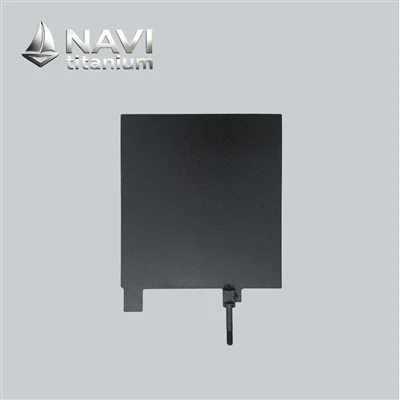
Titanium anode manufacturer NAVI Titanium focuses on producing electrode assemblies for electrochemical applications, with capabilities covering substrate preparation, active coating application, forming operations, and final inspection. Material selection, coating composition, dimensional requirements, and surface condition are evaluated according to the intended electrolysis process rather than handled through a single standard specification. This approach allows each electrode to be matched with its required reaction type and installation format, providing customers with application-specific configurations for different electrochemical processes.
Solution of NAVI Titanium
NAVI Titanium manages titanium-anode projects around clear delivery milestones, from drawing confirmation and production scheduling to coating, quality verification, packing, and carrier handover. Its manufacturing system covers titanium substrates, electrocatalytic coatings, multiple electrode structures, and customized production, with dedicated technical support for drawing-based orders and application-specific designs.


The images focus on the physical form and surface arrangement of the electrode assembly, allowing close observation of its elongated, tubular, planar, or open-frame profile. Attention is given to dimensional proportions, edge treatment, joining points, surface coverage, and the transition between exposed and coated areas.


Application
Titanium anode manufacturer NAVI Titanium supplies coated electrode assemblies for electrochemical processes in which reaction requirements, electrical loading, and electrolyte chemistry determine electrode selection. Substrate grade, active coating composition, exposed area, thickness, and terminal arrangement can therefore be selected around the specific operating target rather than a fixed specification. This application-focused approach enables the same electrode category to be configured for laboratory trials, pilot systems, and continuous production lines.
Application Field: PEM electrolysis for green hydrogen generation
Electrode Type: Precious-metal-coated titanium-based electrodes and titanium porous transport layers (PTLs), available in customized forms for different stack requirements.
Key Specifications: Grade 1 titanium is available for the substrate, with selectable pore characteristics, thickness ranges, active-area dimensions, and coating options matched to stack power, current density, and operating parameters.


Proton exchange membrane electrolyzers place demanding requirements on the substrate used at the oxygen-evolving side, where acidic electrolyte and elevated anodic potential can accelerate material degradation and coating loss. NAVI Titanium supplies tailored electrode assemblies with controlled surface preparation and functional coating formulations for stack capacities ranging from laboratory-scale cells to large hydrogen-generation systems. Electrode selection takes into account current loading, electrolyte exposure, gas release, and contact geometry, helping maintain even electrical transfer and effective gas removal as renewable power input varies.
Application Field: Organic electrosynthesis for fine chemicals, medicines, and specialty material production
Electrode Type: Mixed-oxide coated electrodes, noble-metal surface electrodes, and customized sheet or open-grid formats
Technical Specifications: The base substrate uses titanium, with selectable IrO₂- or RuO₂-based oxide formulations according to the target reaction. Electrode dimensions, open-area ratio, surface configuration, and functional-layer thickness can be adjusted to suit reactor geometry, current demand, and synthesis requirements.


Organic electrosynthesis uses direct anodic oxidation to transform selected molecules without relying entirely on conventional chemical oxidants. In this setting, the electrode surface must remain compatible with the solvent, reactant concentration, applied current, and reactor layout. NAVI Titanium supplies oxide-based and noble-metal-coated electrode formats for laboratory cells, pilot reactors, and continuous synthesis lines, with substrate dimensions and active-surface characteristics selected according to the intended reaction.
Different surface formulations can be evaluated to favor the desired oxidation pathway while limiting unwanted side reactions.
Purchasing guide

Quality control(QC)
As a direct source for these conductive components, we control every stage from raw material to finished goods. Each order ships with verified quality documentation, ensuring full confidence in composition and traceability. Strict in-house standards keep output consistent, reduce sourcing risk, and simplify compliance for global buyers. With stable capacity and responsive service, we support customers who need dependable supply and long-term partnership. Work directly with the maker for reliable results and lasting value.
| Certificate of Analysis | ||
| Titanium Base Material Suppliers: | Coating Precursor Suppliers: | COA of product: |
|
|
|
|


Manufacturing process
| Stage | Manufacturing Description |
| 1. Substrate Preparation | Titanium sheets, rods, tubes, or expanded structures are cut and machined according to the electrode configuration. Surface cleaning removes oil, oxides, and other residues before coating work begins. |
| 2. Surface Activation | Mechanical abrasion and chemical treatment create a clean, active titanium surface. Controlled roughness improves contact between the substrate and subsequent catalytic layers while promoting stronger adhesion. |
| 3. Catalytic Coating Application | Ruthenium, iridium, platinum, tantalum, or blended oxide systems are applied according to the intended electrochemical duty. Repeated coating cycles build the required active layer across the working area. |
| 4. Electrode Stabilization | The coated structure undergoes controlled curing and layer consolidation. Process parameters are adjusted according to substrate geometry and coating chemistry to obtain consistent conductivity and electrochemical behavior. |
| 5. Performance Verification | Each production batch is checked for coating uniformity, adhesion, electrical continuity, dimensional conformity, and electrochemical response. Samples can also undergo accelerated service testing to verify expected operating durability. |
Specification Change Management
When a repeat order includes any change, the revised information is reviewed before production begins. For example, a customer may order 50 pieces in the first purchase and request a different length, width, thickness, connection position, or quantity for the next order. The revised drawing or specification is first compared with the previously confirmed version, allowing the differences to be identified clearly. The updated requirements then go through technical review before the final specification is confirmed. This sequence helps distinguish the latest customer revision from an outdated drawing and gives both sides a clear reference before the order moves forward.

Confirmed Version → Production Release

After the revised requirements have been reviewed, the confirmed specification becomes the reference for the new order. Key details such as dimensions, connection locations, coating requirements, quantity, and other customer-defined parameters can be checked against the latest version before production release. This reduces the risk of using outdated information, applying wrong dimensions, or following an incorrect connection detail from an earlier order. If any point remains unclear or conflicts with previous records, confirmation can be requested before production rather than relying on assumptions. The result is a clearer change-control path: **Customer Revision → Technical Review → Specification Confirmation → Production**, giving repeat buyers a defined checkpoint whenever order requirements change.
Application
Titanium anode manufacturer, NAVI Titanium provides customized electrode solutions for diverse aluminium anodizing processes, covering capacitor foil forming, architectural aluminium finishing, aerospace alloy protection, and hard anodizing treatments. Based on different production targets, electrode structures, and operating parameters, electrode units are engineered with suitable substrate configurations, coating systems, and geometrical designs. These solutions enable precise oxide layer formation, uniform surface treatment, and controlled film growth for various aluminium materials.
In aluminium electrolytic capacitor forming lines, the main objective is to generate a uniform dielectric oxide layer on aluminium foil with accurately regulated thickness and electrical characteristics. Electrode configurations may include mesh structures, plate structures, or electrode unit group constructions featuring oxide-based active layers selected for specific electrolyte compositions and forming voltages. Throughout continuous production cycles, these electrodes maintain consistent anodic oxidation behavior and provide dependable output during high-speed foil treatment. The resulting aluminium oxide film serves as the insulating dielectric layer within capacitors, directly affecting voltage tolerance, leakage properties, and the service life of electronic components used in power supplies, automotive circuits, and communication devices.

Aluminium Anodizing for Architectural Aluminium Profiles

For architectural aluminium profiles, anodizing focuses on forming a decorative oxide layer with consistent visual quality, regulated thickness, and improved durability against external exposure. Electrode structures are commonly available in tubular, plate, or expanded mesh formats with active oxide layers selected for specific bath compositions. The arrangement of electrodes is adjusted based on tank size, profile shape, and electrical loading to achieve balanced oxide formation across large aluminium components. Throughout continuous treatment cycles, these electrodes maintain uniform anodizing results for aluminium frames, curtain walls, doors, and windows. The finished profiles deliver enhanced appearance, increased hardness, and stronger protection against weathering and atmospheric influences.
In aerospace aluminium alloy surface protection, the anodizing process focuses on forming a high-quality oxide layer that improves surface integrity while preserving strict dimensional accuracy of lightweight components. Electrode units are designed with corrosion-resistant titanium substrates and specialized oxide coatings, often produced as customized mesh or plate configurations for aerospace treatment tanks. The electrode structure must accommodate complex component geometries and demanding process control requirements during anodizing cycles. Through precise control of oxide film formation, the process produces aluminium alloy parts with enhanced surface hardness, improved adhesion for subsequent coatings, and better resistance against atmospheric exposure. The finished components are widely used in aircraft structures, precision assemblies, and aerospace equipment.

Hard Anodizing Process for Aluminium Components

Hard anodizing focuses on producing thick, dense aluminium oxide layers with increased hardness, wear resistance, and mechanical durability for demanding applications. Catalytic electrodes used in this process are generally designed with robust titanium structures, oxide-based active layer, and customized dimensions to withstand low-temperature electrolyte environments and high current loading. The electrode configuration is optimized for uniform oxide growth on aluminium components with different shapes and surface areas. During operation, active electrodes provide consistent anodizing conditions, allowing manufacturers to achieve controlled oxide thickness and compact film structures. The final treated aluminium parts demonstrate superior abrasion resistance and dimensional stability, making them suitable for machinery components, hydraulic parts, automotive systems, and precision equipment.
Product development
Titanium anode manufacturer NAVI Titanium has conducted joint optimization projects with global aluminium anodizing production line customers, focusing on improving the oxygen evolution stability under acidic and high-potential operating environments. By adjusting the ratio of active oxide components and optimizing the synergistic relationship between different precious metal elements, the coating formulation is refined to maintain consistent oxygen release characteristics during continuous anodizing cycles. This optimization process considers electrolyte composition, operating voltage, current density, and production duration, enabling the oxide-based active layer system to achieve enhanced adaptability and reliable operation in demanding aluminium surface treatment processes.

Customized Electrode Engineering for Advanced Aluminium Anodizing Lines

Based on practical feedback from anodizing manufacturers, NAVI Titanium further develops customized electrode configurations by analyzing tank structure, aluminium loading conditions, and process parameters. The optimization includes electrode geometry adjustment, installation layout improvement, and operating parameter coordination to enhance the overall matching between the electrode assembly and anodizing equipment. Through systematic engineering evaluation, catalytic electrodes are tailored for different production scenarios, including continuous foil forming, profile treatment, aerospace component finishing, and hard anodizing processes, helping manufacturers achieve more uniform oxide layer formation and consistent surface quality.
FAQ
1. Can the electrode assembly be customized to our specifications?
+
-
Yes. Dimensions, body shape, thickness, opening pattern, connection position, and surface treatment can be adjusted according to your requirements. Please provide drawings, dimensional data, quantity, and intended operating parameters so our sales team can confirm feasibility and quotation details.
2. Can you add our logo or identification marks?
+
-
Yes. OEM and ODM services are available. Logo marking, identification codes, batch references, and other requested markings can be arranged according to the required location, format, and marking method. Please confirm the artwork or marking information before order placement.
3. What information should I provide when requesting a quotation?
+
-
For an accurate quotation, please provide the required dimensions, quantity, body shape, coating specification, connection method, and any available drawings or photographs. If some specifications are not yet confirmed, our sales team can help determine the appropriate configuration from the information you provide.
4. How should the goods be handled during loading and unloading?
+
-
Use suitable lifting or transport equipment according to the package size and weight. During handling, avoid dropping, dragging, stacking excessive loads, or allowing the assemblies to strike hard surfaces. Particular care should be taken around exposed surfaces, edges, terminals, and connection areas.
5. What should I check when the shipment arrives?
+
-
First, inspect the outer packaging for crushing, tearing, moisture, or signs of impact. Then verify the quantity, dimensions, batch information, and identification against the shipping documents. Finally, examine the visible surfaces and connection areas for scratches, deformation, or other damage. Any discrepancy should be reported promptly with supporting photographs.
Hot Tags: titanium anode manufacturer, China titanium anode manufacturer manufacturers, suppliers, factory, Oxygen Evolution Anode, Platinum Titanium Electrode, Ruthenium Iridium Titanium Anode, Ruthenium Iridium Titanium Anode Plate, Titanium Anode Manufacturer, Titanium Anode Mesh Basket