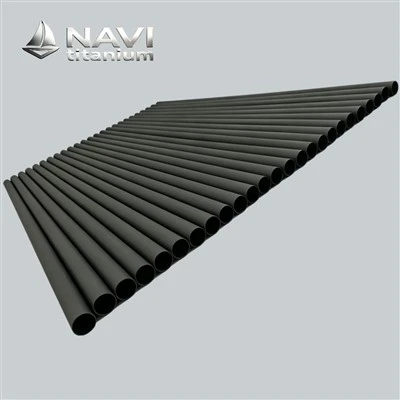
NAVI Titanium supplies titanium anode mesh basket for electroplating lines where anode material must be held securely while allowing electrolyte to circulate freely. The carrier's expanded-gridwork body helps maintain consistent contact between dissolved metal and the plating bath, while reinforced rims and hanging points accommodate repeated loading cycles. Less commonly considered details, such as open-cell grid opening selection, hook positioning, edge reinforcement, and carrier depth, can affect current distribution and material consumption. These parameters can be tailored to match tank dimensions, operating current, anode material size, and automatic plating equipment.
Solution of NAVI Titanium
NAVI Titanium combines production experience with documented quality verification for customized electrochemical components. The company has maintained inspection records covering substrate grade, coating condition, dimensional accuracy, surface quality, and applicable electrical or electrochemical performance. Batch-related documents, material certificates, test reports, and product-specific quality records can be supplied according to project requirements, supporting traceability from production to shipment.
For different electrochemical systems, we develop configurations around structure, coating formulation, dimensions, current conditions, and service environment.


NAVI Titanium presents this electrode carrier as a precision-fabricated component for electroplating installations, with an open-gridwork body visible in the image. The perforated arrangement facilitates electrolyte movement while retaining granular or irregular charge materials. Particular attention is given to rim reinforcement, suspension points, open-cell grid geometry, and load distribution, as these details influence electrical contact, bath circulation, and operational consistency under continuous plating conditions.


Application
Titanium anode mesh basket is incorporated into liquid-phase production facilities where conductive filling media are consumed during continuous manufacturing. NAVI Titanium supplies this configuration for applications requiring orderly handling of metallic filling media and convenient replenishment during extended production campaigns. Its incorporation helps maintain orderly utilization of metallic filling media while facilitating routine replenishment during extended production campaigns. Common sectors include marine cathodic protection facilities safeguarding offshore assets and hydrometallurgical extraction plants recovering zinc, nickel, and other commercially valuable metals.
Offshore assets remain exposed to seawater, tidal variation, biological attachment, and floating debris throughout their operating life, making uninterrupted cathodic protection essential for preserving large metallic structures. Within these protection installations, conductive media are consumed gradually while electrical output is maintained across submerged facilities. Selection generally considers current demand, immersion depth, electrical terminals, and mounting positions to accommodate offshore platforms, harbor structures, intake facilities, subsea pipelines, and storage terminals. Proper configuration assists balanced electrical delivery, simplifies periodic replenishment of conductive media, reduces unplanned shutdowns caused by component replacement, and contributes to lower ownership costs throughout extended marine asset management.

2.Metal Recovery from Hydrometallurgical Circuits

Hydrometallurgical production converts dissolved metallic species into commercially usable resources through continuous extraction and deposition stages. Throughout this manufacturing sequence, conductive feedstock is consumed progressively, making orderly replenishment essential for maintaining uninterrupted metal balance inside extraction equipment. NAVI Titanium supplies related electrode assemblies for these operating environments, with configurations selected according to process requirements. Selection normally considers electrical demand, metallic charge quantity, installation clearance, and replenishment intervals to accommodate facilities handling zinc, copper, nickel, cobalt, manganese, lithium, and other strategic resources. Appropriate selection contributes to lower metallic residue, fewer production interruptions during feedstock replacement, balanced resource utilization, and smoother manufacturing continuity across large-scale recovery plants.
Purchasing guide

Quality control(QC)
Built for electrochemical systems operating in aggressive media, this mesh-structured basket combines a high-purity titanium substrate with a mixed metal oxide coating to ensure stable conductivity and long service life. Its open geometry promotes uniform current distribution and efficient electrolyte flow, while each production lot is supported by documented batch testing.
| Certificate of Analysis | ||
| Titanium Base Material Suppliers: | Coating Precursor Suppliers: | COA of product: |
|
|
|
|


Manufacturing process
Production begins with titanium wire selected for its strength, corrosion resistance, and compatibility with electrochemical service. The wire is woven into a controlled mesh pattern, with aperture and strand arrangement matched to electrolyte circulation and anode loading requirements. Individual mesh sections are then cut and shaped around the basket geometry, while reinforced rims and supporting ribs help preserve the open structure during handling and operation. Precision welding joins the mesh with the frame, creating stable connections at corners, edges, and suspension points. The assembled basket undergoes surface preparation to remove contaminants and establish a clean interface for the catalytic coating. Dimensional conformity, weld integrity, coating coverage, and electrical continuity are subsequently checked before shipment.


Repeat Order Management
Once a purchase has been confirmed, key technical details can be retained as a reference for subsequent requirements. Repeat requests can follow previously approved drawings, physical measurements, connection details, coating requirements, and other agreed criteria, reducing the need to provide the same information from the beginning. Earlier production records can also be consulted when the same format is requested again. This gives procurement teams a clearer starting point for recurring needs and helps reduce repeated technical communication between transactions.

Batch Records & Specification Change Confirmation

Previous batch records can be retained alongside the corresponding commercial and technical references, creating a traceable basis for subsequent replenishment. When a repeat request is received, earlier drawings, physical measurements, coating details, connection arrangements, quantities, and inspection records can be reviewed before fabrication begins, allowing the buyer's established requirements to be checked against the latest request. Any alteration in size, coating loading, connection position, surface treatment, or quantity can then be identified and confirmed before release. This record-based approach helps procurement teams preserve familiar requirements for recurring supply while making each revision visible, documented, and easier to verify before the next production cycle.
Application
Titanium anode mesh basket plays an important role in maintaining material balance. By promoting orderly consumption of conductive charge during extended manufacturing campaigns, it helps maintain consistent metal availability within extraction circuits while reducing interruptions associated with frequent replenishment activities. Appropriate capacity, conductive pathways, and installation arrangements contribute to better utilization of metallic resources and lower residual losses after each production cycle. This approach is particularly beneficial for large-scale facilities recovering zinc, copper, nickel, cobalt, manganese, lithium, and other commercially important metallic elements.
Hydrometallurgical extraction facilities convert dissolved metallic resources into commercial metals through continuous refining and deposition sequences. The catalytic charge carrier securely holds metallic feedstock while providing a conductive path for controlled dissolution during operation. NAVI Titanium supplies this configuration for processing lines where controlled feedstock consumption and practical replenishment are required. Selection generally considers loading volume, electrical pathways, installation clearance, and vessel capacity to accommodate processing lines recovering zinc, copper, nickel, cobalt, manganese, lithium, and other strategic metals. Proper configuration helps maintain balanced metallic consumption, reduces unnecessary production interruptions during charge renewal, limits residual losses after each manufacturing campaign, and contributes to consistent resource recovery across high-capacity extraction plants.

Complete Dimensions & Parameters for Hydrometallurgical Mesh carrier
| Construction Form | Cylindrical / Semi-cylindrical / Rectangular / Flat |
| Base Metal |
|
| Mesh Pattern |
|
| Opening Size | 6×12 mm / 8×16 mm / 10×20 mm / 12×25 mm |
| Mesh Gauge | 0.8–2.0 mm |
| Diameter | 50–300 mm |
| Frame Type | Flat Bar / Round Bar |
| Hanging Style | Single Hook / Double Hook / Cross Bar |
| Electrical Connection | MMO Elements / Graphite Blocks / High-Silicon Cast Iron / Conductive Media |
| Filling Medium | MMO Elements / Graphite Blocks / High-Silicon Cast Iron / Conductive Media |
| Electrolyte Type | Sulfate Liquor / Chloride Liquor / Acidic Liquor |
| Target Metals | Zinc / Copper / Nickel / Cobalt / Manganese / Tin |
Product development

Nano-Structured Catalytic Layer Development
Future ICCP anode carrier are expected to incorporate finer catalytic architectures that deliver higher noble metal utilization through controlled microstructural evolution rather than increased coating quantity. Ongoing technical work is moving toward hierarchical active regions, refined crystal distribution, and functional gradient layers capable of supporting more uniform catalytic activity across the carrier surface. Attention is also shifting toward minimizing localized ageing through stronger bonding between catalytic phases and the underlying titanium base. As offshore infrastructure grows in scale and complexity, these developments aim to lower precious metal demand, extend functional lifetime, and reduce overall ownership expenditure while maintaining dependable protection capability over extended marine deployment.
Intelligent ICCP System Integration
Future ICCP installations are expected to combine electrical protection with digital supervision, enabling operating information from dispersed marine assets to be collected within a unified management platform. Continuous recording of voltage, current, reference potential, and power status will establish historical operating profiles that facilitate trend evaluation rather than isolated measurements. Machine-learning models are anticipated to distinguish subtle electrical variations from normal fluctuations, allowing potential abnormalities to be recognized at an earlier stage. This data-driven management approach will strengthen maintenance planning, reduce unnecessary site visits, and provide centralized oversight for offshore platforms, subsea pipelines, harbor facilities, and other geographically distributed marine assets.


Higher-Level System Integration
Future ICCP installations are expected to progress toward standardized platform concepts that strengthen interchangeability across electrical hardware used within marine protection facilities. NAVI Titanium is advancing the development of titanium anode mesh basket configurations featuring unified terminal arrangements, coordinated dimensional series, and common accessory interfaces, allowing greater consistency across offshore wind farms, ports, subsea pipelines, and coastal terminals. This direction simplifies procurement planning, spare-part allocation, and component interchange between multiple projects while reducing logistical complexity during large-scale marine infrastructure expansion. It also creates a stronger foundation for coordinated asset management throughout successive construction and maintenance programs.
Resistance to Extreme Marine Environments
As offshore infrastructure continues extending into deeper waters and more demanding marine regions, combined exposure to high salinity, elevated hydrostatic pressure, biological accumulation, suspended sediment, floating debris, seasonal temperature fluctuation, and persistent wave loading is becoming increasingly common. NAVI Titanium is directing continuous development toward ICCP electrodes capable of addressing these combined marine influences through greater emphasis on multi-factor durability, crack propagation control, fatigue resistance, interface integrity, and lifetime assessment under coupled mechanical and chemical exposure. This technical direction helps prepare future marine protection facilities for increasingly challenging offshore deployment while reducing unexpected maintenance associated with severe marine environments.

FAQ
1. Do you provide after-sales follow-up after delivery?
+
-
Yes. A dedicated service team tracks each order after shipment. If any issue arises, our staff respond within 24 hours, review the situation with the customer, and provide practical corrective measures according to the specific case.
2. How do you handle quality complaints?
+
-
Every quality complaint is reviewed through our ISO-based management system. A dedicated review team examines production records, inspection data, packing details, and customer feedback before issuing a response. Corrective and preventive actions are provided when necessary.
3. What happens if the supplied goods have a defect?
+
-
If a confirmed defect is found, we communicate directly with the customer to determine the most appropriate resolution. Depending on the circumstances, we may arrange replacement, return, or refund, with the aim of minimizing production disruption and protecting the customer's interests.
4. Can specifications be adjusted for different plating tanks?
+
-
Yes. Dimensions such as overall length, width, depth, opening size, rim reinforcement, hanging points, and loading capacity can be discussed before production. Customers can provide tank drawings or operating requirements so the requested configuration can be assessed in advance.
5. How are orders protected during international transportation?
+
-
Before dispatch, each unit is secured against movement, impact, moisture, and surface damage. Packing methods are selected according to size, quantity, loading method, and transportation distance. For applicable titanium-based goods, packaging and marking can follow GB/T 8180-2023, covering packing, identification, transportation, and storage requirements.
Hot Tags: titanium anode mesh basket, China titanium anode mesh basket manufacturers, suppliers, factory, MMO Ribbon Anode, Ruthenium Iridium Titanium Anode, Ruthenium Iridium Titanium Anode Plate, Titanium Anode Group, Titanium Anode Plate, Titanium Electrodes for Electrolysis