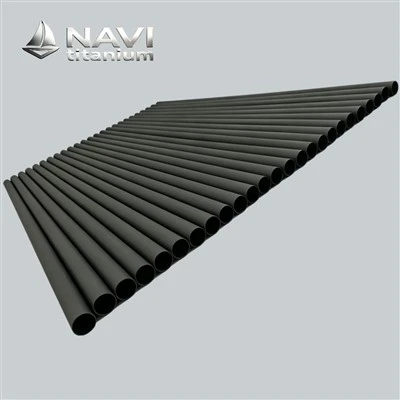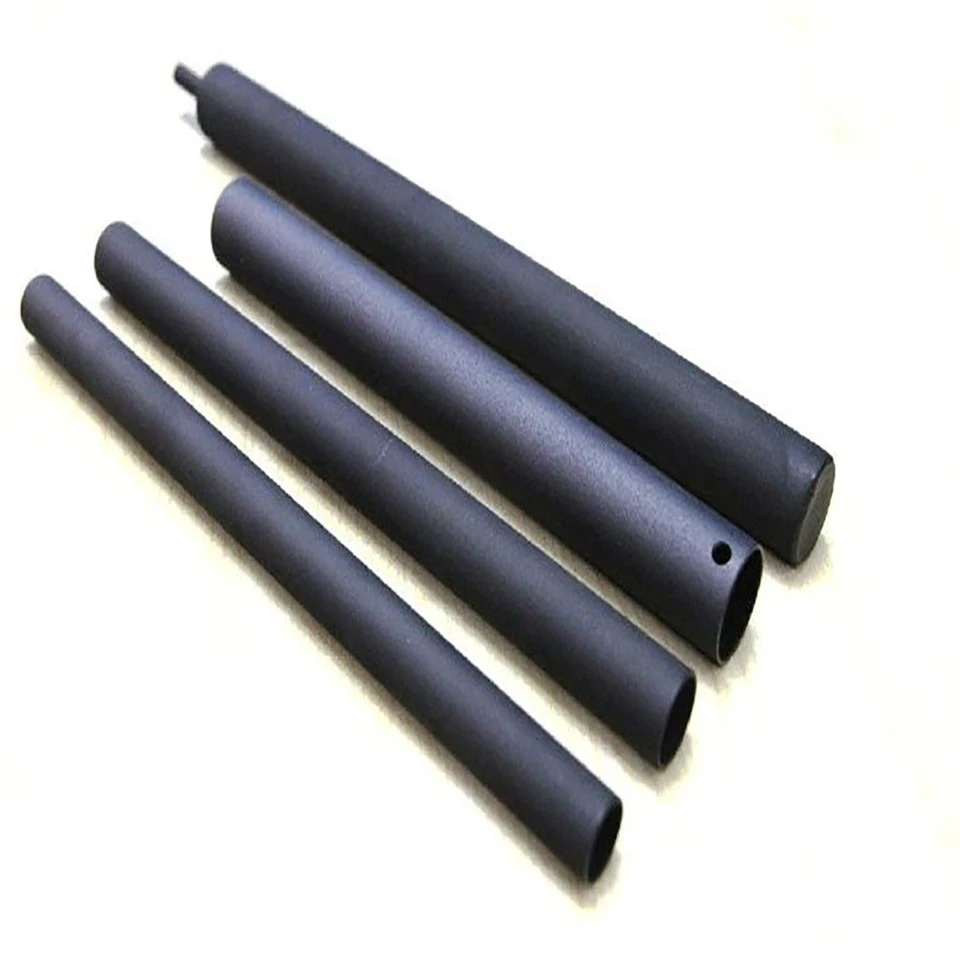


NAVI Titanium supplies mixed metal oxide anodes for electrochemical systems where controlled catalytic activity and predictable electrode behavior are important. Iridium-, ruthenium-, tantalum-, and titanium-based oxide combinations can be tailored to favor oxygen evolution, chlorine evolution, or other reactions. For procurement, coating thickness uniformity and edge-area coverage are worth checking, as local coating depletion can become a failure point before the average coating condition appears abnormal.
Solution of NAVI Titanium
NAVI Titanium MMO electrode series is available in multiple layer formulations and configuration options. The table below summarizes reference information covering recommended fields of use, layer composition, principal dimensions, connection styles, and key strengths, making comparison and equipment selection more straightforward while assisting layout planning and component matching.


NAVI Titanium presents this electrode assembly with a titanium substrate and catalytic oxide coating engineered for controlled electrochemical reactions. From a research perspective, published studies have examined how oxide composition, coating morphology, interlayers, and operating conditions influence catalytic activity and electrode lifetime, providing useful references for selecting electrode specifications for chlorine or oxygen evolution applications.


Application
Mixed metal oxide anodes originated as a replacement for consumable graphite materials and gradually became an important choice for continuous electrical conversion. NAVI Titanium supplies these electrodes for applications where controlled electrochemical performance is required. Their working principle involves transferring electrical energy through catalytic oxide layers, promoting gas evolution or metal deposition while minimizing material loss. Today, these electrodes are selected for chlorine manufacturing facilities and printed circuit board plating lines, where different geometries, oxide compositions, catalytic loading levels, and dimensional specifications are chosen according to electrolyte composition, production capacity, installation layout, and maintenance schedules.
Chlor-alkali plants typically utilize ruthenium–iridium oxide mesh, expanded mesh, or flat plate electrodes installed within membrane or diaphragm cells for chlorine generation. Common dimensions include plate thicknesses of 1.0–3.0 mm and mesh openings ranging from 5 × 10 mm to 10 × 20 mm. Catalyst loading is determined by the intended chlorine yield. Peripheral welds, electrical connection points, and suspension components are fabricated to match cell dimensions, allowing rapid exchange during scheduled shutdowns. Brine concentration, electrical loading, and chlorine output are considered when selecting electrode formats, promoting even gas evolution while lowering power demand. Multiple size options are available for pilot equipment, medium-output installations, and high-capacity chlor-alkali plants.

2.PCB Electroplating

PCB electroplating lines generally employ insoluble ruthenium–iridium oxide mesh, perforated plates, or tubular electrodes within copper, nickel, and tin electrolyte tanks. Typical dimensions include plate thicknesses ranging from 0.8 mm to 2.0 mm, with widths reaching 1,200 mm and lengths prepared to match individual tank sizes. NAVI Titanium provides these electrode configurations for PCB plating applications. Busbars, hanging devices, and fastening parts enable quick fitting and convenient exchange during scheduled maintenance. Electrode type is determined by electrolyte composition, deposition sequence, board throughput, and tank geometry. Balanced liquid flow surrounding the electrode structure promotes even metal distribution across intricate circuit patterns, making it well suited for multilayer circuit boards, HDI fabrication, flexible printed circuits, and semiconductor package manufacturing.
Purchasing guide

Quality control(QC)
Designed for reliable operation in harsh oxidizing conditions, this anode combines a titanium substrate with a catalytically active oxide coating to deliver low overpotential, stable current output, and extended service life. Its formulation resists passivation and coating loss, supporting consistent performance across repeated polarization cycles. Every lot ships with documented testing that verifies coating loading, adhesion strength, and dimensional tolerances for full traceability.
| Certificate of Analysis | ||
| Titanium Base Material Suppliers: | Coating Precursor Suppliers: | COA of product: |
|
|
|
|


Manufacturing process
Production begins with a carefully prepared titanium substrate, where the surface is mechanically conditioned and chemically activated to promote strong bonding with the catalytic coating. The key stage is the preparation of the mixed-oxide coating solution, in which selected ruthenium, iridium, tantalum, or other oxide-forming components are proportioned according to the intended electrochemical duty. The solution is applied onto the substrate through controlled brushing, dipping, or spraying, with repeated coating cycles used to build a consistent active layer. Each pass is carefully regulated to avoid runs, bare areas, or excessive accumulation around edges and joints. The coated substrate then undergoes a controlled curing cycle that converts the deposited precursors into a stable oxide network. Multiple application and curing stages can be combined when a specific loading or surface architecture is required.


Technical & Commercial Documentation
Technical documentation can be prepared according to the agreed specifications and order requirements, helping engineering and QA teams verify the requested configuration before approval. Available documents may include COA, material certificate, inspection report, drawing confirmation, and specification sheet. Drawing Confirmation allows key dimensions, connection details, coating requirements, and other specified information to be checked before production. A Specification Sheet provides a concise reference for dimensions, materials, surface treatment, electrical requirements, and applicable specifications. Inspection-related records can then support incoming checks and internal quality review after receipt.

Commercial Documents for Purchasing & Finance Approval

Commercial documentation supports the purchasing and finance stages after technical requirements have been confirmed. Depending on the order, documents may include a commercial invoice and packing list, together with the agreed quotation, order information, and applicable reference details. Keeping technical and commercial information clearly separated helps different departments review the same order from their respective perspectives: Engineering confirms the required specifications, Purchasing verifies quantities and commercial terms, QA checks the inspection documentation, and Finance uses the commercial records for payment and accounting review. This documentation flow helps reduce repeated requests for information during internal approval.
Product
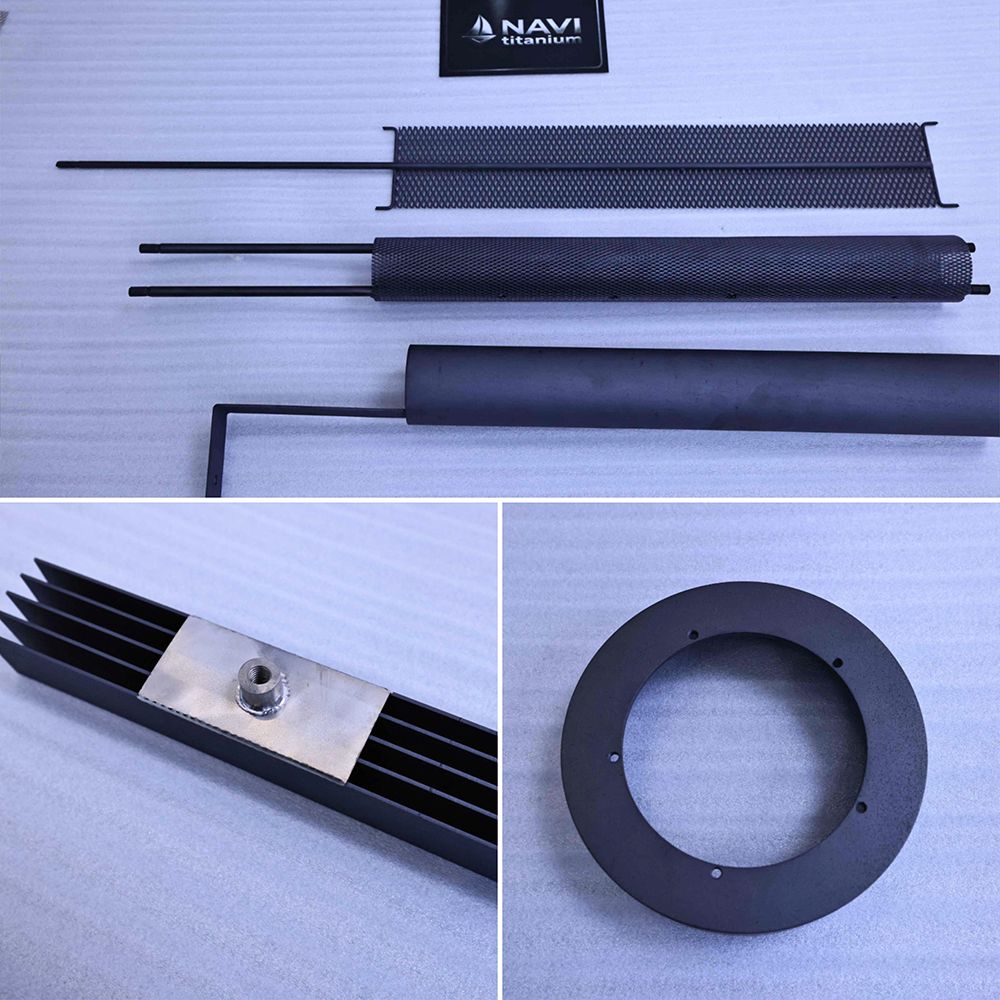
Mixed metal oxide anodes consist of four principal sections: a metal support frame, an electrical transmission assembly, a catalytic oxide layer, and auxiliary hardware. Each section contributes to structural strength, electrical continuity, catalytic activity, or installation convenience within PCB plating equipment. NAVI Titanium provides these assemblies with specifications tailored to different plating applications. Material selection, dimensional control, noble-metal loading, conductive connections, insulation elements, and fastening accessories are coordinated according to plating bath chemistry, tank dimensions, electrical loading, and maintenance schedules, supporting continuous metal deposition together with consistent manufacturing quality across production lines.
The base metal support assembly of mixed metal oxide electrode forms the primary framework carrying every conductive element inside PCB plating equipment. NAVI Titanium supplies Grade 1 material, which is commonly selected because of its excellent formability, low weight, and outstanding chemical endurance. Expanded mesh, perforated sheet, flat plate, or tubular geometries are chosen according to tank dimensions, electrolyte circulation, and installation layout. Laser cutting, rolling, bending, welding, flattening, and heat treatment create accurate geometry while minimizing deformation. Hanging sections, reinforced edges, and supporting members maintain structural integrity during continuous production and simplify replacement during scheduled maintenance.

2. Electrical Transmission Assembly

Electrical power enters the electrode through a conductive network linking the rectifier with every active region inside the plating tank. NAVI Titanium supplies connection assemblies configured for the required electrical loading and tank layout. This pathway is formed by copper busbars, terminal blocks, welded joints, suspension hooks, threaded fasteners, insulating brackets, and connection fittings. Every contact point receives careful finishing to minimize resistance while ensuring secure mechanical engagement. The size of busbars, connector cross-sections, fastening arrangements, and terminal positions is determined by tank dimensions, power demand, and plating output, promoting even energy delivery across the entire electrode structure.
The MMO anode features an active oxide film formed from carefully balanced combinations of ruthenium, iridium, tantalum, and other noble-metal oxides to match copper, nickel, tin, or precious-metal plating baths. Precious-metal loading, oxide ratios, firing schedules, film depth, and bonding strength are carefully monitored throughout fabrication. Repeated high-temperature treatment produces a compact oxide layer with uniform elemental distribution, limiting unnecessary noble-metal consumption while promoting even metal deposition on complex printed circuit board patterns, including multilayer circuits, HDI panels, flexible boards, and semiconductor packaging components.

4.Auxiliary Supporting Assembly

Insulating and fastening components play an important role in securing the electrode structure while maintaining accurate alignment inside plating tanks. Frequently used parts include fluoropolymer sleeves, ceramic spacers, insulating bushings, threaded fasteners, suspension hangers, retaining clips, protective edge strips, and connection hardware. Component choice is influenced by electrolyte composition, mounting position, temperature variation, and maintenance intervals. Together, these accessories help preserve consistent spacing, shield electrical contact points from contamination, minimize installation error, and allow quicker part replacement during planned shutdowns, reducing manual intervention while keeping production lines running smoothly.
Product development
Flat electrodes are frequently selected for membrane chlor-alkali cells with large chlorine output because their broad profile fits narrow electrode gaps while providing ample working area. Standard sizes cover thicknesses from 1.0 mm to 3.0 mm, widths of up to 1,500 mm, and lengths beyond 3,000 mm, matching the dimensions of individual electrolyzers. Each piece is supplied with welded connection points, hanging lugs, reinforced edges, and electrical terminals prepared before shipment. NAVI Titanium offers several ruthenium–iridium oxide formulations, carefully controlled precious-metal ratios, accurate dimensional control, and uniform firing quality, enabling both new electrolyzer construction and refurbishment of existing chlor-alkali lines.

2.Expanded Mesh Electrode Configuration

Mixed metal oxide anodes with an expanded mesh configuration are frequently selected for membrane chlor-alkali cells because the open lattice encourages rapid gas release while promoting smooth brine circulation throughout the electrolyzer. Mesh aperture, strand width, sheet gauge, and expansion ratio are determined by electrolyzer dimensions and anticipated chlorine yield. Standard diamond openings generally range from 5 × 10 mm to 10 × 20 mm, while panel length and width are prepared to match project drawings. Connection terminals, suspension bars, reinforcing members, and outer frames are fitted before delivery. We completes each panel through repeated firing cycles together with comprehensive dimensional verification, producing an evenly distributed oxide layer and consistent fabrication results for chlorine production facilities.
Tubular electrodes are often chosen for membrane chlor-alkali cells because their round profile promotes smoother brine movement and faster gas release within narrow electrolyzer chambers. Standard outside diameters range from 20 mm to 80 mm, with wall thicknesses between 1.5 mm and 3.0 mm. Overall length is prepared to match individual electrolyzer dimensions. Threaded fittings, terminal connections, end closures, hanging components, and sealing parts are fitted before delivery, reducing field installation time. NAVI Titanium manufactures tubular electrodes using carefully balanced ruthenium–iridium oxide formulations, controlled precious-metal content, and comprehensive dimensional verification, serving projects from demonstration facilities to large-scale chlorine plants while offering excellent installation flexibility and uniform fabrication quality.

FAQ
1. Can you provide a Mill Test Certificate and third-party inspection report?
+
-
Yes. A Mill Test Certificate can be supplied for applicable orders, covering traceability details, material grade, chemical composition, and relevant inspection data. If required, an independent laboratory can also be arranged to issue a third-party inspection report. Customers may specify the testing items before shipment so the required documentation can be confirmed in advance.
2. Can you provide English technical documents and export paperwork?
+
-
Yes. English-language technical documents and standard export paperwork are available. Commercial invoices, packing lists, certificates, inspection records, and other agreed documents can be prepared in English. Electronic copies can be sent before dispatch for customer review, while the final documents are supplied with the shipment according to the contract.
3. Can I request a sample before placing an order?
+
-
Yes. Small samples from available stock may be provided for preliminary evaluation. For customized samples, preparation normally takes around **5–7 days**, depending on the requested dimensions, coating specification, connection method, and quantity. Customers can send drawings or technical requirements first so the sample scope and lead time can be confirmed before payment.
4. How can I verify the quality before placing a bulk order?
+
-
Customers can begin with a sample inspection to check dimensions, surface condition, coating appearance, connections, and other agreed specifications. For customized orders, drawings and technical parameters can be reviewed before production. When required, inspection records or independent testing can also be arranged, giving buyers several checkpoints before committing to larger quantities.
5. What technical support is available after purchase?
+
-
Before shipment, key specifications can be reviewed against the customer's application requirements. If an issue occurs during the agreed warranty period, both sides can refer to the contract terms and inspection records to determine the appropriate follow-up action.
Hot Tags: mixed metal oxide anodes, China mixed metal oxide anodes manufacturers, suppliers, factory, MMO Mesh, MMO Titanium Electrode, Platinum Coated Titanium Electrodes, Titanium Anode Basket, Titanium Anode Baskets for Electroplating, Titanium Anode Manufacturer