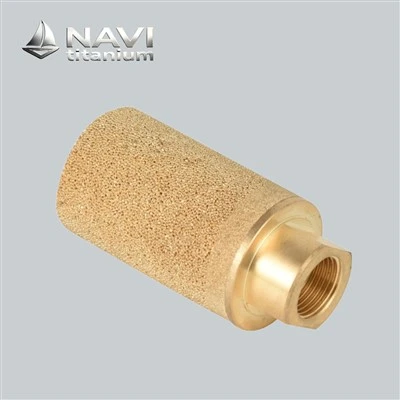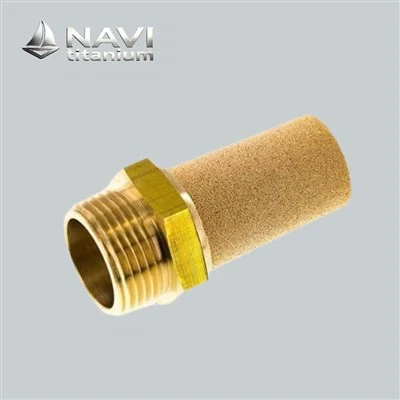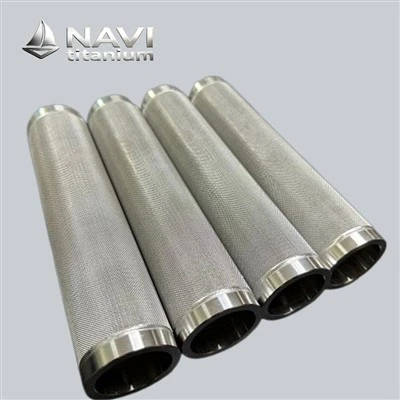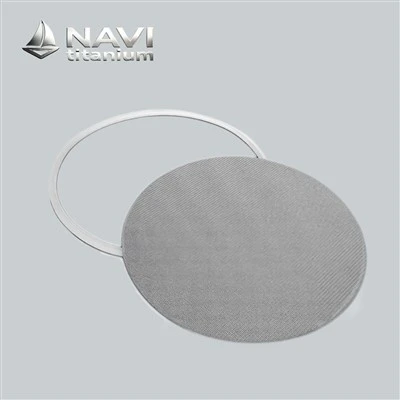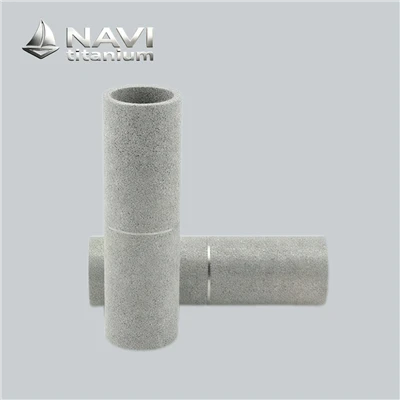

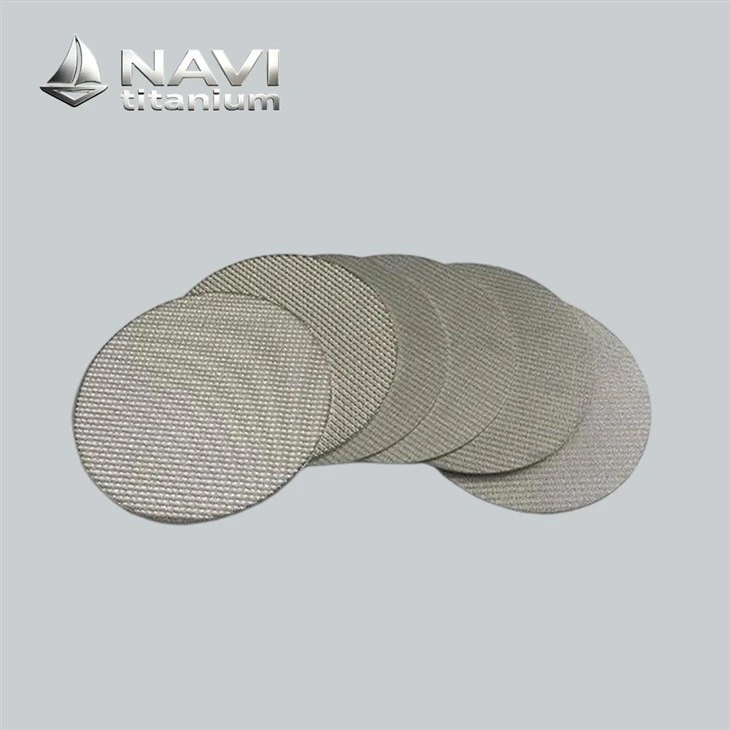
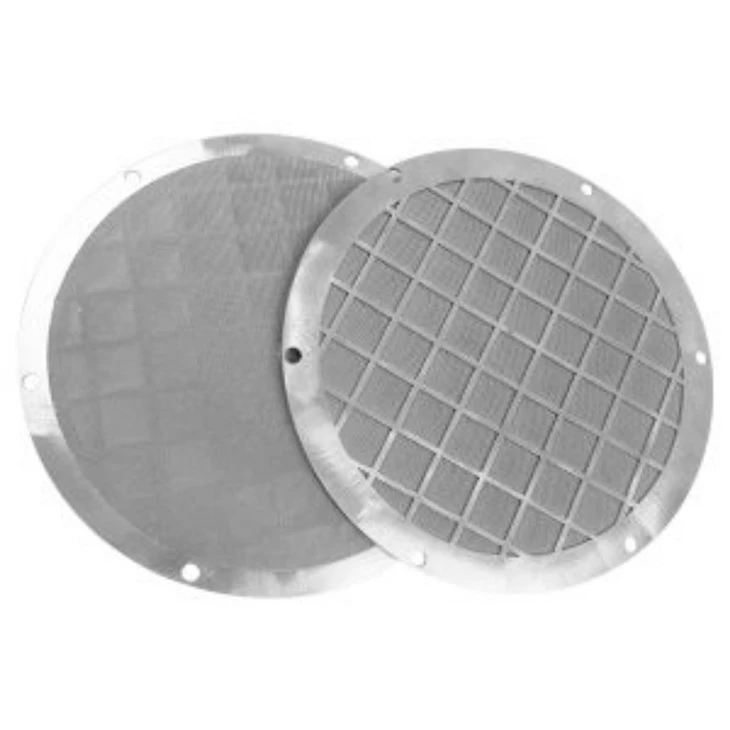
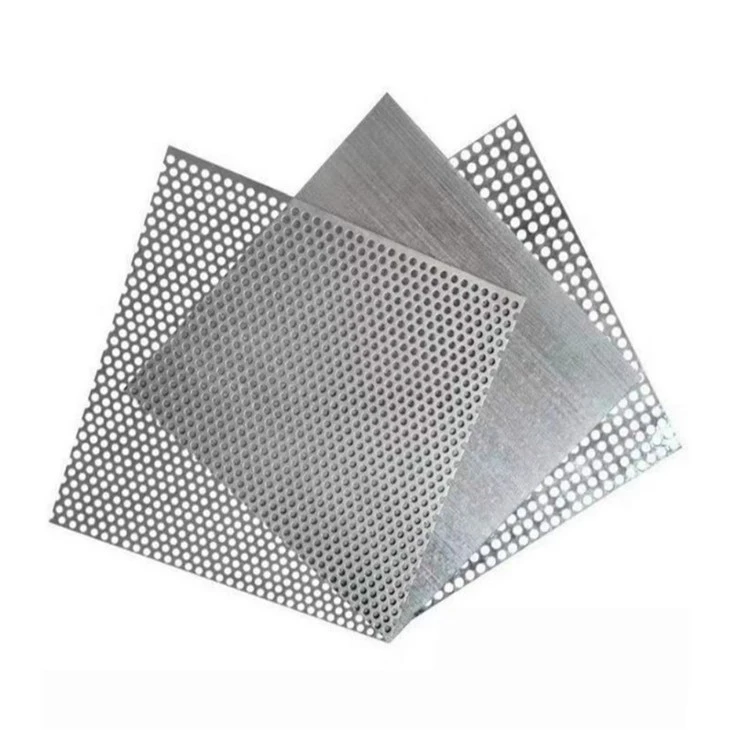
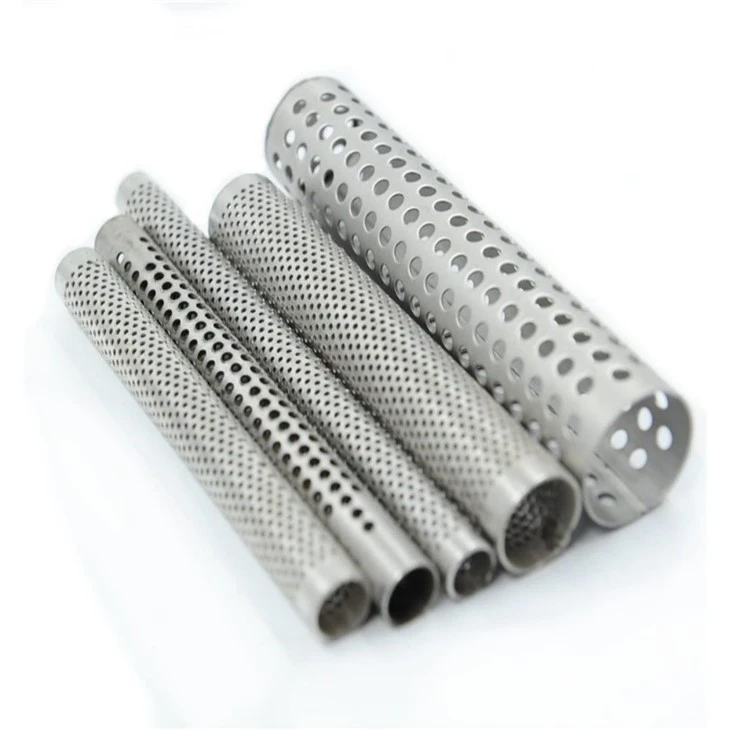
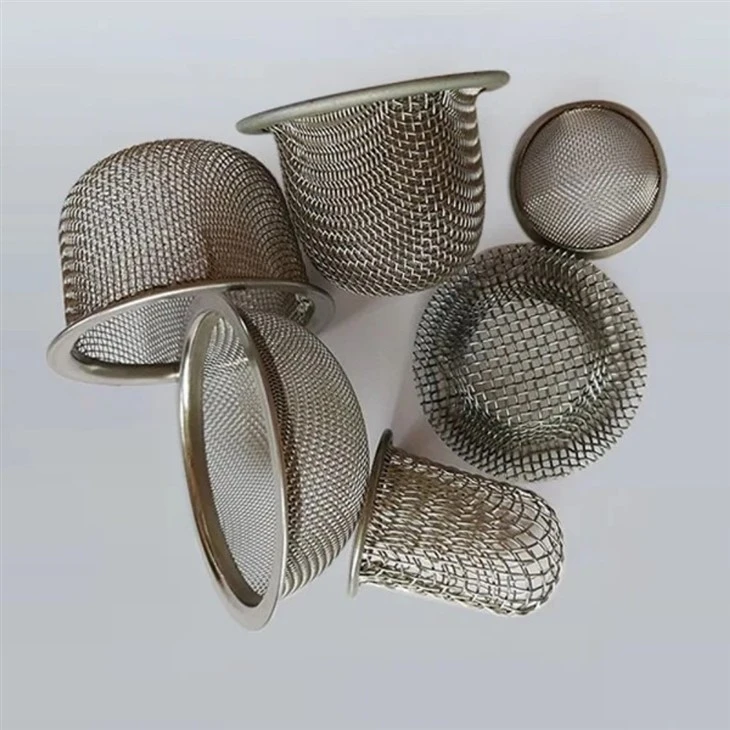
NAVI Titanium sintered porous metal mesh is a rigid, permeable structure created by high-temperature diffusion bonding of titanium wire layers, offering controlled porosity and exceptional mechanical strength. For financial and operations executives, NAVI Titanium delivers predictable lifecycle costs and supply chain security. Our global warehousing strategy ensures 48-hour emergency dispatch, while our transparent pricing model eliminates hidden surcharges. We provide full material traceability from ingot to finished part, giving procurement teams complete audit confidence.
Solution of NAVI Titanium
Sintered porous mesh from NAVI Titanium is produced by a proven metal powder sintering process. It delivers high-performance porous metal substrates for precision filtration, electrochemistry, biomedicine, and high-temperature fluid separation, with excellent acid/alkali corrosion resistance, biocompatibility, uniformly distributed and controllable pore structure, and in-situ regeneration for stable operation under harsh, corrosive, high-temperature, and high-pressure conditions. Customized filtration, air permeability, and flow solutions are available. See specifications below.


Conventional cylindrical or disc-style inserts frequently fail to satisfy unique spatial constraints found in multiphase reaction tanks, side-stream purification units, and custom separation containers. NAVI Titanium supplies a comprehensive range of geometric profiles to fit varied installation frameworks.


Application
Chemical, energy, and pharmaceutical sectors see rising market demand for stable separation and diffusion medium solutions. This advanced fused alloy medium resolves such industry demands by integrating anti-corrosion properties with precision-calibrated void architectures. The material performs exceptionally well in harsh environments where polymer-based barriers deteriorate rapidly and standard woven screens experience structural thread displacement issues.
High-Temperature Polymer Melt Filtration
Advanced plastic and synthetic fiber fabrication requires molten polymer streams to pass through fine barrier media to eliminate gel residues, carbon particulates, and cross-linked impurities. Sintered porous metal mesh operates continuously at temperatures up to 500°C, maintaining dimensional stability where stainless steel options soften and deform. Its multi-layer construction enables deep-layer impurity trapping, capturing debris on outer layers and within internal frameworks to extend operational intervals between maintenance cycles.
The alloy medium boasts superior reverse-flush restoration efficiency, retaining over 90% of original flow capacity after standard cleaning cycles. Custom disc and blade profiles are engineered for seamless integration with existing barrier housings, lowering on-site retrofitting expenses. Field operational records consistently demonstrate a 25% drop in polymer waste rates thanks to enhanced impurity interception capability.


Sparger Elements for Bioreactor Aeration
Biopharmaceutical fermentation work demands sterile, bubble-free gas transmission to preserve cellular activity and maximize oxygen exchange efficiency. This precision fused medium acts as a micro-aeration diffuser, generating 50–200 micron microbubbles that deliver mild fluid mixing without harming shear-vulnerable mammalian cells. Inherent hydrophilic characteristics, maintained through regular sanitation, ensure uniform liquid adhesion and avoid uneven gas flow channeling.
Biocompatible alloy composition complies with USP Class VI industrial standards, withstanding repeated high-pressure sterilization cycles without structural void distortion. Electropolished surface finishing minimizes protein adhesion buildup, a key advantage for long-duration fed-batch operational cycles. These aeration diffusers have undergone validation across 200+ commercial bioreactor units, achieving cellular density levels equivalent to disposable setups while delivering eco-friendly reusable operational benefits.
Purchasing guide

Quality control (QC)
NAVI Titanium's ISO 9001-certified factory ensures every sintered porous mesh meets strict quality standards. Click below to view the COA and quality inspection reports for this product, confirming its filtration performance, pore structure, and corrosion resistance. Review the documents and request your quotation today.

Manufacturing Process
NAVI Titanium's sintered porous metal mesh is manufactured through a controlled metal powder sintering process. Metal powder is precisely graded, uniformly mixed, and filled into molds, then sintered at high temperature in a vacuum or protective atmosphere. During sintering, powder particles bond into a rigid, porous structure with uniformly distributed, controllable pores. The mesh is then cooled, trimmed, cleaned, and inspected for pore size, permeability, and mechanical strength. This process delivers strong, corrosion-resistant, biocompatible porous metal substrates suitable for precision filtration, electrochemistry, biomedicine, and high-temperature fluid separation. Customized pore sizes, thicknesses, and flow rates are available.


Technical Deep Dive: Pore Structure Dynamics & Surface Energy Control
The Unseen Physics of Permeability Engineering
While pore size rating dominates product selection criteria, the actual performance of sintered porous mesh is governed by pore tortuosity, connectivity, and capillary pressure characteristics rarely examined in standard datasheets. These fundamental parameters influence how fluids coat outer layers, how particles are retained at varying flow rates, and how force drop evolves over time. The brand adopts advanced mercury intrusion porosimetry and computed tomography scanning to qualify every manufactured lot, ensuring that the three-dimensional void network matches engineered benchmarks, not merely the two-dimensional exterior openings visible under a microscope.
Tortuosity Factor and Its Effect on Filtration Efficiency
Tortuosity describes the winding path a fluid particle must travel through the porous structure. For sintered metal mesh,


the tortuosity factor ranges between 1.5 and 2.2 depending on layer orientation and compression ratio. This trait directly impacts particle capture probability; higher tortuosity increases the likelihood of inertial impaction and interception, improving sub-micron particle retention without reducing the nominal void rating. Our fabrication workflow controls alloy layer registration to achieve a desired tortuosity gradient, creating a "depth filter" effect that captures fines progressively through the structural thickness. Technical teams publish tortuosity metrics upon request, allowing fluid treatment specialists to model force drop decay more accurately. This level of transparency has made our structural panels the preferred choice for research institutions conducting fundamental fluid treatment studies.
Capillary Pressure and Liquid Entry Behavior
Capillary pressure determines the minimum pressure required for a non-wetting fluid to penetrate the sintered porous metal mesh structure, a critical parameter in gas sparging and liquid-liquid coalescence applications.
Fused alloy panels feature customizable capillary force levels adjusted by modifying thermal treatment levels, which reshapes void neck geometry. Lower thermal treatment levels preserve sharper void edges, boosting capillary resistance, while higher levels yield rounded void structures that lower breakthrough force. The brand delivers proprietary "void-shaping" thermal conditioning that generates dual-mode void layouts-large channels for high fluid throughput interlinked with fine constrictions for precise bubble regulation. This breakthrough enables our structural panels to perform reliably in rigorous coalescer scenarios where traditional uniform-void media fail due to premature breakthrough.
Thermal Expansion Compatibility with Flange Materials
An often-overlooked detail in fused panel layout is the coefficient of thermal expansion (CTE) alignment with adjacent metallic hardware. Our alloy grade delivers a CTE of approximately 8.6 μm/m·°C, which closely matches austenitic stainless steel variants used in pressure vessel flanges. This structural alignment minimizes gasket relaxation and bolt tension loss during thermal cycling cycles.

Technical staff calculate differential expansion at sealing interfaces and suggest tailored gasket grades and clamping tensions to sustain zero-leak integrity across the full operational temperature spectrum. Our installation guidelines include CTE adjustment charts for various flange alloys, preventing seal failures common when high-CTE structural panels pair with low-CTE housing hardware.
NAVI Titanium : Manufacturing Scale and Supply Capability

Capacity You Can Count On: The Production Engine
Meeting global industrial demand requires substantial manufacturing infrastructure and uncompromised supply chain management. Engineer operates a 15,000-square-meter purpose-built facility housing over 50 vacuum sintering furnaces, capable of producing more than 200 tons of sintered porous metal mesh annually. Our vertically integrated operation includes in-house wire drawing, weaving, cutting, and forming, giving us complete control over quality from raw titanium sponge to finished product. NAVI Titanium maintains strategic raw material inventories representing six months of average consumption, insulating our clients from market volatility in titanium pricing and availability.
Multi-Plant Production and Redundancy
To sustain non-stop order fulfillment, technical teams manage two independent manufacturing hubs separated by 200 kilometers, each equipped with full thermal treatment and finishing suites.
This geographic backup structure ensures natural disasters, power interruptions, or equipment malfunctions at one site will never halt client shipments. Our order scheduling platform dynamically distributes tasks between facilities based on current throughput and delivery urgency. The firm has sustained a 99.7% on-time shipment rate over the past three years, even amid global logistics disruptions. We offer real-time order tracking via dedicated client portals, enabling procurement staff to monitor task progress and adjust delivery timelines proactively.
Large-Batch Consistency and Statistical Process Control
For sectors requiring thousands of identical structural components, inter-batch inconsistency poses a major operational risk. The brand enforces strict Statistical Process Control (SPC) across every fabrication stage, including alloy strand dimension checks, weave density validation, and thermal treatment curve calibration. Every manufactured lot undergoes bubble point analysis, air permeability testing, and thickness validation, with all findings archived in a searchable database.


We guarantee that the average void dimension of any manufactured lot varies by no more than ±5% from certified benchmarks. This stable uniformity allows pharmaceutical and food industry partners to validate our structural components as critical operational hardware without repeated revalidation for new order releases.
Flexible Order Fulfillment for Projects of All Sizes
Whether you require a single sintered porous mesh or a container-load of custom-shaped panels, NAVI Titanium adapts our production workflow accordingly. A dedicated rapid-response workshop handles orders under 50 pieces, delivering standard-specification goods within five working days. For large-scale industrial development projects, our project management team coordinates technical planning, fabrication, inspection, and logistics via a single dedicated contact. We offer framework order contracts with staggered shipment releases, letting clients lock in pricing and factory throughput while delaying exact delivery timelines. This high flexibility establishes our firm as a trusted fused component partner for EPC contractors overseeing large-scale industrial plant construction projects.
FAQ
How do you handle customs clearance for shipments to different countries?
+
-
We provide complete export documentation, including commercial invoices, packing lists, certificates of origin, and material safety data sheets. Our logistics team classifies products under correct HS codes to minimize customs delays. We partner with local freight forwarders in over 30 countries to manage import brokerage, ensuring seamless delivery regardless of destination.
What is the expected service life of the mesh in chloride-rich environments?
+
-
Under normal operating conditions (pH 4-10, temperature below 80°C), our titanium mesh exhibits indefinite corrosion resistance. In aggressive conditions (hot brine, pH<2), we recommend annual thickness inspection. We offer a predictive corrosion modeling service based on your specific water chemistry to provide a conservative life estimate.
Can I clean the mesh using ultrasonic methods without damaging it?
+
-
Yes. NAVI Titanium mesh withstands ultrasonic cleaning at frequencies between 20-40 kHz without structural damage. We recommend using mild alkaline detergents followed by deionized water rinsing. Avoid sharp objects that could scratch the surface. We provide a comprehensive cleaning protocol guide with every shipment for reference.
Do you offer a trade-in or recycling program for used mesh?
+
-
Yes. NAVI Titanium operates a closed-loop recycling program. We accept spent titanium mesh, analyze its composition, and provide scrap value credits toward your next purchase. The recycled material is reprocessed into new wire, reducing environmental impact and raw material costs. Contact our sustainability desk for program details and logistics arrangements.
What are the payment terms and minimum order quantities for NAVI Titanium?
+
-
NAVI Titanium offers flexible payment terms including letter of credit, telegraphic transfer, and open account for qualified clients. Standard MOQ is 10 pieces for stock specifications, with no MOQ for custom prototypes. We provide volume discounts starting at 100 pieces. Please request a formal quotation for project-specific terms.
Hot Tags: sintered porous metal mesh, China sintered porous metal mesh manufacturers, suppliers, factory, Bronze Filter Element, Sintered Bronze Filter Element, Sintered Bronze Fuel Filter, sintered metal filter, Sintered Metal Plate, Sintered Metal Tube