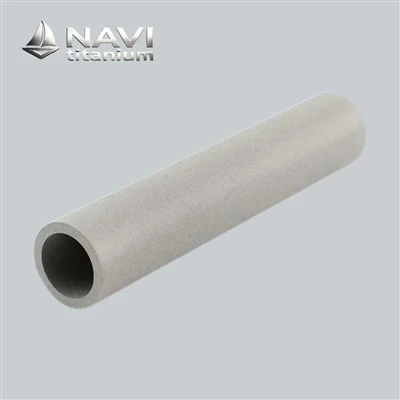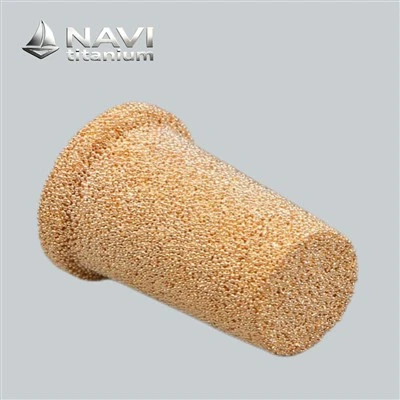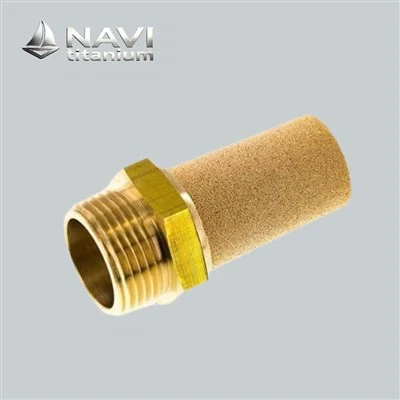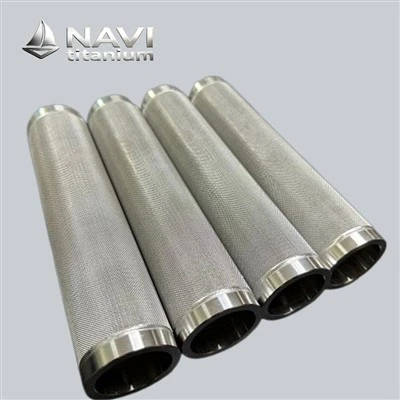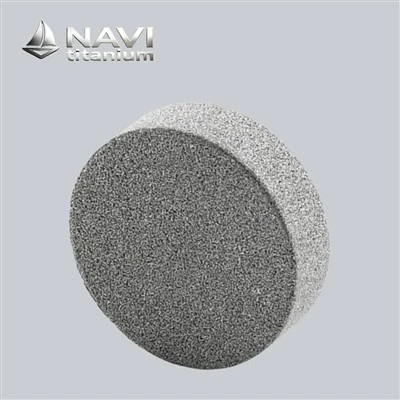

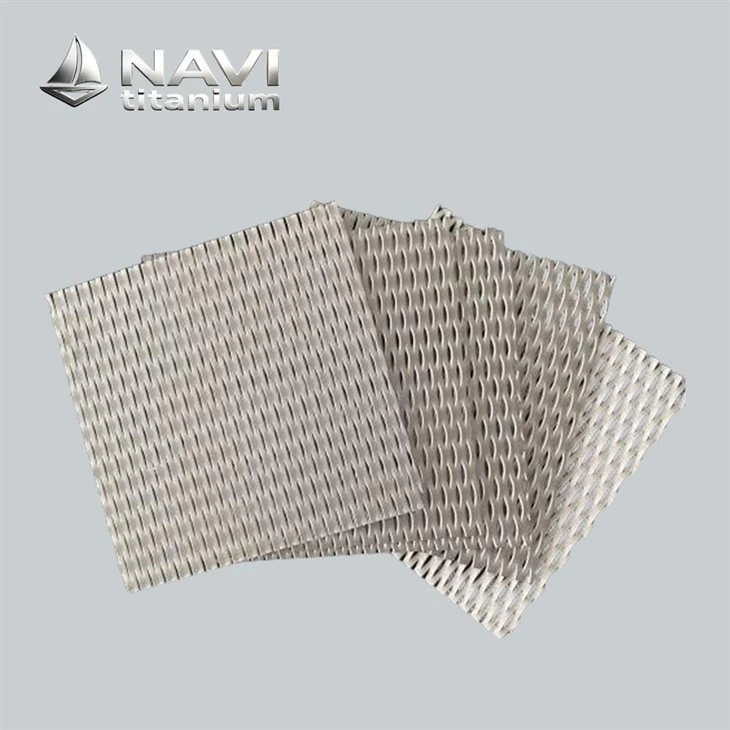


NAVI Titanium sintered metal mesh is a precision‑engineered permeable medium formed by diffusion‑bonding multiple layers of titanium woven cloth under elevated‑temperature compression. For procurement leaders, this translates to predictable operational costs and fewer emergency shutdowns. NAVI Titanium guarantees batch‑to‑batch consistency, reducing validation burdens. Our global inventory hubs ensure rapid dispatch, while our technical group delivers swift failure‑mode analysis.
Solution of NAVI Titanium
NAVI Titanium's sintered mesh is manufactured using a proven powder consolidation method, delivering consistent, controllable openings ideal for precision filtration, electrochemistry, biomedicine, and high-temperature fluid separation. It offers excellent acid-alkali durability, biocompatibility, and in-situ regeneration capability, ensuring long-term stable operation under harsh, corrosive, high-temperature, and elevated-load environments. Customized solutions are available for diverse industrial filtration, air permeability, and flow requirements. Detailed specifications are shown in the table below.


High-performance sintered wire mesh from NAVI Titanium is engineered for rigorous industrial filtration, polymer melt filtration, gas-liquid separation, and high-flow permeable media system operations. Beyond standard size customization, the series supports fully tailored weave patterns, layer configurations, and structural shapes - including seam-welded sleeves and edge-formed discs - to fit unique tank layouts, mounting structures and on-site installation spaces.


Application
Across chemical processing and energy sectors, NAVI Titanium sintered wire mesh serves as the critical interface between fluid dynamics and mechanical integrity. Its titanium substrate offers exceptional resistance to chloride attack and oxidizing acids, where stainless steel would fail within weeks. Its consistent opening distribution ensures predictable pressure-drop characteristics, allowing engineers to design systems with confidence.
In hydrocracking units, catalyst particles must be retained within the reactor bed while allowing high-temperature hydrogen-rich feed to pass. Sintered metal mes functions as a robust catalyst support screen, resisting both erosion from high-velocity gases and attack from sour service environments containing hydrogen sulfide. The mesh's three-dimensional configuration provides multiple capture points for fine catalyst fines, effectively preventing their carryover into downstream heat exchangers, where they could cause fouling and reduced thermal efficiency.
NAVI Titanium offers custom-engineered dome or cylindrical configurations that match reactor internals with micron-level accuracy, completely eliminating bypass flow paths that compromise filtration efficiency. Our rigorous production controls ensure consistent opening-size distribution across the entire screen area. Regular field audit data from operating units demonstrates that our mesh retains over 95% of its original permeability even after three years of continuous exposure to severe operating environments, significantly extending turn-around intervals and reducing unplanned maintenance costs for our clients.

Diffusion Layer for Electrochemical Gas Evolution

In chlor-alkali and water electrolysis systems, efficient bubble release is vital for minimizing overpotential and maximizing overall energy conversion efficiency. The sintered mesh serves as a diffusion layer positioned directly beneath the catalytic coating, providing a highly conductive path for electron transfer while simultaneously facilitating rapid detachment of hydrogen or chlorine bubbles from the electrode area. This dual functionality is critical because accumulated bubbles increase ohmic resistance and block active sites. The open-volume ratio, typically ranging from 30% to 50%, significantly reduces mass transport limitations near the electrode area, allowing fresh electrolyte to continuously replenish the reaction zone. Unlike conventional perforated plates, which offer straight-through channels, the sintered mesh provides a tortuous, three-dimensional pathway that enhances natural electrolyte circulation through capillary action, thereby ensuring more even current distribution across the entire electrode area and preventing localized hot spots. NAVI Titanium meticulously optimizes the wire diameter and mesh count to achieve a specific bubble-release frequency tailored to each client's operating current density, directly translating into measurable gains in energy efficiency-often reducing cell voltage by 2-5%.
Purchasing guide

Quality control (QC)
NAVI Titanium's manufacturing factory is ISO 9001 certified, ensuring every bonded mesh meets rigorous international acceptance standards. Each batch undergoes strict assessment for void fraction, transmissive capacity, and hostile‑media endurance. Click the button below to view our Certificate of Analysis (COA) and verify the factual evaluation reports for yourself‑your trusted guarantee of dependable operational behaviour.

Manufacturing Process
NAVI Titanium sintered metal mesh is produced through a carefully controlled multi‑stage workflow:
1. Raw Material Selection
High‑purity alloy feedstocks (stainless steel, titanium, nickel, etc.) are carefully selected and graded to ensure consistent particle‑size spread and compositional purity.
2. Powder Screening & Batching
Feedstocks are precisely sieved and blended according to target void‑fraction and void‑throat requirements, guaranteeing steady and controllable internal void networks.
3. Forming / Compaction
The feedstock is pressed or rolled into green sheets or mesh blanks using specialized molds, forming the desired outline and sectional dimension with even density distribution.
4. Sintering
Under elevated‑temperature consolidation within a protective atmosphere, feedstock particles bond at their contact points, creating a strong, interconnected void network without obstructing internal passages.
5. Post-Processing
Accurate cutting, rolling, fusing, and exterior treatments are performed according to customer requirements, including multi‑layer lamination for enhanced rigidity and separating capability.
6. Quality Inspection & Testing
Every product goes through bubble‑point load, transmissive capacity, void‑fraction, and mechanical‑strength assessment, ensuring full alignment against documented specifications prior to dispatch.
Technical Deep Dive: Sub-Micron Surface Topography & Fracture Behavior
The Hidden Micro-Dynamics of Sintered Structures
Beyond bulk porosity and tensile strength, the performance of NAVI Titanium sintered metal mesh is governed by exterior roughness parameters and fracture‑propagation paths that are rarely discussed in standard product literature. These microscopic traits dictate how the mesh interacts with flowing fluids at the molecular level, influencing wetting behaviour, particle‑adhesion forces, and crack‑initiation thresholds. We employ specialized strand‑drawing techniques that control exterior‑oxide morphology, creating a beneficial "micro‑roughened" texture that improves mechanical interlocking with applied reactive‑coating layers without hampering restorative washing.
The Role of Surface Skewness in Anti-Fouling Performance
Surface skewness (Rsk) is a roughness parameter that describes the asymmetry of exterior peaks and valleys. For our sinter‑bonded mesh, a negative skewness value‑where valleys predominate‑is engineered to trap lubricating fluid films that hinder sticky polymer deposition.


This trait is achieved through controlled acid pickling after thermal consolidation, which preferentially etches grain boundaries without enlarging the effective void throat. The resulting exterior exhibits low adhesive friction for organic foulants, allowing for easier solvent‑assisted washing with reduced solvent consumption. NAVI Titanium has documented that meshes with optimized Rsk values show a 40 % reduction in irreversible fouling during styrene handling, directly correlating to fewer off‑line washing cycles and less hazardous waste generation per production year.
Fracture Toughness and Subcritical Crack Growth Resistance
While tensile strength is commonly specified, the subcritical crack‑growth behaviour under cyclic thermal stress is a more relevant indicator of long‑term dependability. Consolidated woven cloth exhibits a higher threshold‑stress‑intensity factor compared to nickel‑based alloys within chloride‑bearing surroundings. The delta‑ferrite‑free microstructure of our titanium prevents hydrogen‑triggered embrittlement, a failure mode often overlooked.
Our internal assessment involves accelerated thermal cycling from ambient to 300 °C while monitoring acoustic emissions; NAVI Titanium consistently shows no crack propagation before 50 000 cycles. This data provides engineers with confidence to deploy our mesh for unplanned workflow upsets, where competitive products might suffer from micro‑fractures that expand during subsequent operation, leading to catastrophic fragment shedding into the flowing stream.
NAVI Titanium: Professional Team & Customized Solutions
Beyond the Material: The Service Edge
The true value of NAVI Titanium sintered metal mesh lies not only in our alloy craft proficiency but in the full‑range technical backup network we have built around our offerings. Our internal engineering group averages 15 years of experience in permeable medium deployment, drawing from a knowledge library of over 2,000 global installed project cases. We supply a "Lifetime Operational Record" for each partner, logging running surroundings, upkeep steps, and functional trends to forecast ideal swap‑out timelines in advance. We frame our cooperation as joint efforts for workflow refinement, instead of a basic supplier‑buyer deal.
Customized Engineering for Non-Standard Geometries
Regular flat panels or circular blanks cannot always match intricate reaction tank or separation tank layouts. We hold complete in‑house shaping capacities, including deep stamping, hydraulic shaping, and laser fusing, to craft conical shells, tubular housings,


and bespoke flange‑fitted assemblies. Our engineering group collaborates straight with your mechanical developers via 3D scanning to guarantee dimensional exactness within ±0.1mm. We also supply finite element analysis (FEA) simulation datasets to authenticate that our shaped cloth can endure the specific compressive load and thermal gradients of your setup. We have successfully rolled out over 500 custom contoured parts for ocean platforms and biopharma reaction tanks, with every single unit traceable to a unique production lot and assessment archive.
Rapid Prototyping and Pilot Testing Services
Prior to launching mass fabrication, buyers frequently need validation of operational behavior under real workflow surroundings. Our specialists run an exclusive trial lab fitted with elevated‑compression test stations able to mimic thermal levels up to 600°C and compressive loads up to 200 bar. We can craft trial woven cloth with differing void fraction parameters and ship them within 10 working days.
Our group then aids in decoding trial outcomes, sharing suggestions for void throat tuning or exterior finishing tweaks to boost split efficiency. NAVI Titanium waives fees for preliminary feasibility evaluations, proving our dedication to locking in the ideal layout prior to any formal order placement.
FAQ
How do you ensure product quality when shipping to regions with extreme humidity?
+
-
We uses vacuum-sealed barrier bags containing desiccant indicators to prevent moisture-induced surface staining. Each pallet is wrapped with anti-corrosion VCI film. We also provide a digital "shipment health report" documenting humidity levels at packaging and container sealing. Our logistics partners are audited for proper handling to ensure the mesh arrives in pristine condition regardless of destination.
What is the recommended procedure for replacing a sintered mesh element in a high-pressure vessel?
+
-
We recommend complete pressure relief and inert gas purging before any disassembly. Use only non-marring tools to avoid scratching the sealing surface. Inspect the gasket seating area for pitting. For alignment, we provide installation fixtures upon request. We also offers remote video guidance for first-time replacements to ensure zero damage during installation.
Can you produce meshes in metric sizes for European or Asian specifications?
+
-
Absolutely. NAVI Titanium manufactures to both imperial and metric dimensions. Our rolling and cutting equipment allows for diameter tolerances down to ±0.5mm for round discs and ±1mm for rectangular panels. We routinely fulfill orders in 200mm, 300mm, and 500mm diameters. Please specify your required dimensions in your inquiry.
How do I determine if my mesh has reached the end of its service life?
+
-
Key indicators include a pressure drop increase exceeding 30% of the baseline after cleaning, visible corrosion pitting, or loose surface fibers. We provide a "Lifetime Assessment Kit" containing coupon samples and evaluation forms. We also offer a lab analysis service to measure remaining thickness and pore size distribution for a conclusive assessment.
Do you offer customized packaging for reusable or returnable containers?
+
-
Yes. NAVI Titanium understands the need for sustainable packaging. We offer reusable steel frames and stackable plastic bins with dividers to protect finished parts. For export orders, we use certified fumigation-free wooden crates with shock-absorbing foam. Each package is labeled with handling instructions to prevent stack overload during transit.
Hot Tags: sintered metal mesh, China sintered metal mesh manufacturers, suppliers, factory, Microporous Filter, Porous Media Filter, Sintered Bronze Plate, Sintered Filter Elements, Sintered Filter Plate, sintered metal filter