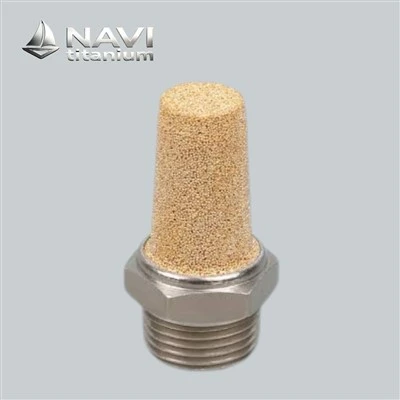
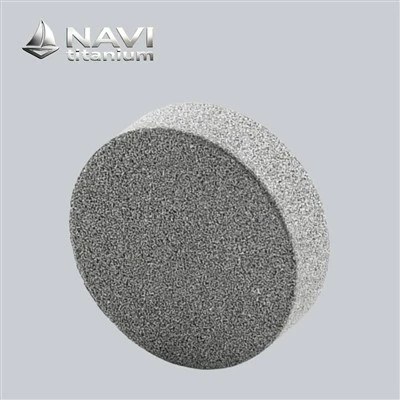
NAVI Titanium provides sintered wire mesh for demanding separation duties. Our service philosophy centers on clear communication, traceable specifications, responsive sampling, and practical guidance before order confirmation. Our technical philosophy emphasizes aperture distribution, strand diameter, layer arrangement, hydraulic loss behavior, and dimensional consistency rather than relying on nominal ratings alone. Each specification is assessed against the intended process, operating thermal profile, fluid characteristics, and particulate loading.
Solution of NAVI Titanium
NAVI Titanium approaches international supply from both an engineering and delivery perspective. This allows overseas procurement teams to evaluate technical data before shipment while reducing discrepancies between the approved configuration and the received goods.
For woven filtration structures, parameters such as Plain Weave, Twill Weave, Dutch Weave, 1–500 μm filtration range, and 3-layer, 5-layer, or multi-layer construction are evaluated together rather than treated as isolated specifications. The selected architecture can be matched with chemical and petrochemical filtration, recyclable CIP/SIP cartridges, high-pressure liquid service, and process-gas purification requirements.


NAVI Titanium examines woven multilayer metallic media from the perspective of controlled fluid passage and particulate retention. Such analysis provides a scientific basis for selecting suitable specifications across demanding separation processes and process-stream management.


Application
Sintered wire mesh from NAVI Titanium is engineered for demanding power-generation and petrochemical applications, enabling controlled particulate retention, flow regulation, catalyst recovery, and process protection.
In power-generation circuits, particulate ingress, condensate carryover, and catalyst or scale fragments can disturb flow regulation, accelerate valve wear, and impair heat-transfer surfaces. A multilayer woven metallic medium can be specified according to aperture distribution, strand diameter, void fraction, and section depth, allowing separation duties to match the hydraulic profile of each circuit. In steam conditioning, cooling loops, hydraulic actuation, and turbine lubrication, graded openings help retain unwanted solids while maintaining an appropriate stress level differential. For high-temperature service, the selection of nickel-based or corrosion-resistant grades depends on thermal profile, chemical exposure, cyclic loading, and cleaning frequency. Welded rims, threaded housings, or cartridge formats can be adapted to existing vessels and manifolds. From a purchasing perspective, key parameters include nominal retention rating, effective open area, hydraulic loss curve, dimensional tolerance, surface finish, and traceability. Laboratory verification under representative flow rates is valuable because particle loading and viscosity can alter hydraulic loss considerably. Such engineering data enables operators to compare replacement assemblies on lifecycle performance rather than nominal aperture alone during scheduled turnaround maintenance periods with NAVI Titanium.

2. Petrochemical

Within petrochemical processing, particulate control is closely linked to catalyst retention, downstream cleanliness, pump protection, and uninterrupted circulation. Refinery streams may carry catalyst fines, coke fragments, corrosion debris, or crystallized deposits. A multilayer woven medium permits tailored aperture distribution and void fraction, supporting selective retention without imposing excessive hydraulic resistance. Applications include catalyst recovery loops, polymer processing, quench circuits, feed conditioning, and protective stages ahead of pumps or control valves. Material selection should account for hydrocarbons, aromatic compounds, sulfides, chlorides, elevated thermal profile, and repeated cleaning cycles. For procurement teams, meaningful specifications extend beyond nominal opening size: hydraulic loss characteristics, solids-loading capacity, dimensional repeatability, weld quality, surface cleanliness, and service-life expectations deserve equal attention. Testing with process-relevant fluids is particularly important because viscosity changes can shift flow resistance and particle capture. A well-matched assembly can reduce catalyst loss, limit fouling, protect sensitive downstream hardware, and support steadier process throughput while simplifying maintenance and replacement scheduling during scheduled turnaround planning with NAVI Titanium.
Purchasing guide

Quality control (QC)
The supplied documentation records the material designation of the woven metallic substrate, allowing procurement teams to verify whether the selected grade corresponds with the approved specification. Depending on filtration duty and operating conditions, available material options can include stainless steel, nickel, nickel-based alloys, and customized metallic grades. The recorded composition is reviewed alongside wire diameter, weave pattern, layer arrangement, and filtration range to maintain consistency between the specified structure and the delivered component. For multi-layer constructions, material records also help distinguish the individual layers when different grades or functional characteristics are incorporated into one assembly. This traceable material information gives overseas purchasers a practical reference when checking corrosion resistance, thermal compatibility, mechanical integrity, and suitability for chemical, petrochemical, liquid, or process-stream service.

Manufacturing Process
NAVI Titanium follows a controlled fabrication route for woven metallic structures, with the material grade considered from the earliest stage. Stainless steel, nickel, nickel-based alloys, or a specified custom grade is selected according to corrosion exposure, thermal conditions, mechanical loading, and the intended filtration duty. The selected wire is then drawn to the required diameter, with dimensional consistency checked before weaving. Plain, twill, or Dutch patterns are formed according to the target opening range and flow characteristics. For multi-layer configurations, individual woven layers are aligned in the prescribed sequence before consolidation. A controlled thermal cycle then promotes metallurgical bonding at contact points while retaining the designed openings throughout the structure. Subsequent sizing, edge finishing, and dimensional correction bring the component to its specified geometry.


Critical Cleanliness & Edge-Control Considerations
For woven multilayer assemblies, the perimeter and terminal faces deserve inspection because local defects can become preferential flow paths during service. Uneven trimming, exposed strands, incomplete joining, or residual burrs may create small gaps where particulate bypass occurs. At the terminal face, flatness and joining quality affect how the assembly seats against a holder, gasket, or retaining ring. Even a minor mismatch can generate localized loading, especially when the process stream encounters repeated stress level changes. Procurement teams should therefore request dimensional records covering outer diameter, section depth, edge profile, and terminal-face flatness rather than checking aperture size alone. Visual inspection under magnification can identify loose strands, trapped debris, surface scratches, and irregular junctions. For assemblies intended for repeated cleaning, the edge should also tolerate handling without generating detached fragments. These details are important when the assembly is installed upstream of sensitive valves, pumps, or narrow passages, where a small detached particle may cause disproportionate operational consequences. A defined inspection checklist helps purchasers distinguish nominal conformity from genuine application readiness with NAVI Titanium.

Fine Channels & Surface Cleanliness

The smallest flow passages require particular attention because their dimensions can determine hydraulic loss, retention performance, and susceptibility to blockage. During production, residual cutting debris, polishing residue, loose particles, or processing contaminants may remain within these narrow passages even when the external surface appears visually clean. Such residues can migrate after installation and contaminate downstream process streams. Purchasers should therefore examine cleanliness from both the exposed surface and the accessible internal passage perspective. Pressure-based testing can reveal abnormal restriction, while microscopic inspection helps identify embedded foreign matter or irregular openings. For demanding applications, cleaning specifications should define acceptable residue levels, inspection methods, drying requirements, and handling practices before final release. Surface cleanliness is especially significant in high-purity gas processing, petrochemical circulation, and precision fluid handling, where contamination may affect subsequent stages. A documented cleanliness criterion gives procurement teams a more objective basis for supplier comparison and reduces uncertainty associated with apparently identical assemblies.
Contaminant Dynamics in Process Streams
NAVI Titanium's sintered wire mesh is engineered for controlled retention amid particle generation, migration, catalyst fines carryover, gel formation, wear debris, scale formation, and carbon deposition.
In continuous process lines, particulate loading rarely remains constant. Feed handling, valve movement, pump shear, thermal cycling, catalyst circulation, and surface abrasion can progressively create fines during operation. Larger fragments may subsequently break into smaller fractions when exposed to stress level fluctuations or repeated mechanical contact. For procurement teams, this distinction matters because nominal retention capability alone cannot indicate how an assembly will perform as the contaminant population changes. Catalyst fines are particularly significant in reaction loops, where escaped particles may represent lost feedstock, downstream fouling, or an increased regeneration burden. A suitable retention assembly should therefore be evaluated against the expected particle-size distribution, solids loading, stress level differential, and cleaning interval rather than a single micron value. Buyers should also examine edge integrity, joining areas, flow passages, and surface cleanliness because loose fragments or fabrication residues can become secondary sources of contamination. Testing with representative process solids provides a basis for sizing, service-life estimation, and maintenance planning with NAVI Titanium.

Particle Migration, Gels, Wear Debris & Deposits

Contaminants can migrate through a process line without remaining at their original location. Fine particles may travel with flowing fluids, accumulate at low-velocity regions, or become trapped within narrow passages. Gel formation creates another challenge: soft agglomerates can deform under stress level and progressively restrict flow. Wear debris generated by moving interfaces may introduce irregular fragments with dimensions and shapes that differ substantially from the original contaminant population. Scale formation can further narrow passageways when dissolved species precipitate onto exposed surfaces, while carbon deposition may create cohesive layers that are difficult to remove. These mechanisms are important to B2B purchasers because stress level rise, throughput decline, cleaning frequency, and unexpected shutdowns are often symptoms of contaminant evolution rather than simple particle loading. Selection should therefore consider particle morphology, compressibility, adhesion tendency, deposit strength, and expected loading rate. For demanding process lines, staged retention, appropriate flow velocity, and periodic inspection can help distinguish between removable deposits and irreversible fouling, allowing maintenance schedules to be based on measurable process indicators rather than fixed calendar intervals with NAVI Titanium.
Flow Resistance & Permeability
For sintered wire mesh, hydraulic loss and permeability are closely coupled with pore-size distribution, section depth, tortuosity, fluid viscosity, and superficial velocity. Under laminar conditions, hydraulic loss generally rises with increasing flow velocity and viscosity, while permeability reflects the ease with which a fluid traverses interconnected passages. The relationship can be described through Darcy-type analysis, where permeability provides a material-specific parameter and pressurization level gradient reflects the hydraulic resistance imposed by the flow path. At elevated velocities, inertial effects may become significant, producing a nonlinear increase in hydraulic loss. For B2B purchasers, permeability should therefore not be evaluated independently from flow rate, operating viscosity, thermal profile, and allowable differential stress level. Variations in opening geometry can also alter local velocity profiles and generate uneven hydraulic loading. As particulate accumulation progresses, effective permeability may decline, causing progressive pressurization level escalation and reduced throughput. NAVI Titanium evaluates flow characteristics through application-specific parameters, helping purchasers correlate permeability, hydraulic loss limits, flow capacity, and service intervals when selecting an appropriate specification for continuous process operation.

FAQ
1. How should pore size be specified?
+
-
Pore size should be selected according to the target particle range, allowable flow resistance, required flow rate, and fluid viscosity. Buyers should also clarify whether the stated value refers to nominal, absolute, or tested retention, as different definitions can produce substantially different results.
2. Which dimensional tolerances should be confirmed before bulk purchasing?
+
-
Key items include overall dimensions, section depth tolerance, opening characteristics, flatness, edge configuration, connection geometry, and allowable dimensional deviation. Confirming these values before procurement helps ensure compatibility with the buyer's existing housing, sealing arrangement, and installation interface.
3. What technical data should buyers request for specification comparison?
+
-
A meaningful comparison should include permeability data, hydraulic loss curves, retention rating, dimensional tolerances, section depth, opening distribution, surface cleanliness, and test methodology. Requesting data under comparable flow rates and fluid properties allows procurement teams to distinguish genuine hydraulic performance from differences caused by testing conditions.
4. Can the same specification maintain identical flow performance across different fluids?
+
-
Not necessarily. Viscosity, thermal profile, density, and operating stress level can alter flow resistance even when the physical specification remains unchanged. Buyers should therefore provide actual operating parameters when requesting flow-rate or hydraulic loss data rather than comparing specifications using nominal dimensions alone.
5. How does section depth affect hydraulic loss and permeability?
+
-
Increasing section depth generally provides a longer flow path, which can raise hydraulic resistance and reduce permeability at a given stress level gradient. However, thickness also affects mechanical rigidity and contaminant-holding capacity, so specification should be based on the required balance between throughput and flow resistance.
Hot Tags: sintered wire mesh, China sintered wire mesh manufacturers, suppliers, factory, Microporous Filter, Sintered Bronze Filter Disc, Sintered Bronze Muffler, Sintered Copper Filter, Sintered Metal Plate, Sintered Stainless Filter