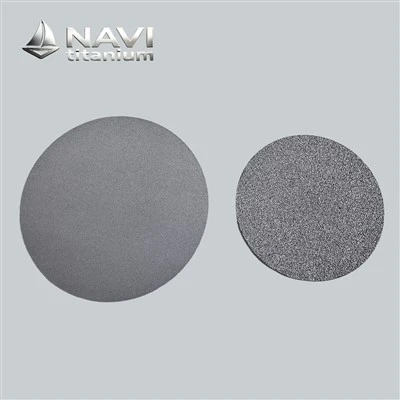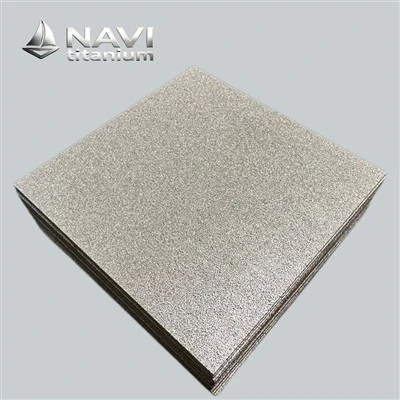


Sintered metal powder is an advanced engineering material developed through powder metallurgy sintering processes. NAVI Titanium combines material expertise, precision manufacturing, and application-focused engineering to produce sintered metal solutions with controlled pore structures, structural stability, chemical durability, and customized functional properties. By optimizing powder characteristics, material composition, forming methods, and sintering parameters, NAVI Titanium provides reliable porous metal components tailored to demanding industrial applications.

Solution of NAVI Titanium


With excellent material stability, controlled porous structures, outstanding corrosion resistance, thermal resistance, and mechanical strength, etc, NAVI Titanium sintered metal parts are widely applied in many fields, including pharmaceutical, petrochemical, chemical processing, food processing, water treatment, new energy, aerospace, and other advanced industries. The following sections provide further details on material characteristics and application solutions.


NAVI Titanium provides sintered metal powder products in various shapes, including tubes, discs, plates, sheets, rings, and other custom geometries. Dimensions, shapes, pore structures, and connection designs can be customized according to customer drawings, operating conditions, and application requirements, supporting reliable solutions for demanding industrial filtration and separation applications.


Application
NAVI Titanium sintered metal powder materials are widely used in pharmaceutical manufacturing due to their excellent chemical stability, cleanliness, and compatibility with demanding production environments. In pharmaceutical production, material selection directly influences equipment reliability, process consistency, and product safety. Porous metallic materials are selected for their ability to withstand complex media conditions, repeated sanitation procedures, and strict cleanliness requirements. Different alloy systems can be applied according to the chemical characteristics of process fluids and the operating environment.
Sintered porous metal materials are increasingly utilized in pharmaceutical processing systems where material purity, chemical compatibility, and long-term stability are essential. Titanium, 316L stainless steel, and other alloy materials can be engineered with tailored porous characteristics to meet different process conditions, including exposure to solvents, extraction media, and chemically active pharmaceutical substances. Through advanced powder metallurgy manufacturing, these materials achieve a stable metallic framework without the limitations commonly associated with polymer-based materials. Their excellent corrosion resistance, structural reliability, and clean material composition make them suitable for demanding pharmaceutical environments requiring consistent performance and high material integrity.


In pharmaceutical manufacturing environments, sintered porous metal materials provide stable chemical performance and excellent material integrity during long-term operation. Their inorganic metallic composition minimizes the risk of material degradation or unwanted interaction with pharmaceutical media, helping maintain the consistency of sensitive formulations and process conditions. The robust structure of titanium, 316L stainless steel, and other alloy systems allows these materials to withstand repeated exposure to elevated temperatures, cleaning agents, and demanding production cycles. Compared with conventional disposable components, porous metal materials offer extended service life, reduced replacement frequency, and improved operational efficiency, supporting reliable and continuous pharmaceutical production.
In sterile gas management systems, NAVI Titanium sintered porous metal materials serve as reliable components for maintaining stable gas handling performance in pharmaceutical manufacturing. During fermentation and bioprocessing operations, these materials can be integrated into gas distribution and conditioning systems to support consistent airflow characteristics and process stability. Their engineered porous structure enables controlled gas permeability and effective flow regulation, which helps maintain suitable operating conditions for microbial cultivation. With strong resistance to thermal stress and chemical exposure, titanium and stainless steel porous materials are capable of enduring repeated SIP (Steam-In-Place) sterilization cycles at 121°C, providing long-term reliability for pharmaceutical production environments.


After repeated sterilization exposure, sintered porous metal materials continue to maintain their dimensional stability and functional performance, making them suitable for long-term use in pharmaceutical production systems. In applications such as pharmaceutical packaging, powder processing, and material storage, these metallic porous components can be integrated into high-purity gas supply and protection systems where stable gas transmission is required. Their durable metallic framework allows reliable operation under continuous thermal cycling and demanding process conditions. The combination of mechanical strength, chemical compatibility, and long service capability makes these materials an effective choice for sterile pharmaceutical environments and advanced drug manufacturing processes.
Purchasing guide

Quality control (QC)


Sintered Metal Powder for Sterile Pharmaceutical Applications
NAVI Titanium sintered metal powder materials, characterized by high-purity composition, integrated sintered structures, zero fiber shedding, and precisely controlled pore characteristics, are widely used in sterile injectable manufacturing environments, including liquid injections, powder injections, intravenous infusions, lyophilized formulations, and sustained-release injectable products. Compared with conventional organic filtration materials, which may face limitations such as fiber release, insufficient sterilization resistance, and structural degradation under demanding conditions, sintered 316L stainless steel and high-purity titanium materials are produced through a binder-free powder metallurgy process. Their excellent cleanliness, corrosion resistance, and mechanical stability help minimize contamination risks and provide reliable material solutions for pharmaceutical processes requiring strict control of particulate impurities, chemical compatibility, and production reliability.


With a wide range of controllable pore structures from submicron to micron scales, sintered porous metal materials provide flexible design possibilities for different pharmaceutical process requirements. By adjusting powder particle size, material composition, and sintering parameters, the internal pore distribution, permeability, and mechanical properties of the material can be precisely controlled. This allows the materials to achieve a balance between fluid transmission, particle separation, and structural stability in complex pharmaceutical environments. In pharmaceutical manufacturing processes, different process stages require materials with specific permeability, cleanliness, and chemical compatibility characteristics. Sintered titanium, 316L stainless steel, and nickel-based alloy materials can be customized according to media properties, operating temperatures, and chemical conditions. Their stable porous structures help maintain consistent performance during long-term operation while reducing the risk of structural deformation or performance degradation under repeated use.
For sterile injection manufacturing environments involving frequent SIP (Steam-In-Place) sterilization, CIP (Clean-In-Place) cleaning, and continuous operation, sintered porous metal materials provide excellent thermal stability, chemical resistance, and long-term structural reliability. Their integrated metallic structure enables them to maintain stable physical properties under repeated exposure to high temperatures, steam sterilization, and aggressive chemical cleaning conditions. Unlike conventional polymer-based materials that may experience aging, deformation, or performance degradation during repeated sterilization cycles, sintered titanium, 316L stainless steel, and nickel-based alloy materials retain their structural integrity and porous characteristics over extended service periods. The excellent durability, cleanliness, and compatibility of sintered porous metals make them suitable for demanding pharmaceutical manufacturing environments where consistent performance, contamination control, and long-term operational stability are required.


These material advantages help improve process reliability, reduce maintenance requirements, and support efficient continuous production of sterile pharmaceutical products. After mirror electro-polishing treatment, sintered porous metal materials achieve a smooth and uniform surface finish, reducing surface irregularities and improving cleanliness, cleanability, and process compatibility in pharmaceutical environments. The excellent chemical stability of 316L stainless steel, high-purity titanium, and other alloy materials helps minimize interactions with pharmaceutical media, supporting the integrity of APIs and excipients during processing. In addition, these materials provide high mechanical strength, excellent resistance to pressure fluctuations, and long-term structural stability under continuous and multi-batch manufacturing conditions. Supported by material certifications, performance evaluation data, and GMP-related technical documentation, sintered porous metal materials offer reliable solutions for sterile pharmaceutical manufacturing, combining high purity, chemical compatibility, operational stability, and long-term service performance.
Compliance & Quality Assurance of NAVI Titanium
NAVI Titanium incorporates material traceability, process documentation, specification verification, and quality inspection into the production of sintered metal filters. Material selection and manufacturing parameters are controlled according to applicable product specifications and project requirements, with relevant records maintained throughout the production process. Depending on the material and application, documentation may include material certificates, dimensional inspection records, production records, and applicable test results, providing a documented basis for product conformity.


For customized or industrial filtration projects, technical requirements can be reviewed before production to clarify material grade, dimensions, filtration characteristics, operating conditions, inspection criteria, and documentation requirements. Critical characteristics are verified at appropriate stages, while final inspection focuses on conformity with the agreed specifications. This structured approach helps maintain consistency between the approved design, manufacturing process, inspection results, and delivered products, supporting customers that require traceable materials, documented quality control, and specification-based acceptance.
FAQ
01. How should NAVI Titanium sintered metal powder products be cleaned?
02. How often should sintered metal products be cleaned?
03. Can sintered metal filters be reused after cleaning?
04. How can the service life of sintered metal products be extended?
05. When should a sintered metal product be replaced?
Hot Tags: sintered metal powder, China sintered metal powder manufacturers, suppliers, factory, Porous Metal Filter, Sintered Copper Filter, Sintered Metal Powder, Sintered Metal Tube, Sintered Steel Filter, Titanium Filter