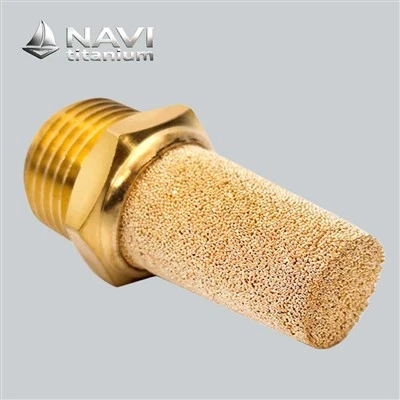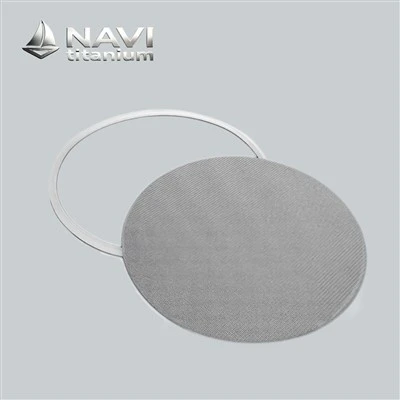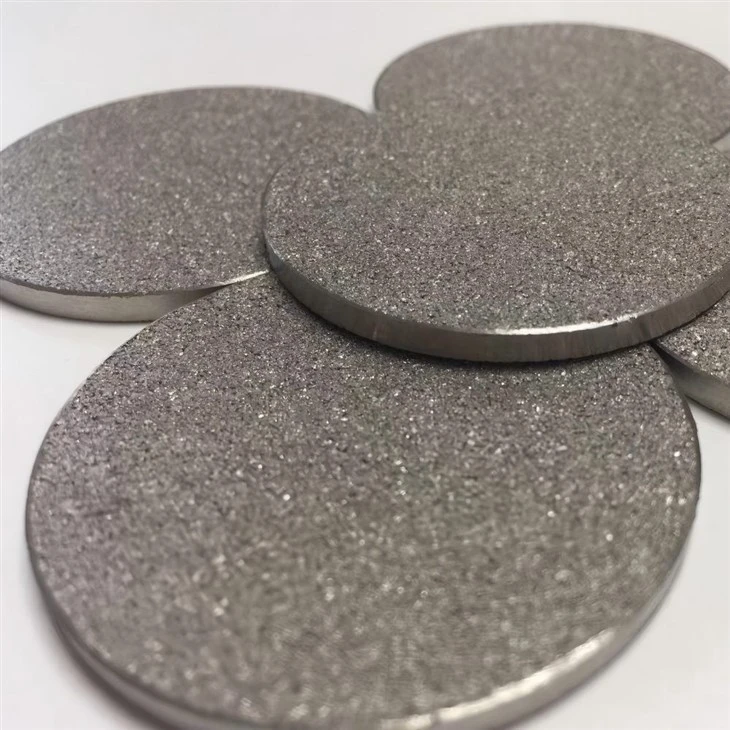


NAVI Titanium sintered disc is a precision-formed circular media for controlled particle retention, gaseous medium diffusion, and flow moderation across demanding process assemblies. Over successive production stages, pore distribution control, thermal consolidation, dimensional inspection, and outer face treatment have been progressively refined. This evolution allows procurement teams to source repeatable specifications while accommodating different pressure-drop targets, particulate loading levels, mounting methods, and operating temperatures across specialized applications.
Solution of NAVI Titanium
NAVI Titanium builds its product development process around material selection, structural evaluation, process verification, and application feedback. For porous components and electrochemical products, the R&D team first reviews the working medium, required flow behavior, thermal or chemical exposure, dimensional constraints, and expected service conditions before defining the material route.
Different grades and material systems can be assessed according to corrosion resistance, mechanical integrity, permeability, conductivity, cleanliness, and long-term stability. NAVI Titanium works with titanium grades including TA1/TA2 and customized TC4 components, while its coating research covers Ru-, Ir-, Pt-, and PbO₂-based systems.
Based on this R&D framework, the following table summarizes NAVI Titanium's current principal titanium product lines.


NAVI Titanium applies controlled thermal consolidation to establish interconnected channel pathways with defined dimensional and permeability characteristics. From a materials-science perspective, these parameters provide a basis for correlating microstructural features with macroscopic flow performance, allowing specification ranges to be evaluated according to volumetric throughput, pressure differential, and thermal exposure.


Application
NAVI Titanium sintered disc enables controlled solids retention and combustion flow regulation through tailored pore distribution, permeability, and dimensional configurations.
In process streams containing suspended fines, catalyst fragments, crystalline residues, or other unwanted particulates, controlled solids retention is often required before the stream enters a downstream stage. The circular body from NAVI Titanium provides a defined channel path while retaining selected particulate fractions according to its pore-size distribution, thickness, and permeability. Unlike a simple screen, its interconnected void network can provide volumetric retention rather than relying solely on outer face interception. This distinction becomes important when particulate loading varies during continuous operation, since retained matter can progressively occupy available channel volume and alter pressure drop.
The relationship between interstice aperture, void fraction, and particle concentration is therefore more significant than nominal dimensional accuracy alone. A finer interstice range improves retention of small particulates but may increase flow resistance; a coarser range permits greater throughput but allows smaller solids to pass downstream. Material selection must additionally consider chemical exposure, thermal cycling, and repeated cleaning requirements. These parameters provide a practical basis for specifying retention grade, permeability, and service compatibility according to the actual process stream.

2. Combustion Flow Control

Within combustion subassemblies, controlled gaseous transport pathway is essential for maintaining an appropriate mixture distribution, local reaction intensity, and pressure profile. The circular diffusion body from NAVI Titanium can regulate gaseous medium movement through its interconnected channel network, converting a concentrated inlet stream into a more evenly distributed flow before it reaches the reaction region. This effect is governed by interstice diameter, void fraction, thickness, and overall permeability rather than by external dimensions alone.
From a fluid-dynamic perspective, pressure loss across the body arises from viscous resistance and localized contraction–expansion effects within the channel network. Increasing thickness generally raises flow resistance, while larger openings tend to lower pressure drop at a given volumetric rate. Such relationships allow the gaseous medium supply to be matched with the required flow range without relying exclusively on downstream valves. Thermal exposure also requires careful consideration because repeated heating and cooling can alter dimensional consistency and channel characteristics. This approach is particularly useful for burners, ignition subassemblies, gas distributors, and compact combustion modules requiring controlled flow delivery.
Purchasing guide

Quality control (QC)
NAVI Titanium incorporates a documented quality record into each shipment, linking material identification, dimensional verification, and performance-related inspection results with the corresponding production batch. For round-form components, particular attention is given to outer diameter, thickness, flatness, edge condition, and structural consistency, since these factors can affect installation fit, flow distribution, and contact with mating parts. This approach also helps retain consistent parameters when the same geometry is reordered for long-term industrial use.

Manufacturing Process
1. Material Preparation
The selected feedstock is inspected for composition, particle distribution, cleanliness, and consistency before forming. The material condition is adjusted according to the required permeability, mechanical strength, and final geometry.
2. Circular Die Filling
The prepared feedstock is evenly distributed into a circular mold cavity. Filling height and material distribution are carefully controlled to reduce density variation between the center and outer perimeter, which is particularly important for thin, flat geometries.
3. Axial Compaction
Pressure is applied through matched upper and lower tooling to form a compact circular body. The pressing parameters are coordinated with diameter-to-thickness ratio to limit edge cracking, warpage, and uneven density.
4. Thermal Consolidation
The compact is subjected to a controlled heating cycle under a defined atmosphere. Adjacent particles bond progressively while the intended internal passage structure is retained.
5. Sizing and Surface Correction
After thermal treatment, dimensional correction is performed where necessary.
6. Final Inspection
The finished circular component undergoes dimensional, surface, structural, and application-related checks. Particular attention is given to uniformity across the radial direction.
Moisture & Contamination Protection
During extended transportation and temporary storage, moisture ingress can become a significant concern for precision porous subassemblies. Thermal regime fluctuations between daytime and nighttime, warehouses and vehicles, or different climatic regions may generate condensation on outer faces and within enclosed packaging spaces. In coastal logistics routes, salt-laden humidity introduces an additional contamination pathway, as deposited salts may remain on exposed outer faces and promote localized chemical attack or discoloration. For NAVI Titanium, protective handling should therefore consider the complete environmental cycle rather than humidity alone. Barrier layers, desiccant placement, controlled enclosure conditions, and appropriate separation from moisture-generating materials can reduce exposure during prolonged transit. Particular attention should be given to transitions between cold and warm environments, where rapid thermal regime changes can produce temporary condensation even when the surrounding atmosphere appears dry. Procurement teams handling overseas orders should evaluate protection according to transit duration, climatic variation, storage location, and expected exposure to coastal or high-humidity environments.

Dust, Packaging Residue & Surface Cleanliness

Surface contamination may also originate from sources that are overlooked during conventional packing practices. Fibers, paper fragments, adhesive residues, plastic particles, and abrasion debris from protective materials can migrate onto functional outer faces during handling. Loading, unloading, warehouse transfer, and manual inspection create further opportunities for dust deposition or incidental contact with foreign matter. These risks become particularly important when the finished assembly is destined for high-cleanliness applications, where even small residues may affect downstream processing or require additional cleaning before installation. NAVI Titanium can approach outer face protection through material separation, low-shedding protective layers, controlled contact points, and cleanliness-focused handling. The objective is not simply to prevent visible damage, but to preserve the original outer face state throughout logistics and storage. For purchasing teams, useful acceptance criteria may therefore include cleanliness, allowable residue level, protective-material compatibility, handling requirements, and inspection methodology before final dispatch.
Backwashing & Reverse-Flow Regeneration
NAVI Titanium sintered disc enables reverse-flow and back-pulse regeneration to recover passage capacity, reduce replacement frequency, and improve lifecycle economics through measurable cleaning efficiency and total cost of ownership.
For subassemblies exposed to progressive particulate loading, reverse-flow cleaning can provide a practical method for restoring channel capacity without immediate replacement. During forward operation, retained solids gradually occupy available pathways, increasing pressure differential and reducing effective throughput. A reverse-flow cycle applies the cleaning stream from the opposite direction, generating shear forces that dislodge accumulated contaminants from the upstream-facing outer face and deeper channel regions. Back-pulse cleaning follows a related principle but uses short pressure excursions rather than a prolonged reverse stream. The required pulse intensity, duration, frequency, and interval depend on contaminant characteristics, retained mass, interstice dimensions, and permissible pressure differential. From a procurement perspective, the key question is not simply whether reverse cleaning is possible, but how effectively NAVI Titanium restores the original flow capacity after repeated cycles. Evaluation may include initial pressure drop, post-cleaning pressure drop, contaminant release rate, residual blockage, and the number of regeneration cycles tolerated before replacement becomes necessary. These parameters help purchasing teams compare cleaning frequency and service intervals against actual operating demands.

Reusable Operation & Total Cost of Ownership

The economic distinction between disposable and reusable formats becomes more important when an assembly operates continuously under substantial particulate loading. A lower initial unit price may appear attractive, yet frequent replacement can increase labor, inventory requirements, downtime, and waste-handling expenses. Conversely, a higher-value reusable format may provide greater economic benefit when reverse-flow regeneration restores sufficient channel capacity over multiple service cycles. For purchasers, total cost of ownership should therefore be assessed through a broader calculation: acquisition price, cleaning frequency, regeneration labor, pressure-related energy demand, inspection requirements, replacement interval, and process interruption. A useful purchasing metric is cost per operating cycle rather than cost per individual unit. Historical pressure-drop records can further indicate when cleaning should occur and whether regeneration remains economically justified. If post-cleaning performance progressively declines, replacement may become preferable to repeated treatment. Procurement specifications can consequently include allowable pressure differential, cleaning-cycle count, recovery target, service interval, and acceptance criteria after regeneration.
Same Size, Different Flow
Two discs with identical diameter and thickness can exhibit markedly different flow rates because external dimensions do not fully define their hydraulic characteristics. For a sintered disc, the decisive variables include pore-size distribution, open-volume fraction, tortuosity, channel connectivity, local density, and outer face condition. Two specimens may share the same nominal dimensions while possessing different distributions of fine and coarse openings. A higher open-volume fraction generally permits greater volumetric throughput, whereas narrower channels increase viscous resistance. Flow is also affected by tortuosity: longer or more convoluted pathways require greater pressure differential to maintain the same throughput. Local density variations can create regions with unequal hydraulic resistance, causing preferential channel through certain areas while restricting others. Outer face deposits, residual processing matter, or partial blockage can further alter effective flow area during service. Therefore, NAVI Titanium evaluates flow characteristics beyond diameter and thickness when specifying a sintered filter disc. For purchasers, permeability, pressure drop, interstice distribution, open-volume fraction, and flow-rate testing provide more meaningful references than dimensional data alone.

FAQ
1. How does your team's technical background support specification selection?
+
-
Our technical team has experience in porous-material processing, thermal consolidation, dimensional assessment, and flow-performance evaluation. This background allows specifications to be reviewed from multiple technical variables rather than diameter and thickness alone.
2. How many years of experience do your core personnel have in this field?
+
-
Our core personnel have accumulated long-term experience across material preparation, thermal processing, pore-scale characterization, finishing, inspection, and technical communication. Their practical experience helps connect laboratory measurements with actual production requirements.
3. Who handles technical clarification for customized specifications?
+
-
Technical clarification is handled by personnel familiar with material processing and porous-flow applications rather than by sales staff alone.
4. How does your team evaluate differences between seemingly identical specifications?
+
-
Experienced specialists assess more than external dimensions. The team therefore considers dimensional data together with hydraulic and material-related parameters when reviewing incoming specifications. This multi-variable assessment helps purchasers avoid selecting a nominally identical item that may produce different pressure-drop or throughput results.
5. What technical information should buyers provide for accurate specification matching?
+
-
For efficient technical evaluation, buyers should provide dimensional requirements, allowable tolerances, target pore range, expected flow rate, pressure differential, thermal regime range, surface requirements, mounting method, and applicable inspection criteria.
Hot Tags: sintered disc, China sintered disc manufacturers, suppliers, factory, Microporous Water Filter, Porous Stainless Steel Plate, Sintered Bronze Muffler, Sintered Metal Powder, Sintered Nickel Filter, Sintered Powder Filter Cartridge