NAVI Titanium presents sintered bronze sheet as a compact porous-form material for controlled flow and particle retention. Buyers often focus on more than dimensions: repeatability between batches, edge finish, joining method, and whether samples can be checked before volume purchasing. NAVI Titanium can review drawings, match an existing reference, and discuss cleaning or service expectations before quotation. For distributors, this reduces uncertainty when replacing an established source. Clear records for size, permeability, surface condition, and inspection results also make incoming checks easier across recurring orders.
Solution of NAVI Titanium
At NAVI Titanium, the warehouse area is organized around controlled storage, batch identification, and material segregation, creating a practical foundation for powder-based manufacturing. Bronze feedstock and other metallic powders can be handled according to designated storage conditions, with attention to moisture exposure, contamination prevention, packaging integrity, and batch traceability. Dedicated placement zones help production personnel distinguish incoming stock, qualified lots, work-in-process materials, and finished components, reducing the risk of material mix-ups during subsequent forming and consolidation. Such warehouse management is particularly relevant when density, particle distribution, chemical composition, and final permeability must remain consistent from one production batch to another.
The selected configuration offers balanced transmission, improved heat dissipation capability and flexible mounting possibilities across various usage scenarios with NAVI Titanium. Full specification details are listed below.


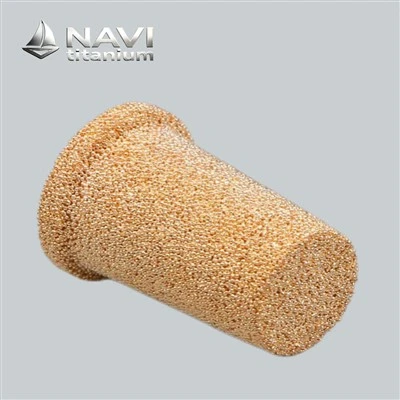
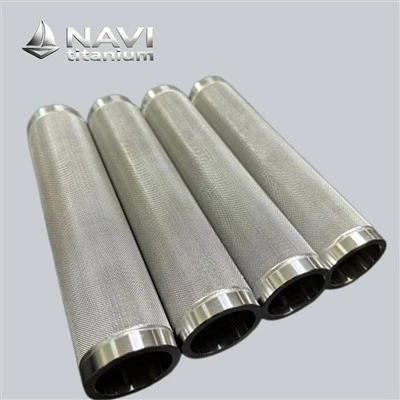
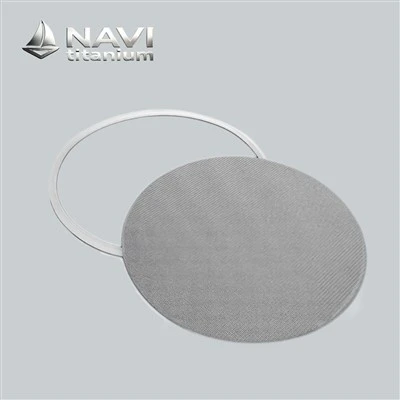
NAVI Titanium presents a compact fluid-control material featuring a uniform cellular arrangement, carefully formed openings, and a clean surface finish. Its visual characteristics reflect controlled particle retention, consistent passage dimensions, and suitability for repeated flow cycles.


Application
Sintered bronze sheet supports gas diffusion and distribution applications by providing controlled gas release and uniform dispersion within various systems. Its internal passage arrangement allows steady movement of gaseous substances, helping maintain balanced exchange and consistent delivery during operation. The specially formed material offers excellent wear resistance, thermal adaptability, and corrosion tolerance under demanding surroundings. NAVI Titanium provides adjustable thickness and opening size for customization across different requirements, supporting efficient gas transmission in aeration units, analytical devices, and chemical processing assemblies.
Gas diffusion processes depend on uniform release patterns and suitable gas movement routes to maintain effective interaction between gas streams and surrounding environments. The interconnected channels inside the material body guide gas migration toward surface openings, where opening size and distribution determine release speed and dispersion range. NAVI Titanium applies a carefully selected passage arrangement to help reduce local pressure differences and promote steady gas exchange during operation. Thickness, surface condition, and opening dimensions are chosen according to gas volume, pressure requirements, and installation space.
This configuration is commonly used in aeration assemblies, gas release units, and analytical devices that require repeatable gas delivery. The compact form, flexible sizing options, and balanced transmission characteristics allow adaptation to various technical environments.

Lubrication Systems

Gas distribution tasks require precise control of gas movement inside reaction chambers, processing units, and analytical assemblies. Gas passes through interconnected channels formed within the material body, where channel layout and opening dimensions determine release patterns and dispersion quality.
A well-arranged passage route helps reduce uneven gas accumulation and improves contact between gas and surrounding substances during operation. The selection of thickness, opening size, and surface condition depends on pressure level, gas volume, and installation requirements.
Through appropriate specification matching, this type of gas distribution medium provides steady transmission, mechanical support, and adaptable use across chemical processing, laboratory analysis, and mixing applications.
Purchasing guide

Quality control (QC)
This porous sheet is produced from copper-tin alloy powder via a controlled high-temperature consolidation process, forming a continuous, permeable metallic matrix with uniform pore distribution. The material combines the intrinsic thermal and electrical conductivity of bronze with a rigid, self-supporting structure suitable for demanding filtration and flow-control applications.
Values presented are representative and may differ based on specific grade, thickness, and operating conditions. End users should confirm suitability through their own application testing.

Manufacturing Process
The manufacturing route begins with carefully graded bronze powder selected according to alloy composition, particle distribution, and intended permeability. The powder is screened and blended to obtain a uniform feedstock, while excessive oxidation or foreign contamination is excluded before forming. A measured quantity is then distributed into a flat forming cavity, where controlled compaction establishes the required length, width, and preliminary thickness while retaining the designed internal openings. The compacted body proceeds into a controlled-atmosphere furnace, where a programmed heating cycle promotes metallurgical bonding between neighboring bronze particles without completely closing the interconnected passages. Temperature ramp rate, holding duration, and cooling conditions are adjusted according to the bronze grade and section geometry, since excessive heat can alter dimensional stability and reduce the intended flow characteristics. After furnace consolidation, the flat body undergoes sizing, edge trimming, surface cleaning, and dimensional verification. Final checks examine thickness uniformity, flatness, density, permeability, and structural integrity before protective packaging and batch identification are completed.


One Supplier, Multiple Stakeholders
A single purchasing project may involve several teams, with each department reviewing different information before approval. Purchasing may focus on quotation basis, MOQ, quantity, delivery schedule, payment terms, and recurring order arrangements. Engineering may require drawings, dimensions, specifications, connection details, material requirements, and revision information before confirming the requested configuration. QA may then review inspection requirements, inspection records, certificates, batch references, and other quality-related documentation. Keeping these requirements connected to the same order reference can make information exchange easier and reduce repeated requests for the same details.

Project Manager → Finance → Cross-Department Order Coordination

Project Managers often focus on project milestones, required dates, installation timing, partial quantities, and changes to the project schedule. Their requirements may differ from those of Purchasing or QA, but all can be linked to the same order information. If a project schedule changes, the required quantity or planned date can be reviewed before production or dispatch arrangements are finalized. This is particularly useful for EPC projects, equipment builders, and customers managing several purchasing stages at the same time.
Finance may require commercial invoices, payment information, quotation references, order values, and other accounting records. Providing these documents alongside the confirmed purchasing information gives Finance a clearer basis for payment and internal accounting review.
Gas Diffusion Mechanism
Internal Passage Arrangement and Gas Dispersion Mechanism
The internal passage arrangement plays a fundamental role in achieving uniform gas dispersion during transmission processes. The interconnected channels formed within the sintered bronze sheet create multiple pathways for gaseous movement, allowing pressure differences to drive gradual release across the entire surface area. Compared with single-point gas outlets, this distributed release method helps minimize local concentration variations and promotes more balanced interaction between gas streams and surrounding environments. The pathway size, distribution pattern, and surface characteristics determine how gases move, spread, and exchange during operation. Such characteristics are particularly valuable in applications requiring consistent gas delivery, improved contact efficiency, and controlled release behavior. NAVI Titanium provides specifications that help match pathway characteristics with different operational requirements, supporting suitable selection according to gas movement conditions.

Thickness and Opening Size Effects on Gas Release

Thickness and opening size are critical parameters that determine gas transmission characteristics and release patterns. A greater thickness generally creates a longer movement route, which can moderate gas velocity and provide smoother pressure distribution throughout the passage system. In contrast, reduced thickness may allow faster gas response when quick release is required. Opening dimensions directly affect outlet distribution, gas volume transmission, and dispersion uniformity. Smaller openings can generate finer gas release points, while larger openings may support higher transmission capacity under specific requirements. NAVI Titanium adjusts these parameters to achieve a balance between gas resistance, release speed, and operational consistency. This relationship between physical dimensions and gas movement characteristics enables customized configurations for different diffusion and distribution applications.
Gas distribution quality depends on how effectively released gases spread across the available area and interact with surrounding substances. Variations in outlet conditions may cause uneven concentration levels, incomplete contact, or inconsistent exchange during operation. A well-arranged passage network inside the sintered bronze filter disc helps guide gas movement and creates a more even release pattern from different surface locations. This approach allows gas flow to maintain a smoother transition while improving contact efficiency in mixing units, aeration devices, and analytical assemblies. The selected opening arrangement and dimensional parameters affect dispersion range, pressure variation, and release uniformity. Careful adjustment of these factors enables better adaptation to different gas delivery requirements and helps maintain repeatable results under changing operating environments.

Engineering Expertise

NAVI Titanium focuses on improving gas diffusion materials through continuous optimization of internal characteristics, surface features, and functional adaptability. The development concept centers on understanding how microscopic pathways affect gas movement, pressure distribution, and interaction efficiency during operation. By studying the relationship between material composition, opening arrangement, and transmission behavior, specialized solutions can be created for demanding gas release applications. The research approach emphasizes balanced gas delivery, reduced resistance, and consistent output across different working environments. Through careful evaluation of physical properties and application requirements, we provides customized options that support evolving market demands. This approach reflects a commitment to enhancing material capability through scientific analysis, practical experience, and continuous refinement of production methods.
The improvement of internal passage systems is a key direction for enhancing gas diffusion capability. The arrangement of interconnected channels determines how gases travel through the material and how evenly they emerge from the surface. A well-controlled pathway system allows gradual release, reduces irregular discharge points, and improves overall gas distribution. Research into channel size, density, and orientation helps achieve a balance between transmission speed and pressure control. NAVI Titanium focuses on such optimization, especially in applications requiring continuous gas exchange and uniform dispersion. By examining the relationship between internal characteristics and external operating requirements, manufacturers can create configurations that provide better adaptability for various usage scenarios. This scientific approach helps transform basic material functions into specialized performance advantages.

Parameter Adjustment for Performance Enhancement

Sintered bronze sheet parameters play an essential role in achieving suitable gas release characteristics for different requirements. Thickness variation, opening dimensions, and surface conditions can directly affect transmission resistance, release speed, and dispersion range. Adjusting these factors allows the material to match different pressure levels, gas volumes, and operating environments. NAVI Titanium applies a carefully selected combination of parameters to help maintain balanced gas movement while reducing unnecessary energy consumption during operation. This customization process requires a detailed understanding of physical relationships between material features and practical usage demands. Through systematic evaluation of these variables, manufacturers can provide tailored configurations that support specific application goals. The ability to modify key parameters demonstrates the flexibility and versatility of this material category.
Future progress in gas diffusion applications depends on deeper research into material characteristics, manufacturing methods, and application requirements. Continuous improvement focuses on enhancing gas transmission efficiency, extending service periods, and adapting to increasingly specialized environments. By analyzing real operating conditions and gathering application feedback, NAVI Titanium researchers can identify opportunities for further improvement in internal pathways and surface characteristics. The combination of scientific investigation and practical experience promotes continuous advancement in material performance. This forward-looking approach supports industries requiring more precise gas management, improved resource utilization, and higher process consistency. As application demands continue to evolve, ongoing optimization will remain essential for creating materials capable of meeting complex technical challenges.

FAQ
1. Can you continue supplying the same specification for future orders?
+
-
Yes. We support repeat purchasing and long-term supply arrangements for customers who need the same specification over an extended period.
2. Can your product replace the item I am currently using?
+
-
Yes. We can evaluate an existing item based on a drawing, sample, photographs, or available specifications. This is particularly useful when customers want to change suppliers, replace an imported item, source a discontinued model, or reduce purchasing costs.
3. What if I do not know how many pieces I need?
+
-
You can first provide your application, equipment model, current usage, replacement frequency, or estimated annual demand. Based on this information, our sales team can help clarify a suitable purchasing quantity. Customers who are testing a new specification can begin with a smaller trial order before moving to regular supply. For established applications, purchasing quantities can also be planned according to monthly or yearly consumption.
4. What experience and qualifications does your team have?
+
-
Our team has accumulated extensive experience in customized manufacturing and customer-specific applications. More than 20 technologies have been granted utility model and design patents by the China National Intellectual Property Administration (CNIPA). These achievements reflect our continued investment in technical capabilities and provide additional confidence for customers seeking customized specifications, sample replication, and long-term cooperation.
5. Which parameters affect gas release performance?
+
-
Several physical parameters affect gas release characteristics, including thickness, opening dimensions, surface configuration, and overall size. Thickness can adjust transmission resistance and pressure distribution, while opening dimensions determine release speed and outlet distribution.
Hot Tags: sintered bronze sheet, China sintered bronze sheet manufacturers, suppliers, factory, Sintered Bronze Air Muffler, Sintered Bronze Bar, Sintered Bronze Filter Disc, Sintered Bronze Plate, Sintered Filter Plate, Sintered Powder Filter Cartridge