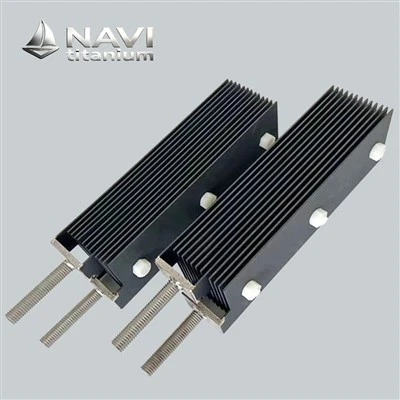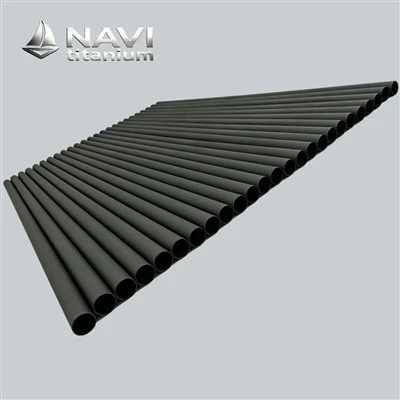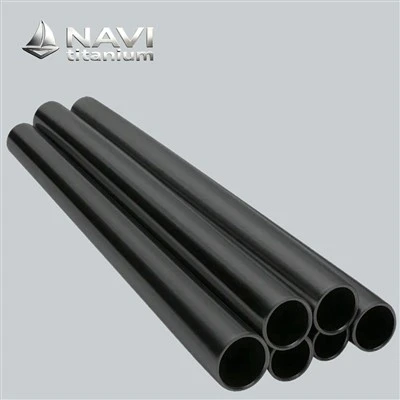


NAVI Titanium's MMO titanium electrode are specifically designed for impressed current cathodic protection and industrial electrolysis applications. They're mainly used in point or linear high-emission scenarios, like steel piles in deep well beds and offshore platforms. They can also be applied to corrosion protection for complex piping networks, reinforcement of aging pipes, and irregular structures, and further used in the chlor-alkali industry and water treatment disinfection. NAVI Titanium's core advantage lies in independently controlling the coating formulas and sintering processes, allowing precise customization to match customer conditions, covering the full range of MMO catalytic systems including ruthenium-iridium coatings, iridium-tantalum coatings, and platinum coatings.

Solution of NAVI Titanium


NAVI Titanium MMO titanium electrodes come in various custom sizes like mesh, discs, cylinders, pipes, and special-shaped plates. They feature high-performance precious metal coatings that stick well, keep oxygen/chlorine evolution potential stable, resist acid and alkaline corrosion, and last a long time. They're widely used in making sodium hypochlorite, industrial water treatment, electrolysis, and other work conditions.


Application
The chlor-alkali industry is a vital component of the modern basic chemical industry. Its core production process involves the electrolysis of saturated sodium chloride (NaCl) brine to manufacture three fundamental chemical products: chlorine gas (Cl₂), caustic soda (NaOH), and hydrogen gas (H₂). The fundamental electrochemical reactions are: 2Cl⁻ → Cl₂ + 2e⁻ at the anode and 2H₂O + 2e⁻ → H₂ + 2OH⁻ at the cathode, resulting in the overall reaction 2NaCl + 2H₂O → 2NaOH + Cl₂ + H₂. In this process, the anode material is a critical factor determining production efficiency, energy consumption, and equipment lifespan. While the chlor-alkali industry traditionally relied on graphite anodes for a long time, graphite suffered from issues such as rapid consumption, low mechanical strength, high electrical resistance, pollution generation, and significant dimensional instability.


In the late 20th century, the emergence of Dimensionally Stable Anode (DSA) technology-featuring a titanium substrate coated with mixed metal oxides (MMO)-ushered the chlor-alkali industry into an era of high efficiency, low energy consumption, and extended service life. Titanium electrodes manufactured by NAVI Titanium typically consist of a titanium substrate and an active MMO coating.
Purchasing guide

Quality control(QC)


| Titanium Base Material Suppliers: | Coating Precursor Suppliers: |
|
|
|


Manufacturing Process

Application
The ion-exchange membrane chlor-alkali process is currently the most widely used electrolysis technology in the global advanced chlor-alkali industry. It uses a cation-exchange membrane to physically separate the anode and cathode compartments while selectively allowing sodium ions (Na⁺) to pass through, thereby enabling the continuous production of high-purity caustic soda, chlorine, and hydrogen. Compared to traditional diaphragm and mercury cathode processes, the ion-exchange membrane process features low energy consumption; high caustic soda purity; minimal environmental pollution; a high degree of automation; and long equipment operating cycles.


An ion-exchange membrane electrolytic cell typically consists of an anode end plate, an anode compartment, an MMO titanium anode, an ion-exchange membrane, a cathode, and a cathode compartment. Among these components, the anode region is responsible for chlorine production, the cathode region is responsible for hydrogen and hydroxide ion production, and the ion-exchange membrane facilitates Na⁺ migration. In this process, the MMO titanium anodes produced by NAVI Titanium serve not only as conductive pathways but also as a highly selective catalytic interface for chlorine evolution, a highly stable platform for electrochemical reactions, and dimensionally stable anodes capable of long-term operation. Their performance directly affects cell voltage; energy consumption per metric ton of caustic soda; chlorine purity; current efficiency; membrane lifespan; and production continuity.
One of the key performance indicators in ion-exchange membrane chlor-alkali production is current efficiency. Theoretically, all current passing through the anode is used for the oxidation of Cl⁻ to produce Cl₂. However, in practice, a portion of the current may be diverted to side reactions. The primary side reaction is the oxidation of water to produce oxygen: 2H₂O → O₂ + 4H⁺ + 4e⁻. An increase in the oxygen evolution reaction leads to reduced chlorine purity, lower effective current, and wasted energy. By optimizing surface catalytic performance, MMO-coated titanium electrodes ensure that the chlorine evolution reaction proceeds preferentially. This is due, in part, to the MMO coating's excellent selectivity for chlorine evolution.


Typical MMO coatings include RuO₂, IrO₂, TiO₂, and Ta₂O₅. Among these, RuO₂ provides high activity for chlorine evolution, while IrO₂ enhances stability. This combination lowers the reaction energy barrier for Cl⁻ oxidation at the electrode surface. The MMO surface possesses a high density of active sites. On ordinary metal surfaces, the effective reaction area is limited. The MMO coating features a microstructure designed specifically for this purpose, with a large number of nanoscale catalytic regions. It is capable of simultaneously handling high-capacity Cl⁻ reactions. Therefore, it is suitable for high-current operation.
In the ion-exchange membrane chlor-alkali process, the ion-exchange membrane is one of the most expensive and critical components. The membrane's performance directly determines caustic soda purity, current efficiency, and cell voltage. Although MMO titanium electrode do not come into direct contact with the membrane, their performance affects the membrane's service life. This is due to factors such as stable anode potential; if anode performance declines, cell voltage increases, leading to a greater potential difference across the membrane. This can lead to membrane aging during long-term operation. Reducing the generation of oxygen by-products is important because an increase in oxygen concentration alters the anode environment and the gas-liquid phase distribution, thereby affecting the stable operation of the membrane. It also reduces the release of impurities; high-quality MMO coatings do not produce large amounts of corrosion by-products like traditional anodes do, thereby lowering the risk of membrane fouling.

Applications in Chlorine Treatment Systems

Wet chlorine gas produced by ion-exchange membrane electrolysis cells must enter a post-treatment system. This typically includes cooling, drying, compression, and liquefaction. The performance of MMO anodes affects the quality of the chlorine gas. If anode performance declines, it may lead to increases in oxygen content and impurity levels, thereby driving up chlorine gas processing costs. Therefore, high-performance MMO electrodes can improve chlorine gas purity and production stability.
Differentiated advanced applications of titanium electrodes across different chlor-alkali process systems
The ion-exchange membrane process features precise operating conditions, stringent parameters, and the highest product purity requirements. It accounts for over 95% of global high-end chlor-alkali production capacity and is best suited for ternary, high-precision MMO titanium electrodes. In this scenario, the core applications of MMO electrodes focus on four key dimensions: maintaining stable operating conditions under precise conditions, mass production of high-end products, long-term protection of the membrane, and maximum energy efficiency.


Through precise control of reaction selectivity, stable maintenance of electrode spacing, and uniform distribution of the interfacial electric field, these electrodes ensure the stable mass production of 32% high-purity liquid caustic soda and 99.5% high-purity chlorine gas, serving high-value-added industrial chains such as new energy, semiconductors, and fine pharmaceuticals. It is also compatible with new energy-saving electrolysers featuring zero electrode spacing or membrane electrode spacing, further reducing electrode spacing and minimizing interfacial polarization voltage drops to achieve the industry's highest energy-efficiency standards, making it a core, standard functional component in modern high-end chlor-alkali plants.
Existing diaphragm-type chlor-alkali electrolysis units are large-scale and operate under relatively lenient conditions; however, they present certain inherent challenges, such as diaphragm clogging, electrolyte degradation, high energy consumption, and frequent maintenance. Against this backdrop, the MMO electrodes produced by NAVI titanium offer differentiated application solutions for diaphragm protection, energy-saving retrofits of aging units, and the maintenance of electrolyte stability. These electrodes feature zero impurity precipitation and low side reactions, preventing membrane pores from becoming clogged by solid impurities and corrosive byproducts. This maintains the membrane's permeability and stability while extending its service life. Without replacing the main electrolyzer equipment-simply by replacing the electrodes-energy savings of 15%–20% can be achieved in older electrolyzers. This retrofit is cost-effective and delivers rapid results, fully meeting the needs of existing facilities to reduce costs and improve efficiency.

NAVI Titanium's Service
Based on global multi-region project experience, NAVI‑Titanium goes beyond the usual industry buzzwords like 'wooden crates, moisture-proof, shock-proof' and establishes a full-chain control strategy covering micro-mechanical damage, container micro-chemical environment, cross-border customs gray risks, insurance evidence collection, and intermediate storage management:

Mechanical aspect: Focus on preventing micro-wear, bending stress from long electrodes' own weight, and resonant amplification during multimodal transport. Using CNC-shaped liners to lock electrodes in place eliminates relative movement inside the crate, and support points are arranged reasonably.
Environmental aspect: Don't just rely on desiccants. Use a VCI sealing barrier system to avoid damage to MMO catalytic surfaces and conductive joints from container rain, packaging off-gassing, and port aerosols, while controlling the moisture content and fumigation residues in wooden crate materials.
Compliance aspect: Address the gray areas in classification of UN3082 Class 9 marine pollutants, REACH-SVHC notification obligations, and dual-use item screening. Provide multi-destination compliant SDS and full sets of documentation to reduce the risk of customs hold-ups in destination countries worldwide.
Commercial risk aspect: Recognize the challenges with insurance claims timing for latent MMO coating damage. Provide standardized unpacking and evidence-collection guidelines, distinguishing between visual inspection and electrochemical performance inspection checkpoints.
Process control aspect: Ensure the factory completes all packaging steps, refusing outsourced logistics warehouse packing; differentiate protection standards for bulk shipments versus courier samples; include temporary storage at transit yards in transportation risk management.

Frequently Asked Questions
What's the core difference between NAVI Titanium MMO electrodes and ordinary domestic MMO electrodes?
+
-
A: Ordinary electrodes often have issues like insufficient titanium purity, simplified pre-treatment, low noble metal coating load, and poor adhesion. After operation, the coating may peel off and efficiency drops quickly. NAVI Titanium uses GR1 high-purity titanium in accordance with ASTM B265 standards, fully implements degreasing, sandblasting, and oxalic acid etching processes, and applies multi-layer gradient noble metal coatings. At the same current density, it has lower overpotential, long-term stable current efficiency, and is suitable for continuous operation in municipal water supply and ship ballast water, reducing downtime losses. We can provide a full set of electrochemical factory test reports to support equipment certification and project bidding.
Can titanium substrates with failed coatings be re-coated with MMO?
+
-
A: If the titanium plate is not deformed, perforated, or severely passivated/oxidized, it can be sent back to the factory to remove the old coating and reapply a new one with full pre-treatment and firing. Re-coating costs 40%–60% less than a brand-new anode, making it suitable for long-term operation of large electrolytic systems. You just need to send back the old electrode, and we'll assess the substrate condition and provide a quote.
What does the electrode warranty cover, and what situations are not included?
+
-
A: The warranty covers normal electrochemical coating wear under contract-specified conditions. Exceeding rated current density, electrolytes with fluoride ions, long-term immersion in strong acids, mechanical impact or scratching of the coating, continuous reverse current, and unauthorized cutting or welding modifications of electrodes are not covered. Clearly defining operating conditions before signing the contract helps your company and the end users set maintenance terms.
In seawater with high calcium and magnesium ions, how do you deal with rapid scaling on plates? Does scaling damage the coating?
+
-
A: Scaling increases resistance, causing local current concentration and accelerating coating wear. Recommended solutions: set up an automatic polarity reversal program; regularly perform low-concentration acid descaling; add pre-treatment to reduce incoming water hardness. The scale itself doesn't corrode the coating, but long-term thick scaling may cause localized overload, so a regular descaling plan is needed.
Without professional technicians, can frontline workers independently handle electrode disassembly and inspections?
+
-
A: Installation processes are standardized: power off → disconnect wiring → remove old electrode → clean tank and cathode scale → insert new electrode ensuring even spacing → tighten cables and slowly ramp up current. We provide illustrated manuals and operation videos for training. Daily work only requires recording tank voltage and observing scale on plates, with no advanced testing equipment needed.
Hot Tags: mmo titanium electrode, China mmo titanium electrode manufacturers, suppliers, factory, MMO Ribbon Anode, Oxygen Evolution Anode, Platinized Titanium Anode, Platinum Titanium Electrode, Titanium Anode Baskets for Electroplating, Titanium Electrodes for Electrolysis