NAVI Titanium platinum titanium electrode are designed for fields where electrochemical component stability, purity, and long-term functional consistency are critical. By combining a high-purity titanium substrate with a platinum surface layer, NAVI Titanium provides an solution that delivers excellent conductivity, corrosion resistance, and electrochemical consistency while minimizing dissolution and contamination risks. For customers concerned about service life, electrical load distribution, electrolyte purity, and working reliability, Pt-Ti anodes offer a practical alternative to conventional titanium electrochemical component, particularly in demanding electrochemical environments. NAVI Titanium verifies key manufacturing parameters before shipment to guide repeatable electrode performance.
Product of NAVI TItanium
Rather than relying on a fixed layout, the supplied arrangement by NAVI Titanium can be specified according to the required cell geometry and installation method. The specification table lists the principal dimensional, material, and electrical parameters, allowing buyers to compare the supplied unit with their equipment drawings and process requirements before procurement.


NAVI Titanium assembly can be customized in size, shape, surface layer configuration, and connection design based on specific working conditions. They are suitable for precision electroplating, high-purity water electrolysis, laboratory electrochemical systems, and other fields requiring high-purity and functional consistency.


Usages in ICCP Systems
Platinum titanium electrodes of NAVI Titanium operate as inert auxiliary anodes powered by a rectifier supplying direct electrical load. By releasing protective electrical load into the electrolyte, they make the ship hull or steel structures function as cathodes, effectively preventing corrosion caused by metal oxidation and electron loss. As an insoluble anode with extremely low consumption, it provides outstanding durability and reliability, making them a key component in ICCP systems.
Its core advantage lies in its exceptionally high electrical load density capability. Conventional mixed-metal oxide anodes typically exhibit limitations under high-load working conditions, where functional consistency degradation, interface instability, and current output attenuation may occur. In contrast, it can sustain reliable running at significantly higher current densities over extended periods, delivering more than twice the current-carrying capability of conventional solutions. Benefiting from excellent high-current stability, they sustains functional consistency without significant polarization or passivation effects, effectively eliminating common issues in systems, such as current fluctuation, unstable protection potential, and insufficient protective performance. Also, high current density capability provides significant advantages in system miniaturization. With higher output capacity per unit area, the required size can be reduced, minimizing installation space and offering greater flexibility for integration into compact and space-constrained uses. This makes it particularly suitable for high-power, high-precision cathodic protection systems where functional stability, compact design, and long-term running stability are essential.


NAVI Titanium item features extremely low consumption and ultra-long working lifetime, greatly reducing lifecycle running and maintenance costs of ICCP systems. Under standard conditions, the consumption rate of Pt-Ti anodes is only 8mg/A·yr, with an extremely low consumption rate. A conventional 2.5μm functional layer can provide a working lifetime of 15–20 years, while a 5μm thickened Pt can achieve a life of more than 25 years under high-load working conditions. NAVI Titanium adopts a Ti substrate combined with a functional layer composite structure. Ti substrate has permanent corrosion resistance and will not corrode or be damaged. Only the surface Pt layer is slightly consumed. It can be re-electroplated and refurbished for reuse later without replacing the entire equipment. Compared with disadvantages of silicon iron and graphite anodes requiring replacement every 3–5 years and ordinary anodes failing after 8–10 years, these anodes can achieve ultra-long maintenance-free running, greatly reducing dismantling, repair, and downtime maintenance costs. It provides extremely high comprehensive cost-effectiveness in marine engineering. This has excellent resistance to erosion, cavitation, and corrosion, making it suitable for various harsh dynamic marine working conditions.
It uses a dense metallic Pt electroplated layer with a compact structure and strong bonding strength, providing outstanding erosion resistance and wear resistance. It can be stably applied in high-risk cavitation areas such as ship propellers, rudders, and high-speed seawater pipelines. Meanwhile, the functional layer has extremely inert chemical properties and, combined with the titanium substrate passivation film, can strongly resist high chloride ion concentrations in seawater, salt spray corrosion, and complex wet-dry alternating environments. In addition, the electrolysis reaction has low overpotential and lower energy consumption. During use, no impurities are released, preventing contamination of seawater and pipelines and ensuring precise and reliable processes of ICCP systems. During installation, bending or impact damage to the goods must be strictly avoided to prevent Pt layer peeling. After equipment shutdown, the complonents should be cleaned promptly with deionized water and properly stored by soaking. Long-term immersion in tap water containing calcium and magnesium ions should be avoided to prevent scale formation and corrosion. Through standardized maintenance, the life of the device can be maximized.


This has a flexible structure and strong adaptability, meeting the needs of various complex ICCP installation scenarios. Titanium material is lightweight and easy to process and shape. It can be manufactured into various structures, allowing it to fit special installation positions, ensuring uniform distribution and eliminating corrosion protection blind spots. The overall weight is lightweight and does not increase ship navigation resistance or equipment load. It is suitable for the lightweight design requirements of high-end vessels such as warships and high-speed yachts. Under high-power working conditions, copper cores can be integrated to enhance conductivity and prevent local overheating and uneven electrical load distribution. In engineering selection, it is the optimal solution for high-flow, high-load, and long-life marine ICCP working conditions. Except for fluoride-containing media, it can be stably applied in most water environments such as brackish water. During installation, bending or impact damage to the assembly must be strictly avoided to prevent the platinum layer peeling. After equipment shutdown, the electrode should be cleaned promptly with deionized water and properly stored by soaking. Long-term immersion in tap water containing calcium and magnesium ions should be avoided to prevent scale formation and corrosion. Through standardized maintenance, the lifetime of the electrode can be maximized.
Purchasing guide

Quality control(QC)
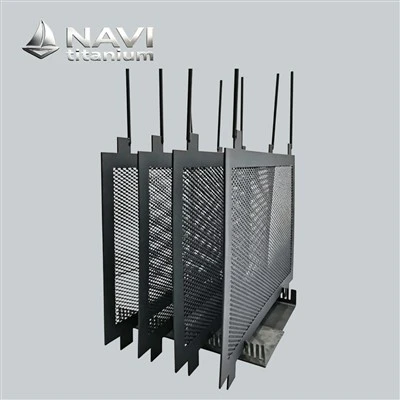
Assembled as a matched set of coated anodes mounted on a shared frame or rail, this grouping delivers balanced current distribution and simplified installation in cathodic protection and industrial treatment systems. The modular layout allows flexible spacing, easy replacement of individual elements, and consistent performance across the array. Every lot is supported by documented verification of coating loading, assembly dimensions, and electrical continuity for full traceability.
| Certificate of Analysis | ||
| Titanium Base Material Suppliers: | Coating Precursor Suppliers: | COA of product: |
|
|
|
|


Manufacturing process
Production of platinum-coated titanium anodes starts with fabricating individual anode units per the required layout, enabling multiple active segments to function as a unified assembly. Each unit is manufactured with precisely controlled geometry to maintain consistent spacing across the whole set. Connection points are created between individual units and the main conductive bus, with strict focus on contact stability and uniform current distribution. Mounting hardware is installed following the specified arrangement, guaranteeing proper alignment of all segments after full assembly. The active surface is then applied with the designated platinum catalytic coating. Joints and contact areas are kept clean to sustain stable electrical continuity. Prior to shipment, the assembled stack passes dimensional inspection, connection testing, visual check and functional performance evaluation. This modular production approach is ideal for electroplating, water treatment, electrolytic generation and other systems that require a bank of coordinated anode units in a single installation.


Selection Guidelines
Selection for NAVI Titanium should first match the working medium, current, and temperature conditions. Platinum titanium electrodes can be stably applied in seawater, potassium gold cyanide solutions, and conventional acidic and alkaline media. However, it is strictly prohibited to use it in environments containing fluoride ions or phosphate ions. These impurities will corrode the titanium substrate, causing Pt detachment. The purity of the plating solution must be strictly controlled in precious metal electroplating. At the same time, the working current must be managed within a safe range. Excessive current may damage the titanium substrate, and excessively high working temperatures will accelerate platinum layer consumption and affect electrode lifetime. Secondly, the appropriate functional layer thickness and coating process should be selected based on the usage scenario. The thickness directly balances electrode cost and usable life. The thicker the layer, the stronger the corrosion resistance and durability, but the price will also increase. High-demand industrial fields can select thick functional layer, while low-frequency and cost-sensitive fields can use conventional thin Pt layers, which processes include platinum electroplating and Pt layer.

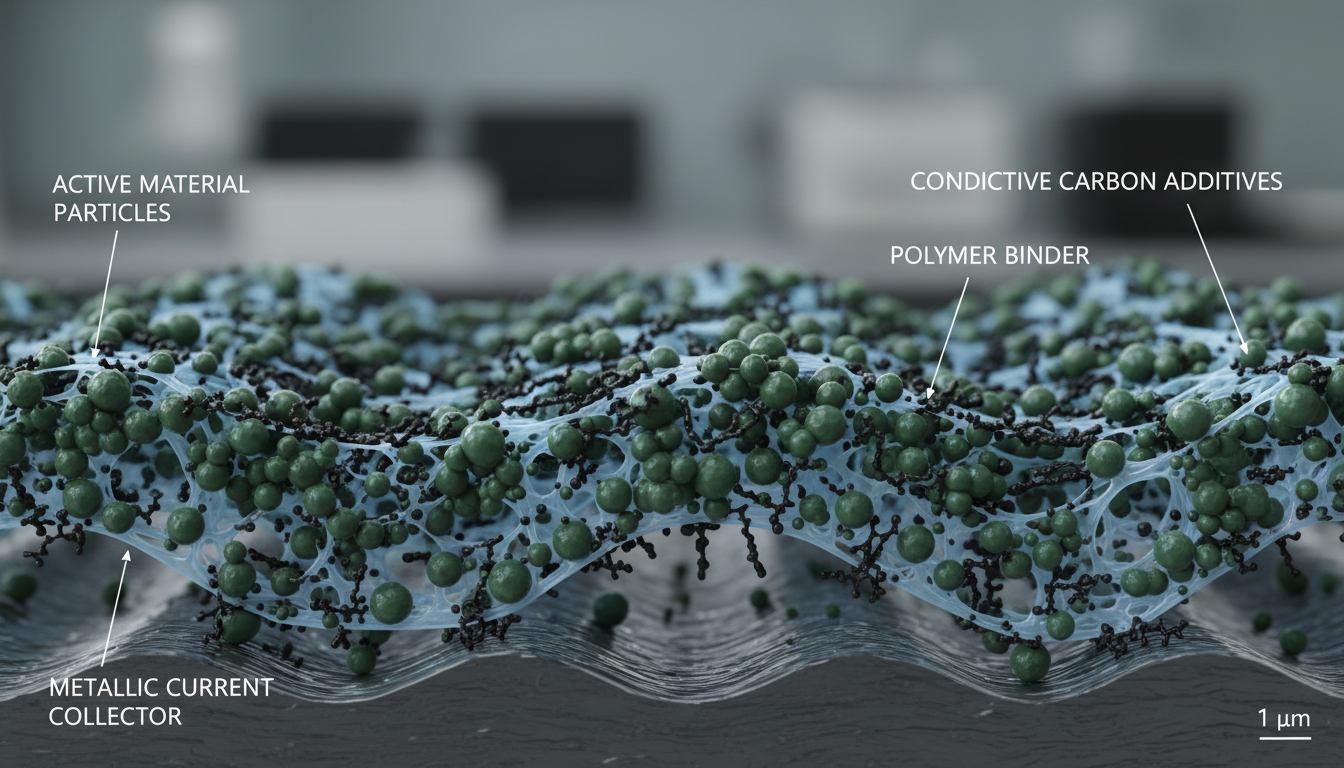
Electroplated Pt provides a dense surface, uniform conductivity, and high precision, making it suitable for high-precision electroplating such as jewelry and electronic components. Pt coating processes offer a more cost-effective option, although they generally have higher resistivity and a shorter usable life, making them suitable for standard industrial applications. NAVI Titanium can recommend the appropriate Pt process and coating configuration based on the electrolyte, current density, service conditions, and required usable life. Furthermore, electrode structure and surface area ratio should be selected based on the specific order needs. The electrode is available in various forms, including plates, rods, tubes, and meshes. Among them, mesh electrodes provide a large active area and more uniform current distribution, making them commonly used in electroplating and electrolysis. At the same time, the anode-to-cathode area ratio should be properly managed to sustain balanced electrochemical loading and prevent localized overloading of the anode. Finally, standardized installation and routine maintenance should be followed to assist consistent electrode stability during long-term use.
Usages in Water Heaters
With the continuous development of water heaters toward higher efficiency, intelligent management, and extended usable life, long-term corrosion protection of internal metal components has become an increasingly important factor affecting equipment reliability and user experience. Inside a water heater, metal structures are exposed for long periods to high-temperature water environments, where dissolved oxygen, mineral ions, conductivity variations, and repeated heating and cooling cycles can accelerate electrochemical reactions. Over time, these conditions may lead to corrosion-related issues in internal tanks, heating components, fasteners, and connecting structures, especially in areas affected by welding, mechanical stress, or uneven environmental conditions.


By applying platinum titanium electrode, the corrosion process can be actively managed through impressed current technology, providing a more reliable and continuous protective effect for water heating systems. Traditional water heaters commonly rely on consumable anode materials to provide corrosion protection. Although this approach can offer basic protection during the early stages of use, the protective material gradually deteriorates as it works, causing a progressive reduction in protection capability. As a result, periodic inspection and replacement are required to sustain effectiveness. If maintenance is delayed, insufficient protection may occur, increasing the risk of localized corrosion and reducing the usable life of internal components. This maintenance-dependent approach not only increases working costs but also creates additional challenges for users in terms of equipment management and long-term reliability.
Key Advantages in Water Heaters
NAVI Titanium product utilizes a steady composite structure that does not undergo rapid consumption like conventional sacrificial anodes during running. As a result, it can sustain effective protection over extended periods. For water heater, this reduces the decline in protection stability caused by anode consumption, minimizes the need for frequent disassembly, inspection, and component replacement, and improves long-term operational convenience. In addition, water quality varies significantly between different regions, and factors such as mineral ion concentration, conductivity, and corrosive components can directly influence the corrosion rate of internal metal structures. This finished item can work together with a monitor system to adjust current output based on actual working conditions, providing an appropriate level of protection while avoiding the limitations of conventional protection methods with fixed protective capabilities.


This enables more precise corrosion management under different water quality conditions. During long-term processes, water heaters experience repeated heating and cooling cycles as well as continuous electrochemical effects from high-temperature water environments. Conventional materials may experience functional characteristics degradation under these conditions, whereas this item offers excellent chemical stability and temperature resistance, sustaining reliable processes during prolonged thermal cycling and reducing protection loss caused by material aging. Corrosion inside water heaters is often non-uniform and typically begins at localized areas such as structural defects, welded regions, or stress concentration points.
The electrode rod provides more stable and evenly distributed protective current, reducing areas with insufficient protection and lowering the risk of localized corrosion and pitting. This helps improve the reliability and durability of internal tanks and critical components.Traditional sacrificial anodes gradually dissolve during procedures and may generate maintenance waste. This product provides corrosion protection through impressed current technology and does not depend on continuous material consumption to sustain protection performance. This reduces replacement-related waste and aligns with the growing demand for environmentally friendly, low-maintenance, and sustainable household appliance solutions.


Furthermore, the product can be customized in terms of dimensions and structural design based on the internal space requirements of different water heater systems, allowing convenient integration and installation. When combined with intelligent monitor systems, protection parameters can be adjusted based on factors such as temperature, water quality, and conductivity, enabling smarter corrosion management. This provides an advanced corrosion protection solution for premium water heaters and commercial hot water systems.
Why Use NAVI Titanium Anode?
NAVI Titanium handles made-to-order configurations where dimensions, tolerances, mounting points, connection positions, hole patterns, or overall geometry need to match a specific piece of equipment. Machining work can be arranged around the approved drawings and intended installation method, with attention to dimensional consistency across mating parts. For projects requiring a complete assembly rather than a single electrode, the company can combine the main electrode with titanium bolts, PTFE insulating parts, connectors, and other designated fittings. Different components can be prepared as a coordinated set according to the required assembly arrangement, reducing additional machining, part matching, and on-site modification after delivery. This option is suitable for equipment manufacturers, replacement projects, and applications where installation space or connection details leave little room for adjustment.


OEM designation based on drawings, samples, photographs, dimensional data, or other available references is accepted. When the original drawing is unavailable, an existing component can be used as the basis for reverse engineering. The development process may include dimensional measurement, geometry reconstruction, connection identification, material and component confirmation, sample preparation, and subsequent batch production. Where necessary, the reproduced design can be adjusted to accommodate updated dimensions, revised mounting arrangements, or replacement requirements while retaining the essential configuration of the original part. Private-label orders can also be arranged with designated product markings, packaging, and other agreed presentation details. From an existing reference to a repeatable manufacturing version, this approach gives equipment makers and distributors a practical route for reproducing legacy parts, developing replacements, and building their own branded product lines.
FAQ
01. How do I choose between Ru-Ir, Ir-Ta, and Pt-coated products?
02. When is a platinum titanium anode a better choice than an MMO one?
03. How does coating selection affect the usage life?
04. Can NAVI Titanium manufacture replacement anodes based on an existing electrode?
05. How does NAVI Titanium control coating performance?
Hot Tags: platinum titanium electrode, China platinum titanium electrode manufacturers, suppliers, factory, DSA Anode, MMO Coated Titanium Anodes, Platinized Titanium Mesh Anode, Platinum Coated Titanium Anode, Powered Titanium Anode Rod, Titanium Anode Plate