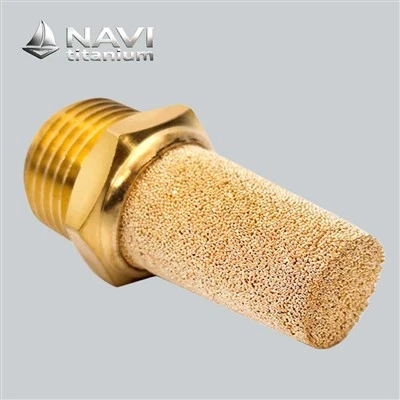
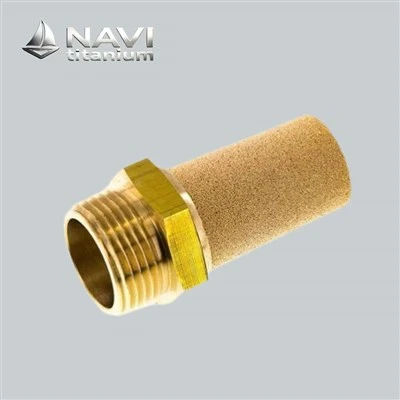
NAVI Titanium sintered stainless steel mesh is a porous filter medium produced by sintering multiple layers of woven stainless wire under high temperature and pressure, creating a rigid, cleanable structure with precise, uniform pore ratings and high mechanical strength. NAVI Titanium offers factory-direct pricing, customized pore sizes and shapes, rapid sample lead times, stable bulk supply and export-grade packaging, so procurement teams gain a dependable single source that reduces downtime, simplifies sourcing and protects long-term filtration performance.
Solution of NAVI Titanium
NAVI Titanium's sintered ss mesh adopts mature metal powder consolidation craft, acting as premium porous metal substrates for precision separation, electrochemistry, biomedicine and high-temp fluid handling. Customizable uniform controllable voids support on-site regeneration with outstanding acid-alkali resistance. We tailor items matching varied industrial separation, permeability and flow demands for stable service under severe corrosive, high-temperature and high-pressure environments. Below lies complete specs and performance data for your reference.


Beyond standard sizes, NAVI Titanium delivers fully tailored shapes - flat sheets, discs, cylinders, cones, caps, cartridges and pleated panels - with geometric profiles machined exactly to customer drawings, including custom flanges, nozzles and housings, fitting unique tank layouts, mounting structures and cramped on-site installation spaces.


Application
Sintered stainless steel mesh units support demanding industrial particle separation and solids recovery across chemical processing, petrochemicals, food and beverage, pharmaceuticals, water treatment, aerospace and energy. Their welded, multi-layer construction delivers dependable particle retention, strong flow capacity, thermal stability and corrosion resistance, while cleanable surfaces extend operating life far beyond disposable materials.
For High Pressure Environments
In demanding operating conditions such as hydraulic systems, compression stations, polymer melt processing and water injection, porous stainless wire-cloth units provide the mechanical strength that pleated disposable cartridges cannot. The bonding treatment fuses every wire cross-point into a rigid metallurgical structure, so cartridges withstand differential loads of tens of bar without collapse, blowout or particle migration. Ratings typically range from 1 to 100 microns, enabling fine particle control with acceptable pressure drop. Under surges and thermal cycling, the welded multi-layer structure resists fatigue, while the all-metal construction tolerates temperatures beyond 400°C and aggressive fluids such as superheated steam, sour gas and polymer additives. Cleaning by back-flushing, ultrasonics or chemical regeneration restores flow, cutting replacement frequency and lifecycle expenditure. NAVI Titanium verifies each cartridge with bubble-point and burst testing, and optional 904L stainless alloy wire-cloth upgrades deliver superior resistance in chloride-rich, acidic streams.


Catalyst Retention and Gas-Liquid Separation in Chemical Processing
In chemical and refining processes, sintered stainless steel filters act as coalescing and catalyst-retention elements where throughput and reliability matter. Installed at reactor outlets, they hold catalyst fines inside the vessel while allowing product streams to pass at high flow rates, preventing downstream erosion, plugging and product contamination. As coalescing media, the three-dimensional pore structure promotes droplet collision and separation, enabling efficient removal of entrained liquids from gas streams or water from hydrocarbon fuels. The filter's cleanability is decisive in continuous plants: a single element can be back-flushed, chemically cleaned and returned to service many times, lowering consumable cost and waste compared with disposable cartridges. Because pore ratings and layer combinations are selectable from 1–300 microns, engineers can tune separation efficiency against pressure drop for each duty. NAVI Titanium manufactures these elements with laser-welded end caps, certified materials and documented bubble-point results, giving operators traceable quality for safety-critical process duties.
Purchasing guide

Quality control (QC)
NAVI Titanium's production base holds valid ISO 9001 qualification for sintered mesh. We execute full-process strict quality control for all mesh batches. Tap the button below to browse complete COA inspection reports covering raw material composition, structural performance and corrosion resistance data for your project verification.

Manufacturing process
Our sintered ss mesh adopts mature powder metallurgy and vacuum sintering techniques. Every production step follows standardized control for uniform porous structure and stable mechanical performance. Strict raw material screening, molding, sintering and full inspection ensure consistent quality for all custom orders from NAVI Titanium.
Raw Material Screening
High-grade stainless steel powder is screened and classified precisely to guarantee consistent internal void structure of sintered mesh. Chemical composition is verified strictly to match industrial anti-corrosion standards.
Even Mixing & Molding
Classified powder is blended without organic binders, then pressed into unified green blanks with balanced density to avoid uneven shrinkage after consolidation. Custom mold sizes fit all mesh specifications.
High-Temp Vacuum
Consolidation Green blanks are loaded into vacuum furnaces for segmented temperature consolidation. Metallurgical bonding forms stable interconnected voids, delivering integral high-strength mesh without internal cracks.
Precision Post Processing
Consolidated mesh undergoes trimming, deburring and flatness calibration. Custom cutting, edge sealing and assembly can be finished per client drawing demands.
Multi-Stage Cleaning & Full Inspection
Ultrasonic cleaning removes residual powder inside voids. Each batch of sintered mesh gets permeability, anti-pressure and bubble-point testing before packing.
Batch Archiving & Delivery
All qualified meshes are labeled with unique lot numbers. Raw material certificates, furnace records and inspection sheets are filed for two years to realize full production traceability.
Sintered Mesh vs. the Alternatives
Choosing the right filter medium means balancing filtration precision, mechanical strength, service life and total cost. Sintered stainless steel mesh wins where duty is demanding: it holds uniform pores, survives high pressure and temperature, and regenerates through cleaning cycles that disposable cartridges cannot. Plain woven mesh and perforated plate remain economical choices for coarse screening and support duties, while disposable cartridges suit high-precision final polishing. For most industrial processes, the sintered option delivers the lowest cost per filtered liter over time.
| Comparison Point | Sintered Stainless Steel Mesh | Plain Woven Wire Mesh | Perforated Plate | Disposable Filter Cartridge |
|---|---|---|---|---|
| Filtration Precision | Uniform 1–300 µm pores, bubble-point verified | Coarse, uneven openings, limited precision | Very coarse; holes rarely below 0.5 mm | Precise, down to sub-micron |
| Mechanical Strength | Rigid sintered bonds withstand high differential pressure | Weave shifts, needs support | Highest rigidity, no depth filtration | Low, collapses under high ΔP |
| Temperature & Corrosion Resistance | Up to ~480°C; 316L, 904L, Hastelloy options | Alloy dependent | Alloy dependent | Often limited to 120–150°C, media not corrosion-rated |
| Cleanability & Service Life | Back-flush, ultrasonic or chemical; hundreds of cycles | Partially cleanable, easily deformed | Cleanable, surface-only filtration | Single-use, discarded when loaded |
| Pressure Drop & Flow | Engineered open area balances ΔP and retention | Low initial ΔP, blinds quickly | Very low ΔP, poor retention | Low initially, rises quickly |
| Lifecycle Cost | Higher initial, lowest long-term cost | Low initial, frequent replacement | Low cost, narrow duty range | Low unit cost, high recurring cost |
| Typical Applications | Polymer melt, catalyst retention, high-pressure gas, coalescing | Screening, sieving, simple straining | Coarse straining, guards, support layers | Final polishing, sterile and fine filtration |
Inside the Weave: Technical Details Most Buyers Never Ask About
Beyond catalogue specifications, bonded wire structures contain subtle technical and metallurgical characteristics that determine real-world behaviour. Thermal bonding does more than join wires: it changes surface metallurgy, channel geometry and flow behaviour in ways that remain invisible in ordinary photographs.
The Sintered Bond Is a Micro-Weld, Not a Glue
Many buyers assume thermal bonding works like a high-temperature adhesive holding wires together. In reality, the operation creates true diffusion joints: at temperatures near the alloy's melting point, atoms at each wire cross-point migrate and recrystallize, fusing the wires into one continuous alloy body. A sectioned component under a microscope shows no gap, filler or binder - only genuine grain structure extending across the junction. This explains behaviours that surprise first-time users. A sintered stainless steel mesh cannot unravel at a cut edge the way woven cloth does, because there are no loose strands to pull; edges can be trimmed, drilled and welded without the weave collapsing. The joined structure also resists vibration fatigue because stress spreads through rigid fused joints rather than concentrating at loose weave points. And because the bond consists entirely of alloy, thermal shock and repeated cleaning cycles do not weaken adhesion, allowing these components to retain their rated strength after years of continuous operation.


Air Flows Differently Than Water: The Multiphase Performance Trap
A common misunderstanding is that a 10-micron separator performs identically in air and liquid. In fact, air and liquid travel through bonded wire layers according to entirely different physical rules, and the distinction matters during system design. For liquids, movement follows viscous drag through tortuous, winding flow channels; for air, compressibility changes velocities and differential resistance along the component. Surface tension adds another layer: hydrophobic surfaces resist wetting, increasing the force required to push liquid through fine openings, while wettable surfaces allow capillary forces to draw liquid through naturally. This is why bubble-point testing - the point at which the first bubble passes through a wetted component - remains an industry-standard method for checking the largest opening: it directly measures capillary resistance rather than estimating dimensions from wire counts. Designers who overlook these effects may over-specify components, wasting pumping energy, or under-specify them, risking premature blockage of fine openings caused by surface-active contaminants during long-term operation.
Why Global Customers Choose NAVI Titanium
Scale and Supply You Can Plan Around
NAVI Titanium operates a vertically integrated manufacturing base, with in-house weaving, thermal bonding, cutting, forming and final inspection under one roof. Our porous wire-cloth product lines run continuously, giving us capacity to deliver thousands of square meters of material and hundreds of finished components every month to customers across Asia, Europe, the Middle East and the Americas. Because we control operations from raw wire to finished cartridges, we can commit to firm lead times: standard sheets ship within days, while custom-shaped components typically leave in two to four weeks. For project-critical orders, our manufacturing planning team reserves capacity in advance, so ramp-ups do not compromise delivery dates. This scale also supports pricing consistency: large-volume raw-material purchasing and efficient batch manufacturing let us maintain competitive prices despite alloy market swings. Whether you need one prototype or a thousand-piece annual contract, NAVI Titanium's supply network is built to grow with your business.


An Engineering Team That Stands Behind Every Element
Behind every NAVI Titanium order stands a dedicated technical and quality team that treats particle separation as a precision discipline. Our metallurgists select wire alloys and layer configurations according to your actual operating fluid, temperature and differential-load profile, while our application specialists review drawings, micron ratings and connection details before manufacturing begins. Every sintered stainless steel mesh is verified through multiple checkpoints: incoming wire certification, in-line thickness and opening sampling, bubble-point testing, and final dimensional inspection against your drawing. Test reports are archived and issued with each shipment, so your quality department can trace any component back to its material lot and manufacturing date. The same team supports you after delivery: our technical staff answer installation questions, recommend cleaning intervals and help diagnose unexpected differential-load increases. This combination of technical expertise and documented traceability is why NAVI Titanium components are selected by industrial distributors, OEM equipment builders and plant maintenance teams.
Customization, Packaging and Transport Done Right
For customers who need more than a standard disc, NAVI Titanium treats custom manufacturing as routine. Our specialists accept drawings in any common format - PDF, DWG, STEP or a hand sketch with critical dimensions - confirming feasibility, tolerances and opening specifications before quoting. Custom shapes include tapered cones, dished heads, stepped cartridges, flanged tubes and multi-piece welded assemblies, with millimetre tolerances where the design allows. Prototypes are produced quickly, and once approved, manufacturing repeats the identical geometry batch after batch, so replacement parts remain fully interchangeable. Every shipment follows a strict export-grade packaging protocol: material is wrapped to prevent edge damage, cartridges are individually cushioned, and crates are built to survive sea freight, air freight and multi-leg road transport. Full export documentation - packing lists, commercial invoices, certificates of origin and material test reports - is prepared by our export team, reducing customs complications at your port of entry.

FAQ
Customers in different regions ask about compliance - do you provide certificates and documentation accepted in our country?
+
-
Yes. NAVI Titanium ships globally with full export documentation: commercial invoice, packing list, certificate of origin, material test certificates and, on request, ISO quality documentation, REACH/RoHS statements for EU-bound goods and FDA-grade material statements for food-contact applications.
How should I clean and maintain sintered stainless steel mesh elements?
+
-
Sintered stainless steel mesh is cleanable, which is one of its main economic advantages. For light fouling, reverse flushing with clean process fluid or water restores most flow. For stubborn deposits, ultrasonic cleaning or chemical cleaning with compatible acids and alkalis works well - avoid chloride exposure on standard grades and rinse thoroughly after chemical cleaning.
What service life can I expect, and how do I know when to replace the element?
+
-
Lifespan depends on duty: fluid cleanliness, temperature, pressure, chemical aggressiveness and cleaning frequency. In steady operations with regular back-flushing, sintered stainless elements commonly last several years - far longer than disposable cartridges. Signs it is time to replace include rising differential pressure that cleaning no longer reduces, visible cracks or corrosion pitting, and a bubble-point test showing enlarged maximum pore size.
If I order replacement elements, will they match my existing installation exactly?
+
-
Yes - this is where our made-to-drawing capability pays off. Send us your original drawing, part number, or even a used element, and our engineers confirm the critical dimensions: outer diameter, length, flange or thread type, pore rating and layer structure. Replacement elements are manufactured to the same geometry and verified against your drawing before shipping, so they drop into your housing with no rework.
How can I trust the quality before placing a large order?
+
-
Transparent verification is built into our process. Every batch receives incoming wire certification, sintering process records, pore rating checks and bubble-point testing, with final dimensions inspected against your drawing. We can supply evaluation samples, and for serial orders we offer pre-shipment inspection reports, photos and, if required, third-party inspection by agencies such as SGS or BV at our plant. Material test certificates accompany every shipment. If you visit China, you are welcome to audit our production line - many long-term customers started with a sample, then a pilot order, then annual contracts, and that path is open to you too.
Hot Tags: sintered stainless steel mesh, China sintered stainless steel mesh manufacturers, suppliers, factory, Sintered Bronze Bar, Sintered Bronze Filter, Sintered Metal Sheet, Sintered Powder Filter Cartridge, Sintered Stainless Filter, Sintered Stainless Steel