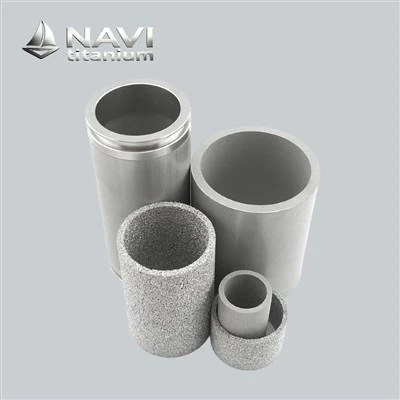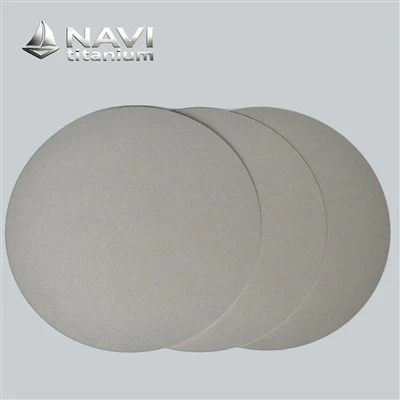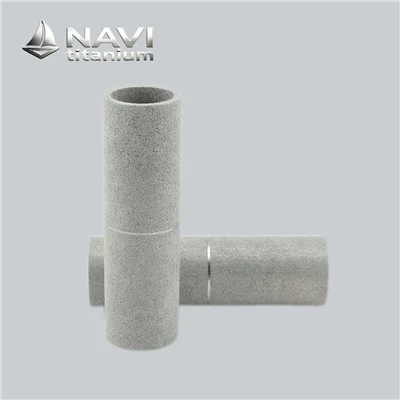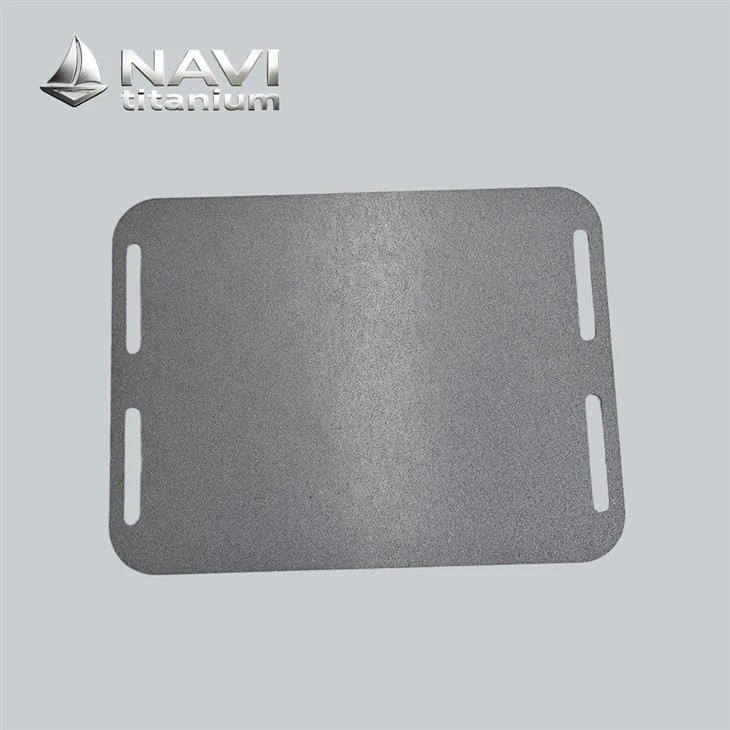
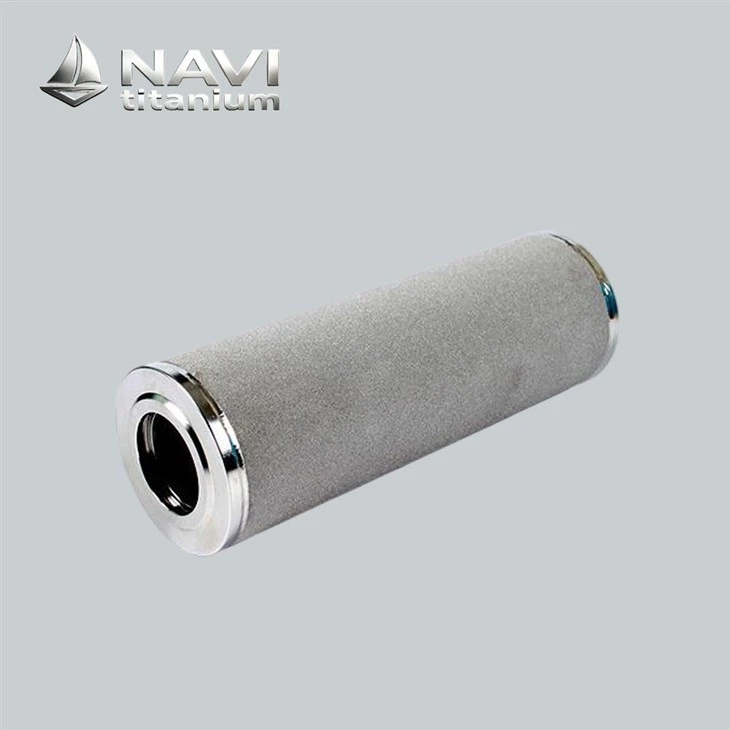
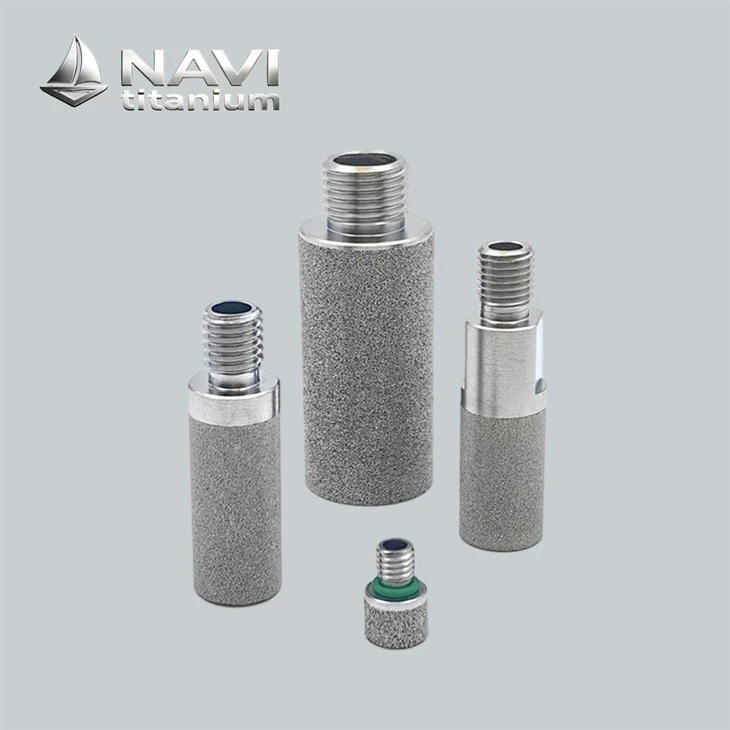
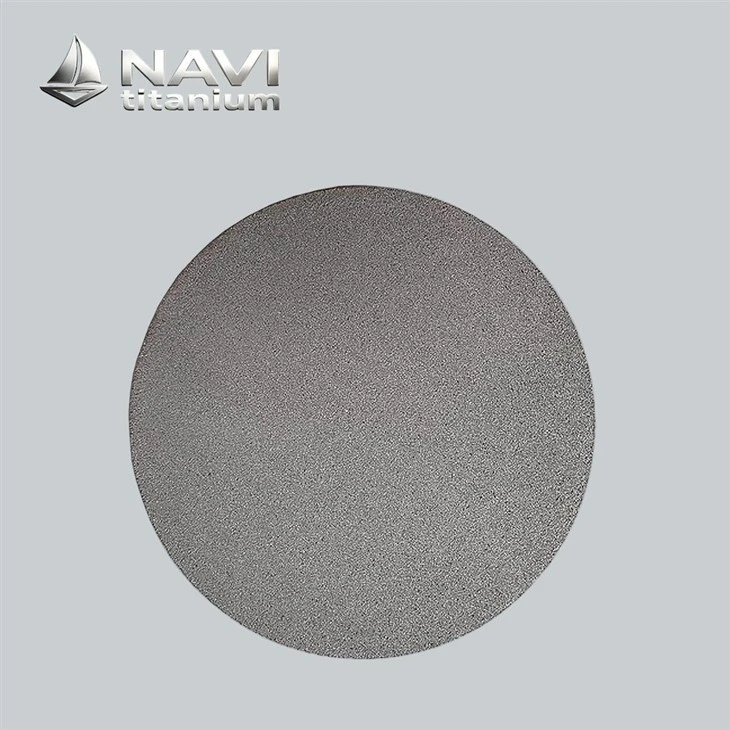
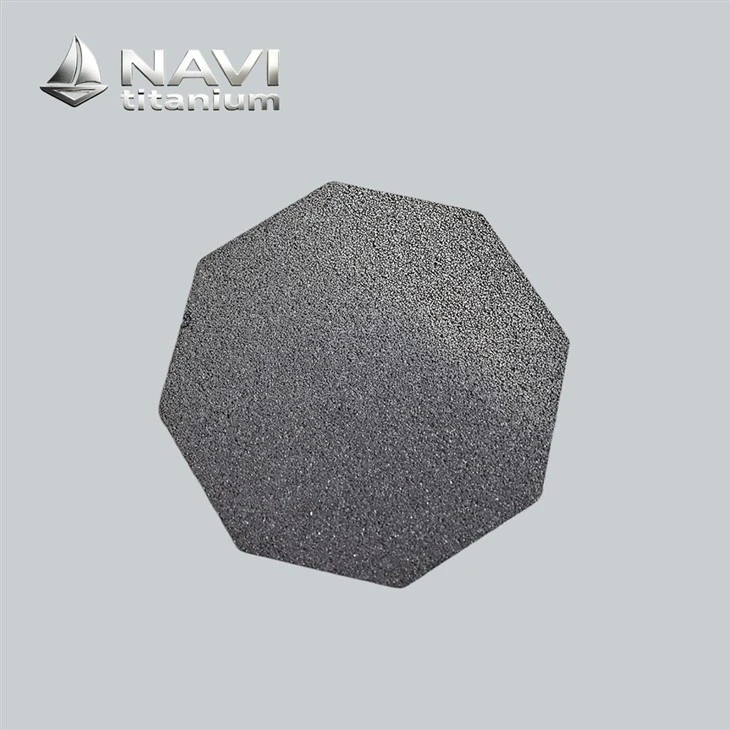
NAVI Titanium is one of China's sintered metal filter manufacturers using fused particulate feedstock to create finished permeable components - cartridges, tubes, discs and plates - inside its own plant, start to finish. What buyers gain is a shorter chain: no trading house margin, no re-quoted sketch, and dies paid once rather than billed per order. Direct manufacture also means a repeat order two years later still matches the first lot, annual frame agreements fix pricing, and consignment stock can be held against your forecast.
Solution of NAVI Titanium
Two numbers open enquiries: the micron and the week you need it. NAVI Titanium answers both from one plant, consolidating graded feedstock - 316L, alloy, Hastelloy, Monel, bronze - into permeable bodies whose evenly distributed openings resist acid and alkali attack and stay biocompatible. Because porosity is fixed at the press rather than picked from stock, filtration, air-flow capacity and flow are tuned to each duty, then restored by rinsing. The table shows the ranges.


Tubes, candle components, conical baskets, domed caps, stepped spargers, plate packs and irregular inserts are all formed here. Send STEP, IGES, or a dimensioned sketch on paper, and the outline is matched to vessel nozzles, tank bottoms, manifold blocks and tight installation gaps. Shell thickness, flange position and thread are set together with the shape.


Application
Conventional filter materials usually fail one of two ways on harsh duties: the seam splits under thermal cycling, or the component collapses at peak differential load. As sintered metal filter manufacturers, NAVI Titanium produces filter bodies with neither a seam nor a layer to separate, so the component keeps its rating through backwash, steam and load swings. So the same component moves between liquid and hot gas duty, unchanged.
Chemical and Petrochemical Processing
Catalyst recovery, amine sweetening, hot solvent polishing and acid dosing all run at conditions that punish organic media: temperature spikes, solvent attack and pressure reversals during backwash. NAVI Titanium supplies sintered elements for these units in 316L-LF, titanium Grade 2, Hastelloy C276 and Monel 400, matching the alloy to the stream rather than forcing one grade across the plant. Titanium costs more per kilogram but often outlasts three stainless change-outs in chloride service.
Because the body is one fused mass, there is no adhesive seam for toluene or hot amine to attack, and no fibre to carry into a reactor feed. Elements are regenerated by backwash, solvent rinse or controlled burn-off, so a skid returns to duty within a shift instead of waiting on a consumable delivery. Welded end caps, flanges and thermowell pockets are added in the same workshop, which shortens the path between approved drawing and installed part.


Water and Wastewater Treatment
Municipal and industrial plants use fused filter materials wherever a stream is too hot, too gritty or too chemically active for polymer membranes: backwash water recovery, ozone contactor diffusers, sour water stripping, and final polishing before discharge. NAVI Titanium builds these components as coarse-opening plates, domed diffusers and candle filters, sized to the tank rather than to a catalogue. Air scour and backwash are routine, and the filter body survives both without compaction, which is the failure mode that ends a sand or fibre bed early. Titanium specifications handle seawater and chlorinated service; 316L covers the rest at lower cost. Energy matters as much as clarity: a diffuser that keeps its opening structure holds blower power flat, while a blinded one pushes compressor load up each month. Plants standardise on one component across vessels, which simplifies spares: one part number, one pull-out tool, one rinsing recipe documented for the operators on shift.
Purchasing guide

Quality control (QC)
Each lot leaves with a heat number resolving to its feedstock certificate, furnace chart and measured bubble point, flow capacity and shell thickness. Testing follows ASTM F316 methods. Independent SGS verification can be added before dispatch. Quality claims are easy to make and hard to check, so skip ours: tap the button underneath to download the COA pack and inspection reports.

Manufacturing Process
Dies, feedstock, furnaces, welding and testing all sit in one NAVI Titanium facility, giving our sintered metal filter manufacturers capability direct control from sketch approval through fabrication and inspection to dispatch. A trial unit and a fabrication run follow the same route, the same gauges and the same records. Nothing is subcontracted out between sketch approval and dispatch. Reorders therefore match the approved first article, even years later.
Step 1
Drawing Review
Engineers read the enquiry against the duty: fluid, temperature, load, particle load and rinsing method. Where a shell is too thin for the load or a flange sits where a tool cannot reach, we flag it and propose a change before dies start, which is cheaper than discovering it after firing.
Step 2
Tooling and Sample Run
Dies are cut in-house; simple geometries move from sketch to first article in about ten days. Trial parts are made on manufacturing dies, not on a bench rig, so approval data carries over to volume. Dies are charged once and then belong to the customer.
Step 3
Powder Preparation
Gas-atomised and water-atomised feedstock is screened to a narrow band, then blended to a recipe that sets opening size and green strength. Each lot carries its mill certificate, and apparent density and flow rate are logged before the feedstock is released to pressing.
Step 4
Forming
Simple shapes are die-pressed; long tubes and large plates are consolidated by cold isostatic pressing, and thin sheet by roll compaction. Controlled green density across the section is what keeps opening size even after firing, from the first part to the ten-thousandth.
Step 5
Sintering
Batch vacuum furnaces handle high-alloy and titanium work under recorded ramps; continuous mesh-belt furnaces run the high-volume stainless lines. Both are charted per tray, and shrinkage is measured after firing as a check that the batch stayed inside its pore window.
Step 6
Welding, Machining and Assembly
End caps, flanges, spigots and threaded bosses are argon-welded, then machined to the sealing faces the sketch calls for. Multi-layer and graded-opening assemblies are stacked and welded here, so a finished component arrives as one part instead of a kit.
Step 7
Testing, Documentation and Dispatch
Bubble point, flow capacity, shell thickness and a load hold are recorded against each heat number. Components are rinsed, dried, packed in vapour-corrosion-inhibitor film and crated with the certificate set. Retained trial units stay on the shelf for two years.
Technical Data of NAVI Titanium Sintered Metal Filters
As sintered metal filter manufacturers, NAVI Titanium recognizes that material choice decides most of the operating life, so the tables below list what we pour and what those alloys do in real process fluids. Read them as reference values for shortlisting, not as a guarantee; rates are quoted in millimetres per year, measured on polished, unstressed coupons. We confirm figures against your concentration, temperature and washing cycle before quoting.
NAVI Titanium Sintered Metal Filters
|
Metal powder base |
Porosity window |
Nominal pore grade |
Thermal ceiling |
Media behaviour |
Forms supplied |
Lead time |
|
316L stainless |
30 – 45% |
0.5 – 200 µm |
600 °C |
Alkali, organics, steam |
Tube, disc, plate, candle |
10 – 15 days |
|
316L-LF stainless |
30 – 42% |
0.5 – 100 µm |
600 °C |
Low carbon, weld-safe |
Tube, cartridge |
12 – 18 days |
|
Titanium Grade 1 |
35 – 50% |
0.5 – 100 µm |
350 °C |
Chlorides, seawater |
Disc, plate, diffuser |
15 – 20 days |
|
Titanium Grade 2 |
30 – 45% |
1 – 100 µm |
350 °C |
Oxidising acid, brine |
Tube, disc, sparger |
15 – 20 days |
|
Hastelloy C276 |
28 – 40% |
1 – 80 µm |
800 °C |
Reducing acid, wet chlorine |
Tube, plate |
25 – 35 days |
|
Monel 400 |
30 – 42% |
5 – 100 µm |
500 °C |
HF service, caustic |
Disc, tube |
25 – 35 days |
|
Inconel 600 |
28 – 40% |
5 – 80 µm |
900 °C |
Hot gas, carburising |
Tube, cone |
30 – 40 days |
|
Sintered bronze |
35 – 45% |
10 – 200 µm |
200 °C |
Air, oil, fuel |
Disc, muffler, bushing |
10 – 15 days |
Corrosion Rate Comparison in Common Media (mm/year)
|
Medium |
316L |
Titanium Gr2 |
Hastelloy C276 |
Monel 400 |
Alumina ceramic |
PVDF polymer |
|
10% HCl, 25 °C |
> 1.0 |
0.12 |
0.05 |
0.40 |
0.02 |
< 0.01 |
|
10% NaOH, 80 °C |
0.05 |
0.02 |
0.03 |
0.02 |
0.60 |
0.10 |
|
Seawater, 30 °C |
0.10 pitting |
< 0.01 |
0.01 |
0.05 |
0.05 |
< 0.01 |
|
Wet chlorine, 40 °C |
> 1.0 |
< 0.01 |
0.05 |
0.30 |
0.02 |
0.50 |
|
98% H₂SO₄, 25 °C |
0.50 |
> 1.0 |
0.08 |
0.60 |
0.05 |
0.60 |
|
5% HF, 25 °C |
> 1.0 |
> 1.0 |
0.30 |
0.08 |
> 1.0 |
0.05 |
What Working With NAVI Titanium Actually Looks Like
Capacity You Can Audit
A packaging machinery builder near Milan had been buying fused sparger tubes through a local distributor, with a twelve-week lead time and no visibility past the invoice. NAVI Titanium reviewed the sketch, proposed a 2 mm shell-thickness increase at the weld collar, and shipped first articles in eleven days using plant dies. Six weeks later the first volume order cleared customs.
What the buyer audits is capacity rather than promises: four pressing lines, two vacuum furnaces and one continuous belt furnace, roughly 40,000 units a month across stainless specifications, and a die store holding forms for repeat customers at no charge. Monthly output reports and a rolling twelve-week capacity window are shared on request, so a buyer can see whether a seasonal peak can be absorbed before committing. On-time delivery across the last four quarters has held above 96%, documented per order rather than averaged into a single claim.


How a Problem Order Is Handled
Sintered metal filter manufacturers are judged on the order that goes wrong, not the nine that go right. NAVI Titanium runs every lot under a tracking number that resolves to four records: feedstock mill certificate, furnace chart, inspection sheet, packing list. If a customer reports a deviation, the lot file is pulled within one working day and the retained test piece from that tray is retested.
Where the finding is ours, replacement stock is scheduled ahead of the fabrication queue and shipped at our cost; where the finding points to a change in the customer's own process - a stronger washing acid, a higher inlet loading - the test data is shared so the next alloy or opening specification can be selected on evidence.
Warranty terms sit in the quotation, not in small print, and corrective-action reports follow the same eight-section format buyers use in their own audits, which means they can be filed without rewriting.
Notes From Buyers
"We audit suppliers every two years, and this was the first time the furnace charts were handed over without a request." - Quality manager, chemical equipment builder, Lombardy. "Our nickel circuit runs hot acid with a lot of solids. The units have been in operation fourteen months, and the load trace still looks like month one." - Plant metallurgist, hydrometallurgy refinery, Western Australia. "Shipments to Jubail arrive with the certificate set matching the packing list, which is the detail that keeps our customs broker calm." - Procurement officer, water treatment contractor, Saudi Arabia. "They flagged a weld collar we had specified too thin before cutting dies. That saved us a rework loop." - Engineering lead, food processing OEM, Nuevo León. "Twelve weeks became four, and the dies stayed ours." - Supply chain lead, pump builder, Poland. These remarks point one way: documentation arrives with the goods, and problems are raised before dies are cut.

FAQ
How do I qualify a sintered metal filter manufacturer before volume orders?
+
-
Ask for four things: powder mill certificates, furnace charts for a recent batch, the bubble-point gauge's calibration record, and a first article made on production tooling rather than a bench sample. A manufacturer that runs its own furnaces will produce all four within a day, at no charge.
Do you sign NDAs, and what is the minimum for a drawing-based part?
+
-
NDAs are signed before drawings are exchanged, and customer dies are stored separately and never used for other orders. Minimum order is one piece for samples and ten for production, so a trial does not force a pallet purchase. Tooling drawings stay your property, returned on request.
Can you ship under our brand with neutral packing?
+
-
Yes. Elements can be laser-marked with your part number, packed in plain cartons without NAVI Titanium identification, and drop-shipped to your customer with your own paperwork enclosed. Compliance statements still name the mill and heat number. Barcode labels, carton print and pallet pattern are accepted; pallet photographs are sent before dispatch.
Which regional standards do buyers ask for?
+
-
European buyers usually request EN 10204 3.1 and PED material traceability; US enquiries reference ASME Section II and ASTM F316 testing; Japanese buyers ask for JIS material equivalence; Gulf shipments need SASO or country-specific clearance documents. Certificates are issued in English, and bilingual versions are available for customs. State your market early.
How often is servicing needed, and what if a batch arrives faulty?
+
-
Service interval is set by differential pressure trend, typically every three to twelve months, and elements are cleaned in place, not replaced. If a batch fails on arrival, send the lot number and photographs; the file is pulled within a working day and replacements ship at our cost.
Hot Tags: sintered metal filter manufacturers, China sintered metal filter manufacturers manufacturers, suppliers, factory, high porosity metal filter tube, porous sintered metal filter plate, Sintered Filter Elements, sintered metal filter disc, Sintered Metal Sheet, Sintered Stainless Steel