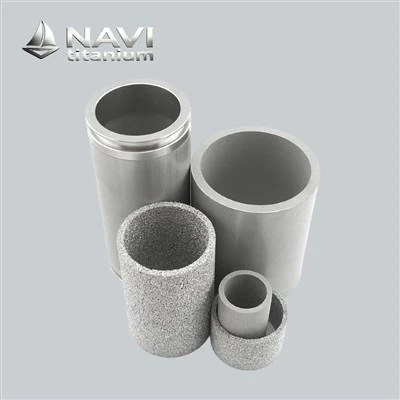
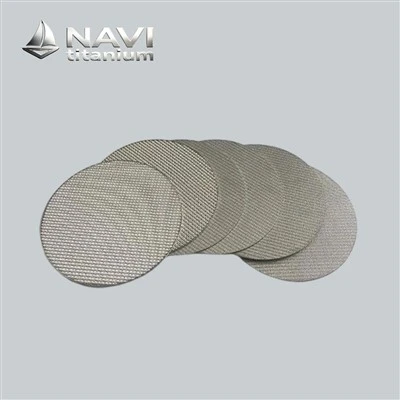
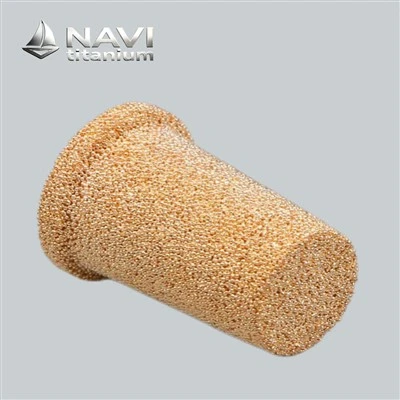
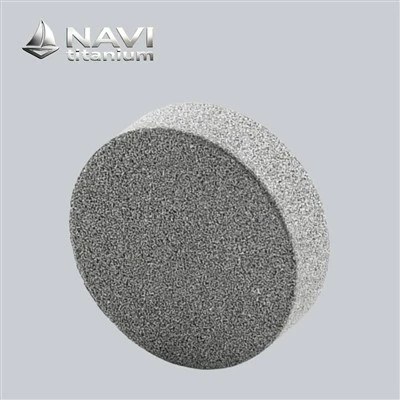
NAVI Titanium provides in-line gas purification units for back pressure regulators, helping limit particulate ingress and protect sensitive valve passages. Production oversight includes forming presses, controlled-atmosphere furnaces, and thermal profiling instruments used to monitor consolidation cycles. Furnace temperature uniformity, heating-rate records, and cooling curves are reviewed to identify potential batch variations. Press capacity and mold dimensions are matched to specified cartridge geometry, while post-treatment checks examine dimensional changes and surface integrity. These less-visible manufacturing details give procurement teams a clearer basis for assessing process consistency, customization feasibility, and repeat-order requirements.
Solution of NAVI Titanium
NAVI Titanium draws on its production facilities to address the demanding requirements of gaseous purification upstream of back pressure regulators, where pore consistency and pressure-drop control require careful process management. Forming presses accommodate different geometries, while thermal-processing furnaces allow controlled heating and cooling during porous material consolidation. Furnace temperature records, press-capacity selection, and dimensional verification provide useful checkpoints for evaluating batch consistency and production feasibility.
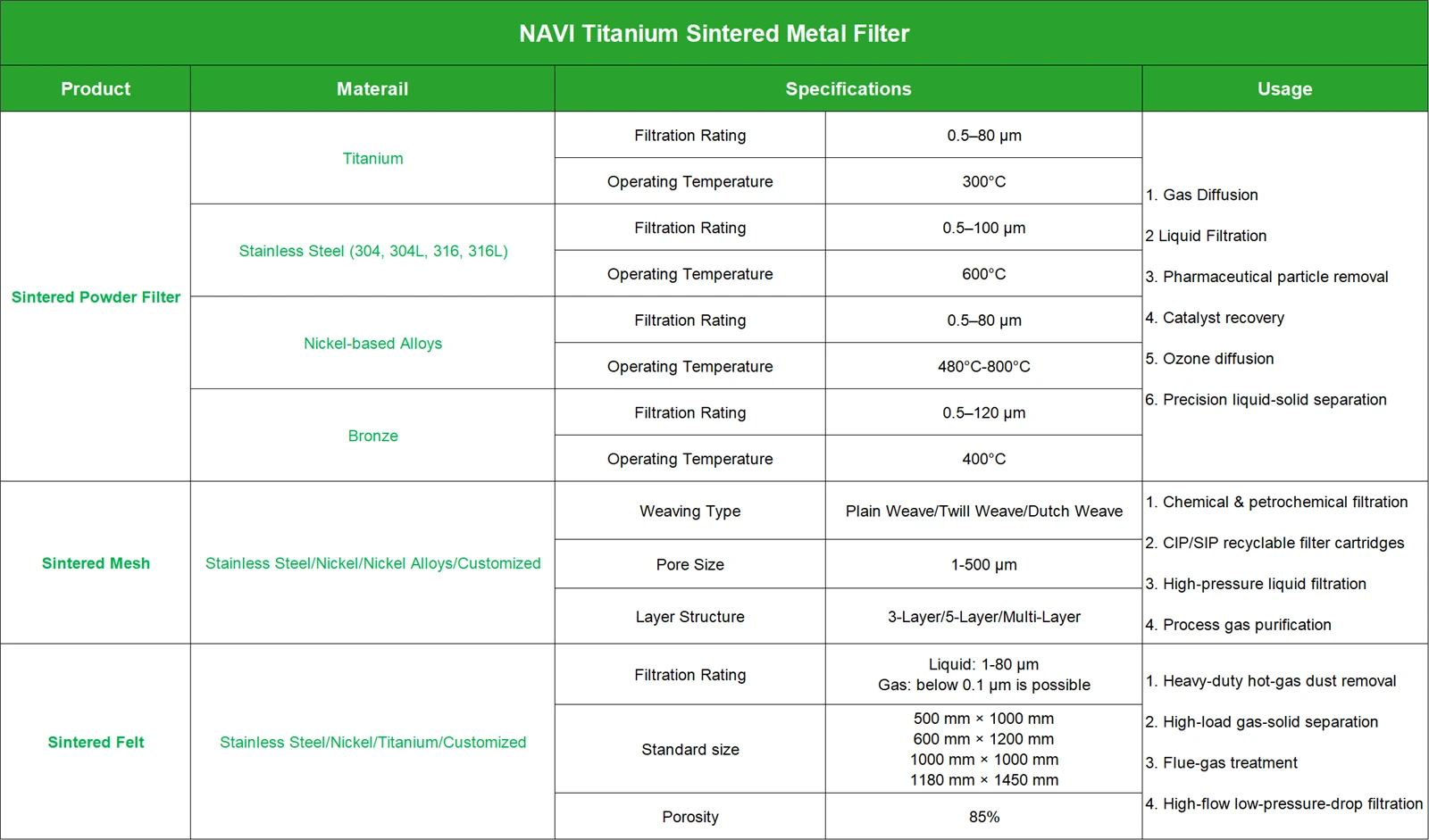


NAVI Titanium examines gas-phase purification through the relationship between pore distribution, differential pressure, and particulate retention. Material selection, thermal exposure, and dimensional tolerances must therefore be assessed together to establish suitability for upstream pressure-control applications and repeatable operating performance.


Application
NAVI Titanium provides the in-line gas filter sintered filter for back pressure regulators for high-purity gas delivery and laboratory pressure-control systems, helping reduce contaminant ingress, minimize pressure fluctuations, and protect sensitive regulator passages.
In high-purity gaseous distribution, back pressure regulators maintain a defined upstream pressure by modulating downstream discharge in response to process demand. The upstream gaseous stream may contain trace aerosols, condensable species, or particulate residues originating from cylinders, pipelines, valve seats, and upstream purification stages. If these contaminants accumulate within the regulator's narrow flow passages, they can alter local pressure losses, interfere with valve movement, and introduce fluctuations into the controlled pressure range. A compact in-line gas purification unit installed upstream of the regulator helps intercept entrained solids before they enter sensitive internal passages.
Selection requires more than nominal particle retention. Engineers must assess gaseous compatibility, operating pressure, temperature excursions, differential pressure, and the potential for condensate formation. Excessive flow resistance can create a pressure offset between the upstream line and the regulator inlet, particularly during rapid changes in gas consumption. Conversely, insufficient contaminant retention may accelerate seat wear and increase maintenance frequency. Pore-size distribution, effective flow area, and internal cleanliness therefore require evaluation against actual operating conditions.

2. Laboratory and Pilot-Scale Gas Processes

Laboratory reactors and pilot-scale gaseous systems frequently operate under controlled pressure to regulate reaction kinetics, gaseous solubility, residence time, and phase equilibrium. However, fine particulates released from upstream valves, reaction vessels, tubing, or drying assemblies may accumulate near the regulator seat. Such deposits can cause hysteresis, delayed valve response, pressure oscillation, and deviations between setpoint and measured pressure. Placing a compact gas-cleaning cartridge before the regulator reduces the transport of these contaminants into precision flow-control passages.
Application-specific assessment should account for gaseous composition, line pressure, pulsation amplitude, flow rate, and the physical properties of potential contaminants. In reactive-gas experiments, chemical compatibility is especially important because condensable compounds may alter surface characteristics or obstruct narrow flow channels. The relationship between pore dimensions and pressure drop must also be assessed across the full operating range rather than at a single reference flow. During scale-up, differences in gas velocity and contaminant loading can change the service interval substantially. Engineers should therefore record baseline pressure loss, establish differential-pressure limits, and verify regulator response after installation.
Purchasing guide

Quality control (QC)
NAVI Titanium emphasizes traceable material data and application-specific verification. Recorded pore dimensions, dimensional tolerances, thermal-processing parameters, and permeability results allow buyers to assess potential pressure losses and particulate retention before installation. These records also facilitate incoming inspection, regulator compatibility checks, and technical review when operating pressure or gaseous composition changes.

Manufacturing Process
Production begins with the selection and classification of suitable raw feedstock according to the required pore range and gaseous compatibility. The graded particles are blended uniformly, loaded into a precision mold, and compacted under controlled pressure to establish the intended geometry and internal void distribution. A programmed furnace cycle then promotes solid-state bonding while preserving interconnected gaseous passages. Subsequent sizing operations establish the specified outer dimensions and connection interfaces. Dimensional checks, permeability measurements, and differential-pressure testing help determine whether the finished unit can restrict particulate ingress without creating excessive resistance upstream of a back pressure regulator. NAVI Titanium gives particular attention to pore uniformity, wall thickness, and flow consistency, since local restrictions may cause pressure deviations, delayed valve response, or premature maintenance.


Packaging and Transit Protection
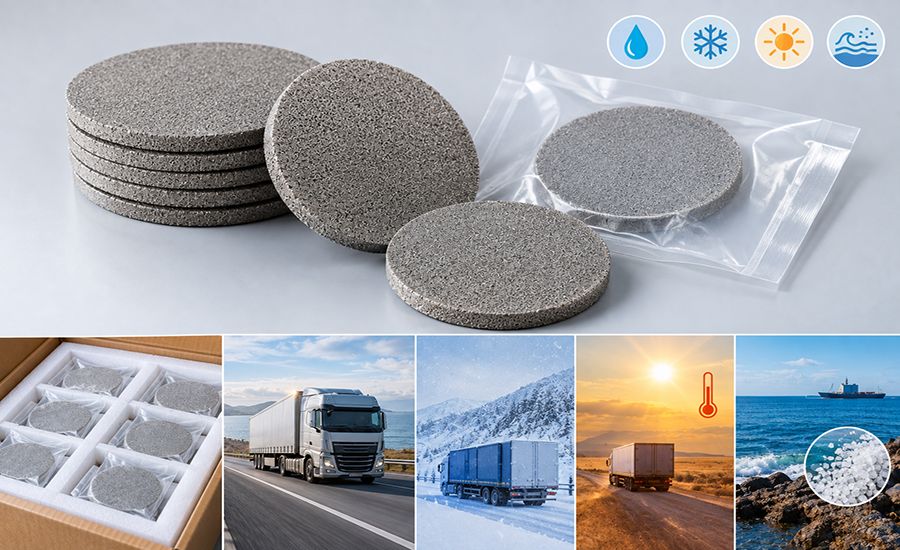
- Protection of calibrated flow passages: Gas purification cartridges intended for upstream regulator installation require protection against dust ingress, surface abrasion, and accidental impact. Clean inner enclosures help prevent foreign particles from entering the flow channels before installation.
- End-connection protection: Threaded ports, machined shoulders, and sealing faces should receive suitable covers to reduce the risk of dents, scratches, or thread deformation during handling.
- Moisture and environmental exposure: Individual barriers and appropriate desiccants may be considered when the specified material and storage conditions permit. Packaging selection should account for temperature fluctuations, condensation, and prolonged warehouse storage.
- Separation during transit: Individually restrained units reduce direct contact, vibration damage, and friction between adjacent surfaces. Dividers should prevent movement without applying excessive force to thin-walled cylindrical sections.
- Identification and traceability: Outer labels can state item codes, dimensions, flow direction where applicable, order references, and handling instructions.
Application-Specific Handling

- Preserving the specified flow direction: Where the cartridge has a designated inlet and outlet, orientation markings should remain legible after unpacking. Incorrect installation may change contaminant interception and pressure-drop characteristics.
- Preventing downstream contamination: Protective caps should remain in place until installation. Assembly personnel should use clean tools and suitable handling practices to avoid transferring workshop debris into regulator passages.
-
Matching connections to regulator assemblies: NAVI Titanium recommends compatibility checks to reduce the risk of forced assembly, leakage, and avoidable field modifications.
- Handling replacement units: Separate identification for replacement cartridges helps maintenance teams distinguish revisions, nominal pore ratings, and connection variants. Clear records also simplify repeat purchasing and spare-parts planning.
Application Considerations
The value of an upstream gaseous purification unit extends beyond its initial quotation price. A suitable specification can reduce the frequency of regulator servicing, limit valve-seat wear, and help avoid production interruptions caused by contamination-related pressure deviations. Buyers should compare expected service intervals, replacement accessibility, differential-pressure limits, and the availability of repeat-order specifications rather than relying solely on unit cost. Where several regulators operate across parallel gaseous lines, dimensional consistency and clearly documented revision control simplify spare-parts management. Procurement teams should request defined acceptance criteria for pore dimensions, flow resistance, connection tolerances, and cleanliness, with verification methods agreed upon before order confirmation. For applications involving corrosive or reactive gases, compatibility assessments should reflect the actual gaseous composition and operating temperature range. Maintenance personnel can establish a baseline differential pressure after commissioning and monitor subsequent changes to identify possible blockage before regulator performance deteriorates. This approach makes replacement decisions more evidence-based and helps purchasing departments evaluate long-term operating expenditure across multiple installations.

Protection of Internal Valve Passages

For buyers specifying gaseous purification units upstream of back pressure regulators, the primary concern is maintaining the required upstream pressure without introducing excessive flow resistance. Particulate residues from pipelines, valve seats, cylinder connections, and upstream gas-handling assemblies may accumulate near the regulator seat, causing restricted movement, pressure fluctuations, or increased maintenance frequency. Selecting an appropriate pore rating requires balancing particle retention against the pressure drop permitted by the operating system. A rating that is too restrictive may reduce available flow, whereas an excessively open passage may allow contaminants to enter sensitive valve clearances. Procurement teams should therefore assess nominal pore dimensions alongside maximum operating pressure, gaseous composition, flow rate, and expected contaminant loading. Connection compatibility is equally important because mismatched threads or sealing faces may create leakage risks during commissioning. Buyers handling specialty gases should also verify chemical compatibility and cleanliness requirements before approving a specification. Reviewing these parameters at the quotation stage reduces uncertainty during installation, limits avoidable modifications.
Application Analysis
For procurement teams, the in-line gas filter sintered filter for back pressure regulators requires evaluation against pressure-control accuracy, gaseous cleanliness, and lifecycle expenditure. NAVI Titanium emphasizes application-specific assessment of pore dimensions, differential pressure, gaseous composition, and connection tolerances. Excessive flow resistance may shift the regulator's operating response, while inadequate particle retention can expose valve seats to deposits, increasing maintenance frequency. Buyers should establish acceptance criteria before ordering and verify performance under representative operating conditions.
| Evaluation parameter |
|
|---|---|
| Pore rating |
|
| Operating pressure |
|
| Gas compatibility | Assess chemical interactions and potential residue formation. |
| Flow resistance |
|
| Connection interfaces |
|
| Maintenance planning | Define differential-pressure limits and replacement criteria. |
A properly specified unit helps protect regulator passages while balancing flow capacity, pressure response, and maintenance costs. Clear technical requirements and documented acceptance checks enable more informed purchasing decisions.
FAQ
1. What repeat-order ratio can buyers expect for recurring purchases?
+
-
Repeat-order consistency depends on maintaining agreed pore ratings, dimensions, gas-flow requirements, and connection specifications. Buyers can establish reference drawings and acceptance criteria to reduce variation between successive orders.
2. How many years of business experience should buyers look for in a sintered filter manufacturer?
+
-
Buyers should assess operating history alongside documented production capabilities, technical personnel, quality management practices, and experience with gas pressure-control applications.
3. Can you process customer-provided samples?
+
-
Sample-based processing may be possible when buyers provide a physical reference, technical drawings, or both.
4. Can special specifications be accommodated for different regulator systems?
+
-
Nonstandard requirements may include customized outer dimensions, connection interfaces, pore ratings, wall thicknesses, and flow capacities.
5. Can multiple product categories be purchased through one factory?
+
-
Multi-category purchasing can simplify supplier coordination, order administration, and inventory planning when the factory has suitable capabilities across the required categories. Buyers should verify production scope, technical expertise, quality controls, and lead times for each category individually.
Hot Tags: in-line gas filter sintered filter for back pressure regulators, China in-line gas filter sintered filter for back pressure regulators manufacturers, suppliers, factory, controlled porosity metal filter, porous metal filter core, Porous Stainless Steel Tube, Sintered Brass Filter, Sintered Bronze Sheet, Titanium Filter