NAVI Titanium manufactures the CEMS flue gas online monitoring with microporous sintered filter, a porous metal filtration element designed for flue gas sampling and pretreatment in Continuous Emission Monitoring Systems (CEMS). It captures solid particles and selected contaminants before gas reaches sensitive analytical instruments. NAVI Titanium can review drawings, operating temperatures, gas composition, and sampling requirements to help equipment manufacturers select suitable filter configurations, verify technical compatibility, and plan procurement for environmental monitoring projects across diverse industrial markets.
Solution of NAVI Titanium
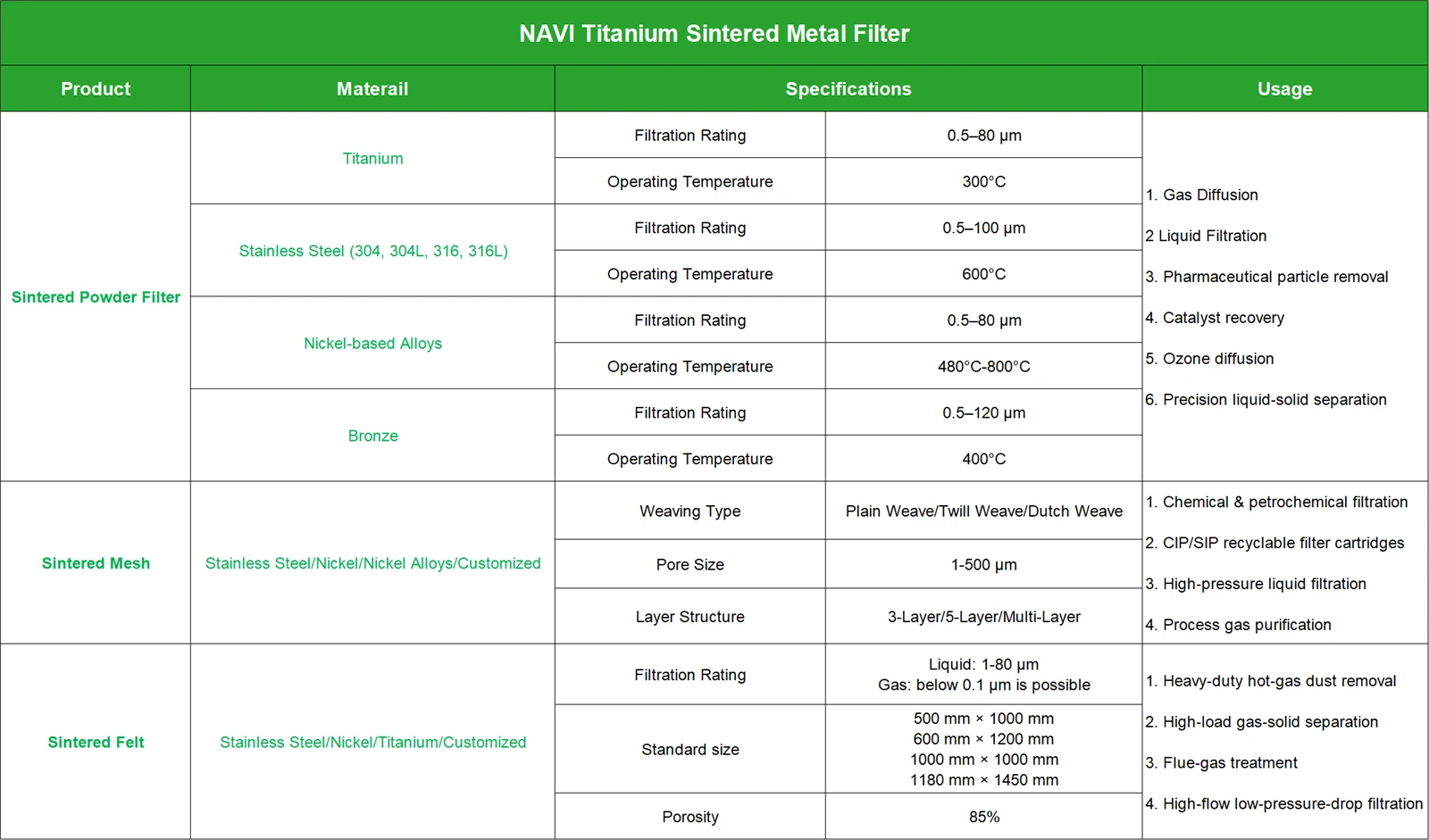
NAVI Titanium manufactures sintered porous metal materials through controlled metal powder processing and high-temperature sintering. For microporous sintered filter applications, porous titanium substrates provide filtration options for demanding gas-sampling environments. Their interconnected pores support gas passage while retaining particles, and selected grades offer resistance to corrosive media. Pore size, permeability, and geometry can be customized according to operating conditions. The following table presents representative material and performance parameters for preliminary selection and technical discussion with our engineering team.


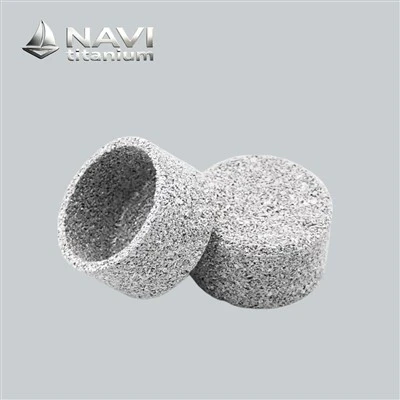
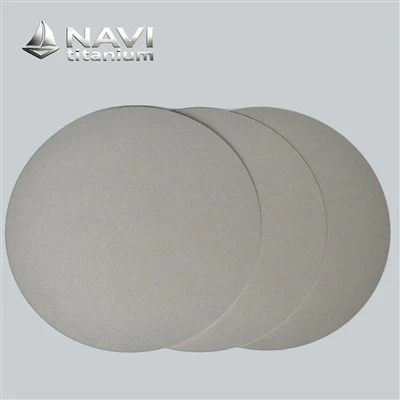
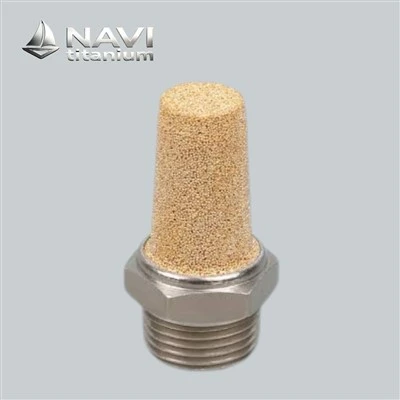
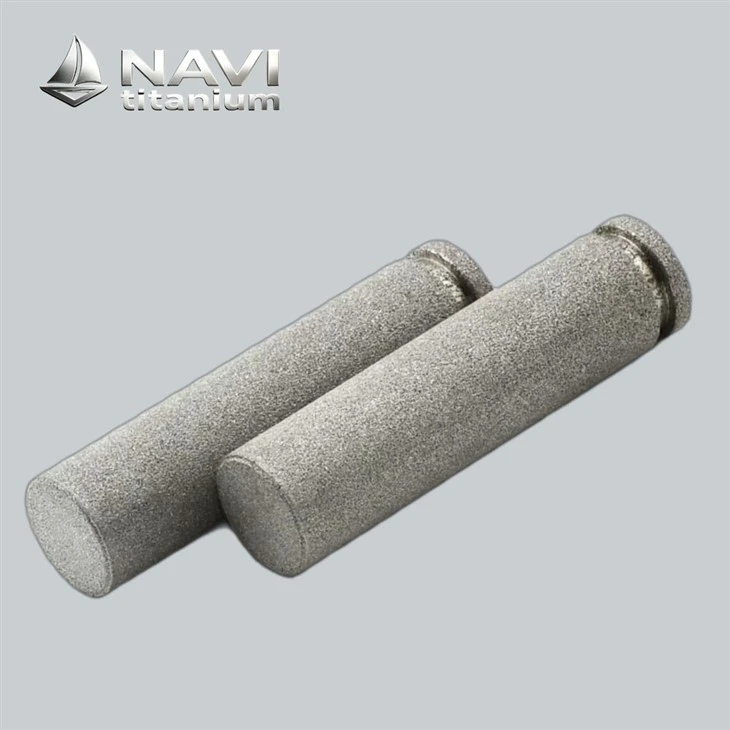
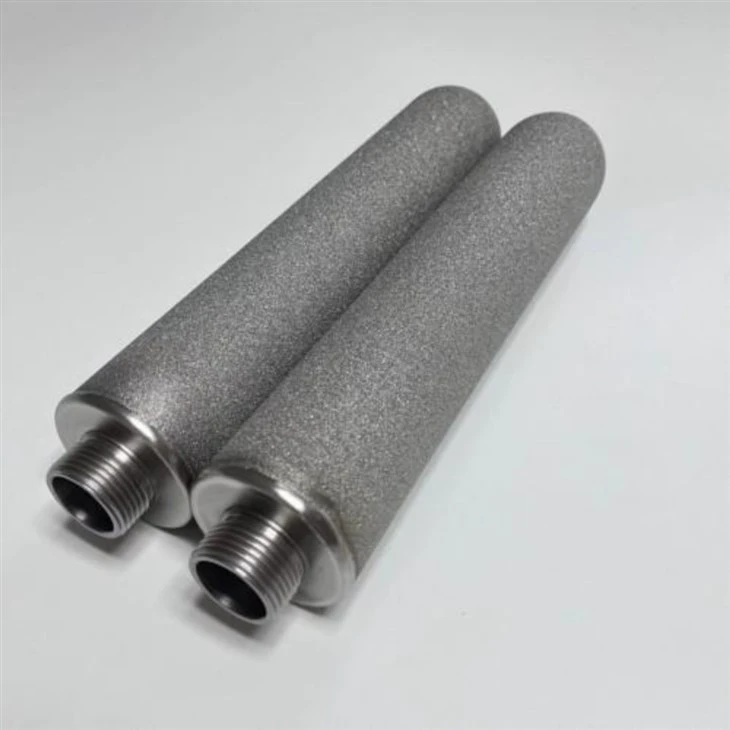
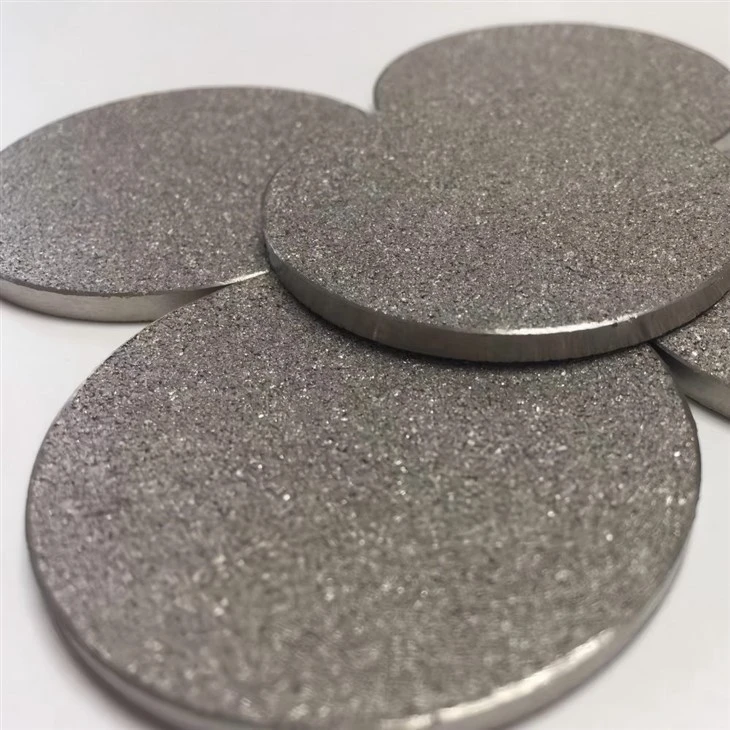
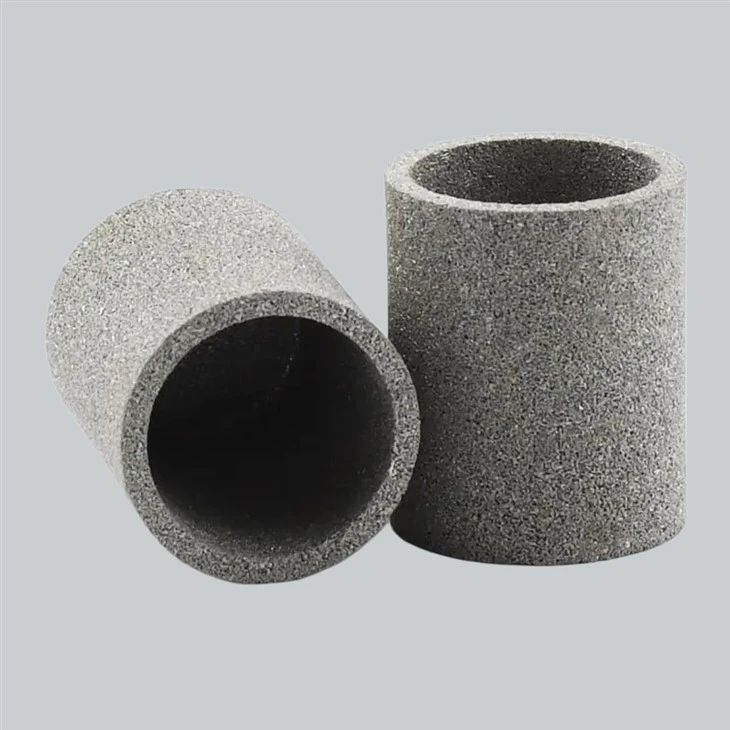
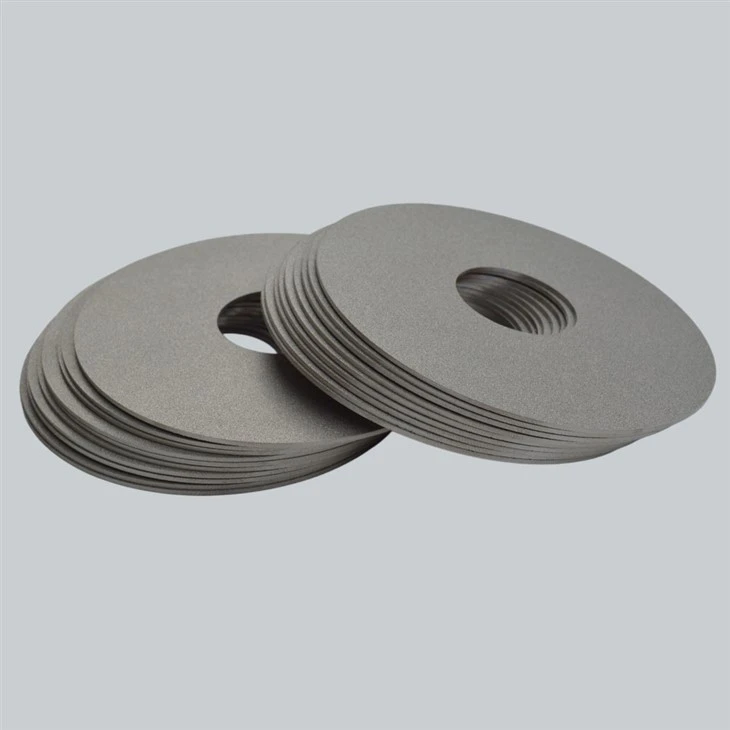
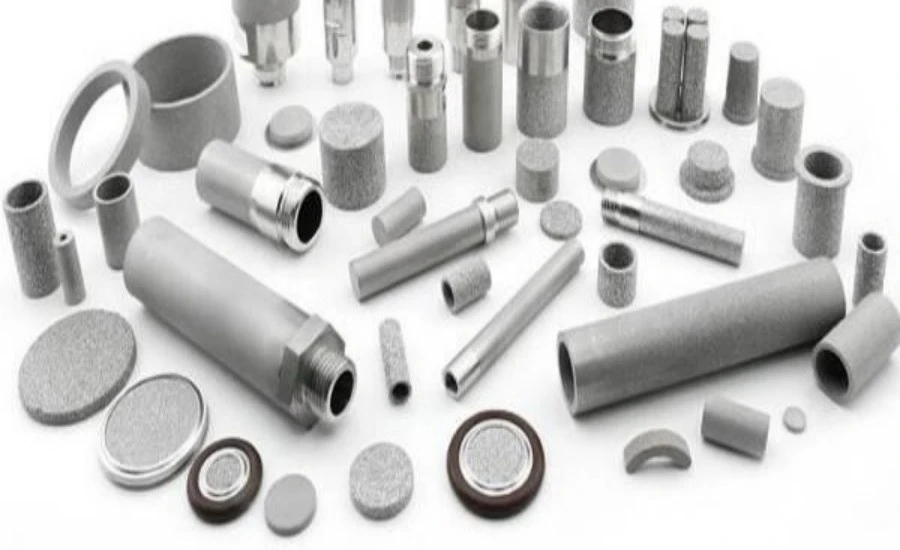
NAVI Titanium supplies cylindrical sintered filter cartridges, flat-ended elements, threaded cartridges, cap-shaped filter heads, and thin circular filter discs. These configurations accommodate different probe structures and sampling assemblies. We reviews external geometry, pore requirements, connection details, and installation clearances before confirming a manufacturable design.


Application
Microporous sintered filters support representative flue gas sampling by retaining particulate matter before samples enter downstream conditioning and analysis equipment. Their selection depends on dust concentration, gas temperature, moisture, condensable substances, and required sampling flow. NAVI Titanium provides material and geometry options for two common applications: boiler emission monitoring in power generation and combined heat and power facilities, and exhaust monitoring in steelmaking, coking, and metallurgical sintering operations.
Boiler Flue Gas Monitoring in Thermal Power Plants and Combined Heat and Power Facilities
Thermal power plants and combined heat and power facilities monitor boiler exhaust to track emissions and support environmental reporting. Their CEMS installations may measure sulfur dioxide (SO₂), nitrogen oxides (NOₓ), particulate matter, oxygen concentration, temperature, and moisture, depending on system configuration. Before analysis, a representative gas sample must pass through a sampling probe and associated pretreatment components. NAVI Titanium can review the existing probe assembly, mounting dimensions, connection type, and required filtration characteristics before recommending a filter configuration matched to CEMS flue gas online monitoring with microporous sintered filter. Cylindrical cartridges are commonly considered where a tubular probe accommodates an elongated element, while threaded or cap-shaped designs may suit other assemblies.

CEMS Exhaust Monitoring in Steel Mills, Coke Plants, and Metallurgical Sintering Furnaces
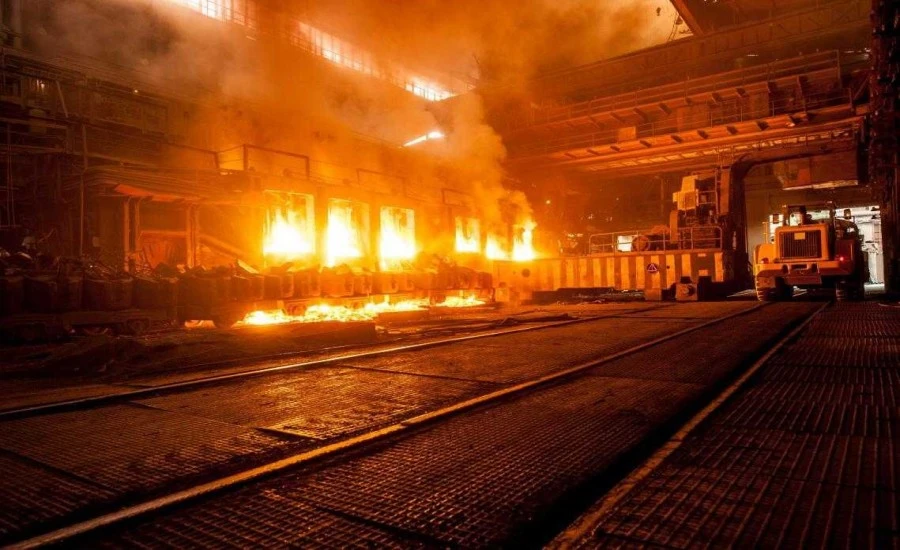
Steel mills, coke plants, and metallurgical sintering facilities can generate exhaust containing substantial particulate loads, variable moisture, and chemically aggressive constituents. Their emissions monitoring systems may serve sintering machines, heating furnaces, coke ovens, and other exhaust sources, depending on the plant layout and applicable regulations. Dust entering a sampling probe can accumulate along the sampling path, obstruct flow, or interfere with downstream conditioning and measurement equipment. A microporous metal filter provides a physical barrier that retains particles while allowing the gas sample to pass through its porous structure.
Material selection requires particular attention to the actual gas composition. Sulfur-bearing compounds, acidic condensate, alkalis, and elevated temperatures may affect filter compatibility differently according to process conditions.
Purchasing guide

Quality control (QC)
NAVI Titanium follows a documented quality inspection process for porous metal filtration products. Each order is checked against the approved material grade, dimensions, connection details, and agreed filtration requirements. Inspection records can be reviewed according to the supplied documentation package. For sintered silter procurement, click the COA button to view the available Certificate of Analysis or request applicable material and inspection documents for your specific order before shipment.

Manufacturing Process
NAVI Titanium manufactures sintered porous metal filters through a controlled sequence of material preparation, powder processing, forming, sintering, finishing, and inspection. The production route is selected according to the specified metal, filter geometry, pore characteristics, and intended operating environment, providing reliable core filtration components for CEMS flue gas online monitoring with microporous sintered filter.
| Step | Stage | Key Actions | Selection / Inspection Criteria |
|---|---|---|---|
| Step 1 | Technical Review & Material Selection | Review customer drawing, gas composition, operating temperature, dust loading, connection design, and required filtration performance | Select titanium or another suitable porous metal per application; confirm material specification |
| Step 2 | Powder Preparation | Prepare the selected metal powder for the required forming process | Powder properties affect pore distribution, permeability, and particle retention; follow approved production specification |
| Step 3 | Forming & Geometry Control | Shape powder into cylindrical cartridge, cap, disc, or custom configuration | Select tooling and forming parameters to meet dimensions and structural design |
| Step 4 | High-Temperature Sintering | Controlled sintering to bond metal particles into porous structure | Temperature, atmosphere, and parameters depend on selected material and specification |
| Step 5 | Finishing & Connection Processing | End faces, threaded interfaces, mounting features, dimensional details processed or checked | Verify against approved drawing |
| Step 6 | Inspection & Documentation | Dimensional and visual inspections; pore/permeability/performance tests when specified | Supply material reports and inspection documents per order agreement |
| Step 7 | Packaging & Dispatch | Protect porous surface and connection features during transport | Check product identification, quantities, shipping documentation before dispatch |
Product Shape & Structural Types
We supply sintered filters in multiple shapes to match diverse CEMS flue gas sampling conditions. Each design adopts integral sintering technology with exclusive structural advantages for specific installation positions.
| Shape Type | Appearance Description | Structural Features | CEMS Application Scenarios |
|---|---|---|---|
| Cylindrical Sintered Filter (Most Popular) | Hollow cylinder with flat ends or threaded connectors, full range of lengths & diameters | Integrally sintered, uniform micron pores on tube wall; gas flows in one end and out the other | Built-in sampling probes, cabinet pre-filters, mid-section of heat-traced sampling lines |
| Cup / Cap Sintered Filter Tip | Closed round cap at one end, male thread or ferrule fitting on open side | Dual-layer filtration via end face & side wall; large ash deposition space for less clogging | Front end of direct-insert flue sampling probes, ideal for high-dust flue ducts |
| Disc Sintered Filter Sheet | Thin round sheet with or without central hole | Ultra-thin sintered layer, low flow rate yet high precision, used with filter housings | Secondary precise post-filtration, internal protective filter for gas analyzers |
| Conical Sintered Filter Tip | Tapered tip with threaded tail | Conical flow guide for easy dust shedding and superior anti-clogging performance | Flue gas sampling of high-ash boilers and cement kilns |
Exclusive Rare Industry Comparison
Material and Manufacturing Expertise
NAVI Titanium focuses on porous metal materials and customized titanium components for industrial applications, supplying core filter elements dedicated to CEMS flue gas online monitoring with microporous sintered filter.For CEMS sampling, the quality of the porous structure affects particle retention, gas flow, and compatibility with the sampling assembly. A controlled powder preparation and sintering process helps establish the intended pore structure and component geometry. Unlike fibrous media, a properly manufactured metallic filter does not rely on loose glass fibers to capture particles, reducing the risk of fiber shedding associated with unsuitable fibrous elements. Porous titanium can be considered for selected environments where corrosion resistance is important. However, performance depends on the grade, temperature, moisture, and specific contaminants present in the gas. Buyers should confirm compatibility rather than assume that titanium resists every acid or process chemical.

Durability for Demanding Operating Conditions
Industrial sampling probes can face dust accumulation, thermal cycling, moisture, and corrosive constituents. NAVI Titanium helps customers evaluate these conditions when selecting filter materials and geometries. A suitable porous metal element can provide a reusable alternative to certain disposable filter media, particularly where cleaning is practical and validated. Reverse purging may remove accumulated particles, but the achievable cleaning effect depends on the dust's adhesion, particle characteristics, pore structure, and purge settings.
For heated sampling systems, filter selection should consider the complete temperature profile rather than the nominal temperature of a single component. Gas cooling, condensation, or chemical reactions can change the service environment. Our team can review operating details to help buyers establish realistic inspection intervals, cleaning procedures, and replacement criteria. These measures support planned maintenance without making unsupported guarantees about service life or uninterrupted operation.
Customization and Equipment Compatibility
CEMS manufacturers and environmental engineering contractors often need filters that fit established probe assemblies rather than generic replacement elements. NAVI Titanium supports drawing-based customization for outside diameter, length, wall geometry, end configuration, and connection requirements. Cylindrical cartridges, threaded elements, cap-shaped filter heads, and circular discs can be assessed according to the customer's installation. To accelerate technical review, buyers can provide a drawing, existing filter sample, photographs, equipment model, or relevant dimensions. Additional information about gas composition, operating temperature, dust loading, and cleaning method helps clarify the application. Before an order is released, the material, dimensions, and agreed inspection requirements should be confirmed in writing. For international customers, this specification-led approach can help purchasing teams coordinate with equipment designers, maintenance personnel, and project engineers. Sample orders may be discussed where available, allowing the customer to evaluate fit and performance under representative conditions.

Quality Assurance and Documentation
NAVI Titanium recognizes that industrial procurement requires clear specifications and traceable documentation. Inspection requirements can be agreed before manufacturing, including dimensional checks, visual inspection, material identification, and relevant filtration or permeability tests where applicable. Documentation availability depends on the actual product and order scope. Buyers can request applicable material reports, inspection records, and a Certificate of Analysis when these documents are available for the supplied product. Any required test method or acceptance limit should be agreed before production so the inspection package reflects the purchase specification. For environmental monitoring applications including CEMS flue gas online monitoring with microporous sintered filter, the filter is one component within a larger measurement system. Its material and filtration properties should not interfere with the intended sample or introduce unacceptable contamination. System-level validation remains the responsibility of the equipment integrator or monitoring-system operator.
FAQ
Which material is suitable for CEMS flue gas sampling: titanium or stainless steel?
+
-
The choice depends on gas composition, temperature, moisture, corrosion exposure, and required filtration performance. Sintered titanium is a candidate for selected corrosive environments, while stainless steel may suit other applications. Share the operating conditions and equipment details with NAVI Titanium for a material compatibility review.
Can the filter be used in high-temperature sampling lines?
+
-
Potentially, yes, but the permitted operating temperature must be confirmed for the selected material and assembly. The probe, connection, seals, and surrounding components may have different temperature limits. Provide the normal and peak temperatures, including any condensation or thermal cycling conditions, before ordering.
How often should a sintered filter be cleaned or replaced?
+
-
There is no universal maintenance interval. Dust loading, particle adhesion, pore characteristics, sampling flow, and operating conditions all affect service life. Inspect the filter and monitor sampling performance according to the equipment manufacturer's procedure. Reverse purging may be suitable where the filter and system have been validated for that method.
Can NAVI Titanium customize the filter for different CEMS analyzer brands and sampling probes?
+
-
Absolutely safe and reliable. The product is made of high-purity titanium material, with no toxic and harmful precipitation, excellent biocompatibility and biological inertness. It has passed strict sterile testing, does not affect cell growth and microbial fermentation, and fully meets the experimental standards of biomedical laboratories, pharmaceutical production and biological research institutions in various countries.
What quality documents can international buyers request?
+
-
Depending on the product and order agreement, buyers can request applicable material reports, dimensional inspection records, pore or permeability test results, and a Certificate of Analysis. Specify the required documents and acceptance criteria during quotation or order confirmation so their availability and scope can be agreed before production.
Hot Tags: cems flue gas online monitoring with microporous sintered filter, China cems flue gas online monitoring with microporous sintered filter manufacturers, suppliers, factory, gas metal filter, liquid metal filter element, porous metal filter core, Sintered Metal Disc, Sintered Metal Filter Cartridge, Sintered Metal Powder Filter