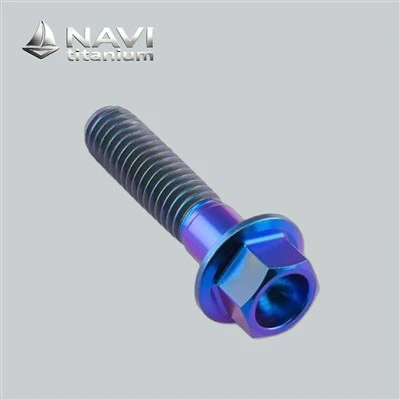
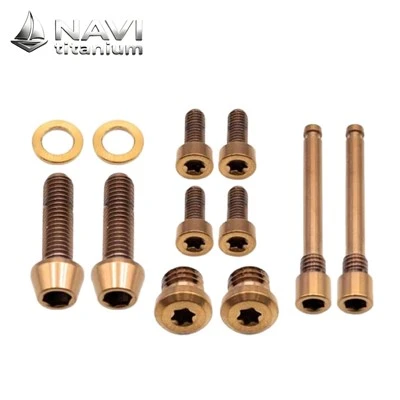
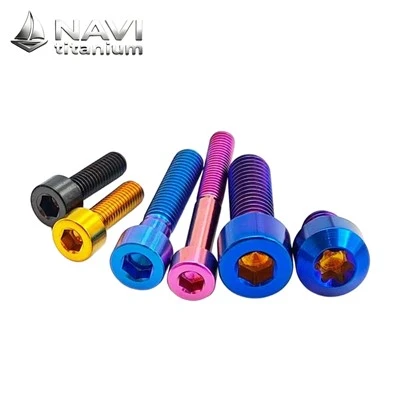
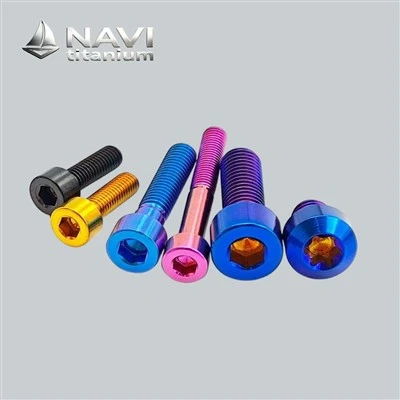
NAVI Titanium manufactures titanium bolts for Ridstar Q20, addressing aftermarket replacement and model-specific assembly applications. Our R&D team investigates alloy fatigue behavior, stress distribution, and dissimilar-metal contact through comparative engineering studies. Process development places particular emphasis on multi-stage machining, controlled surface finishing, and repeatable production parameters.


Solutions of NAVI Titanium
NAVI Titanium laboratory evaluation and process records provide technical evidence for ongoing improvement, while collaboration between metallurgical specialists and production engineers allows unusual mechanical challenges to be examined from both scientific and manufacturing perspectives.


NAVI Titanium approaches electric bicycle component development through applied metallurgy and precision manufacturing research. Particular attention is given to alloy fatigue resistance, mechanical load transfer, contact behavior, and long-term structural stability.


Application
NAVI Titanium manufactures titanium bolts for Ridstar Q20 applications, covering model-specific assembly compatibility, aftermarket replacement, and structured spare-parts procurement for electric bicycle distributors and service providers.
The Ridstar Q20 is an electric fat-tire bicycle developed around a reinforced frame, an integrated power system, and a multi-component mechanical assembly. Its construction involves several interconnected areas, including the handlebar assembly, front fork, wheel hubs, brake interfaces, drivetrain, and frame connections. For distributors and aftermarket component retailers, identifying the exact assembly position is an essential step when selecting replacement hardware. Different locations may involve variations in load direction, contact pressure, vibration exposure, and mechanical retention. These factors influence the selection of an appropriate fastening configuration. A vehicle-specific component schedule should therefore distinguish between structural joints, accessory mounts, and frequently serviced connections rather than treating all fasteners as interchangeable. When evaluating titanium-based alternatives, particular attention should be given to the original engineering specification, mating components, and galvanic compatibility with adjacent metals. This approach establishes a more reliable technical basis for aftermarket applications while reducing uncertainty during product selection, installation planning, and subsequent maintenance.

2. Model Identification

For wholesalers, bicycle workshops, and electric mobility retailers, the Ridstar Q20 represents a distinct procurement reference rather than a generic electric bicycle category. Model identification should be accompanied by production generation, assembly location, and the intended replacement position. This distinction becomes particularly relevant when dealers handle multiple Ridstar variants or maintain inventories for different vehicle configurations. A structured spare-parts record can connect each component reference with its corresponding assembly diagram, installation location, quantity per vehicle, and applicable service procedure. Such documentation also makes communication between technicians and overseas manufacturers more consistent. For Ti alloy alternatives, procurement evaluation should extend beyond weight reduction to include fatigue behavior, bearing contact, corrosion interactions, and compatibility with the original joint design. Workshops should also retain records of installation torque specifications established for the relevant connection, since values applicable to conventional steel hardware cannot automatically be transferred to titanium alloy components. A model-based procurement system consequently creates a clearer basis for inventory classification, and aftermarket distribution across different sales channels.
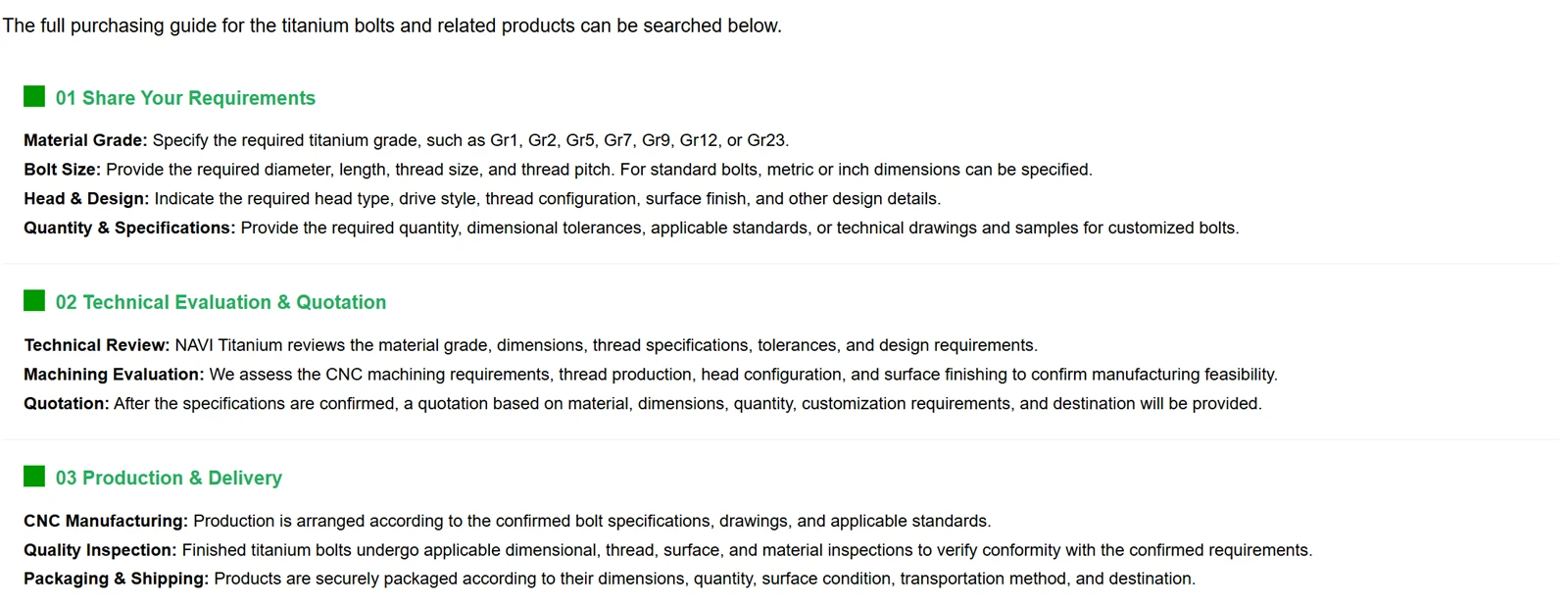
Purchasing guide
Quality control (QC)
NAVI Titanium applies systematic quality documentation to components developed for the Ridstar Q20 platform. Metallurgical traceability, alloy composition records, mechanical property data, and production process parameters establish a verifiable technical reference for distributors and aftermarket buyers evaluating model-specific compatibility and consistency across procurement cycles.

Manufacturing Process
The manufacturing route for Ridstar Q20-compatible components begins with the selection of certified alloy stock, followed by precision cutting, multi-axis machining, and controlled shaping of the required profiles. Process parameters are established according to the alloy grade and intended mechanical function, while sampling records and metallurgical documentation provide traceability throughout production. This manufacturing sequence accommodates the varied mechanical demands of the Ridstar Q20 platform and establishes a consistent basis for aftermarket replacement and distributor procurement.
Retail Packaging and Documentation
For retailers handling Ridstar Q20 aftermarket components, the choice of retail packaging influences shelf presentation, inventory organization, and customer purchasing decisions. Color boxes are suitable for branded retail collections, particularly when distributors intend to establish a consistent visual identity across different accessory categories. Blister packs provide a compact arrangement in which individual components remain separated and visible, making them practical for hardware stores and motorcycle accessory outlets. Transparent display cases offer another option for retailers who prioritize direct product visibility and organized counter presentation. For mixed assortments, individual compartments can distinguish different lengths, head profiles, and installation positions, reducing confusion during sales and stock replenishment. Labels should clearly identify the applicable vehicle model, alloy grade, component reference, and quantity. Retailers purchasing multiple configurations can also use barcode labels to connect physical inventory with their internal SKU records. Selecting an appropriate presentation format before export helps align warehouse handling, retail display, and downstream distribution practices.

Declaration Information

International shipments intended for Ridstar Q20 aftermarket applications require consistent export documentation and accurate customs declarations. The commercial invoice and packing list should identify cheap titanium bolts using a description, together with the alloy composition, grade, specifications, individual quantities, and declared transaction value. For mixed assortments, separate entries are preferable to a single combined description because different configurations may fall under different tariff classifications. The declared value should reflect the actual transaction and remain consistent with the invoice, payment records, and other commercial documents. NAVI Titanium exporters should also distinguish between the number of individual components, retail sets, and outer cartons to prevent discrepancies during customs clearance. The applicable HS classification should be verified against the importing country's tariff schedule rather than selected solely from a general international description. Consistent terminology across invoices, packing lists, and shipping records reduces documentary inconsistencies and gives overseas distributors a clearer basis for import procedures, duty calculations, and inventory registration.
Vehicle Application and International Delivery
For distributors handling Ridstar Q20 electric bicycles, application verification should distinguish the standard Q20 from other variants, including the Q20 Pro. Although these bicycles share a recognizable product family, differences in production generations, assembly configurations, and component specifications may affect interchangeability. Buyers should therefore avoid treating the entire Ridstar range as one universal application category. A more reliable procurement approach involves checking the original component reference, installation position, thread pitch, nominal diameter, and overall length against the corresponding vehicle documentation. Retailers managing multiple variants can establish separate inventory codes for each confirmed application, reducing the risk of incorrect order allocation and unnecessary after-sales returns. Before placing repeat orders, distributors may also provide photographs, existing component samples, or assembly diagrams for technical verification. This procedure creates a clearer purchasing record and allows manufacturers to distinguish confirmed applications from provisional references. For overseas wholesalers, maintaining version-specific records is particularly useful when developing replacement collections for different regional markets.

Small-Quantity International Delivery

For overseas distributors and motorcycle accessory retailers, small-quantity international consignments are often useful during initial market testing, sample evaluation, and urgent inventory replenishment. DHL, UPS, and FedEx provide express courier options for cross-border deliveries, with service availability depending on the origin, destination, parcel characteristics, and local customs procedures. Buyers should compare more than the quoted freight charge when selecting a carrier. Transit estimates, remote-area surcharges, dimensional weight calculations, customs brokerage arrangements, and destination handling fees can all influence the landed cost. For smaller orders, combining several component references into one consignment may reduce administrative expenses while allowing retailers to evaluate different configurations simultaneously. Commercial invoices should contain clear descriptions, accurate declared values, country-of-origin information, and consistent quantities. Distributors should also confirm whether import duties and taxes are collected before dispatch or upon arrival. A documented courier arrangement gives purchasing teams better control over replenishment schedules, cash flow, and inventory planning across international sales channels.
Thread Accuracy and Engagement Reliability
For electric bicycle applications such as the Ridstar Q20, thread quality directly influences joint stability, installation consistency, and long-term mechanical reliability. NAVI Titanium evaluates three essential characteristics: pitch consistency, tooth-profile integrity, and precision class. Pitch deviation can cause uneven engagement between mating components, increasing localized stress and accelerating wear during repeated assembly. Incomplete or irregular tooth profiles may reduce effective contact area, while excessive tolerance variation can lead to difficult installation or insufficient engagement. For titanium bolts for Ridstar Q20, these characteristics should be assessed against the original vehicle specifications rather than generalized industry assumptions.
| Evaluation Factor |
|
Purchasing Significance |
| Pitch consistency | Uniform spacing between adjacent threads | Reliable engagement |
| Tooth-profile integrity | Complete crests, roots, and flanks | Reduced localized stress |
| Precision class | Controlled dimensional tolerances | Consistent assembly |
| Engagement length | Adequate contact with mating parts | Improved joint stability |
Reliable thread accuracy establishes a sound basis for repeatable installation, mechanical durability, and aftermarket procurement confidence.
FAQ
1. Can automated equipment maintain consistent quality during the production?
-
Automated machining and processing equipment can improve production repeatability by maintaining consistent operating parameters and reducing variations caused by manual handling.
2. How does precision machining affect the installation performance of small mechanical components?
-
Precision machining controls critical features such as thread pitch, concentricity, head profiles, and bearing contact areas.
3. Can non-standard components be manufactured for different electric bicycle configurations?
-
Yes. Non-standard production can accommodate specific head styles, lengths, thread specifications, and installation positions.
4. Can production capacity support recurring bulk orders for aftermarket distributors?
-
Bulk production can be organized through standardized operating procedures, production scheduling, and batch-level process records.
5. How is production capacity coordinated when multiple specifications are ordered simultaneously?
-
Production scheduling generally considers equipment availability, machining complexity, raw stock preparation, order priority, and planned completion dates.
Hot Tags: titanium bolts for ridstar q20, China titanium bolts for ridstar q20 manufacturers, suppliers, factory