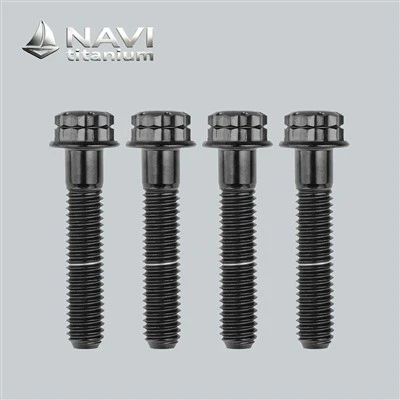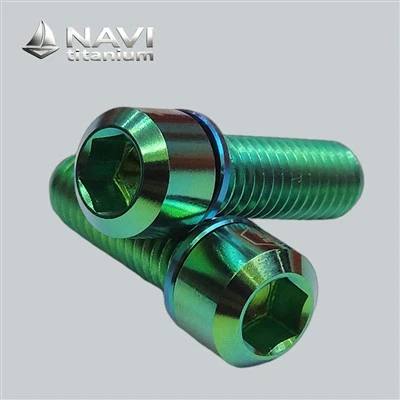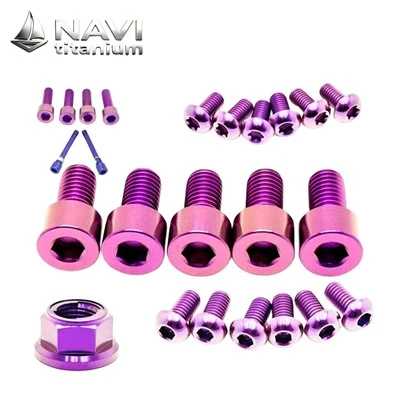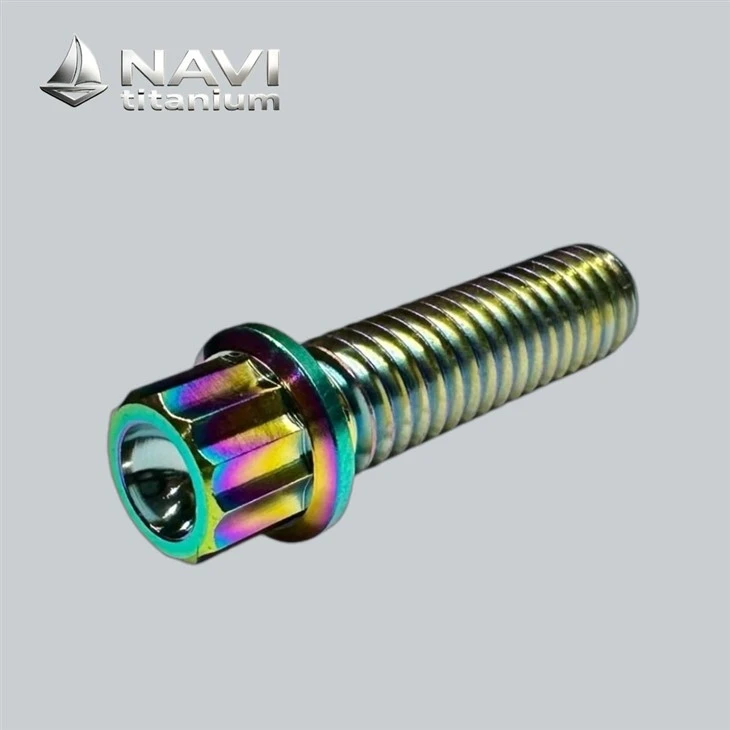
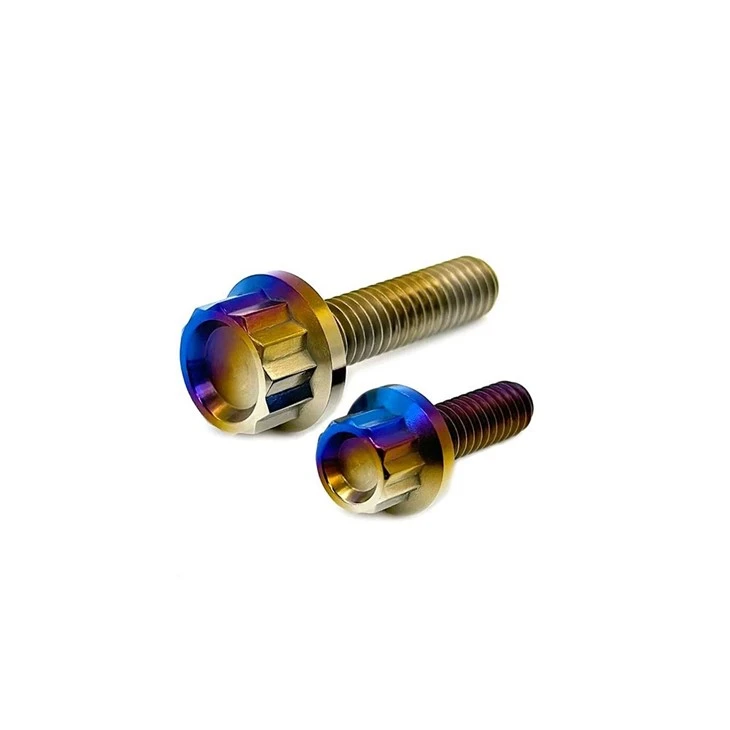
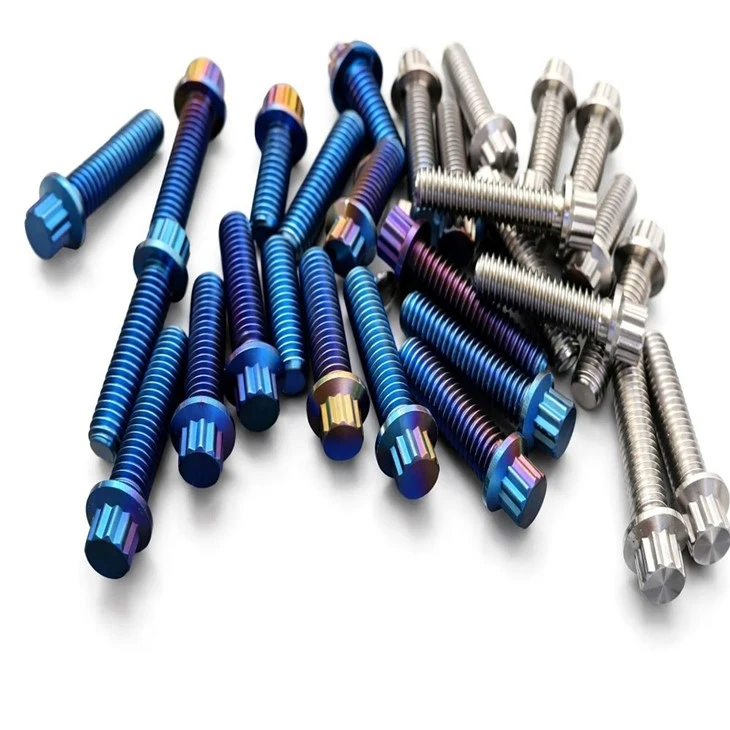
NAVI Titanium titanium beadlock bolts for off-road motorcycles, ATVs, and UTV wheel assemblies, where secure ring retention is essential under demanding terrain conditions. Based in Baoji, China's established titanium industry hub, our titanium bolt factory combines long-term metalworking experience with an integrated production and export operation. Overseas cooperation spans markets including the United States, Germany, Japan, and Russia.


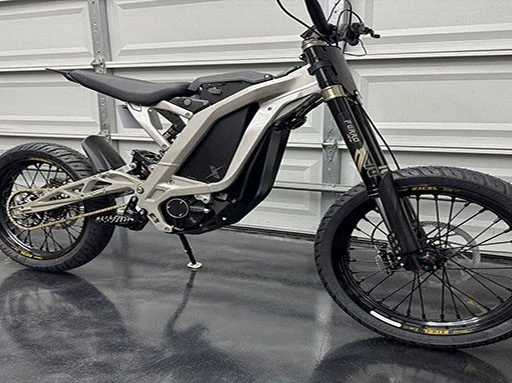
Solutions of NAVI Titanium
NAVI Titanium has developed an international business network. For buyers evaluating beadlock hardware, export cooperation involves more than product selection; clear identification, commercial documentation, shipment planning, and communication across different time zones all influence procurement efficiency.


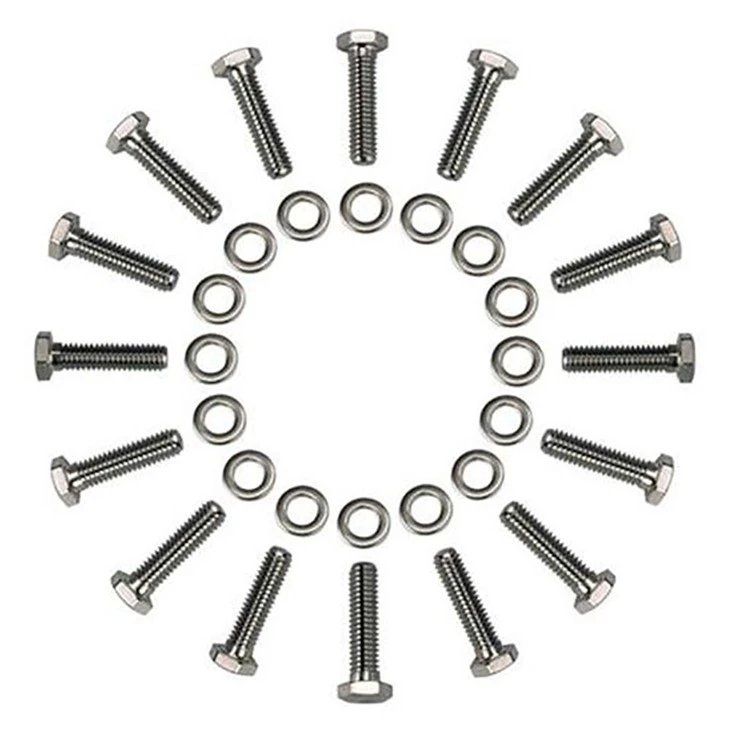
NAVI Titanium examines beadlock hardware through the mechanical relationship between ring retention, contact pressure, and load distribution. In off-road wheel assemblies, the arrangement of individual screws around the rim circumference influences joint stability under impact, vibration, and changing tire deformation.
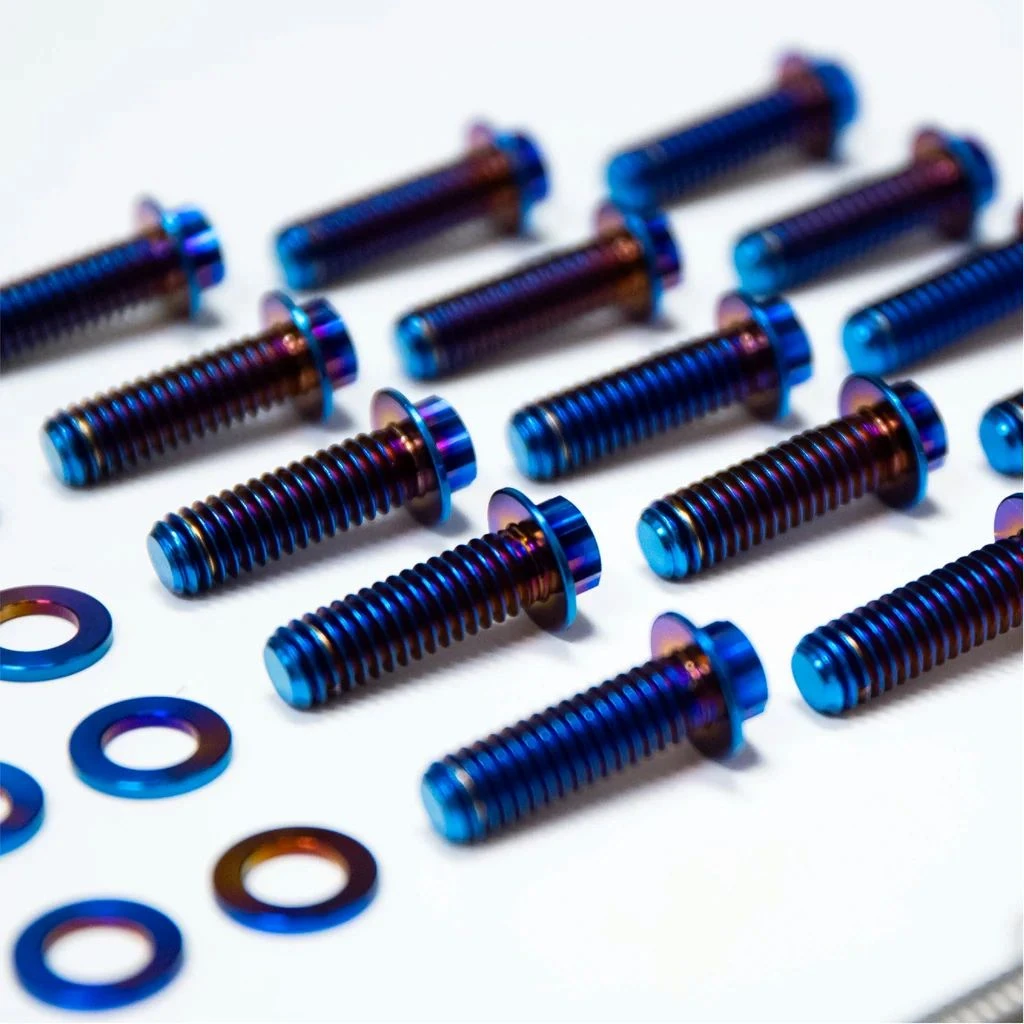
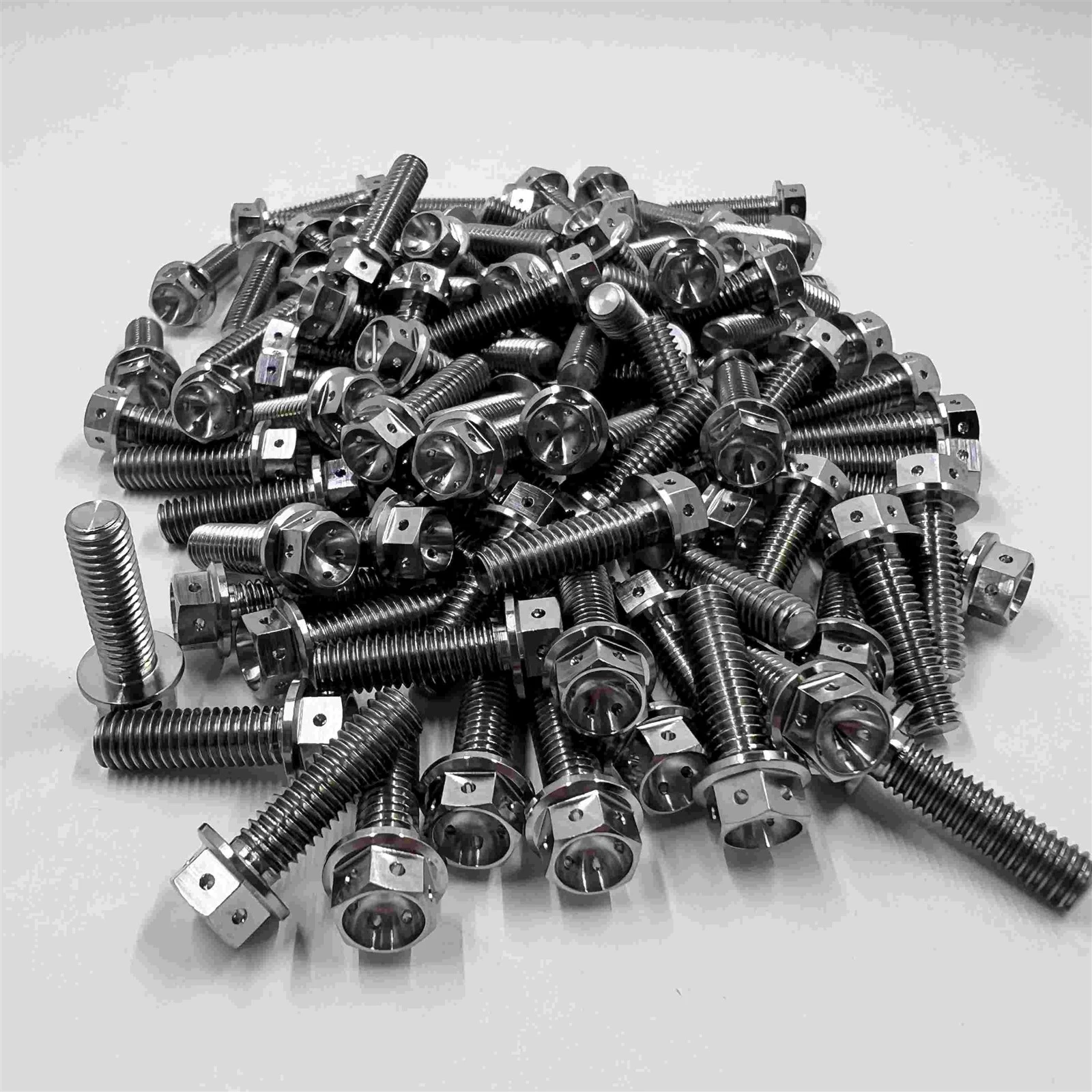
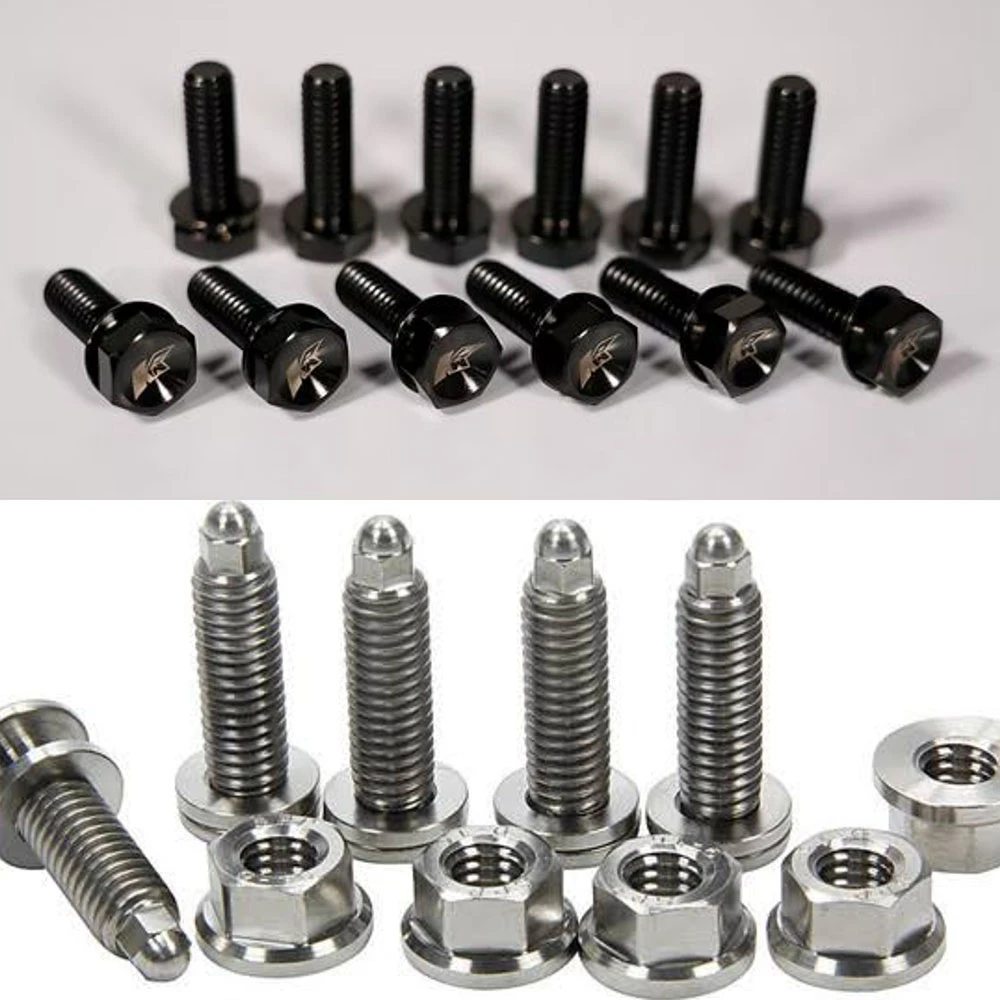
Application
NAVI Titanium manufactures titanium beadlock bolts for securing beadlock rings on off-road motorcycles, ATVs, and UTVs, supporting consistent clamping force distribution and reliable tire-bead retention under demanding terrain conditions.
A beadlock ring is an annular retaining structure positioned near the wheel rim to restrain the tire bead against the rim seat. Its defining feature is a circumferential series of closely spaced apertures, through which individual fasteners generate distributed clamping forces. Unlike conventional wheel assemblies that rely primarily on inflation pressure to maintain bead seating, this arrangement mechanically confines the bead between opposing contact regions. The resulting load path extends from each screw head through the retaining ring and into the wheel body, creating localized compression that combines into an approximately continuous circumferential restraint. Uniform contact depends on aperture alignment, bearing-face compatibility, ring stiffness, and the consistency of tightening procedures. Excessive variation between adjacent positions can produce uneven pressure, local ring distortion, or progressive loosening under repeated vibration. For off-road motorcycles, ATVs, and utility terrain vehicles, this architecture becomes particularly relevant when reduced inflation pressure is used to improve traction on irregular ground. The retaining system must accommodate impact loading, lateral tire forces, and repeated changes in contact stress without compromising wheel integrity.
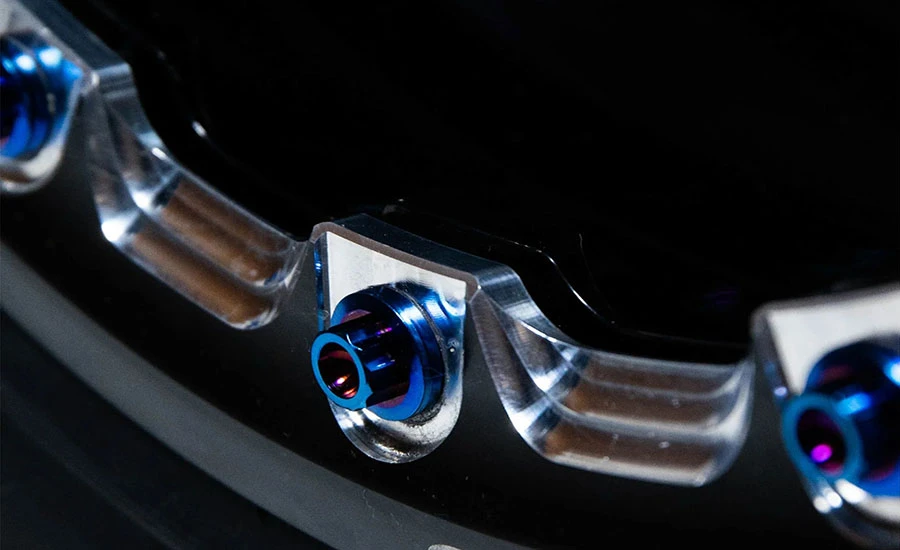
2. Installation Position
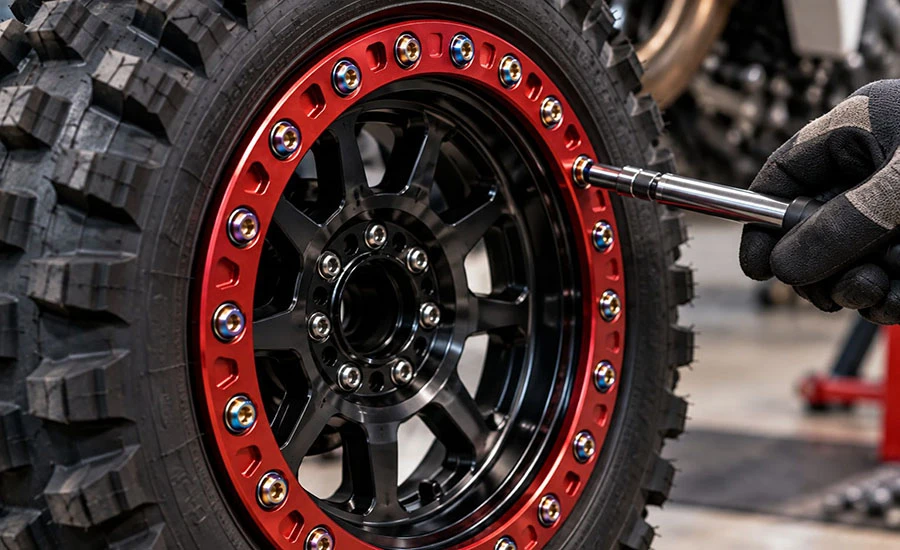
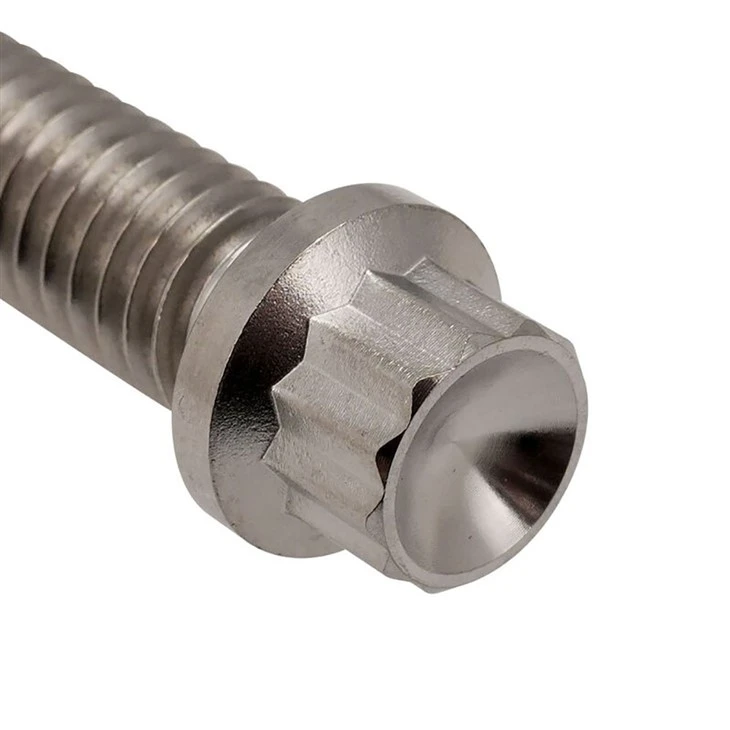
The relevant installation points are distributed around the retaining ring rather than concentrated at the wheel hub center or axle interface. Each screw passes through a corresponding opening in the ring and engages the designated wheel-side attachment point, securing the assembly at a controlled clamping level. Head seating is critical: a conical underside must match its mating recess, whereas a flat bearing face requires a compatible supporting area. Incorrect contact can concentrate stress around the aperture, accelerate fretting, and interfere with consistent load transfer. During assembly, the retaining ring should sit evenly against the tire bead, with all attachment points aligned before progressive tightening begins. A staged, cross-pattern sequence can reduce local distortion and help maintain more uniform circumferential pressure. In service, repeated wheel impacts, drivetrain vibration, and tire deformation may alter joint preload, making periodic checks appropriate under the vehicle manufacturer's maintenance guidance. These considerations are especially important for competition motorcycles and recreational off-road vehicles, where NAVI Titanium hardware encounters traction demands and terrain irregularities that expose the wheel assembly to fluctuating mechanical loads.
Purchasing guide
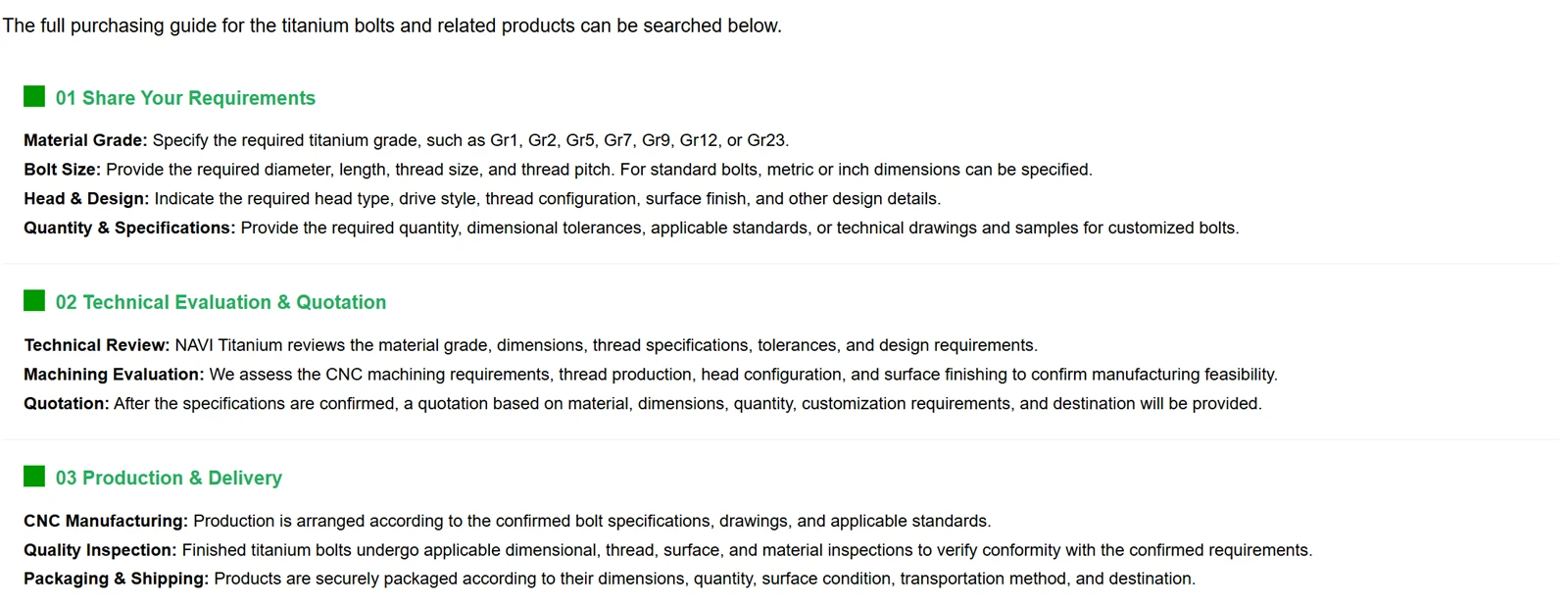
Quality control (QC)
NAVI Titanium maintains documented quality records to support technical evaluation and purchasing decisions for beadlock hardware used in off-road wheel assemblies. Chemical composition, mechanical properties, and traceable production data provide a structured basis for assessing conformity with agreed specifications, particularly where circumferential clamping stability and dependable ring retention are central to operational performance.

Manufacturing Process
Manufacturing beadlock hardware begins with selecting suitable titanium alloy stock and preparing it for precise blank production. The external head is shaped to match the intended wheel-ring interface, whether a low-profile bearing face or a countersunk seat. Subsequent machining establishes the drive recess, shank dimensions, and engagement features, while controlled deburring removes sharp edges that could interfere with seating or assembly. Particular attention is given to the underside of the head, since its contact with the retaining ring influences load transfer and local stress distribution. Thread rolling or cutting is selected according to the specified design and production route. After cleaning, the components undergo dimensional verification and mechanical checks appropriate to the drawing, with attention to concentricity, seating-face consistency, and engagement accuracy. This NAVI Titanium process sequence supports reliable installation across the closely spaced attachment points of off-road wheel assemblies, where consistent head contact and controlled clamping contribute to bead retention under vibration and impact loading.
Beadlock Hardware Organization and Handling
For motorcycle, ATV, and UTV beadlock assemblies, organizing hardware according to an individual wheel significantly reduces sorting complexity during installation and maintenance. A dedicated carton can contain the exact quantity of screws needed for one retaining ring, with additional spare pieces identified separately when specified. This arrangement prevents technicians from repeatedly counting loose components or distinguishing visually similar items during wheel preparation. Ring aperture quantity, screw length, head configuration, and drive compatibility should be verified against the intended wheel design before grouping. For distributors handling multiple wheel models, clear identification of vehicle compatibility, ring configuration, and piece count reduces the likelihood of incorrect selection. Internal compartment divisions can separate primary hardware from spare items while maintaining a consistent arrangement throughout transportation. When several wheel sets are shipped together, individual carton identification allows warehouse personnel to allocate complete assemblies without reopening every container. This approach also simplifies inventory reconciliation, particularly for aftermarket retailers managing frequent small orders, workshop replenishment, and mixed vehicle applications across different regional markets and customer groups.
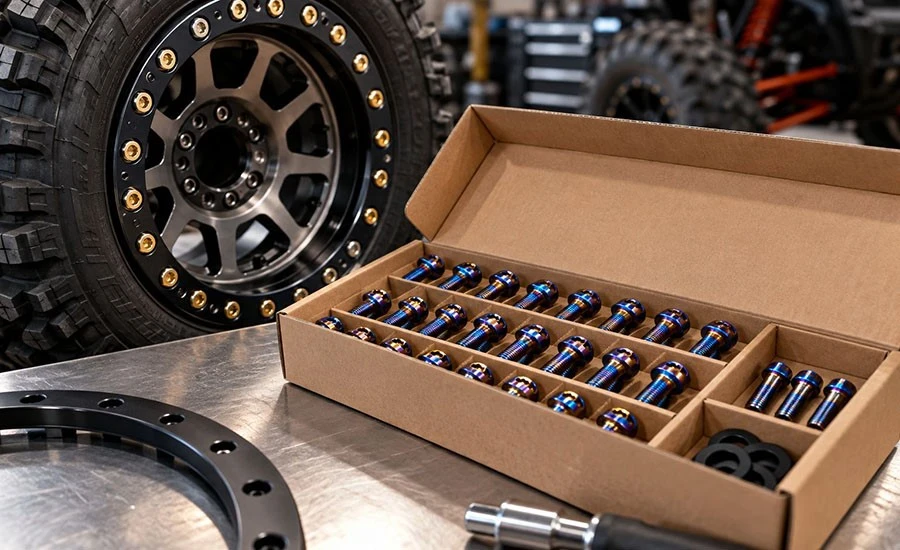
Label and Quantity Traceability
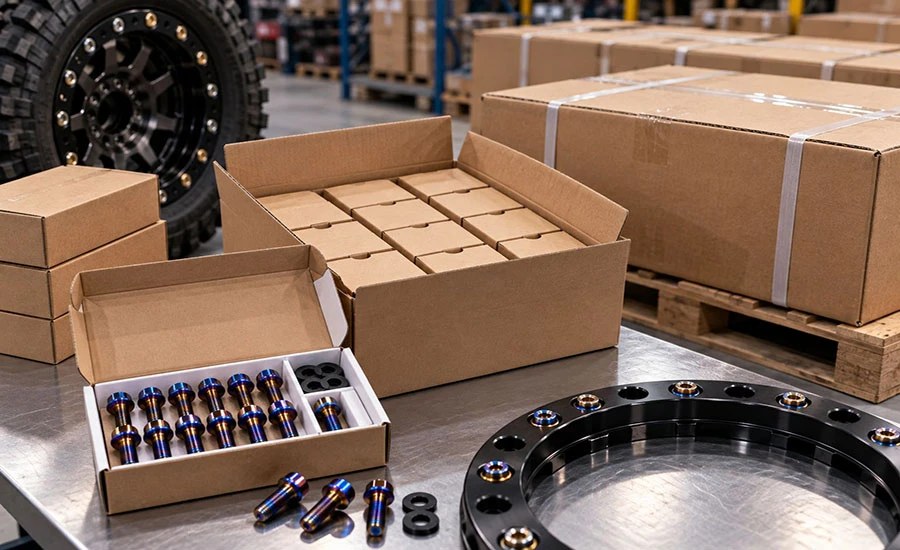
Accurate identification across multiple shipping levels is essential when beadlock hardware is distributed through international wholesale networks. The individual set box should display the wheel reference, screw configuration, quantity, and relevant order identifier, while the inner carton records the number of complete sets enclosed. The outer carton label should correspond with both subordinate levels and the accompanying shipping list, establishing a verifiable numerical relationship throughout the shipment. For example, an outer carton containing four inner cartons, with ten wheel sets in every inner carton, represents forty complete sets rather than forty individual screws. This distinction is important because purchasing documents may express quantities in wheel sets, whereas warehouse systems sometimes register individual pieces. Consistent unit definitions reduce reconciliation errors during customs processing, inventory entry, and distributor order fulfillment. Barcode references or clearly structured alphanumeric identifiers can further connect physical cartons with commercial records. When several wheel configurations share one shipment, separate NAVI Titanium identifiers prevent accidental interchange and allow receiving teams to verify contents without opening every individual box.
Beadlock Ring Applications
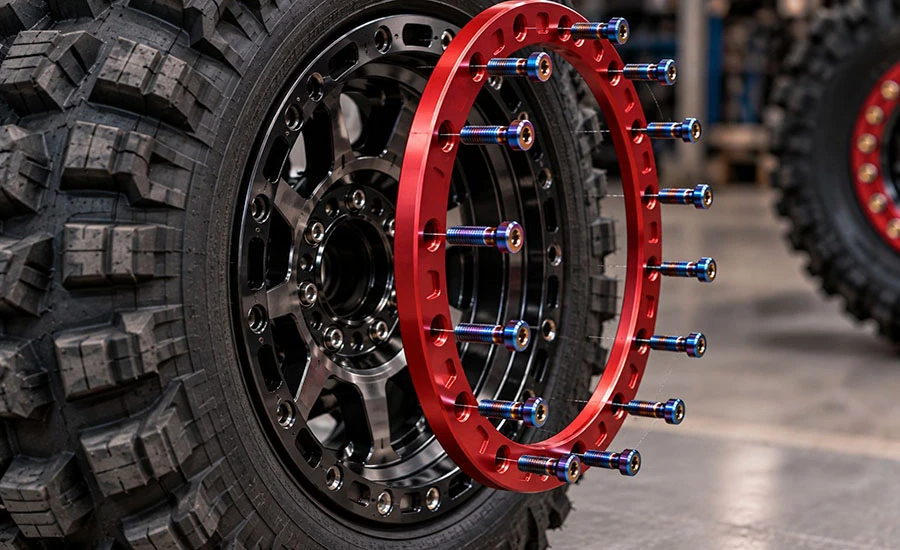
In functional beadlock wheel assemblies, the retaining screws occupy a circular sequence of attachment points near the outer perimeter of the rim, connecting the removable clamping ring to the wheel body. Their placement differs fundamentally from central hub connections, spoke attachments, or conventional wheel mounting hardware. The screw heads remain accessible along the exposed ring, while their engagement sections extend into designated receiving holes within the underlying wheel structure. This arrangement establishes a continuous mechanical connection around the tire bead, distributing compressive loading across multiple circumferential positions. For wholesale purchasers and wheel manufacturers, accurate identification of the installation interface is essential when comparing replacement components or preparing assembly kits. Relevant considerations include hole spacing, head seating configuration, engagement depth, ring thickness, and accessibility for installation tools. Differences between front and rear wheel designs, vehicle platforms, or aftermarket ring systems may prevent direct interchangeability. Procurement documentation should therefore reference the corresponding wheel assembly drawing and installation location.
Functional Classification
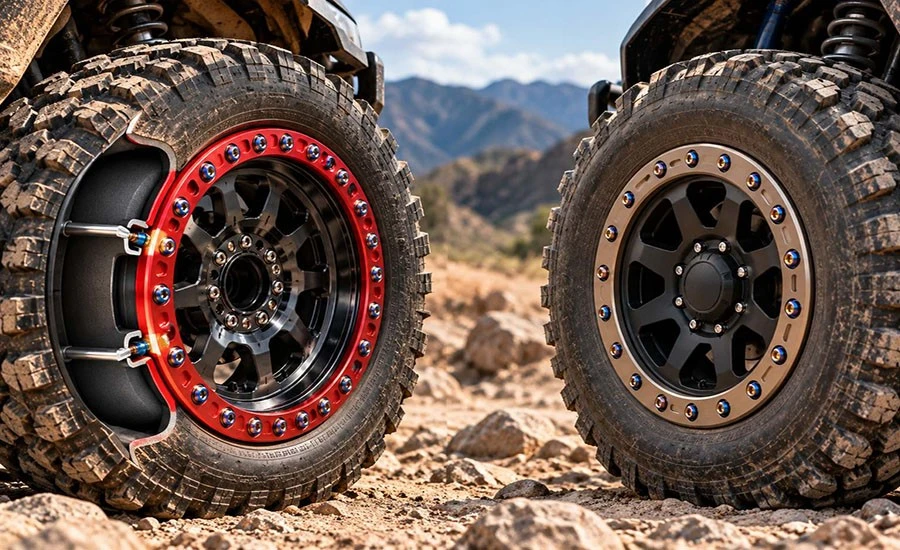
Beadlock wheel hardware must be classified according to whether the surrounding ring performs mechanical tire retention or serves primarily as a decorative element. A functional clamping ring compresses the tire bead against a designated rim interface, helping resist bead displacement when inflation pressure decreases or substantial lateral forces develop during off-road operation. Its attachment points consequently participate in a load-bearing system exposed to vibration, repeated impacts, and changing tire deformation. Decorative rings, although visually similar, may attach only to exterior wheel features without contributing to tire retention. For distributors and OEM purchasing teams, confusing these categories can result in incorrect component selection, unsuitable tightening practices, and misleading application descriptions. Technical specifications should distinguish actual clamping arrangements from simulated beadlock designs, identifying the intended ring construction, attachment interface, and approved operating conditions. Visual resemblance alone cannot establish mechanical equivalence. Where replacement hardware is being sourced, confirmation against the wheel manufacturer's technical documentation remains necessary before compatibility or operational suitability can be established for NAVI Titanium commercial distribution.
Procurement Profiles and Commercial Priorities
The purchasing framework for titanium beadlock bolts varies across wheel manufacturers, aftermarket brands, racing maintenance teams, component wholesalers, and repair workshops. NAVI Titanium recognizes that procurement decisions depend not only on mechanical compatibility but also on inventory turnover, replacement frequency, documentation accuracy, and distribution efficiency. Wheel producers prioritize repeatable assembly characteristics, whereas aftermarket brands emphasize model coverage and consistent visual presentation. Racing operations require rapid identification and dependable replenishment under compressed maintenance schedules. Wholesalers evaluate stock flexibility and order consolidation, while repair workshops focus on installation compatibility and minimizing vehicle downtime.
| Buyer Category |
|
| Wheel Manufacturers | Ring compatibility, assembly consistency, production scheduling |
| Aftermarket Brands | Model differentiation, appearance consistency, retail assortment planning |
| Racing Teams | Rapid replacement, installation efficiency, emergency stock availability |
| Parts Wholesalers | Inventory rotation, mixed-order coordination, traceable identification |
| Repair Workshops | Accurate fitment, service accessibility, reduced installation delays |
Understanding these distinct purchasing priorities establishes a more reliable basis for supplier evaluation, commercial negotiations, and long-term cooperation across specialized off-road vehicle markets.
FAQ
1. Can aftermarket distributors use their own trademarks?
-
Trademark arrangements can be discussed for private-label distribution projects, subject to ownership verification and applicable authorization.
2. What industry awards or recognition can buyers review when evaluating your manufacturing experience?
-
Available corporate recognition documents can be shared for procurement evaluation upon request.
3. What corporate qualifications can wheel manufacturers review?
-
Corporate registration documents, business licenses, and applicable quality management certifications can be provided for supplier qualification procedures.
4. What testing documentation is available for hardware used in functional beadlock wheel assemblies?
-
Relevant quality records may include chemical composition reports, mechanical property results, and dimensional verification documents. Where independent laboratory testing is requested, the laboratory's accreditation scope should be confirmed before testing arrangements are agreed.
5. What export-related documentation can international wholesalers request
-
Common shipping documents include commercial invoices, detailed packing lists, and transport documents. Certificates of origin and other destination-specific records may be arranged where applicable.
Hot Tags: titanium beadlock bolts, China titanium beadlock bolts manufacturers, suppliers, factory