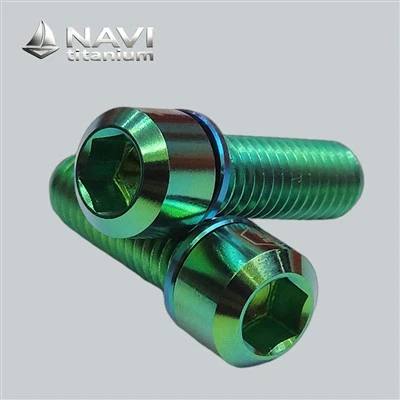
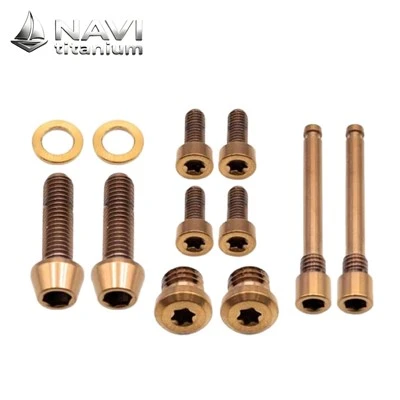
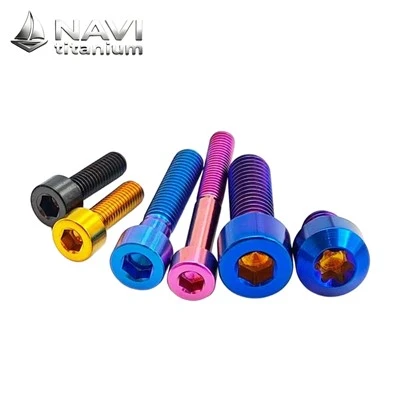
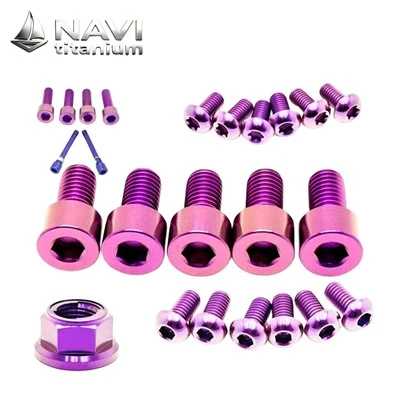
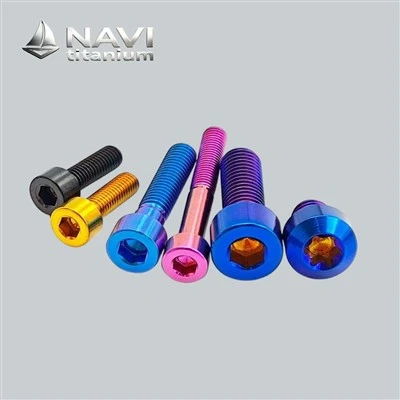
NAVI Titanium offers Honda titanium bolts for motorcycle upgrades, replacement programs, and aftermarket distribution. Effective purchasing decisions rely on more than unit price; buyers should evaluate alloy grade documentation, batch identification, and compatibility with designated mounting positions. For distributors managing multiple vehicle models, a structured stock classification system helps distinguish head profiles, lengths, drive types, and application codes. Reorder thresholds, batch records, and cross-reference lists reduce picking errors and simplify replenishment.


Solutions of NAVI Titanium
NAVI Titanium approaches motorcycle hardware procurement through specification control, batch traceability, and repeat-order coordination. These details establish a consistent basis for quotation comparison and supplier evaluation. Inventory management is equally important for distributors serving multiple models: separate stock codes, retained order histories, and reorder records help distinguish similar hardware and reduce picking errors.


NAVI Titanium applies a systematic approach to motorcycle hardware development, integrating alloy selection, precision machining, and application-specific evaluation. Particular attention is given to dimensional consistency, joint compatibility, and production repeatability. These factors establish a technical basis for aftermarket sourcing, helping distributors maintain stable product specifications, streamline procurement decisions, and improve continuity across recurring orders.


Application
NAVI Titanium offers Honda titanium bolts for motorcycle frame brackets, auxiliary supports, engine covers, and peripheral hardware, with attention to fitment compatibility, installation access, vibration resistance, and routine maintenance.
Frame attachments and auxiliary supports represent practical application areas, particularly at non-primary load-bearing joints associated with accessory supports, protective structures, and body-mounted hardware. Their mechanical performance depends on the interaction between bolt length, clamping faces, support thickness, and available head clearance. An unsuitable grip length may cause inadequate engagement or interference with adjacent parts, while uneven contact can produce local stress concentrations and gradual loosening under repeated vibration. Procurement teams should therefore assess the complete joint assembly rather than select hardware by nominal diameter alone. Head profile, drive interface, washer arrangement, and access for installation tools also influence assembly efficiency, especially where supports sit close to frame members or body panels. During routine servicing, removable connections should permit controlled disassembly without unnecessary disturbance to neighboring hardware. For wholesale and aftermarket programs, clear part identification simplify inventory management and replacement planning. Application suitability should be established against the original vehicle documentation, with particular caution around steering, suspension, and other safety-critical structural joints.

2. Engine Peripherals and Covers

External engine covers, protective guards, cable supports, and accessory supports create compact installation zones where access and joint stability must be considered together. Closely spaced housings may restrict socket movement, screwdriver alignment, and hand clearance, making the head profile and drive recess important factors during assembly and subsequent maintenance. A suitable bolt arrangement should allow the installer to apply the prescribed tightening procedure without contacting nearby wiring, hoses, or adjacent castings. Engine operation introduces recurring vibration, while nearby exhaust hardware and other heat sources can expose surrounding joints to elevated operating temperatures. These conditions make joint compatibility, preload retention, and the correct washer arrangement relevant to long-term service performance. Buyers should also distinguish accessory attachments from connections that retain internal engine assemblies or carry critical operating loads. Substituting alternative hardware at a major engine joint without validated engineering data may alter clamping behavior or compromise operational safety. For commercial sourcing, model-specific fitment records, installation guidance, and traceable part references help distributors evaluate compatibility across product variants.
Purchasing guide
Quality control (QC)
NAVI Titanium emphasizes traceable alloy composition and documented quality consistency for motorbike hardware applications. For hardware intended for Honda-related aftermarket programs, certified chemical composition data helps buyers verify alloy identity, assess conformity with applicable standards, and maintain reliable sourcing records. This documentation also strengthens procurement transparency and supports informed decisions when evaluating material suitability for specific vehicle mounting positions.

Manufacturing Process
The manufacturing process at NAVI Titanium begins with the selection of suitable titanium alloy stock according to the intended motorbike application and applicable technical standards. CNC turning and milling establish the bolt head profile, shank dimensions, and drive recess, while precision cutting operations produce the specified length and end configuration. Controlled machining parameters help limit tool wear and maintain dimensional consistency across production runs. Subsequent thread cutting or rolling establishes the required engagement characteristics, followed by deburring and surface finishing to remove sharp edges and improve visual uniformity. Depending on the specified grade, controlled heat treatment may be applied to achieve appropriate mechanical properties. Verification of critical dimensions, hardness, and surface condition helps establish conformity with the drawing.
Handling Integrity
- End-cap selection: NAVI Titanium uses protective caps or sleeves to cover exposed screw ends, reducing direct contact with surrounding hardware during storage and transit.
- Collision prevention: Individual compartments help limit movement between metal parts, reducing the risk of impact marks or damage to precision-cut ends.
- Cross-contact reduction: Separating hardware by part code and length helps prevent contact between incompatible items during picking, sorting, and order consolidation.
- Deformation risk control: Suitable end guards help reduce localized impact forces that could affect the accuracy of the starting threads or compromise installation.
- Contamination exclusion: Clean caps and enclosed holders reduce the entry of dust, metal chips, and other foreign particles into threaded openings.
- Edge separation: Dividers keep threaded ends away from sharp supports, cutting edges, and adjacent hardware that may cause abrasion during movement.

Handling Stability and Repeated Movement

- Individual placement: Small trays, partitioned inserts, or compartmentalized holders keep hardware in defined positions during warehouse transfers and export handling, reducing direct contact between adjacent parts and simplifying subsequent order preparation.
- Repeated handling: Durable separators help maintain isolation when goods move between machining, sorting, storage, and dispatch areas, limiting accidental impacts and preserving the condition of exposed ends throughout multiple handling stages.
- Batch identification: Alloy grades, and quantities help warehouse staff select compatible items without unnecessary handling, while clear identification records improve stock traceability and reduce picking errors.
- Movement limitation: Properly fitted inner holders reduce shifting caused by vibration, carton rotation, and routine loading activities, helping prevent collisions between metal hardware during domestic distribution and international transit.
- Receiving efficiency: Organized units allow distributors to count incoming stock and identify missing hardware with less manual rearrangement, supporting faster warehouse registration and more accurate inventory updates.
Procurement Planning and Mechanical Performance
For distributors and aftermarket wholesalers, purchasing motorbike threaded fastener as individual hardware or coordinated kits involves different inventory and sales considerations. Standard kits typically cover selected mounting points, making them suitable for routine replacement and popular upgrade programs. Full-bike kits offer broader coverage across multiple assemblies, helping retailers simplify product listings and increase average order value. Fork kits address a more specific service category, allowing suspension specialists to stock hardware relevant to maintenance and upgrade work. Before placing orders, buyers should confirm the intended motorbike model, model year, included quantities, head styles, drive interfaces, and designated installation positions. A clear component list helps prevent omissions and reduces the risk of incompatible parts entering retail inventory. Individual threaded fastener remain useful for workshop replenishment, repair orders, and customers who need to replace only a limited number of hardware. For wholesalers managing several product lines, separate stock codes for single pieces, standard sets, complete kits, and fork kits improve warehouse organization. Historical sales data can then guide purchasing quantities and reorder schedules.

Alloy Selection and Mechanical Performance

Mechanical performance is a central purchasing consideration when selecting custom titanium bolts for motorbike applications. Buyers should review tensile strength, yield strength, hardness, and fatigue behavior alongside the applicable alloy grade and technical documentation. Tensile strength indicates the maximum stress sustained before fracture, whereas yield strength relates to the onset of permanent deformation. Hardness provides an indication of resistance to localized indentation and wear, but it cannot independently establish overall joint reliability. Fatigue performance is particularly relevant to motorbike assemblies exposed to repeated vibration and cyclic loading. For distributors sourcing hardware across different applications, published test data and traceable alloy records provide a stronger basis for supplier comparison than price or appearance alone. Mechanical properties must also be considered in relation to bolt dimensions, engagement length, tightening torque, and the connected parts. A high-strength grade is not automatically suitable for every mounting position. Buyers should follow vehicle manufacturer guidance and avoid replacing critical engine, brake, steering, or suspension hardware without verified application data. Consistent documentation helps purchasing teams assess suitability and maintain dependable sourcing decisions.
Torque Control
For Honda motorcycle applications, Honda titanium bolts from NAVI Titanium are evaluated with attention to controlled tightening practices, lubricant compatibility, and appropriate locking compounds. Torque values should follow the vehicle manufacturer's service data or validated engineering specifications, since friction at mating faces and within engaged threads directly affects preload. Lubricated joints may develop greater clamping force than dry joints at the same torque, increasing the risk of excessive stress. Thread-locking compounds also alter assembly behavior, so product selection and tightening procedures should remain consistent with the compound manufacturer's instructions. Before assembly, mating parts should be clean, aligned, and free from debris or damaged engagement features. Installers should use calibrated torque tools, avoid uncontrolled impact tightening, and observe any specified curing period.
| Assembly factor |
|
| Torque specification | Follow verified vehicle service data |
| Lubrication |
|
| Locking compound | Select a compatible grade and follow its application instructions |
| Joint preparation |
|
| Tool control | Use a calibrated torque wrench and a controlled tightening sequence |
| Service work | Follow the prescribed removal, renewal, and reassembly procedures |
In summary, reliable motorbike joint performance depends on validated torque values, controlled friction conditions, compatible locking agents, and disciplined assembly procedures.
FAQ
1. Can you coordinate multiple motorbike hardware categories in one order?
-
Yes. Buyers can coordinate threaded fastener, nuts, washers, spacers, and related CNC components through a unified sourcing program.
2. How does one-stop purchasing benefit motorbike parts wholesalers?
-
One-stop purchasing allows wholesalers to combine individual hardware, replacement sets, and complete upgrade kits within a coordinated procurement plan. Shared order records and unified product coding improve stock allocation, simplify replenishment, and help maintain consistent availability across popular motorcycle models.
3. How many production machines are available for motorbike hardware manufacturing?
-
Production capacity depends on the equipment configuration, machining processes, and current workload. A manufacturing facility with multiple CNC turning centers, milling machines, and auxiliary processing units can allocate operations across different component categories.
4. How are technical improvements incorporated into motorbike hardware projects?
-
Technical improvements may originate from assembly feedback, recurring service issues, drawing reviews, and changes in vehicle configurations. Engineering teams can assess component compatibility, clamping behavior, alloy selection, and installation access before updating manufacturing documentation.
5. How can process optimization improve manufacturing consistency?
-
Process optimization involves reviewing machining sequences, cutting parameters, tool wear, deburring methods, and workpiece handling. Standardized operating procedures and in-process dimensional checks help reduce variation and unnecessary rework.
Hot Tags: honda titanium bolts, China honda titanium bolts manufacturers, suppliers, factory