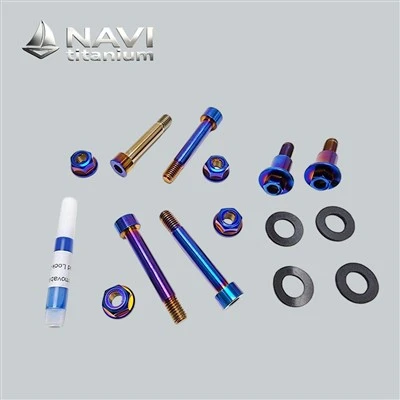
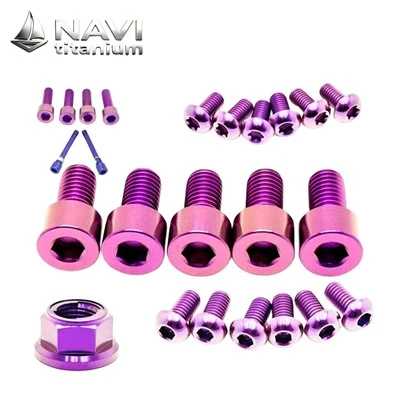
NAVI Titanium presents Kawasaki titanium bolts for motorcycle assemblies where dependable joining and controlled weight are valued. Repeat orders from overseas motorcycle-parts distributors have included additional batches for the same vehicle platforms after earlier deliveries were adopted in routine assembly and aftermarket programs. Customer feedback has frequently highlighted consistent fit, clean machining, practical head options, and stable batch-to-batch quality. Some buyers also return with expanded item lists after verifying initial samples, covering different mounting positions within one model family. This recurring purchasing pattern reflects confidence built through actual use rather than product claims alone.


Solutions of NAVI Titanium
NAVI Titanium has developed long-term cooperation with overseas motorcycle-parts buyers, with several purchasing programs progressing from trial quantities to repeat batches for ongoing aftermarket and assembly projects. Customer feedback has highlighted consistent machining quality, clean appearance, accurate fit, and convenient communication during repeat purchasing. Buyers returning for additional batches have also requested broader selections of head styles, lengths, and drive options for different motorcycle positions. This purchasing continuity gives procurement teams a practical reference beyond catalogue claims, particularly when evaluating a new supplier for recurring orders.


NAVI Titanium applies a structured approach to motorcycle fastening studies, considering alloy selection, machining practice, joint configuration, load distribution, and installation conditions as interconnected variables. Such evaluation helps distinguish hardware intended for peripheral assemblies from components exposed to higher mechanical loads. The resulting product references offer procurement teams a technical basis for comparing applicable specifications, manufacturing consistency, and intended vehicle use across different motorcycle programs.


Application
Kawasaki titanium bolts from NAVI Titanium are suited to lightweight fastening around motor-adjacent brackets, covers, cable supports, sensor holders, and other auxiliary electric-drive components.
In electric motorcycle assemblies, NAVI Titanium hardware can be applied around motor-adjacent brackets, protective covers, cable guides, sensor supports, and other peripheral components that are not responsible for transmitting primary drive loads. These locations are exposed to continuous vibration generated by rotating machinery, road excitation, and repeated acceleration or deceleration cycles. The fastening solution therefore needs to maintain stable clamping pressure while accommodating limited clearance around compact drive assemblies. Kawasaki's electric motorcycle parts documentation identifies dedicated motor brackets, covers, collars, washers, and multiple bolt configurations within the electric motor assembly, illustrating the variety of auxiliary connection points surrounding the drive unit. For procurement teams, attention may be directed toward alloy grade, head configuration, drive interface, grip length, washer compatibility, and torque practice according to the intended mounting position. Such applications can help reduce unnecessary mass in peripheral hardware while preserving reliable attachment of secondary components during repeated riding cycles.

2. Covers, Cable Supports and Drive-System Peripherals

Peripheral areas surrounding an electric drive system often contain numerous compact attachment points for covers, brackets, wiring guides, sensor holders, protective plates, and service-access components. These positions generally differ from primary motor mounts because their mechanical role is mainly to retain or position auxiliary parts rather than transfer major propulsion loads. Kawasaki's parts documentation for the Z e-1 and Ninja e-1 illustrates motor brackets, covers, small flanged bolts, washers, and related components distributed around the electric drive assembly. From an engineering perspective, selection should consider clamp stability, mating-part contact, clearance around adjacent electrical components, tool accessibility, and resistance to loosening under cyclic vibration. For buyers, repeatability across batches is also important because numerous small attachment points may be used across one vehicle platform. Appropriate hardware selection can therefore contribute to controlled assembly practices, reduced unnecessary mass, and dependable retention of peripheral drive-system components without being assigned to primary load-bearing joints. Consistent lot control and traceable production records can further simplify supplier evaluation, incoming verification, and repeat procurement for established vehicle platforms.
Purchasing guide
Quality control (QC)
For motorcycle hardware procurement, NAVI Titanium places emphasis on traceable alloy composition and documented quality data. The relevant quality record can present key chemical composition values, mechanical characteristics, production references, and applicable standards associated with the delivered grade. For buyers evaluating high-performance motorcycle components, such documentation offers a verifiable basis for confirming alloy identity and comparing sourcing consistency across purchasing programs.

Titanium Bolts Manufacturing Process
Production begins with selected alloy bar stock, which is cut into individual blanks according to the planned part configuration. CNC turning then establishes the shank, cylindrical sections, shoulders, chamfers, and other rotational features. Milling is used for hexagonal, socket, button, flange, or countersunk heads, while drilling creates drive recesses or other functional openings where specified. Subsequent machining removes burrs and sharp edges, followed by cleaning to eliminate machining residues. Polishing, blasting, or anodizing may then be applied according to the intended motorcycle application and appearance. This machining-led route allows consistent production of lightweight motorcycle hardware across different configurations.
Large-Format Bolt Protection
For larger motorcycle hardware such as M8, M10, and M12 configurations, NAVI Titanium greater individual weight can increase movement and contact forces during handling, pallet transfer, container loading, and long-distance transportation. A suitable protective arrangement should therefore limit free movement between individual pieces and prevent concentrated pressure from being transferred across the components. Separate inner compartments, rigid dividers, molded inserts, or layered cushioning can be selected according to the quantity and configuration involved. Keeping heavier pieces securely positioned also helps reduce mutual contact during vibration and repeated changes in transport direction. For procurement teams, this approach is particularly relevant when ordering mixed configurations, because different lengths and head styles may have different weight distributions. Clearly separated groups can simplify receiving procedures and reduce the possibility of counting errors. This is especially useful for distributors purchasing larger quantities for motorcycle workshops, aftermarket programs, and regional stockholding, where consistent protection during transit can contribute to smoother receiving and inventory processing.

Head Impact Protection

The head area deserves additional attention because it contains the visible drive feature and may experience direct contact with neighboring pieces when movement occurs inside an outer carton. For larger configurations, protective dividers or individual sleeves can create physical separation around the head, reducing the chance of edge-to-edge contact, impact marks, or deformation of the drive recess. A layered arrangement can place cushioning between component groups while keeping the shank areas aligned and preventing excessive lateral movement. Buyers may also consider reinforced inner boxes when multiple heavy pieces are consolidated into one shipping unit. This approach reduces direct load transfer between upper and lower layers during stacking and handling. For motorcycle distributors, maintaining clean head profiles is important because the hardware may proceed directly from warehouse storage to workshop installation or retail presentation. Consistent internal organization also makes it easier to identify different configurations without repeatedly opening and rearranging the entire carton. For long-distance export orders, protection around the head area can therefore be treated as a practical part of product preservation, particularly when larger configurations are transported together in substantial quantities.
Finish Treatment and Color Options
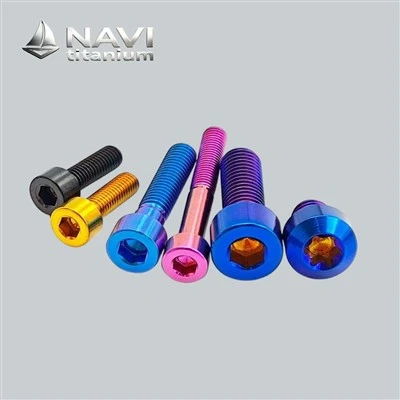
For motorcycle parts distributors, workshop chains, and aftermarket brands, appearance selection can be an important commercial consideration alongside basic mechanical suitability. Available visual treatments may include blue, gold, black, purple, rainbow, heat-blue, and natural metallic tones, allowing buyers to create different styling directions for individual vehicle programs. A broader color range can also help distributors organize product lines by model, riding style, accessory category, or customer preference. Blue and gold are often associated with performance-oriented builds, while black offers a more restrained appearance for street-oriented motorcycles. Purple and rainbow treatments can appeal to buyers seeking stronger visual differentiation, whereas natural metallic tones may suit restoration or minimally modified builds. From a perspective, color consistency across recurring orders is particularly valuable when a distributor intends to maintain the same visual identity across multiple product listings. Buyers may therefore evaluate not only the available color palette but also identification methods and compatibility with their existing motorcycle accessory range. A clearly organized color program can simplify purchasing decisions while giving aftermarket sellers more options for developing visually differentiated product collections.

Color Selection

Color choice can also be incorporated into the planning of complete motorcycle upgrade programs rather than treated as an isolated decorative decision. For wholesalers and aftermarket suppliers, NAVI Titanium offering several visual treatments allows one hardware range to address contrasting customer preferences without creating an entirely separate product category. Blue, gold, black, purple, rainbow, heat-blue, and natural metallic finishes can be allocated to different motorcycle styles, accessory packages, or retail collections. A distributor may use darker tones for understated builds and brighter colors for performance-inspired or exhibition-oriented motorcycles. Consistent appearance across multiple mounting positions can create a more coordinated vehicle presentation, which is useful for workshops preparing demonstration motorcycles or retailers creating themed upgrade packages. Buyers may also consider how color options are recorded on quotations, item references, labels, and reorder records so that purchasing teams can distinguish variants efficiently. For recurring commercial programs, retaining approved color references can reduce communication time between buyers and production teams. This makes appearance selection a practical procurement consideration.
Weight Optimization and Riding Performance
For motorcycle aftermarket programs, weight reduction is better evaluated as a system-level allocation of mass rather than simply comparing the weight of individual parts. NAVI Titanium offers Kawasaki titanium bolts for applications around the frame, motor, footpeg, handlebar, covers, and other selected mounting areas. Replacing conventional steel hardware can reduce local mass; the accumulated effect becomes more relevant when numerous pieces are changed across one vehicle. Published motorcycle engineering literature also distinguishes between general vehicle mass and unsprung or rotating mass, with the latter having a stronger influence on suspension response and maneuverability.
| Application area |
|
Potential riding consideration |
| Frame & subframe | Accumulated hardware mass | Overall vehicle mass |
| Motor area |
|
Compact drive-system layout |
| Footpeg area | Local mass reduction | Rider-control response |
| Handlebar & cockpit |
|
Steering feel and balance |
| Wheel/suspension vicinity | Mass positioned away from sprung body | Suspension responsiveness |
For aftermarket buyers, lightweight motorcycle hardware can form part of a broader gram-level weight-reduction strategy, with greater value achieved by selecting locations according to their dynamic position and mechanical role.
FAQ
1. How does the factory area support motorcycle hardware production?
-
The overall factory footprint provides dedicated space for machining, technical operations, quality management, warehousing, and related production activities, allowing different stages of an order to be organized within an established manufacturing environment.
2. How large is the production area?
-
The production area is arranged for CNC machining and related processing operations, with dedicated equipment zones that allow motorcycle hardware orders to move through an organized production workflow.
3. What R&D facilities are available for motorcycle hardware development?
-
A dedicated R&D area is used for process development, technical evaluation, application studies, and production-method improvement, helping the engineering team address different motorcycle hardware applications.
4. How is warehouse space used for export orders?
-
Dedicated warehouse areas can accommodate raw stock, work-in-process items, finished goods, order segregation, and export preparation.
5. How long has the company been operating in this industry?
-
Established in 2008, the company has more than 18 years of operating experience, giving international buyers a longer supplier history to consider when evaluating manufacturing continuity, technical accumulation, and long-term cooperation.
Hot Tags: kawasaki titanium bolts, China kawasaki titanium bolts manufacturers, suppliers, factory