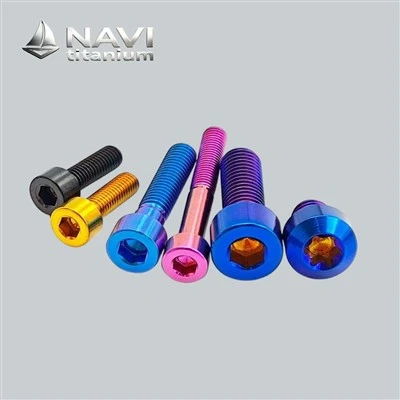
NAVI Titanium supplies the surron LBX titanium bolt kit for electric off-road motorcycle customization, combining precision finishing with application-specific fastening solutions. Since 2008, accumulated experience has informed material selection, dimensional verification, and production planning for specialized mechanical components. Practical knowledge of motorcycle fasteners includes thread compatibility, head configurations, tightening requirements, surface finishing, and resistance to environmental exposure.


Solutions of NAVI Titanium
With experience dating back to 2008, NAVI Titanium has developed integrated capabilities in material processing, precision finishing, and customized workpiece production. Drawing on experience with motorcycle and electric off-road vehicle workpieces, the company offers CNC-machined fastening solutions in multiple Ti grades, with customized head configurations, thread geometries, and installation dimensions. From prototype evaluation to batch production, material traceability, dimensional inspection, and technical documentation help address procurement requirements.


NAVI Titanium applies precision-finishing expertise to lightweight fastening workpieces for electric off-road motorcycles, with attention to alloy selection, machining accuracy, head configuration, load distribution, and assembly compatibility. Ti-6Al-4V is commonly considered where high specific strength and corrosion resistance are important.


Application
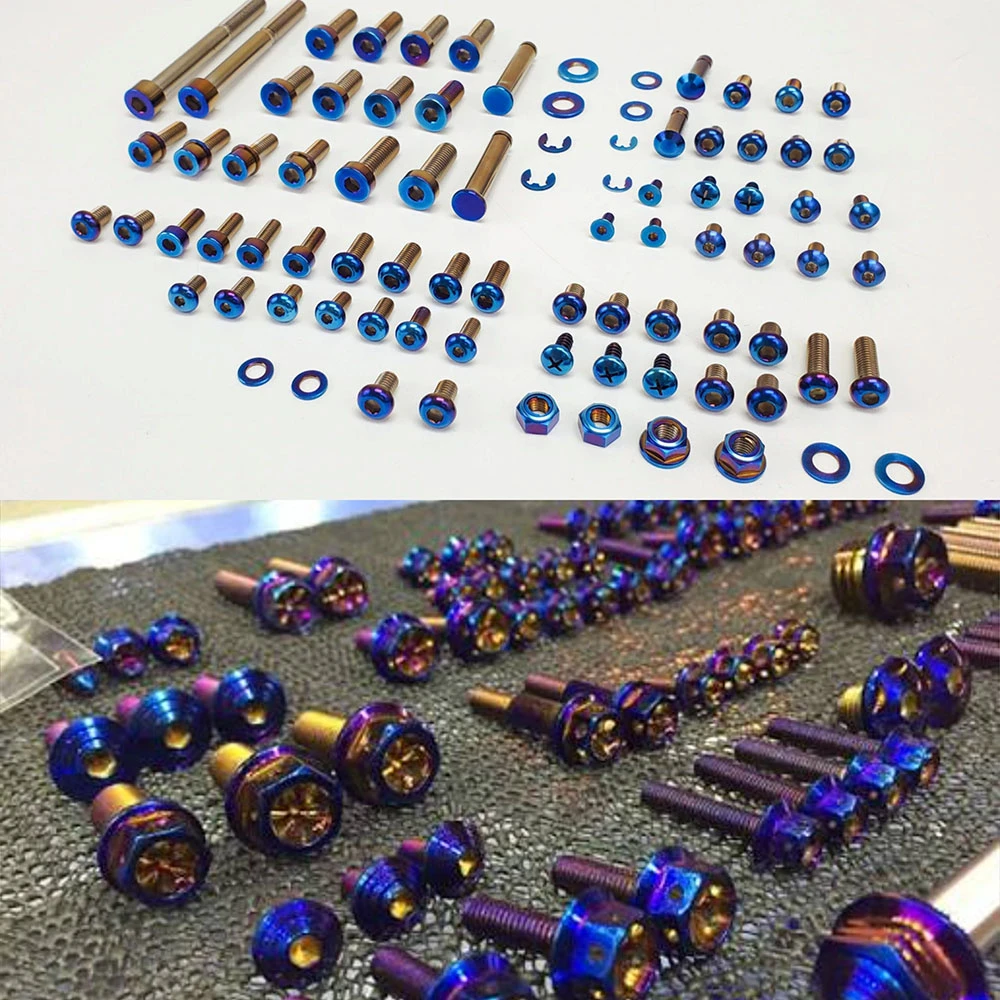
The surron LBX titanium bolt kit from NAVI Titanium offers lightweight fastening solutions for chassis, suspension, motor, battery, and exterior workpiece assemblies, with attention to mechanical strength, dimensional precision, corrosion resistance, and installation compatibility.
The Surron LBX electric off-road motorcycle operates under variable mechanical loads generated by acceleration, braking, uneven terrain, and repeated suspension movements. Its chassis and suspension interfaces contain multiple fastening points, including frame connections, shock absorber mounts, swingarm pivots, and linkage assemblies. These joints experience cyclic stress, vibration-induced loosening, impact forces, and fluctuating clamping requirements during demanding riding conditions. Replacing selected original fasteners with precision-machined lightweight alternatives requires careful consideration of tensile strength, fatigue resistance, thread engagement, and dimensional compatibility. Ti alloy fasteners, particularly those produced from Ti-6Al-4V, offer a favorable strength-to-weight ratio and corrosion resistance, making them suitable for weight-sensitive mechanical assemblies. However, material substitution must account for differences in elastic modulus, friction coefficients, and preload behavior to avoid compromising joint integrity. Appropriate head configurations, controlled tightening procedures, and compatible surface treatments are important considerations during installation.

2. Motor, Battery and Exterior Component Assembly

The Surron LBX integrates an electric powertrain, battery enclosure, protective bodywork, and rider-control workpieces within a compact off-road platform. Fastening points around the motor housing, battery mounting brackets, footpeg supports, handlebar clamps, and removable protective panels are exposed to distinct combinations of vibration, mechanical loading, moisture, and environmental contaminants. Lightweight fastening solutions can contribute to overall mass reduction, particularly where multiple workpieces are secured across the vehicle. Ti-6Al-4V alloy offers high specific strength and resistance to atmospheric corrosion, making it a potential alternative for selected non-critical and structurally appropriate connections. Engineering evaluation should distinguish primary load-bearing joints from cosmetic or accessory attachments, as their mechanical requirements and safety implications differ considerably. Particular attention should be given to thread tolerances, engagement depth, galvanic compatibility with adjoining materials, and torque specifications. Anti-galling measures may also be necessary because Ti alloys can exhibit adhesive wear during threaded assembly. For aftermarket suppliers, application-specific compatibility checks and traceable inspection records are valuable considerations.
Purchasing guide
Quality control (QC)
NAVI Titanium maintains material documentation for Ti-6Al-4V alloy workpieces supplied for electric off-road motorcycle applications. The documentation records key chemical and mechanical characteristics, helping purchasing teams verify alloy grade, tensile properties, yield strength, elongation, and material traceability before procurement.

Manufacturing Process.
Alloy Bar Selection: Ti-6Al-4V alloy bar is selected according to the required mechanical characteristics, cleanliness, and production grade.
CNC Turning: Precision CNC equipment removes excess stock and establishes the basic shank, head, and connection features.
Head Machining: The bolt head is machined according to the specified drive style, such as hex socket, Torx, flange, or conical-head configuration.
Thread Cutting: Precision cutting equipment produces the required pitch, diameter, and engagement profile while controlling finishing consistency.
Deburring & Cleaning: Machined workpieces undergo edge treatment and thorough cleaning to remove chips, burrs, and processing residues.
Marking & Packing: Identification is applied according to order specifications, followed by protective packing to prevent contact damage during storage and transportation.
Packaging Details
For motorcycle bolt sets, individual separation is an important packaging detail for buyers managing mixed specifications and repeated assembly work. NAVI Titanium can arrange workpieces in dedicated compartments, small sealed bags, or partitioned inner trays according to head style, length, alloy grade, and quantity. This arrangement reduces metal-to-metal contact during transportation and helps prevent rubbing, impact marks, or mixing between visually similar pieces. For distributors and repair workshops, clear identification on inner packs can also simplify warehouse counting and order allocation. When Ti-6Al-4V workpieces are shipped internationally, protective wrapping should remain clean and dry while avoiding packaging materials that may leave fibers, oil, or adhesive residue. A practical inner-pack system therefore combines physical separation with readable identification, allowing purchasing personnel to verify the contents without opening every package. For recurring orders, consistent packing arrangements can further simplify receiving procedures and stock management across different motorcycle workpiece categories. Additional separation can be applied when one shipment contains multiple alloy grades or head configurations, reducing the possibility of handling errors during warehouse distribution.

Outer Carton Protection

The outer carton used by NAVI Titanium should provide sufficient resistance against compression, vibration, and repeated handling throughout international transportation. Small bolt sets can be consolidated into reinforced cartons with internal cushioning or partitions that limit movement during transit. Excessive empty space may allow workpieces to shift and collide, while excessive compression can place unnecessary stress on the inner packs. Buyers may also value carton labels showing item code, alloy designation, quantity, gross weight, and handling information, particularly when several motorcycle specifications are included in one shipment. For export distributors, readable identification reduces warehouse processing time and helps distinguish different bolt configurations after arrival. When multiple cartons form one shipment, numbered carton references can correspond with the packing list, creating a practical connection between physical packages and purchasing records. This approach is especially useful for wholesale orders containing assorted electric off-road motorcycle workpieces, where accurate identification contributes to efficient receiving, storage, and subsequent order fulfillment.
Application Areas
NAVI Titanium applies CNC turning, milling, drilling, precision threading, and chamfering to the surron LBX titanium bolt kit, supporting consistent machining accuracy, assembly compatibility, and repeat-order supply for motorcycle workpiece buyers.

1. CNC Turning
Ti-6Al-4V bar stock is processed on CNC lathes to establish the main shank and head proportions. Controlled cutting parameters help maintain consistent concentricity, repeatability, and finishing quality across wholesale production orders.

2. Milling and Drilling
CNC milling creates drive features, recesses, and specialized head details, while drilling produces accurate axial holes where specified. These operations allow distributors and motorcycle workpiece suppliers to source consistent configurations for different assembly locations.

3. Threading and Precision Chamfering
Precision threading establishes the required pitch and engagement profile, while controlled chamfering removes sharp edges around openings and transitions. Coordinated finishing procedures help improve assembly smoothness, handling safety, and consistency between supplied lots.
Multi-Specification Production Control
NAVI Titanium applies structured production records when multiple motorcycle bolt specifications are processed within the same manufacturing program. For titanium bolt factory and related motorcycle workpieces, critical dimensional data can be associated with machining stages, equipment identification, operator records, inspection results, and material certificates. This approach reduces the risk of specification mixing when different lengths, head configurations, drive styles, or alloy grades are produced concurrently. Process cards and identification codes can connect incoming bar stock with CNC turning, milling, drilling, threading, chamfering, cleaning, and packing records. Statistical process control may also be used to monitor key dimensions across repeated production runs, allowing deviations to be identified from recorded measurements rather than relying solely on finished-item comparison. For distributors and aftermarket workpiece buyers, such traceability creates a clearer technical history for incoming verification, quality documentation, repeat procurement, and issue investigation.
| Control Point |
|
Purchasing Value |
| Specification identification | Code, alloy grade, length, head type | Prevents mixed specifications |
| CNC processing |
|
Establishes process history |
| Measurement records | Critical dimensions, tolerance data | Supports consistency review |
| Process traceability |
|
Facilitates issue investigation |
| Packing identification | Code, quantity, carton reference | Simplifies warehouse receiving |
In summary, specification control combined with traceable production records improves consistency and procurement transparency for multi-specification motorcycle bolt programs.
FAQ
1. How is technical R&D applied to motorcycle bolt applications?
-
Technical development considers load distribution, vibration exposure, installation space, alloy selection, head configuration, and service conditions.
2. How is process R&D used for bolt set production?
-
Process development evaluates CNC turning, milling, drilling, precision chamfering, and thread finishing as an integrated sequence. Cutting parameters, tool selection, machining order, and chip-control methods are studied to achieve repeatable results when multiple specifications are produced.
3. What research is conducted on bolt set selection?
-
Ti-6Al-4V is commonly evaluated for motorcycle applications because of its high specific strength, relatively low density, and corrosion resistance. Research can focus on mechanical properties, machinability, galling behavior, alloy consistency, and suitability for different vehicle assembly locations.
4. How does a parameter database assist repeat orders?
-
A parameter database can retain machining data such as cutting speed, feed rate, tool selection, hole diameter, pitch, chamfer allowance, and torque references. Buyers benefit from faster specification confirmation and greater consistency when reordering established configurations.
5. How does a process database support production consistency?
-
A process database links individual specifications with finishing sequences, equipment settings, tool records, production references, and previous processing results. This accumulated information helps manufacturers reproduce established configurations efficiently and investigate deviations when buyers report application-related issues.
Hot Tags: surron lbx titanium bolt kit, China surron lbx titanium bolt kit manufacturers, suppliers, factory