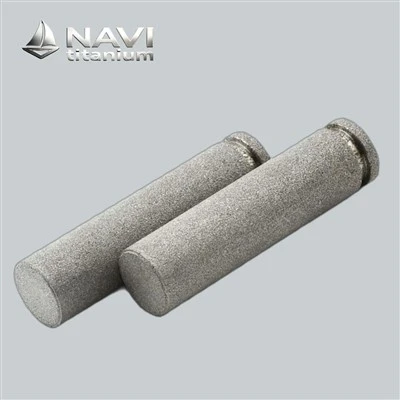
NAVI Titanium's ss sintered filter cartridge is a seamless, weld-free stainless steel tube built by isostatically pressing and vacuum-sintering 316L powder into a depth-type porous wall that traps particles throughout its thickness. Commercially, buyers choose us for shorter payback: each cartridge is backwashable and chemically regenerable, so one unit replaces hundreds of disposable elements; stable micron ratings protect downstream valves and catalysts; and factory-direct pricing with documented COA traceability removes the risk premium usually carried by imported filter media.
Solution of NAVI Titanium
NAVI Titanium grows these porous metal bodies through a mature powder-metallurgy route: compaction followed by high-vacuum sintering bonds each grain without binders, leaving uniform, interconnected channels controlled by powder cut and sintering profile. The result resists acids, alkalis and chlorides, stays dimensionally stable under heat and pressure, is biocompatible, and accepts in-situ regeneration by backwash, ultrasonic or chemical cleaning. Share your micron, permeability and flow: our tunes grade, wall thickness and geometry to match.


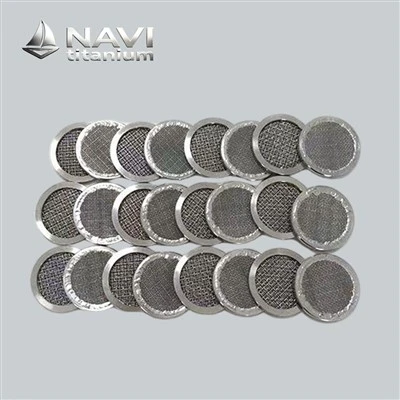
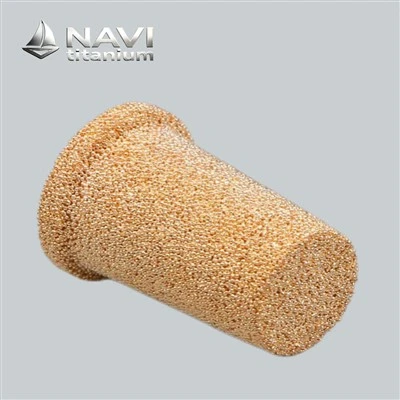
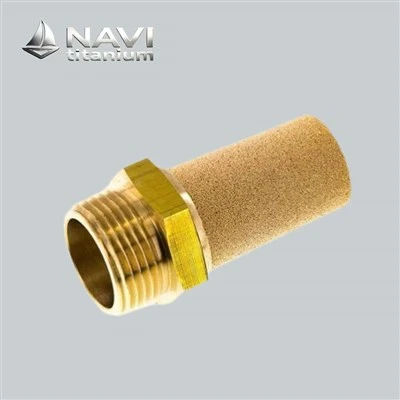
Beyond stock straight tubes, NAVI Titanium forms these elements as tapered cones, domed end caps, stepped multi-diameter bodies, flat discs, plates and threaded adapters. Client drawings are welcome: send a STEP file or sketch and we will match the profile to your housing, tank nozzle or vessel internals, keeping pore structure and media grade unchanged. Prototype samples ship before tooling.


Application
Harsh duties punish ordinary media in two ways: it sheds into the product stream, or it blinds early and forces an unplanned shutdown. Across chemical processing, gas handling and sterile manufacturing, NAVI Titanium's weld-free metal cartridges remove both failure modes, then return to service after cleaning instead of going to disposal. Polysilicon production and medical filtration show the contrast clearly.
Polysilicon
Polysilicon plants push filter media to its limits: chlorosilane and hydrogen streams carry fine silicon dust at elevated temperature and pressure, where any trapped fibre or stray metal ion can downgrade an entire solar-grade batch. We supply ss sintered filter cartridges rated from 0.5 to 20 micron for these duties. The monolithic wall contains no binder to outgas and no fibre to shed, so the product stream stays clean and downstream distillation columns stay free of debris. Because the body is solid metal, it survives the thermal shock of repeated start-ups, and after blinding it recovers most of its original permeability through reverse-flow blowback or controlled acid pickling. Where standard ceramic candles must be replaced several times each year, one NAVI Titanium set routinely spans multiple campaigns, cutting both shutdown hours and waste disposal cost. Returned elements regenerate rather than retire: reverse-flow blowback recovers over 90% of original permeability.


Medical Filtration Applications
Medical and pharmaceutical lines filter for a different reason: patient safety. Every surface touching product or process gas must be cleanable, verifiable and free of extractables. NAVI Titanium builds these cartridges from virgin 316L powder, then cleans and passivates the porous wall so it resists rouging and survives repeated steam sterilisation. Typical duties include sterile venting on fermenters and buffer tanks, nitrogen and compressed-air polishing ahead of aseptic filling lines, WFI pre-filtration, and containment of fine API or implant-grade metal powder during milling. Biocompatibility documentation referenced to ISO 10993 can be supplied on request, and each lot carries full heat traceability for the IQ/OQ file your validation team maintains. Solid and seam-free, it sheds no fibre into injectable product and swells no adhesive during SIP cycles - two failure modes validation routinely flags with polymer pleats. Sealing options cover EPDM, silicone, Viton and PTFE to match autoclave, SIP and gamma cycles.
Purchasing guide

Quality control (QC)
Every ss sintered cartridge leaving NAVI Titanium's ISO 9001 certified factory is backed by paperwork you can audit. Each melt heat is traced, each production batch measured for pore grade, bubble point and dimensional tolerance. Please click the button below to review our sample certificates of analysis, inspection reports and material data sheets. Lot-specific copies ship with your order.

Manufacturing Process
NAVI Titanium stainless steel sintered filter cartridges are manufactured via professional powder metallurgy and high-temperature vacuum sintering technology. With standardized raw material treatment, layered molding, integral sintering and precision post-processing, the whole production process ensures uniform micropore structure, stable filtration precision, high mechanical strength and outstanding corrosion resistance for long-term industrial filtration service.

1. High-Grade Stainless Steel Powder Selection and Grading
We use carefully selected 304 and 316L stainless steel powders with controlled purity and dependable chemical composition. Incoming materials are screened, fractionated and cleaned according to specified micron ranges before production. A well-controlled particle size profile helps establish the required pore dimensions, airflow characteristics and filtration precision across the finished elements.

2. Accurate Mold Loading and Isostatic Pressing
The classified stainless steel powder is distributed evenly inside purpose-built cylindrical molds. Through isostatic compaction, pressure is applied uniformly from multiple directions to produce dense, uniform green bodies with minimal cracking. Controlled filling and compression help maintain wall thickness, internal geometry and roundness throughout the filter element.

3. High-Temperature Vacuum Integral Sintering
The compacted green bodies are transferred to a high-temperature vacuum furnace for thermal consolidation. With carefully regulated heating and vacuum conditions, individual stainless steel particles bond at their contact areas while retaining the designed porous structure. This stage establishes the metal framework and contributes to the cartridge's rigidity, pressure capability and dimensional stability.

4. Precision Machining and End Finishing
Once the sintered bodies have cooled, they are processed through precision cutting, length adjustment, end-face machining and edge deburring. Depending on the project specification, threaded sections, welded flanges and connection fittings can also be fabricated. Critical dimensions and mounting interfaces are checked to achieve accurate installation within the designated filter housing.

5. Ultrasonic Cleaning and High-Purity Treatment
Completed elements undergo multiple cleaning stages, including ultrasonic washing, compressed-air purging and, where required, passivation. These operations remove residual particles, machining fluids and surface contaminants from the component and its pore passages. The resulting clean media is prepared for applications where filtration purity and low contamination are important.

6. Strict Batch Testing and Standard Packaging
Each production batch is evaluated through pore-size measurement, air-permeability analysis, pressure testing, dimensional checks and visual examination. Approved elements are dried before being sealed and vacuum-packed for shipment. Inspection records and product documentation can be provided according to project requirements, supporting applications in gas purification, liquid separation, chemical processing and pharmaceutical production.
Technical Data Tables
NAVI Titanium ss sintered filter cartridge behaves nothing like a disposable pleated element: it costs more on day one, less by year three. The table below compares service life, temperature and regeneration across four media used in the same housings, including woven wire mesh. Read the regeneration row that decides how often your line stops, not how much it costs. Typical data, reference only.
SS Sintered Cartridge vs Alternative Filter Media
|
Item |
NAVI Titanium SS Sintered Cartridge |
Pleated PP / Glass Fibre Cartridge |
Ceramic Candle |
Woven Stainless Steel Mesh |
|
Typical service life |
2 – 5 years, regenerable |
1 – 8 weeks, single-use |
6 – 12 months |
1 – 3 years |
|
Max. continuous temperature |
400 – 600 °C |
60 – 120 °C |
800 – 1000 °C |
400 – 550 °C |
|
Filtration mechanism |
Depth, tortuous pore channels |
Surface / depth pleat pack |
Depth, irregular grains |
Surface sieving |
|
Fine-particle retention |
0.5 μm absolute achievable |
0.5 – 1 μm but unstable when wet |
1 – 10 μm |
Limited by aperture, usually ≥ 20 μm |
|
Regeneration |
Backwash, ultrasonic, pickling, burn-out |
Not regenerable |
Backwash only, fragile |
Backwash, ultrasonic |
|
Pressure / shock behaviour |
Good, no media migration |
Creep, pleat collapse |
Brittle to thermal shock |
Good, but may deform and open apertures |
|
Media shedding risk |
None - monolithic metal |
Fibre shedding risk |
Particle shedding risk |
Wire breakage risk at seams |
|
Relative annual consumable cost index* |
1.0 (baseline) |
3.5 – 6.0 |
2.5 – 4.0 |
1.8 – 2.5 |
*Index reflects typical replacement plus disposal cost over a two-year window in a continuous-duty line. Reference only.
Recommended Cleaning Method by Fouling Type
|
Fouling type |
Typical source |
Recommended regeneration |
Expected permeability recovery |
|
Loose particulate cake |
Silicon dust, catalyst fines |
Reverse-flow blowback with dry gas |
90 – 98% |
|
Soft organic deposit |
Polymer residue, fermentation broth |
Alkaline soak followed by reverse rinse |
85 – 95% |
|
Inorganic scale |
Carbonate, oxide scale |
Dilute nitric acid pickling, passivated afterwards |
80 – 90% |
|
Carbonised matter |
Pyrolysis products |
High-temperature burn-out then ultrasonic clean |
88 – 96% |
NAVI Titanium - Proven Partnerships, Verified Trust
Replacing Ceramic Candles in a European Polysilicon Line
A European photovoltaic-material producer running two chlorosilane loops was replacing ceramic candles roughly every nine months, and each outage cost a full production shift plus hazardous-waste handling for the broken elements. NAVI Titanium reviewed the duty, sampled the dust, and recommended a 5 μm ss sintered filter cartridge with 3 mm wall and flanged end caps sized to their existing vessel nozzles, so no housing modification was needed. After the first campaign the plant ran six reverse-blowback cycles without removing a single cartridge, and differential pressure after regeneration tracked within 8% of the start-up value. Their maintenance lead reported that consumption dropped to roughly one third of the previous volume, and the line has since standardised NAVI Titanium geometry across the second reactor train as well. We also trained their operators on blowback sequencing and supplied a written regeneration procedure, so plant staff no longer wait for external service between campaigns.


Quality Evidence Buyers Accept Without Argument
Trust is easier to claim than to prove, so NAVI Titanium builds it into the paperwork. Every cartridge can ship with batch-level bubpoint and permeability records, material certificates traceable to the original melt heat, and dimensional reports signed off before packing. Third-party inspectors are welcomed at our ISO 9001 certified facility: SGS, BV and customer-nominated auditors regularly witness testing here, and export documentation - including EN 10204 declarations, RoHS and REACH statements - is prepared as routine rather than exception. The attitude behind this is straightforward: we would rather spend an afternoon answering an inspector's questions than argue about a specification months later. Buyers in Europe and North America tell us this is the reason their purchase department approves repeat orders without a new supplier qualification round. Spare parts stay in stock for repeat customers, so urgent replacements ship within days. Every shipment carries an audit-ready batch number matching its test record.
What Customers Say After Commissioning
After commissioning, feedback usually converges on the same three points. Process engineers value that the micron rating stays where the datasheet says it is, even after multiple cleaning cycles - "we planned our polishing loop around 5 μm and it never drifted," wrote one German systems integrator. Maintenance teams appreciate regeneration: a plant engineer in Texas noted that backwashing takes twenty minutes instead of a full ss sintered filter cartridge change-out, which means no confined-space permit and no consumable stock to manage. Purchasing teams mention responsiveness - drawings returned within days, prototypes shipped before payment of tooling, and real answers about lead time. A distributor serving Southeast Asian food and beverage customers summed it up as "the specification sheet matches the delivered part," which, in this industry, is a compliment worth repeating. Several customers hold NAVI Titanium elements as safety stock rather than sourcing locally, which their auditors consider evidence of a qualified supply chain.

FAQ
How many years does one cartridge last, and how do I know when it is finished?
+
-
Service life depends on duty, typically 2 to 5 years with proper regeneration, and the indicator is differential pressure rather than calendar time. Log cleaning cycles: when post-cleaning differential pressure stays above roughly 150% of start-up value, or flow no longer recovers, the element is genuinely spent. We provide a start-up reference reading with every batch so you have a baseline.
What is the correct cleaning procedure, and what should never be done?
+
-
Use reverse-flow blowback with clean gas first, then ultrasonic cleaning in deionised water for fine fouling; alkaline soak suits organics, dilute acid suiting scale. Always rinse to neutral and repassivate after acid pickling. Never use hydrochloric acid or chloride-containing cleaners on stainless media - pitting is permanent. Avoid wire brushing the surface, which smears metal over pore mouths. We can regenerate returned cartridges.
Which end-fitting and thread standards do you match? (US / Europe / Japan buyers)
+
-
We machine fittings to 222 and 226 O-ring, DOE flat gasket, NPT, BSP, metric DIN and JIS threads, as well as sanitary clamps for hygienic lines. European customers frequently request DIN connections, North American plants use NPT or sanitary tri-clamp, and Japanese and Korean buyers typically specify JIS dimensions. Send a drawing or an existing sample and we will match it exactly, including gasket material specification.
Will this cartridge contaminate our product? What documentation supports that?
+
-
316L media contains no binders, no adhesives and no lubricants after sintering, so there is nothing to extract into your product, and there is no fibre or particle shedding. Surfaces are pickled and passivated, then electropolished where required. Documentation can include the material certificate with melt-heat traceability, EN 10204 statements, RoHS and REACH declarations, and biocompatibility testing referenced to ISO 10993 for medical or food-contact applications.
What quality checks run before shipment, and how fast can a custom drawing be delivered?
+
-
Each batch receives bubble-point testing, permeability measurement, dimensional inspection, weld integrity and surface checks, with batch numbers recorded for traceability. Standard sizes usually ship in 10 to 15 days; customised shapes based on your drawing take about 20 to 30 days including prototype sampling. Third-party inspection before shipment is supported, and we provide a complete written quality file with every delivery.
Hot Tags: ss sintered filter cartridge, China ss sintered filter cartridge manufacturers, suppliers, factory, instrumentation porous metal filter, micron rated sintered porous metal filter, Sintered Bronze Filter Element, Sintered Bronze Sheet, Sintered Metal Powder, Sintered Powder Filter Cartridge