

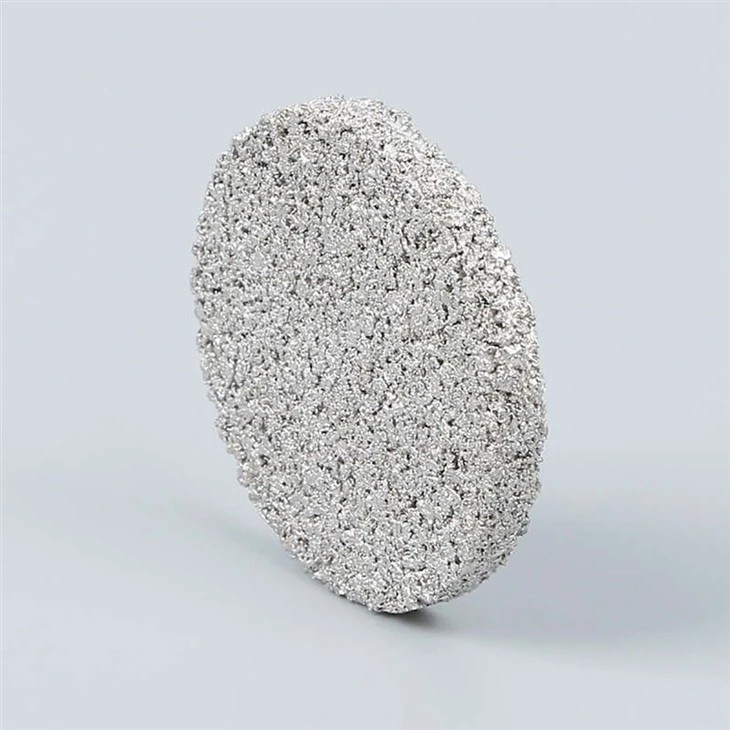

NAVI Titanium supplies porous filter solutions for controlled gas and liquid passage, with pore characteristics tailored to demanding process requirements. Our production capability covers small laboratory batches through volume orders, supported by vacuum sintering furnaces, precision forming units, CNC machining centers, ultrasonic cleaning systems, and automated inspection instruments. Each batch can be evaluated for dimensional tolerance, permeability, surface cleanliness, and pressure resistance before dispatch.

Solution of NAVI Titanium


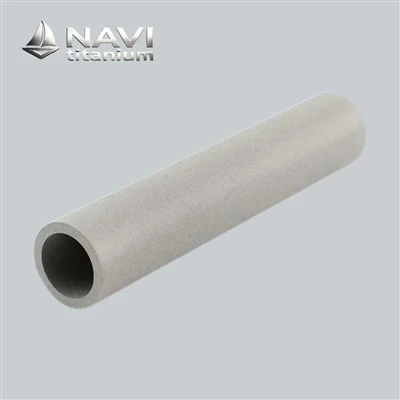
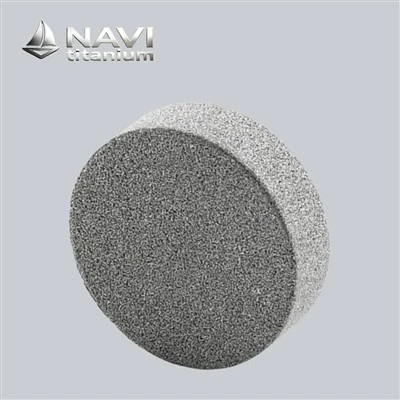
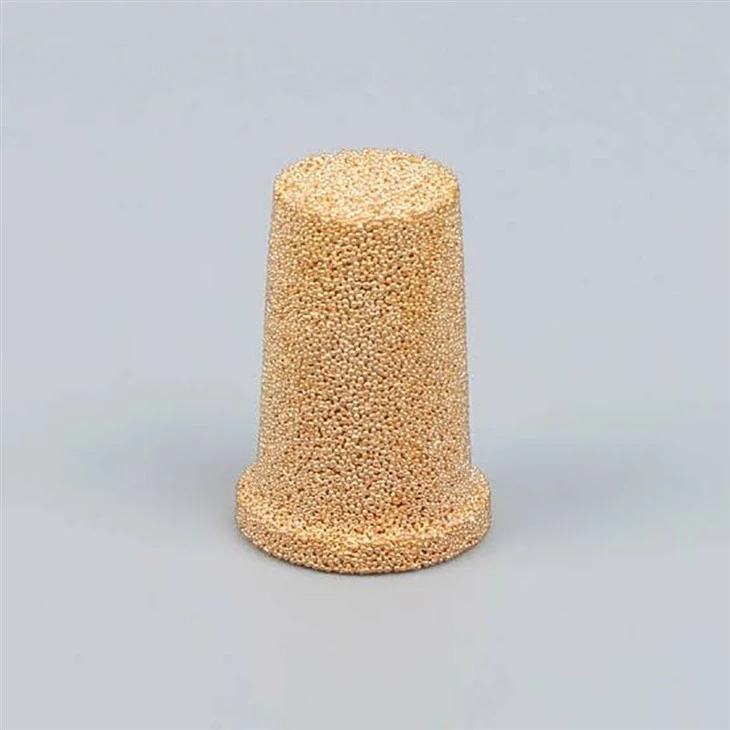
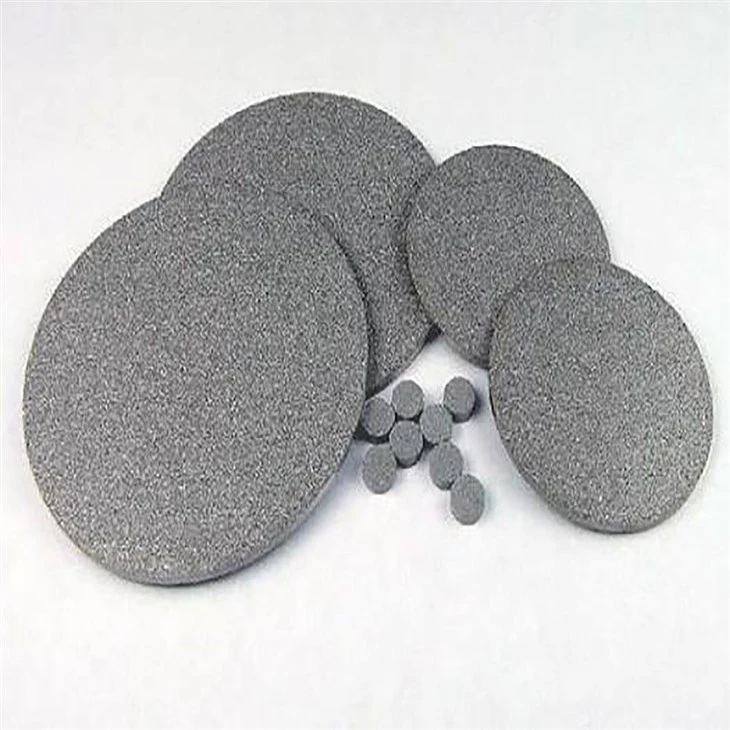
NAVI Titanium presents a precision-engineered porous filter material featuring interconnected passages and a controlled pore-size distribution. Microscopic characteristics, dimensional consistency, and surface condition can be evaluated to correlate morphology with hydraulic performance, pressure response, and service requirements in demanding process systems.


Application
NAVI Titanium porous filter supports high-purity gas handling in semiconductor processing and hydrogen systems, enabling controlled particle retention, uniform gas passage, and dependable operation across demanding process environments.
NAVI Titanium supports semiconductor fabrication and precision electronics processing, where gas purity directly influences deposition uniformity, chamber cleanliness, and wafer-level yield. Sintered metallic media are employed as inline gas-cleaning interfaces to intercept particulate contaminants while maintaining controlled gas throughput. Their interconnected pore network provides a defined permeability regime, allowing engineers to balance particle retention against pressure drop rather than relying solely on nominal pore size. This is particularly important for high-purity nitrogen, argon, hydrogen, and process-gas distribution, where unstable flow resistance can disturb pressure control or mass-transfer conditions. Fine-particle retention is also critical upstream of mass-flow controllers, vacuum equipment, and sensitive process chambers, where particulate ingress may generate defects or accelerate component wear. Compared with fibrous alternatives, a sintered construction offers a mechanically robust matrix capable of tolerating repeated thermal cycling, differential pressure, and cleaning procedures. Material selection, pore-size distribution, thickness, and surface finish can therefore be coordinated according to gas composition, operating temperature, cleanliness requirements, and allowable pressure loss.

2. Hydrogen & Specialty Gas Systems

NAVI Titanium supports hydrogen production, purification, and specialty-gas handling requiring controlled fluid passage under conditions where contamination, pressure fluctuation, and material compatibility can strongly affect downstream operation. Sintered media can function as particulate-retention and gas-diffusion interfaces within purification trains, pressure-control assemblies, electrolyzer auxiliaries, and laboratory-scale gas systems. Their three-dimensional pore architecture enables distributed flow across the available cross-section, reducing localized jetting and helping maintain more uniform gas transport. For hydrogen service, permeability must be evaluated together with pore morphology, wall thickness, differential pressure, and operating temperature because excessive resistance can increase system energy demand, while insufficient retention may allow particulate migration into valves, sensors, membranes, or downstream reactors. Metallic compositions such as stainless grades or nickel-based materials can be selected according to thermal exposure and chemical environment. For B2B procurement, parameters including nominal permeability, bubble-point behavior, dimensional tolerance, surface cleanliness, and pressure resistance are often more meaningful than pore size alone.
Purchasing guide

Quality control (QC)


Global Freight Planning
For buyers handling time-sensitive projects, air freight is suited to orders where delivery speed has a greater priority than freight economy. This option is particularly practical for higher-value goods, trial quantities, replacement units, and medium-volume purchasing schedules that cannot justify a long transit cycle. Before dispatch, NAVI Titanium can organize dimensional verification, quantity checks, protective wrapping, outer-case selection, and export documentation according to the agreed order requirements. Freight arrangements can be planned around cargo dimensions, gross weight, destination airport, and requested arrival window. For procurement teams coordinating installation, maintenance, pilot production, or urgent replenishment, faster international transit can reduce inventory gaps and help keep project schedules moving. Buyers can also request shipment information covering carton dimensions, gross weight, package quantity, commercial invoice details, and other documents required by their forwarder or customs broker. This approach gives overseas purchasers clearer visibility before the cargo leaves the origin and makes air transport easier to coordinate with internal receiving schedules.

Sea Freight - Economical Planning for Larger Volumes

For bulk purchasing, heavier consignments, and recurring procurement programs, sea freight offers a practical route where transit time can be planned in advance. Larger orders can be arranged according to cargo volume, gross weight, destination port, container utilization, and preferred sailing schedule. NAVI Titanium can prepare protective outer packaging suited to the dimensions and quantity of the goods, helping reduce movement during extended international transit. Prior to dispatch, buyers may confirm carton counts, package measurements, gross weight, documentation requirements, and destination information with their nominated forwarder. This is particularly useful for distributors, system builders, OEM purchasers, and project contractors placing consolidated orders rather than small urgent lots. Sea transport can also support purchasing plans with longer replenishment cycles, allowing buyers to coordinate production schedules and warehouse capacity around expected arrival periods. When several specifications are purchased together, cargo consolidation may further simplify freight coordination and reduce the need for multiple individual consignments, making this route suitable for larger-volume international sourcing programs.
Specialized Gas Handling & Pressure Equalization
NAVI Titanium porous filter supports controlled gas dispersion and pressure equalization through tailored pore distribution, helping maintain uniform gas passage and balanced pressure across demanding process assemblies.
In gas diffusion and sparging assemblies, pore-size distribution directly affects bubble formation, gas throughput, and dispersion uniformity. A finer pore population may generate smaller bubbles under suitable pressure, increasing the gas–liquid contact area, while larger passages can lower resistance and support higher throughput. For procurement teams, the relationship between gas flow, inlet pressure, and bubble pattern is often more meaningful than nominal pore size alone. Hydrogen, nitrogen, oxygen, and compressed air may require different permeability ranges according to viscosity, supply pressure, liquid depth, and target dispersion rate. Local blockage can create preferential channels, causing uneven release across the active area and increasing localized pressure demand. Installation orientation also deserves attention because gravity, liquid head, and mounting position can alter gas distribution. NAVI Titanium can assess pore grade, thickness, dimensions, connection format, and permeability according to the intended sparging assembly. Such parameters help buyers evaluate expected pressure drop and gas distribution before selecting a suitable specification for continuous operation.

porous media filter for Pressure Equalization

Pressure-equalization assemblies require controlled gas passage while limiting unwanted ingress of liquid and particulate matter. This principle is useful in sealed housings, vacuum chambers, gearboxes, sensor enclosures, pneumatic assemblies, and chemical containers exposed to changing temperature or pressure. During heating and cooling cycles, trapped gas expands or contracts, creating a breathing effect that can generate differential pressure across the enclosure. A controlled pore pathway allows gradual pressure balancing without leaving the interior fully exposed to the surrounding environment. For B2B buyers, key considerations include permeability, pore grade, thickness, mounting orientation, pressure differential, liquid-repellency requirements, and compatibility with the surrounding housing. Excessive resistance may delay pressure equalization, whereas overly open passages may permit undesirable ingress. NAVI Titanium can supply configurations matched to enclosure dimensions, threaded fittings, welded joints, or other mounting arrangements. Evaluation can include dimensional checks, permeability assessment, surface cleanliness, and pressure-response testing, giving purchasers useful technical references.
Powder Purity and Vacuum Performance
NAVI Titanium porous filter relies heavily on feedstock purity because residual oxygen, moisture, carbonaceous species, and other volatile impurities can become embedded or adsorbed during consolidation, subsequently releasing under vacuum or elevated temperature. Such desorption can raise background pressure, introduce condensable species, and compromise gas-control accuracy. Fine feedstock also presents a high specific surface area, making surface chemistry and absorbed moisture particularly important during thermal processing. For vacuum service, low outgassing is therefore not simply a material attribute; it is linked to feedstock cleanliness, thermal history, pore morphology, surface preparation, and final cleaning. High-purity feedstock can reduce potential sources of volatile release and unwanted deposition, supporting cleaner gas passage and more predictable pressure regulation. During prolonged thermal exposure, controlled chemistry also helps limit oxidation-related changes and preserve dimensional characteristics. NAVI Titanium can assess key parameters such as raw-material grade, impurity profile, pore-size distribution, permeability, dimensional tolerance, and thermal-processing history, enabling purchasers to correlate feedstock quality with vacuum performance, pressure response, and long-term service behavior.

FAQ
1. Can dimensional tolerances be controlled for OEM procurement?
+
-
Yes. Key dimensions such as diameter, thickness, length, aperture position, and connection dimensions can be controlled according to agreed drawings or technical specifications. Inspection records can also be prepared for batch verification before dispatch.
2. How is permeability evaluated before shipment?
+
-
Permeability can be assessed through controlled gas-flow testing under defined pressure conditions. The resulting data can help purchasers compare different pore grades and establish a suitable relationship between flow rate, pressure drop, and gas passage requirements.
3. What surface and cleanliness requirements can be specified?
+
-
Surface cleanliness can be addressed according to the intended service environment. Options may include controlled cleaning, removal of loose residues, visual inspection, dimensional verification, and specified handling practices to reduce unwanted contamination before final dispatch.
4. How does feedstock purity affect vacuum outgassing?
+
-
Higher feedstock purity helps reduce residual oxygen, moisture, carbonaceous substances, and other volatile residues that may be released during vacuum operation or heating. For purchasers, the impurity profile is therefore an important reference when low outgassing and clean gas passage are required.
5. Which pore-size range can be supplied?
+
-
Different pore grades can be produced according to required permeability, pressure drop, and particle-retention characteristics. Buyers can specify the target pore range, thickness, outer dimensions, and required gas-flow performance for specification matching.
Hot Tags: porous filter, China porous filter manufacturers, suppliers, factory