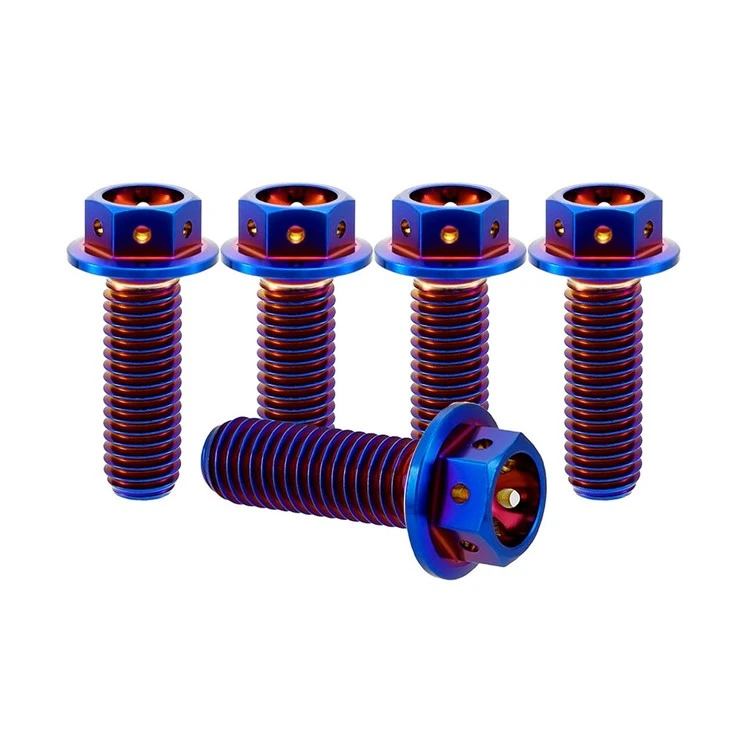
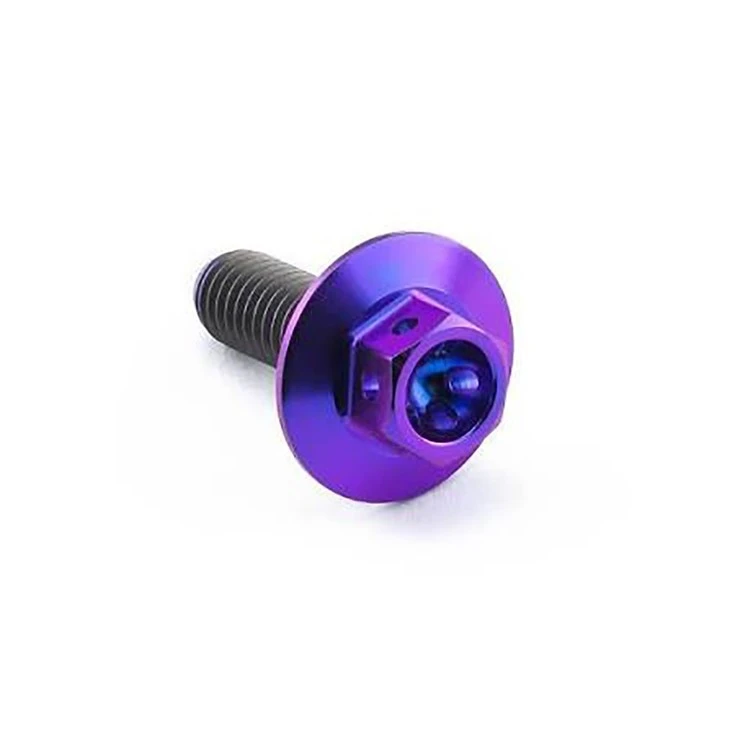
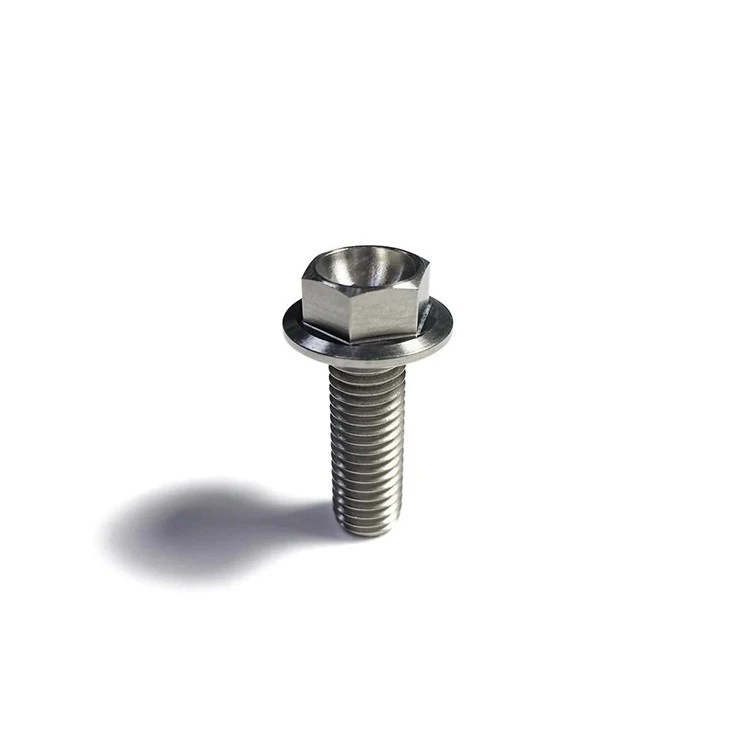
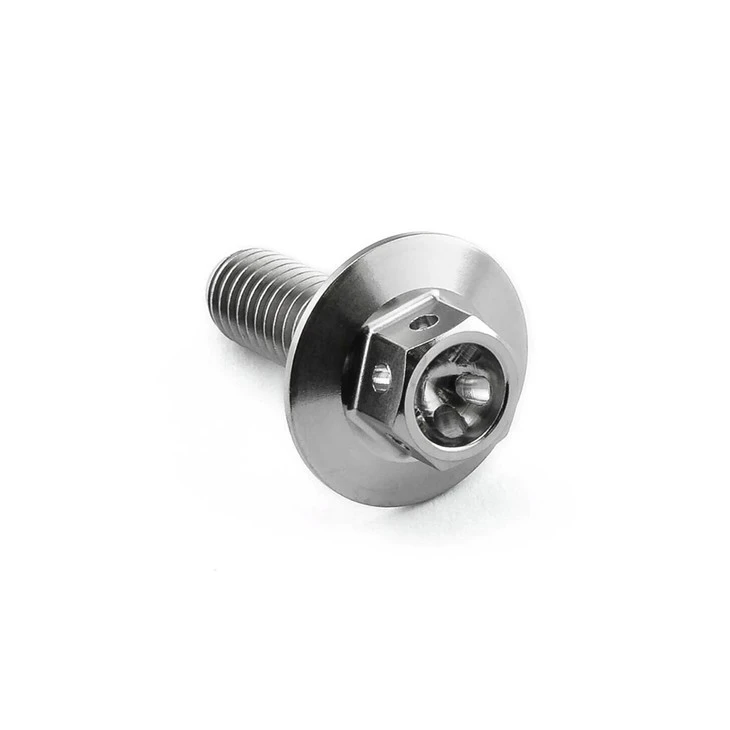
NAVI Titanium presents titanium flange bolts for motorcycle assemblies. For distributors, regional market development depends on dependable communication, clear product identification, and repeatable ordering arrangements across multiple sales channels. Strategic partnerships can extend beyond routine transactions to include shared demand forecasting, coordinated inventory planning, technical document exchange, and early discussion of emerging model-specific demand. Such cooperation gives importers and wholesalers a stronger basis for managing regional stock, supporting downstream retailers, and evaluating long-term commercial opportunities.

Solutions of NAVI Titanium
NAVI Titanium develops commercial relationships with regional distributors and strategic partners serving motorcycle, automotive, and mechanical engineering markets. For businesses evaluating titanium bolt manufacturers, an established partnership can simplify portfolio selection, replenishment discussions, and coordination between importers, wholesalers, and downstream retailers. Broader cooperation may also involve sharing market feedback, identifying emerging model-specific demand, and aligning purchasing schedules with regional sales patterns.


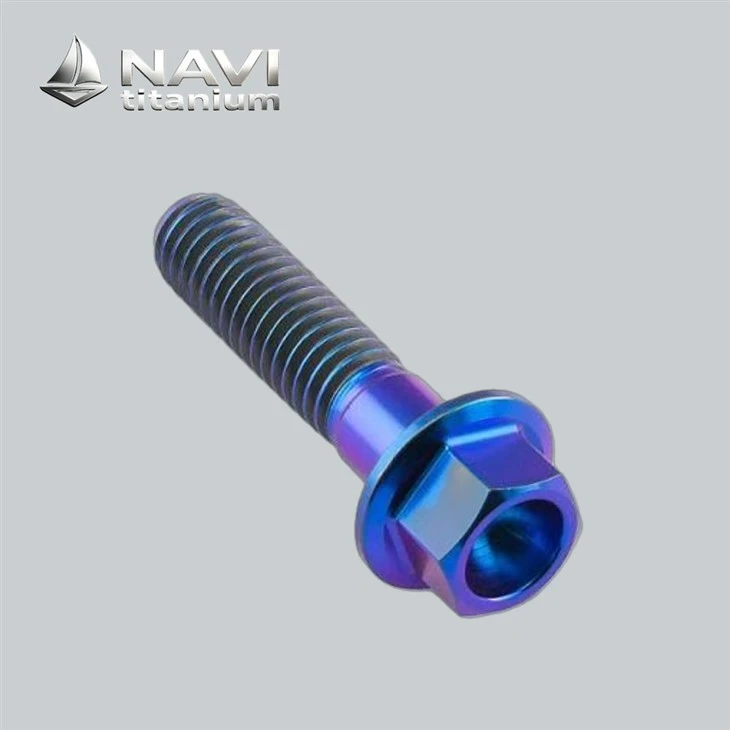
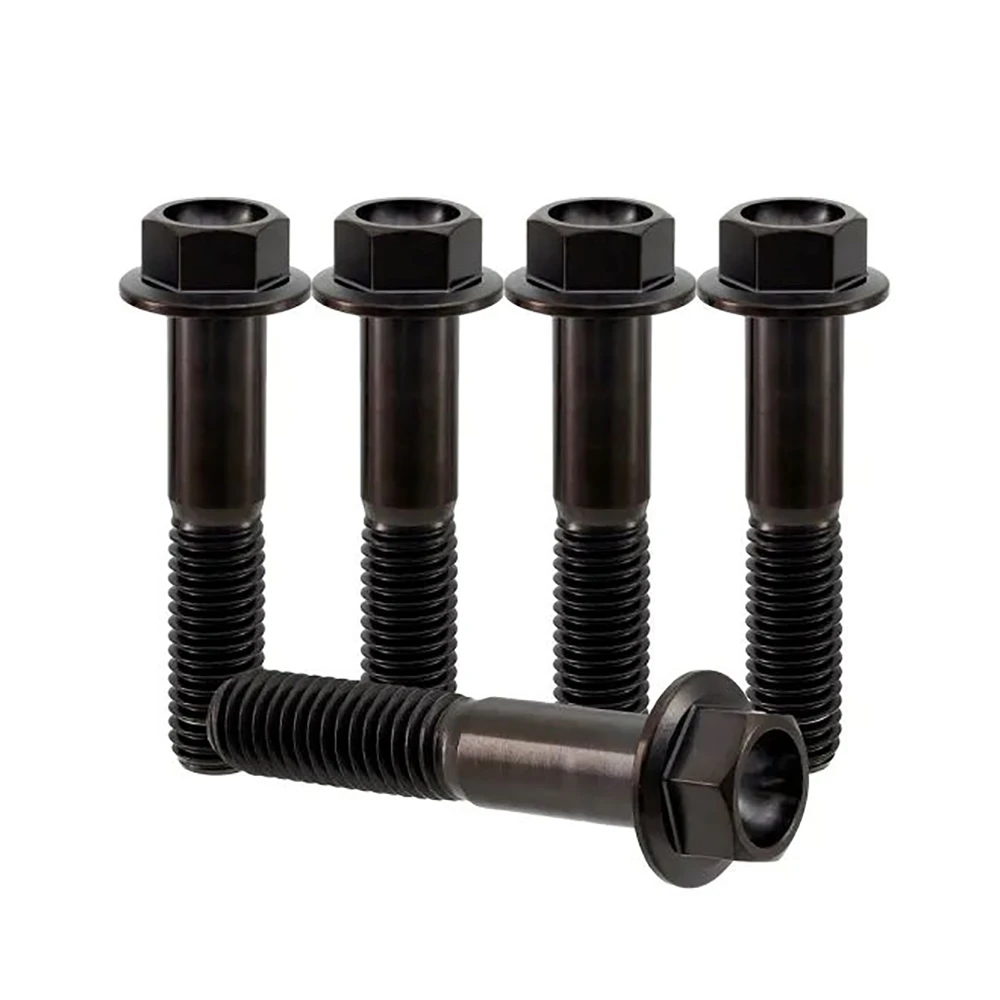
NAVI Titanium examines flange architecture through bearing-area distribution, head-to-joint contact, and load-transfer behavior. The integrated lower flange broadens the supporting footprint beneath the hexagonal head, influencing local compressive stress and seating stability.
Application
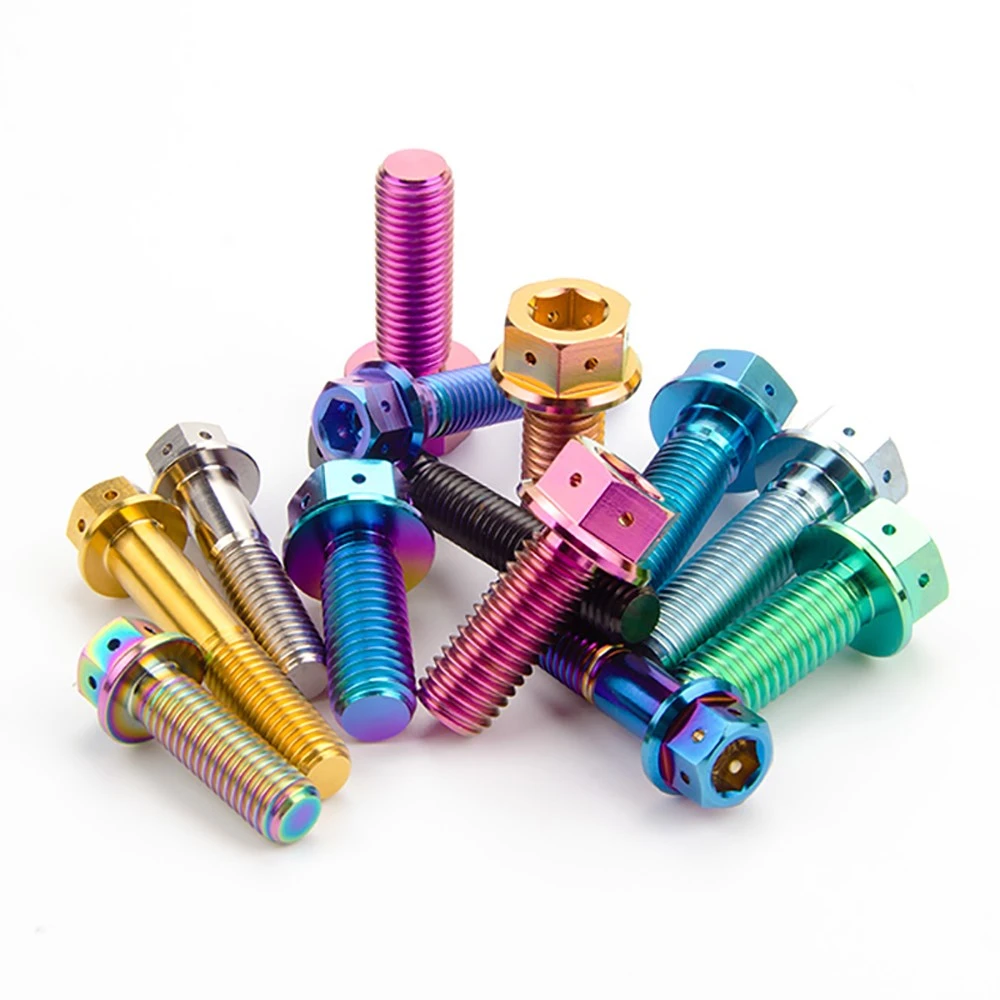
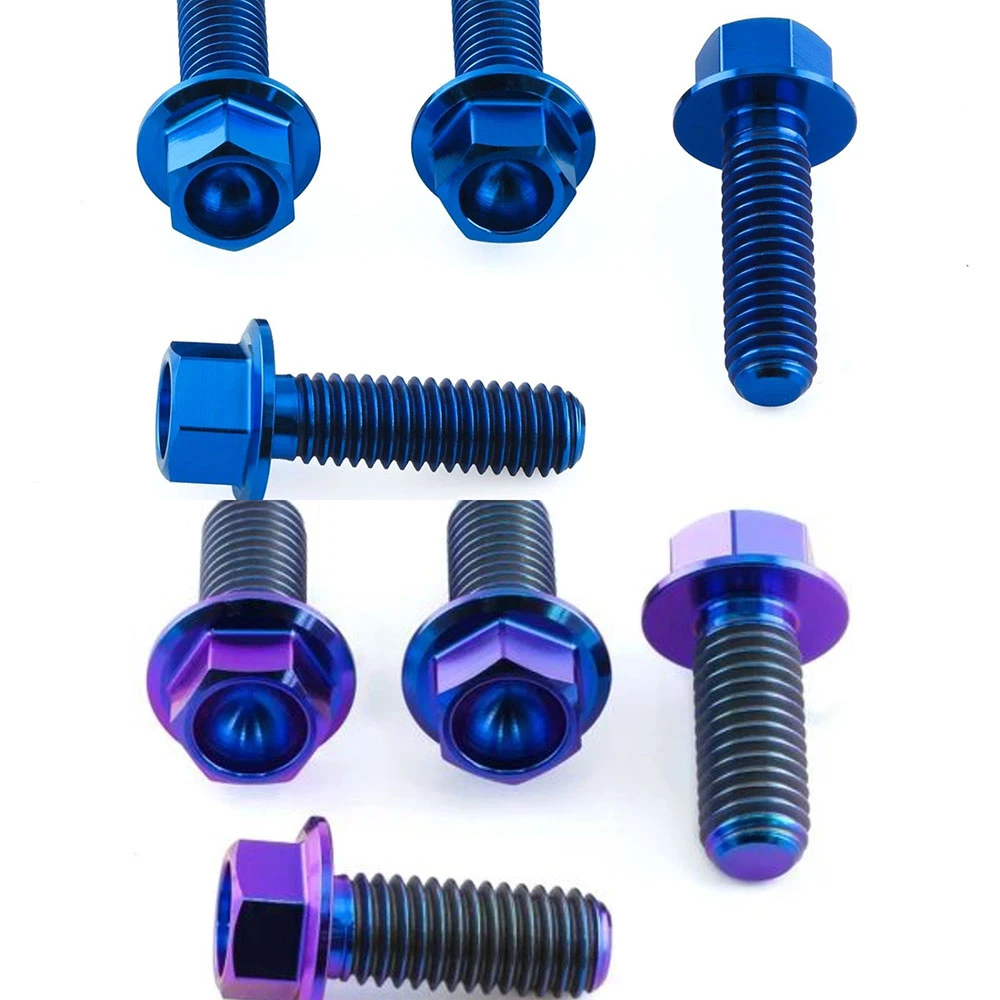
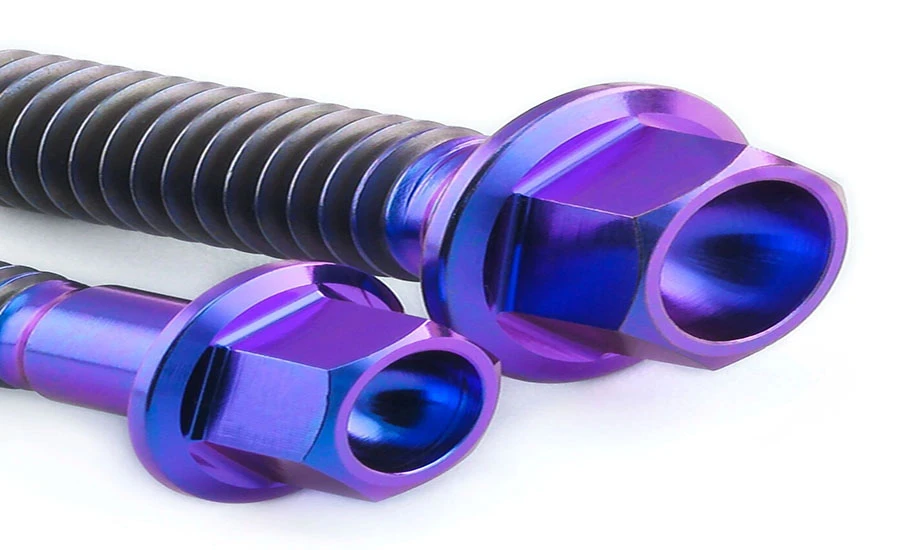
NAVI Titanium titanium flange bolts feature an integrated bearing flange that promotes more uniform contact pressure, simplifies joint assembly, and supports reliable load transfer in motorcycle and mechanical applications.
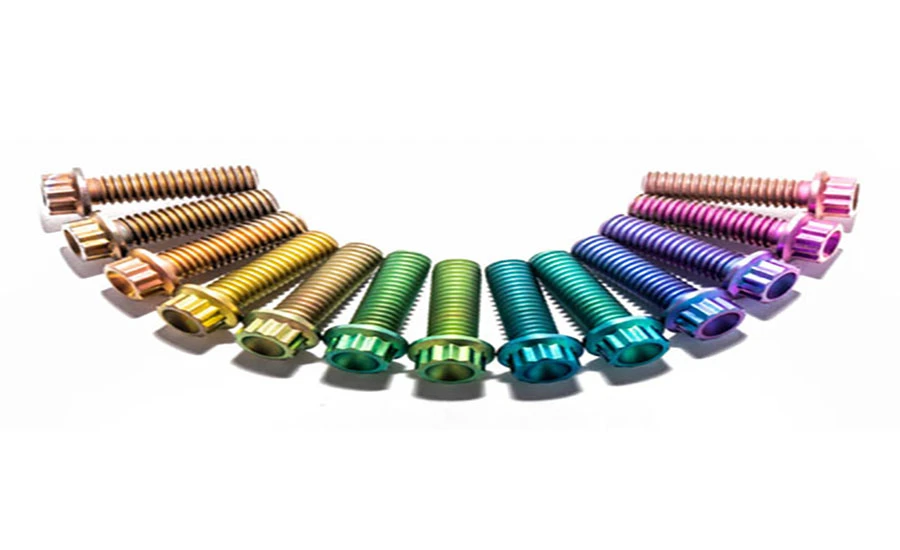
The flange configuration is distinguished by a broad, disc-like bearing extension beneath the external hexagonal head. This integrated structure increases the contact area between the head and the adjoining component, altering the distribution of compressive stress across the joint interface. Compared with a conventional hexagonal head, the enlarged bearing face can reduce localized pressure when the clamped component has adequate stiffness and the mating surfaces are properly aligned. Its effectiveness, however, depends on flange diameter, bearing-face flatness, joint compliance, and the mechanical properties of the adjoining parts. In motorcycle assemblies, these factors become particularly relevant where aluminum housings, brackets, and lightweight structural members are involved. The flange is generally produced as an integral feature of the head, eliminating the need for a separate washer in applications where the joint design permits direct seating. This arrangement also reduces the number of loose components during assembly. A rigorous evaluation should consider contact pressure, bearing stress, head seating stability, and the possibility of local deformation under the specified clamping load.
2. Flange Seating Characteristics
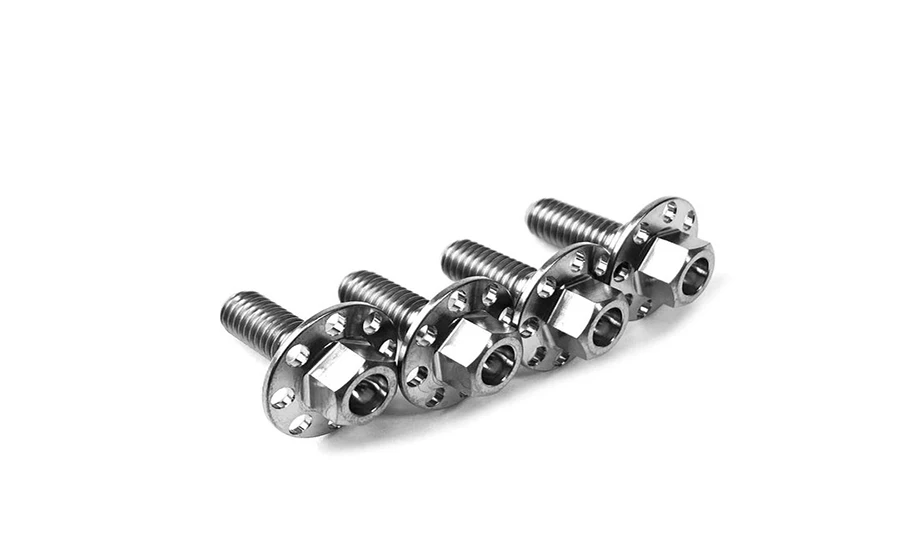
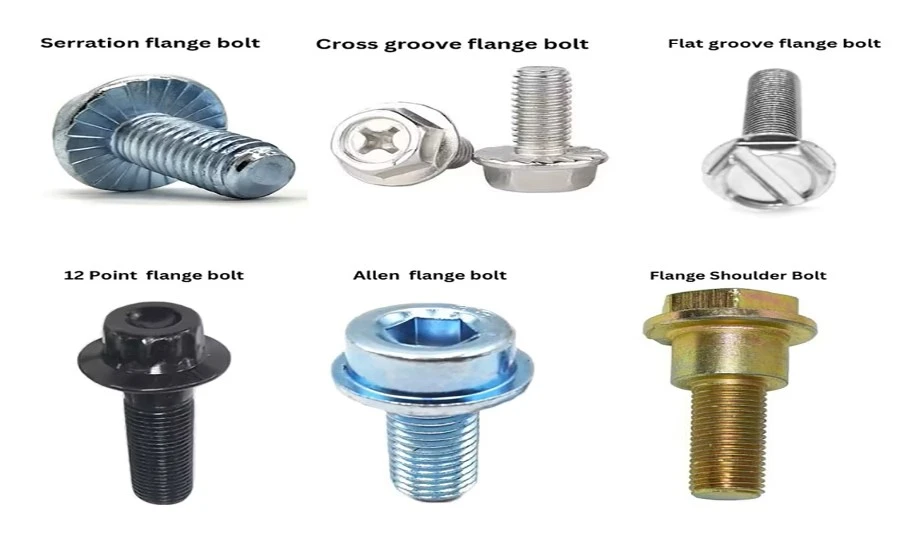
The underside of a flange determines how clamping force is transferred into the adjoining component. A smooth bearing face establishes contact primarily through its supporting area, whereas a serrated variant incorporates radial or circumferential teeth intended to increase resistance to relative rotation. These configurations are not mechanically interchangeable: serrations may improve rotational restraint under suitable conditions, yet they can also mark softer alloys, damage anodized finishes, or introduce localized stress concentrations. For motorcycle assemblies exposed to vibration, cyclic loading, and repeated servicing, flange selection should therefore account for joint stiffness, frictional behavior, substrate hardness, and the consequences of surface indentation. The external hexagonal perimeter provides access for conventional wrenches and sockets, while the flange extension determines the available bearing footprint beneath the head. Accurate seating is essential because uneven contact can produce nonuniform pressure and promote progressive loosening or local damage. Engineering assessment should distinguish resistance to rotation from resistance to clamp-load loss; the former does not independently guarantee the latter. The appropriate configuration ultimately depends on the joint's load path, adjoining component design, and intended service conditions.
Purchasing guide
Quality control (QC)
For flange-style components, consistent bearing-face characteristics and reliable mechanical performance are important considerations in motorcycle assembly. NAVI Titanium maintains technical records that document relevant composition data, mechanical characteristics, and traceability information, giving purchasing teams a clearer basis for reviewing specification conformity and assessing consistency across repeat orders.

Manufacturing Process
The manufacturing sequence begins with preparing the metal stock and establishing the hexagonal head profile, followed by producing the integrated flange beneath the head through controlled forging or precision machining, depending on the selected production route. NAVI Titanium gives particular attention to the transition between the head and the expanded bearing rim, where dimensional consistency influences seating contact and stress distribution. Subsequent machining establishes the required shank configuration, while thread rolling or cutting creates the helical engagement profile. Throughout production, concentricity between the shank and bearing face, flange flatness, and consistency of the hexagonal drive profile remain important process considerations. These characteristics determine how evenly clamping loads transfer into adjacent parts and whether the integrated flange provides stable support during assembly and service.
Flange Profile Control and Bearing Face Integrity
Maintaining a consistent external hexagonal contour requires coordinated control of die alignment, stock distribution, and machining allowance throughout production. The transition between the head and its expanded flange deserves particular attention because abrupt changes in cross-sectional area can create localized stress concentrations, while excessive variation may produce uneven seating against the adjoining component. During forging, die cavity accuracy and material flow influence the continuity of the hexagonal flats and the circular flange perimeter. Subsequent machining can refine critical contact regions where closer tolerances are necessary. Concentricity between the shank axis and flange center is another important consideration, since eccentricity may cause nonuniform pressure distribution under clamping loads. For motorcycle assemblies incorporating aluminum brackets, engine housings, and compact mounting points, these variations can affect joint stability and the appearance of exposed hardware. Process control should therefore address head symmetry, flange thickness consistency, transition radii, and the relationship between the bearing plane and the shank axis. Establishing these parameters early in production reduces corrective work and supports repeatable assembly behavior across recurring orders.
Bearing Face and Appearance Preservation
The flange underside serves as the principal load-transfer interface between the head and the adjoining component, making its condition important to both mechanical performance and visual presentation. Scratches, dents, embedded particles, or raised burrs can interrupt contact and create localized pressure peaks, particularly when the mating component is relatively soft. During intermediate handling, parts should be separated or positioned in suitable fixtures to prevent metal-to-metal impacts and abrasion between adjacent components. Dedicated trays, nonabrasive separators, and controlled transfer procedures can reduce damage to the bearing rim and exposed hexagonal flats. Where colored finishes are applied, contact with hard tools, contaminated work surfaces, or abrasive residues may cause visible marks or uneven coloration. Cleaning procedures should remove processing residues without introducing scratches or compromising the selected finish. The bearing face should also remain free from raised defects that could interfere with proper seating. For distributors serving motorcycle aftermarket channels, NAVI Titanium recognizes that consistent appearance across a retail assortment contributes to a more uniform presentation, while preserved contact areas reduce the risk of complaints associated with visible damage or irregular seating.
Installation Compatibility
An integrated flange creates a broader bearing footprint beneath the hexagonal head than a conventional head with a narrower supporting face. This difference affects how clamping pressure transfers into the adjoining component, particularly in motorcycle assemblies incorporating aluminum brackets, engine covers, and lightweight mounting structures. With an increased contact area, the average bearing pressure may decrease under an equivalent axial load, provided that the adjoining face remains sufficiently flat and the contact region is fully supported. However, a larger footprint does not automatically guarantee greater joint reliability; local stiffness, flange flatness, clamping force, and the condition of the mating surfaces remain influential variables. For distributors and component manufacturers, evaluating this relationship helps distinguish products intended for lightweight assemblies from those used at more heavily loaded connection points. Procurement discussions should address the actual bearing diameter, the supporting area available on the mating component, and the possibility of local indentation under repeated loading. Consistency in these characteristics also matters when replenishing inventory for established motorcycle models, since differences between production lots can affect assembly behavior and downstream customer satisfaction.
Flange Diameter and Available Clearance

The outer diameter of the flange must be assessed against the space surrounding the mounting hole rather than considered independently. Nearby ribs, recessed pockets, curved castings, adjacent connectors, and neighboring screw positions can restrict the available seating area. An excessively wide flange may overlap a raised feature, interfere with an adjacent component, or prevent the underside from contacting the intended bearing plane uniformly. Conversely, an undersized flange may leave insufficient supporting area around the hole, increasing local pressure on softer adjoining parts. For buyers, confirming these relationships before approving a purchase reduces installation disputes, unnecessary returns, and the cost of replacing incompatible stock. NAVI Titanium recommends that technical drawings identify the flange's outer diameter, the hole location, surrounding obstructions, and the available flat seating region. Where several motorcycle models share similar mounting points, a model-specific compatibility matrix can help distributors organize product references and reduce selection errors. Sample fitting against representative components is also useful when drawings omit casting irregularities or nearby clearance limitations. These checks establish a practical basis for purchasing decisions and repeat-order consistency across different sales channels.
Integrated Flange Versus Separate Washer Assembly
The structural distinction between an integrated flange and a conventional head paired with a separate washer lies in component arrangement, bearing contact, and assembly control. NAVI Titanium evaluates these factors for motorcycle applications where joint accessibility, load distribution, and repeatable installation influence purchasing decisions. An integrated flange combines the head and expanded bearing rim into one piece, whereas a separate washer introduces an additional interface that may affect alignment, friction, and component handling. Neither arrangement is universally superior; suitability depends on the adjoining part, clamping load, available clearance, and service conditions.
| Evaluation factor |
|
Separate washer |
| Component count | One-piece head assembly | Two loose components |
| Bearing footprint | Defined by the flange diameter | Determined by washer dimensions |
| Assembly handling | Fewer loose items to manage | Requires correct washer selection |
| Contact interfaces | Fewer component interfaces | Additional interface beneath the head |
| Service considerations | Integrated design stays together | Washer can be replaced independently |
For distributors and engineering buyers, titanium flange bolts can simplify inventory coordination while preserving a clearly defined bearing arrangement; selection should still follow the joint design and applicable load calculations.
FAQ
1. How can environmental management practices affect the reliability?
-
Effective environmental management includes controlling chemical discharge, collecting process residues, and maintaining appropriate wastewater treatment.
2. Can energy-efficient production contribute to more competitive purchasing costs?
-
Efficient equipment operation, optimized production schedules, and reduced idle time can lower energy consumption per unit.
3. How should production scrap be managed during manufacturing?
-
Metal offcuts, rejected components, and machining residues should be separated according to composition and recovery suitability. Documented collection and recycling procedures help reduce disposal volumes while improving resource accountability throughout production.
4. How does resource utilization affect long-term supply stability?
-
Efficient use of raw stock, cutting fluids, electricity, and process consumables can reduce unnecessary consumption.
5. Why is employee training relevant to consistent production quality?
-
Training in equipment operation, process parameters, handling procedures, and defect prevention helps workers recognize deviations before they affect subsequent operations.
Hot Tags: titanium flange bolts, China titanium flange bolts manufacturers, suppliers, factory