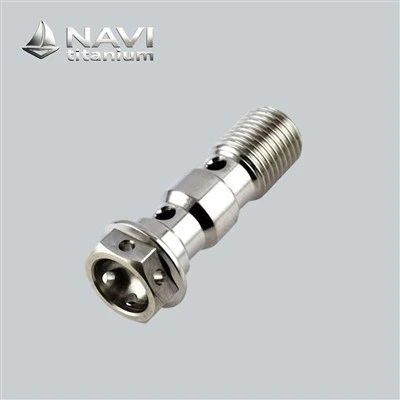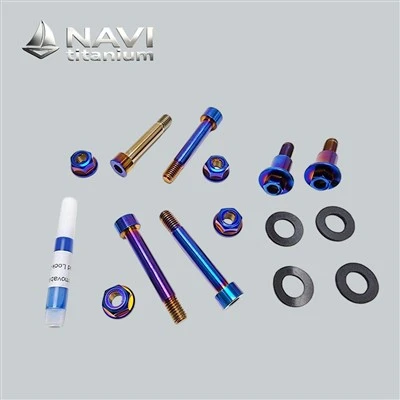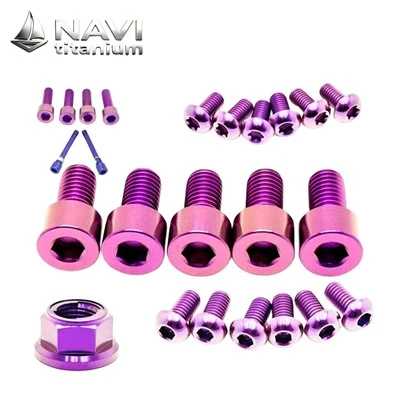


NAVI Titanium produces anodized titanium bolts for motorcycle applications, combining controlled oxide-film development with distinctive colour effects. Recent process improvements focus on electrolyte stability, electrical parameter calibration, and pre-treatment consistency, reducing variations caused by alloy composition and previous machining operations. Process optimization also involves bath monitoring, electrode positioning, and controlled rinsing sequences.


Solutions of NAVI Titanium
NAVI Titanium places particular emphasis on process optimization, with ongoing refinements in electrochemical treatment, oxide-film development, and production parameter control. For anodized motorcycle components, electrolyte management, electrical consistency, pre-treatment procedures, and post-process rinsing are important factors in achieving repeatable colour effects and stable film characteristics.


NAVI Titanium adopts electrochemical surface conversion technology to investigate oxide-film development, optical interference, and colour stability across different production conditions.


Application
NAVI Titanium applies controlled electrochemical oxide development to anodized titanium bolts, combining optical colour variation with consistent film formation and practical considerations for motorcycle assembly and service performance.
Anodizing is an electrochemical conversion process in which the outermost titanium layer reacts under an applied electrical potential to create a controlled oxide film. The workpiece functions as the anode in an electrolyte cell, while the selected electrolyte, electrical potential, current density, and treatment duration govern oxide growth. Unlike paint or deposited plating, the resulting film develops from the underlying metal itself and remains closely integrated with it. Its thickness alters the way incident light is reflected and interferes within the oxide layer, producing visible colours without relying on conventional pigments. Consequently, colour is linked to the optical thickness of the film rather than to a separate coloured layer. This distinction matters when assessing appearance across production batches: stable electrical conditions, clean pre-treatment, and consistent electrolyte management are central to repeatable results. The process is therefore both an electrochemical treatment and an optical control method, with process records providing a basis for evaluating colour consistency. Bath analysis and reference-coupon testing can reveal drift before it becomes visible across production batches.

2. Functional Considerations in Motorcycle Applications

For motorcycle hardware, the anodic film is relevant to appearance, handling, and the condition of exposed metal during service. NAVI Titanium considers the oxide layer in the production of custom titanium bolts. The oxide is thin, adherent, and generally non-conductive, so its presence can influence electrical contact where a component is expected to conduct through its bearing areas. Assembly plans should therefore identify contact zones and account for the film when evaluating electrical continuity or torque behaviour. Colour selection also needs a practical assessment: the same nominal electrical setting may produce different visual results when alloy condition, prior machining, cleaning, or electrolyte history changes. A controlled production route normally includes degreasing, rinsing, electrical treatment, and thorough post-process rinsing, followed by checks of colour uniformity and visible defects. Anodizing should not be treated as a substitute for sound alloy selection, correct joint design, or suitable corrosion control in aggressive environments. For repeat orders, recording the alloy grade, pre-treatment route, electrolyte condition, electrical parameters, and approved colour reference gives buyers a more reliable basis for matching appearance across batches under repeated service and maintenance cycles.
Purchasing guide
Quality control (QC)
To establish greater transparency in anodizing process control, NAVI Titanium maintains technical documentation covering alloy composition, oxide-film characteristics, and relevant production parameters. Particular attention is given to colour consistency, coating adhesion, and the relationship between processing conditions and optical performance.

Manufacturing Process
At NAVI Titanium, the anodizing process begins with controlled degreasing and chemical cleaning to remove residual oils, machining debris, and surface contaminants. After thorough rinsing, the workpiece is connected as the positive electrode in an electrolytic cell containing a suitable conductive solution. An applied direct current promotes controlled oxide-film growth through ionic reactions at the metal-electrolyte interface. Electrical potential, current density, electrolyte composition, and treatment duration collectively influence film thickness and optical interference, which determines the resulting colour. Subsequent rinsing removes residual electrolytes, while controlled drying limits watermarks and contamination.
Anodizing Quality and Optical Control
Visual consistency is an important acceptance criterion for anodized motorcycle components, particularly when multiple pieces are assembled within one vehicle. During quality assessment, particular attention should be given to localized spots, scratches, watermarks, and irregular colour transitions. Dark patches may indicate incomplete cleaning, residual contaminants, or uneven electrolyte exposure, whereas pale areas can result from inconsistent oxide development. Linear marks may originate from previous machining, handling, or contact between individual workpieces during processing. Watermarks and localized discoloration can also develop when residual electrolyte remains after rinsing or when drying conditions vary. Examination under consistent illumination allows buyers to distinguish genuine coating irregularities from normal optical reflections. For visually sensitive orders, reference samples and agreed colour standards provide a more objective basis for acceptance. Recording defect locations, affected areas, and occurrence frequency also makes it easier to identify recurring process deviations and establish corrective measures. This approach is particularly relevant to mixed-colour assortments, where noticeable differences between adjacent components can affect the overall appearance of an assembled motorcycle.

Oxide Thickness and Colour Relationship

The colour produced by anodizing is primarily associated with optical interference within the transparent oxide film rather than conventional pigment deposition. When incident light reaches the oxide layer, partial reflections occur at the air-film and film-metal interfaces. These reflected light waves interact with one another, producing constructive and destructive interference at different wavelengths. Oxide thickness therefore plays a decisive role in determining the perceived colour. As the film develops, the optical path length changes, resulting in transitions through different visible colour ranges. However, colour progression does not follow a simple linear relationship with electrical potential or processing duration. Alloy composition, electrolyte conditions, electrical stability, and prior cleaning can influence the resulting optical response. Two components treated under apparently similar settings may consequently exhibit slight visual differences. For procurement evaluation, NAVI Titanium recommends that colour references be assessed under consistent lighting conditions, while electrical parameters and process records should be retained for repeat orders. This combination of optical comparison and process documentation provides a more reliable basis for controlling colour consistency across successive production runs.
Colour Development and Maintenance Considerations
Gradient finishes and multi-colour combinations create additional possibilities for motorcycle hardware collections, particularly for distributors serving aftermarket and performance-oriented markets. Unlike single-colour treatments, these effects require more precise coordination of oxide development across different areas of an individual component. Variations in electrical exposure, electrolyte conditions, masking arrangements, and processing sequences can influence colour transitions and the visual boundaries between adjacent tones. For buyers planning coordinated assortments, an approved reference sample is valuable for establishing acceptable transitions, colour intensity, and the positioning of contrasting areas. Production planning should also distinguish between repeatable colour combinations and experimental visual effects, since complex transitions may involve additional processing stages and higher rejection risks. Maintaining reference records for electrical parameters and treatment sequences provides a technical basis for subsequent replenishment. This approach is particularly useful for retailers building recognizable colour collections rather than purchasing isolated decorative components.

Cleaning Agents and Maintenance Compatibility

Chemical compatibility is an important consideration for distributors, motorcycle workshops, and aftermarket retailers because cleaning practices can influence the long-term appearance of anodized components. Mild neutral detergents are generally preferable for routine cleaning, while strongly acidic or alkaline solutions may attack the oxide layer under certain exposure conditions. Chloride-containing cleaners, concentrated degreasers, abrasive polishing compounds, and aggressive chemical removers also warrant particular attention. Their effects depend on concentration, contact duration, formulation, and the condition of the existing oxide film. Abrasive pads and rough cleaning cloths may introduce visible marks even when the chemical formulation itself is relatively mild. Buyers should therefore distinguish between routine washing products and specialized workshop chemicals when preparing maintenance guidance for end users. Compatibility testing on representative samples is advisable before introducing unfamiliar cleaners into regular service procedures. For wholesale orders, documented cleaning recommendations can reduce avoidable appearance complaints, improve after-sales communication, and establish more consistent maintenance practices across different retail and repair networks.
Comparison of Anodizing with Alternative Finishing Technologies
Anodizing differs fundamentally from conventional painting, electroplating, and Physical Vapour Deposition (PVD) in its film-development mechanism and interfacial characteristics. For anodized titanium bolts, the oxide layer develops through electrochemical conversion of the underlying metal rather than the application of an independent decorative coating. This distinction influences adhesion, electrical insulation, optical colour generation, and long-term appearance. Painting relies on an externally deposited polymeric film, while electroplating introduces another metallic layer through electrochemical deposition. PVD uses vapour-phase deposition to create a thin functional film under controlled vacuum conditions. Each technique presents different considerations regarding equipment investment, process complexity, colour availability, wear behaviour, and production repeatability.
| Evaluation criteria |
|
Conventional painting | Electroplating | PVD |
| Film formation | Electrochemical conversion | Polymer deposition | Metallic deposition | Vapour-phase deposition |
| Colour generation | Optical interference | Pigments | Metallic composition or post-treatment | Film composition and optical effects |
| Electrical behaviour | Generally insulating | Generally insulating | Often conductive | Depends on coating composition |
| Adhesion mechanism | Conversion interface | Primer and bonding | Metallurgical/electrochemical deposition | Interfacial bonding |
| Procurement focus | Colour consistency and oxide integrity | Film uniformity and chipping | Corrosion behaviour and coating integrity | Hardness, adhesion and process cost |
NAVI Titanium considers these differences when evaluating finishing routes for motorcycle components, particularly where decorative appearance, dimensional retention, and process consistency are relevant to procurement decisions.
FAQ
1. How Do Patented Technologies Contribute to Anodizing Process Reliability?
-
Patented technical developments can demonstrate progress in process control, electrode arrangements, and oxide-film development.
2. How Are Technical Developments Applied to Commercial Production?
-
Laboratory research and process improvements need to be validated through actual production trials.
3. Are Production Records Available for Repeat Orders?
-
Production records help establish consistency between successive orders.
4. Which Processing Parameters Are Recorded During Anodizing?
-
Important parameters include electrical potential, current density, treatment duration, electrolyte composition, and rinsing conditions. Maintaining these records provides a technical reference for evaluating colour variation, oxide development, and process stability.
5. Can Manufacturing Processes Be Traced When Colour Differences Occur?
-
Process traceability allows manufacturers to investigate variations by linking production records, parameter histories, and reference samples.
Hot Tags: anodized titanium bolts, China anodized titanium bolts manufacturers, suppliers, factory