

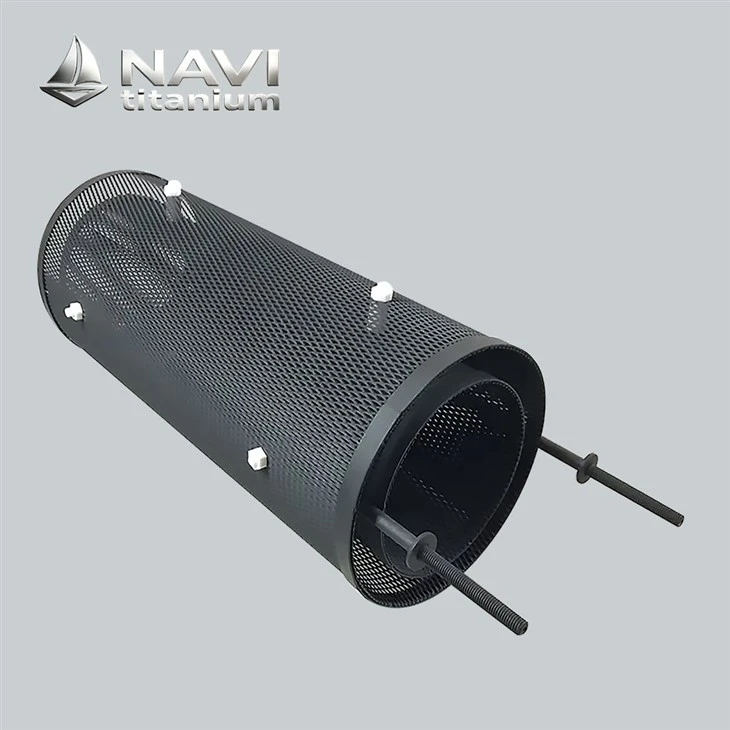


NAVI Titanium offers titanium anode for water softening device, helping buyers address hardness precipitation and scale control. Research priorities include catalytic compositions that favor oxygen evolution, alongside substrate pretreatment that strengthens coating adhesion. Process evaluation examines precursor distribution, curing schedules, and coating coverage around cut edges, where localized defects may initiate premature degradation.
Solution of NAVI Titanium
NAVI Titanium approaches electrochemical softening through two research priorities: catalytic composition and coating execution. Process research examines precursor wetting, repeated deposition, curing schedules, and edge coverage to identify potential pathways for coating failure. For procurement teams, meaningful evidence includes composition records, adhesion checks, polarization data, and energy comparisons obtained under stated test parameters.


NAVI Titanium considers catalytic composition and coating uniformity central to electrochemical softening performance. Cathodic alkalinity promotes calcium carbonate precipitation, while complementary anodic reactions sustain charge transfer.

Application
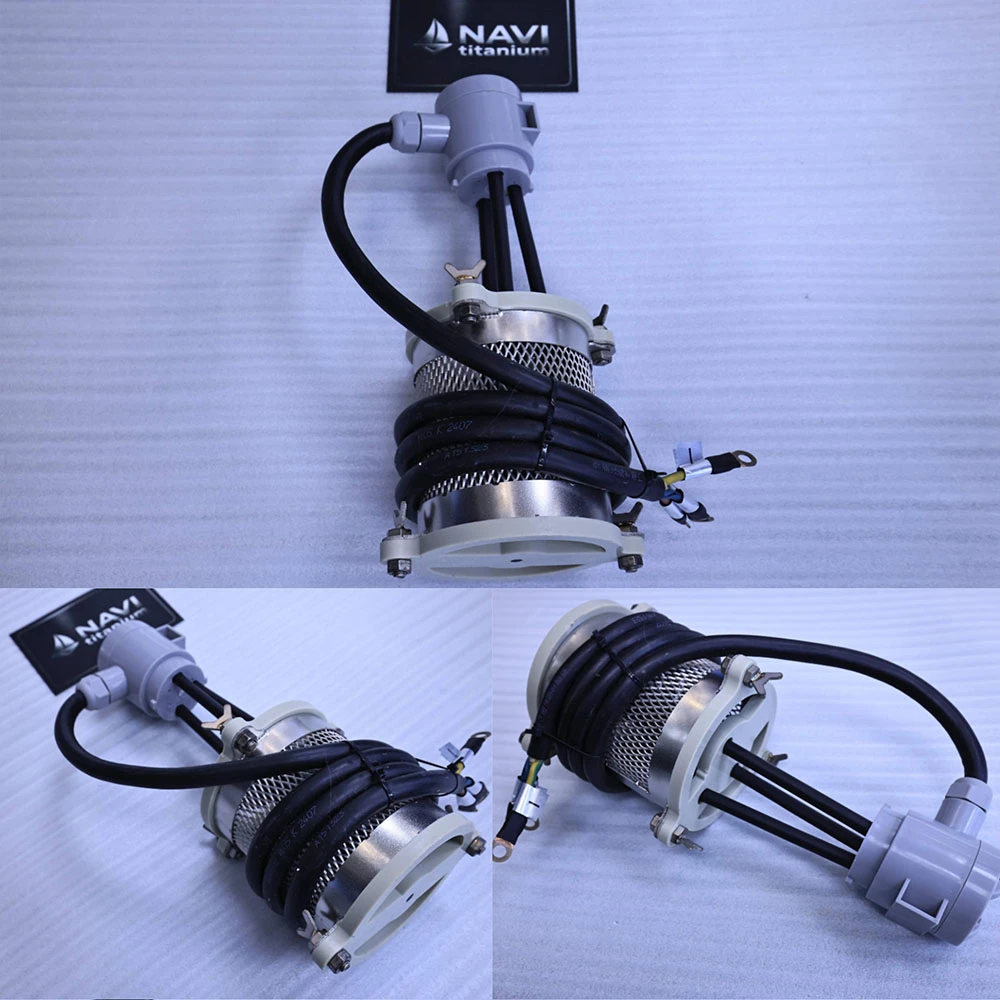
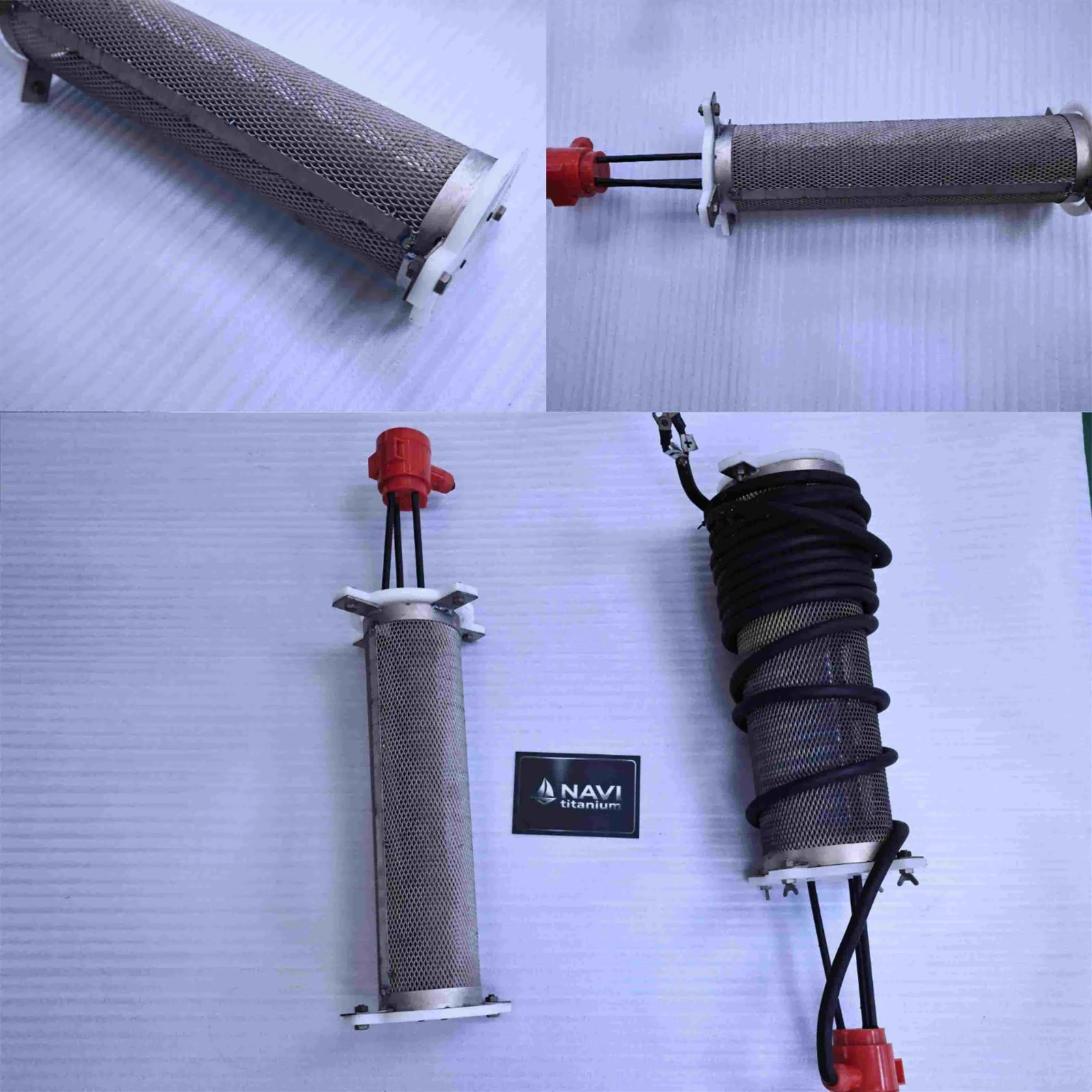
NAVI Titanium supplies titanium anode for water softening device applications, supporting electrochemical hardness reduction and scale control in industrial recirculating cooling water systems and dedicated hard water treatment units.
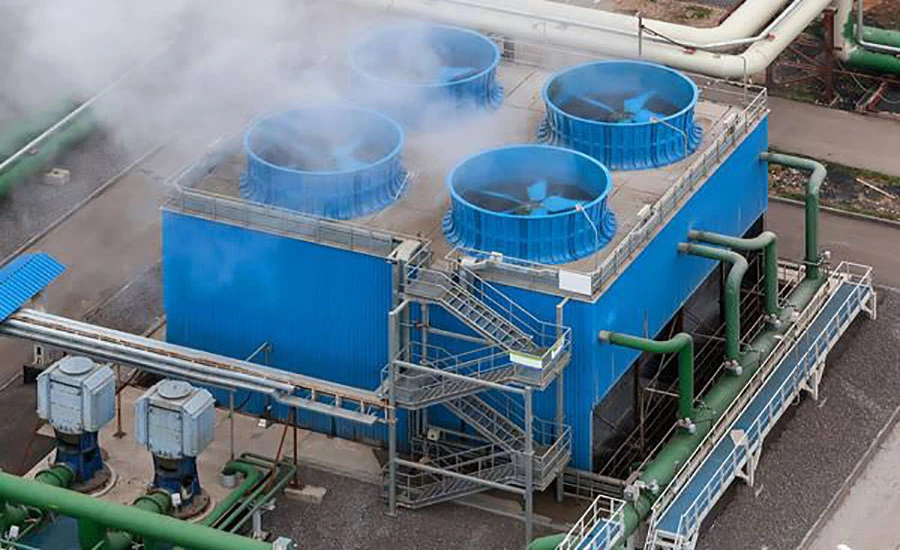
Industrial recirculating cooling water systems experience progressive mineral concentration through evaporation, increasing the potential for carbonate deposition on heat transfer surfaces. Electrochemical softening addresses this risk by promoting controlled precipitation within a dedicated reactor, commonly installed in a sidestream circuit. Cathodic reactions generate hydroxide ions, creating localized alkaline conditions that favor calcium carbonate precipitation and, where sufficient alkalinity develops, magnesium hydroxide formation. The coated titanium anode sustains the complementary oxidation reaction, while its catalytic composition must accommodate water chemistry and operating current density. Treatment performance depends on more than electrode activity: circulation rate, residence time, cathode area, and deposit removal determine whether precipitated solids are effectively extracted. Evaluation should therefore combine calcium hardness and alkalinity measurements with deposit mass, energy consumption, and exchanger performance. Chloride concentration also requires attention because competing anodic reactions may affect oxidant formation and corrosion management. Properly integrated treatment can reduce scaling pressure, but achievable water savings and chemical reductions require validation against the cooling system balance.
2. Electrochemical Hard Water Treatment Units
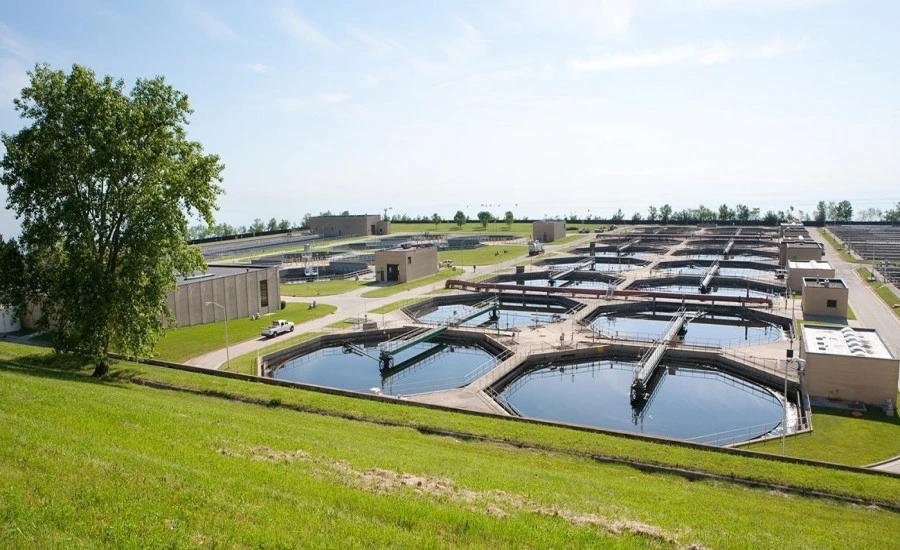
Electrochemical hard water treatment units couple induced precipitation with solids separation to reduce dissolved hardness without relying exclusively on ion exchange regeneration. Within the reactor, cathodic alkalinity shifts carbonate equilibria toward calcium carbonate supersaturation; magnesium removal generally requires higher local pH and may proceed through hydroxide precipitation. The anode completes the electrochemical circuit through oxidation reactions, making coating stability, electrical contact integrity, and resistance to operating conditions essential selection criteria. Reactor configuration determines whether crystallization occurs predominantly on the cathode, on suspended seeds, or within a separate precipitation chamber. Each arrangement creates different requirements for hydraulic distribution, cleaning access, and downstream filtration. Because precipitation depends on carbonate availability, waters with different hardness compositions may respond differently despite similar total hardness values. Automated control should coordinate current supply, flow, and cleaning cycles to limit deposit accumulation and sustain reproducible treatment rather than assume constant removal efficiency across variable incoming water chemistry.
Purchasing guide

Quality control(QC)
For water softening applications, NAVI Titanium's verification of coating composition, active loading, dimensional tolerances, and electrical connection integrity provides a basis for assessing conformity with agreed specifications. Results and test methods support procurement review and traceability, while hardness removal performance requires separate validation against feedwater chemistry, flow rate, and cleaning cycles.
| Certificate of Analysis | ||
| Titanium Base Material Suppliers: | Coating Precursor Suppliers: | COA of product: |
|
|
|
|


Manufacturing proces
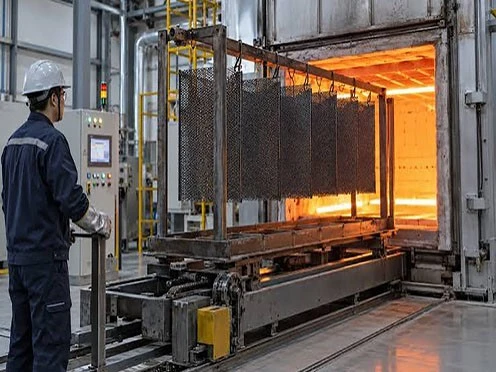
Fabrication begins with substrate cutting and connection preparation, followed by degreasing, abrasive treatment, and acid pickling to promote coating adhesion. Catalyst selection considers feedwater chloride content and oxygen evolution selectivity. Repeated precursor application, drying, and furnace curing establish the specified catalytic loading, with particular attention to edges and welds. Adhesion, electrical continuity, and polarization response are verified against agreed criteria. For softening systems using polarity reversal, coating qualification must reflect the intended cleaning cycle, while reactor operation must accommodate cathodic scale accumulation and subsequent deposit removal during routine operational maintenance.


Cleaning Compatibility and Handling Protection
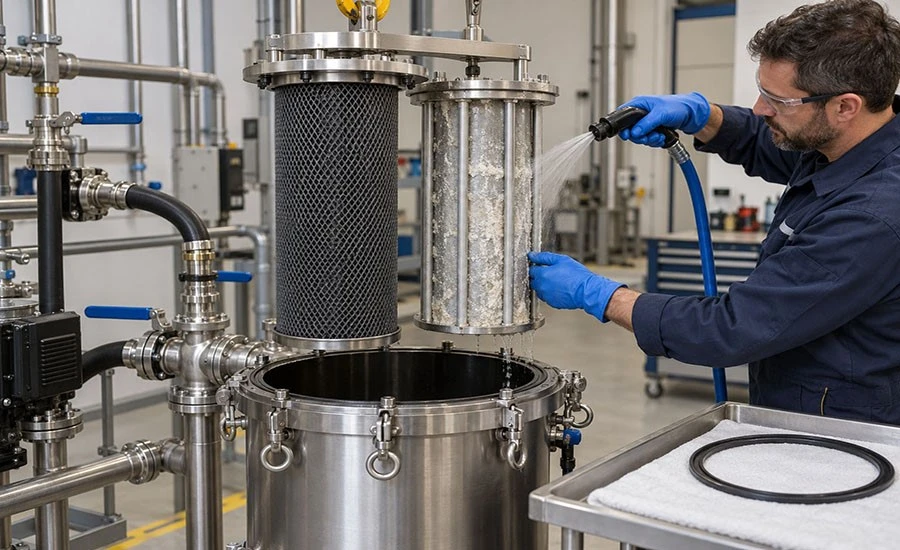
Cleaning compatibility should be confirmed against the intended softening reactor before procurement, because calcium carbonate deposits can obstruct passages and narrow operating clearances. Manual cleaning requires accessible openings, adequate hand clearance, and approved nonabrasive implements that avoid scraping catalytic coatings. Online cleaning requires confirmation of permitted reagents, concentration limits, circulation direction, exposure duration, and rinse criteria; polarity reversal should be specified separately and accepted only when the coating is qualified for that duty. Removal for cleaning introduces additional questions concerning lifting points, detachable electrical terminals, gasket replacement, and repeatable positioning after reassembly. NAVI Titanium recommends a maintenance drawing identifying permitted contact areas and withdrawal clearance, together with written restrictions on brushing, pressure jets, and acidic agents. Cleaning intervals should follow observed deposition and operating trends rather than a universal calendar. Acceptance checks after cleaning should address residual deposits, coating damage, connection resistance, and restored spacing.
Preventing Lattice Compression, Snagging, and Local Stretching
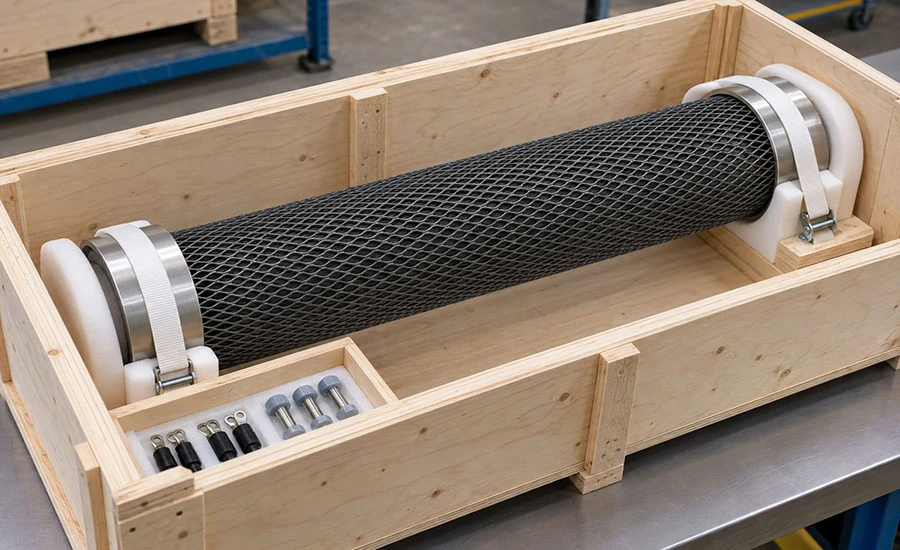
Expanded lattice sections require restraint that preserves their original contour without transferring concentrated loads through individual strands. Compression can flatten curved sections, narrow openings, and alter clearances needed for circulation and deposit release during softening. Protective cradles should therefore support approved uncoated margins or reinforced attachment points, with external loads carried by the shipping enclosure. Snagging presents a separate risk: exposed screws, wire ties, sharp dividers, and loose accessories can catch openings and tear coated strands during unpacking. Smooth separators, covered fasteners, and dedicated accessory compartments reduce these contact hazards. Local stretching should be prevented by prohibiting lifting from a single opening or pulling one edge to free a trapped section. Cylindrical pieces may require internal supports, provided contact locations are approved and padding cannot abrade the coating. Buyers should define allowable contour deviation, minimum separation between adjacent pieces, and receiving checks before dispatch. Photographs of restraint positions and unpacking instructions provide useful evidence when evaluating transit damage, helping distinguish compression, snagging, and tensile distortion from discrepancies originating before shipment.
Polarity Reversal
Permission for polarity reversal should be obtained in writing before a softening unit is ordered, because tolerance cannot be inferred from appearance or catalytic loading alone. NAVI Titanium clarifies whether reversal is intended for periodic scale release, extended alternating operation, or occasional recovery after fouling. The approved sequence should state current magnitude in both directions, dwell duration, switching frequency, ramp settings, and any required pause before changing polarity. Verification should reproduce the proposed electrical sequence alongside representative chloride content, hardness, pH, flow, and cleaning chemistry. Relevant evidence includes coating adhesion, voltage drift, catalytic loss, and performance retention after repeated cycles. Accelerated trials require an explanation of how increased stress relates to the intended duty; a short demonstration cannot establish unrestricted reversal capability. Procurement documents should identify prohibited settings, shutdown triggers, and the party responsible for controller programming. Buyers can then evaluate whether the proposed operating window fits their maintenance strategy and obtain written approval before changing timing or current settings after commissioning, with traceable records retained for subsequent technical review.

Selecting Configurations for Unidirectional and Reversing Operation
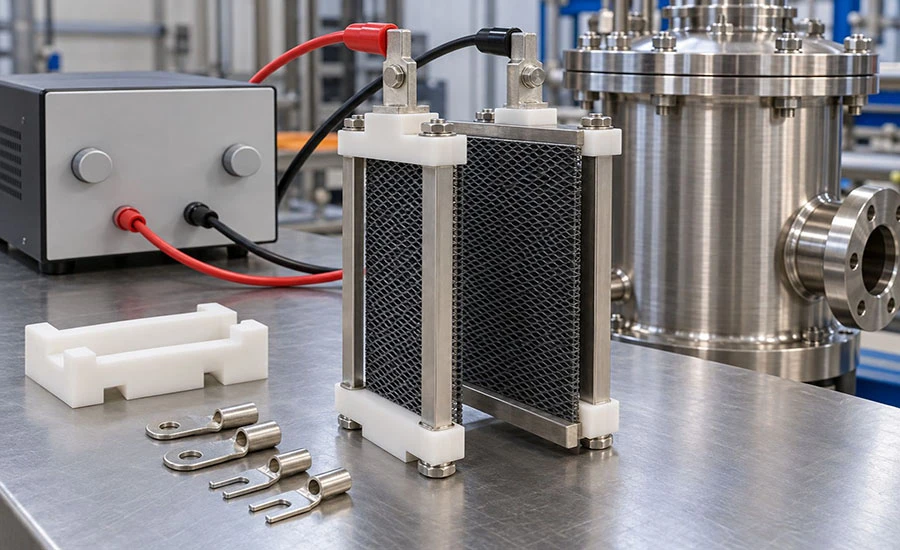
Purchasers should distinguish fixed polarity packages from reversal capable packages at the quotation stage, since identical mounting dimensions do not establish equivalent operating capability. For unidirectional operation, the quoted configuration should identify the positive connection, compatible opposing assembly, permissible current range, and approved cleaning approach. If deposits are removed through mechanical access or chemical circulation, those methods should be reflected in maintenance documentation. For reversing operation, both members of the pair must be assessed for their alternating roles, including catalytic compatibility, connection capacity, insulation, and exposure during negative polarization. The commercial scope should state whether the offer includes only coated sections, a matched pair, detachable terminals, or a complete cartridge with spacing fixtures. Controller compatibility, switching logic, and responsibility for commissioning should also be explicit. Buyers should compare quotations using the same active area, electrical duty, reversal sequence, and acceptance criteria. Separate part numbers and polarity identification help prevent a fixed polarity replacement from entering a reversing circuit, while documented configuration approval supports repeat ordering without relying on visual similarity.
Buyer and Application Matching
Selecting a titanium anode for water softening device applications requires procurement criteria. NAVI Titanium discussions should establish whether the objective is new installation, replacement, experimental comparison, or operating cost reduction. Fit assessment extends beyond dimensions to electrical duty, precipitation management, cleaning access, and acceptance criteria.
| Buyer group |
Application priorities |
Procurement evidence |
| OEMs | New units, module trials, installation envelopes, recurring orders | Approved drawings, capacity commitments |
| System contractors | Reactor, rectifier, cathodic assembly, controller, cleaning compatibility | Interface schedules, commissioning responsibilities |
| Repair specialists | Legacy replacements, drawing replication, connector checks, shutdown planning, spare stocks | Revision control, interchangeability confirmation |
| Plant operators | Cooling circuits, hardness control, maintenance access, expenditure | Operating data, cleaning intervals, replacement costs |
| Research teams | Small trial quantities, coating comparisons, adjustable layouts | Test protocols, traceable records |
| Scope clarification | Softening duty versus auxiliary disinfection and resin accessories | Reaction objectives, compatibility boundaries |
Purchase approval should link the selected configuration to hardness control objectives, allocated responsibilities, and maintenance commitments. Disinfection capability requires separate confirmation; resin softeners do not inherently require powered treatment assemblies.
FAQ
1. What evidence should we request from an in-house laboratory?
+
-
Request reports identifying sample references, test methods, calibration status, and acceptance criteria. For softening applications, useful evidence links coating performance to hardness reduction, energy consumption, and cleaning frequency.
2. Can laboratory trials reproduce our intended operating cycle?
+
-
A representative trial setup should accommodate your proposed flow rate, current density, spacing, and cleaning sequence. If polarity reversal is planned, request programmable current control and recorded switching intervals. Confirm that the trial duration and feed chemistry adequately reflect your intended application before accepting performance comparisons.
3. Which testing instruments are relevant to procurement approval?
+
-
Depending on the agreed scope, relevant instruments may include calibrated electrical meters, coating adhesion testers, optical microscopes, and programmable polarization systems. Ask which checks are routine and which require separate arrangements.
4. How can substrate and coating analysis support replacement purchasing?
+
-
Substrate verification and coating characterization address different purchasing risks. Request substrate grade documentation alongside coating loading, coverage, adhesion, and cross-sectional observations where appropriate.
5. What should chemical composition testing clarify?
+
-
Request separate assessments of substrate composition, catalytic constituents, and potential contaminants.
Hot Tags: titanium anode for water softening device, China titanium anode for water softening device manufacturers, suppliers, factory, custom coated titanium anode, dimensionally stable titanium electrode, iridium oxide coated titanium mesh anode, plate titanium anode, Powered Titanium Anode Rod, tube titanium anode


