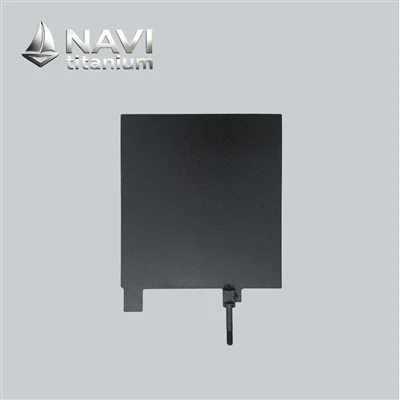
NAVI Titanium self-developed MMO (Ru-Ir) anode assembly for seawater aquaculture uses a ruthenium-iridium mixed metal oxide coating on a high-purity titanium base. It performs outstandingly as a chlorine evolution catalyst even in highly chlorinated, strongly corrosive seawater conditions. It's the core electrochemical component for in-situ electrolysis of seawater in fish, shrimp, and shellfish farming tanks to produce hypochlorite, disinfect water, control algae, and break down harmful bacteria and ammonia nitrogen.
We handle the whole production chain ourselves-from base material processing and coating sintering to assembly packaging - supporting custom specifications, bulk supply, and technical support. We offer a stable procurement channel for aquaculture equipment manufacturers, farming project integrators, and water treatment system providers, delivering long-lasting, energy-efficient anode solutions with consistent performance to help maintain stable water quality and reduce disease risk.
Solution of NAVI Titanium
With the electrochemical industry continuously moving towards high efficiency, long lifespan, and customized solutions, MMO mixed metal oxide titanium anodes have become key electrochemical components in applications like electrolysis, oxidation, and corrosion protection. NAVI Titanium leverages its mature coating development and precision manufacturing technology to create a series of MMO titanium anode products tailored to different electrolyte environments, current densities, and usage needs, ensuring an exact match between coating solutions and application scenarios, and overcoming the common issues of generic anodes like poor adaptability, rapid decay, and short lifespan.


The electrode spacing, number of stacked sheets, lead terminal type, and mounting holes can all be customized as needed. The insulating components resist electrolyte corrosion, effectively preventing short circuits between electrodes and ensuring long-term stable operation of the entire anode assembly. The coating goes through multiple layers of application and stepwise high-temperature sintering, giving it strong adhesion, resistance to erosion and oxidation, stable slot voltage, and controllable energy consumption, significantly extending the service life of the whole set of electrodes.


Application
MMO (Ru-Ir) anode assembly for seawater aquaculture made by NAVI Titanium is built on a high-purity titanium base and coated with a ruthenium-iridium mixed metal oxide layer, which directly helps clean and adjust the aquaculture water through electrochemical processes.
The most common and core application in aquaculture is in-situ electrolytic production of hypochlorous acid for water disinfection. When MMO (Ru-Ir) anodes are used to electrolyze seawater, a highly efficient chlorine evolution reaction occurs on the anode surface, converting chloride ions in the seawater into chlorine gas, which quickly hydrolyzes into hypochlorous acid. Thanks to its strong oxidizing ability, hypochlorous acid can directly destroy the cellular structures of bacteria, viruses, fungi, and other microorganisms, achieving broad-spectrum sterilization. The key advantage of this process lies in its immediacy and in-situ nature: the anode components are placed directly in the circulating water system or aquaculture ponds, and the active chlorine produced by electrolysis is released on-site. This avoids the cumbersome steps of transportation, storage, dosage, and residue control associated with traditional chemical disinfectants.
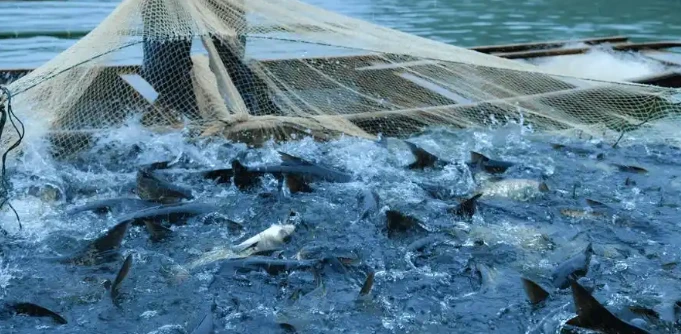
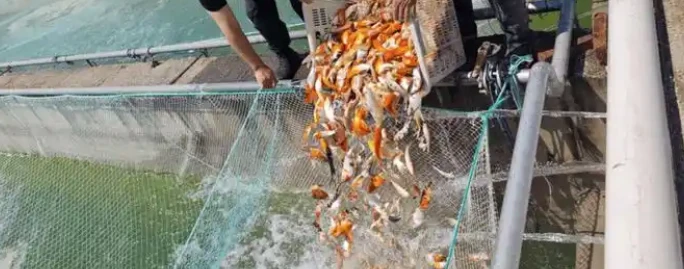
For aquaculture operators, this means that during routine water changes, pond draining, or pond transfers, they don't need to rely heavily on external disinfectants; they can continuously and controllably disinfect incoming seawater, which is especially useful for large-scale farms with high water turnover and frequent batch changes. More importantly, MMO (Ru-Ir) anodes have low chlorine evolution potential and high current efficiency, producing more active chlorine for the same energy consumption. This means farms can achieve more stable disinfection with less electricity, which directly translates into measurable operational benefits for farms where electricity costs matter and operations run year-round.
Purchasing guide

Quality control(QC)
NAVI Titanium has made its tiered quality inspection data available for download, so customers can easily get the files they need to complete supply chain audits, project bids, factory inspections, and third-party compliance testing. Each COA is linked to a specific production batch to avoid mix-ups, effectively reducing risks like abnormal slot pressure or premature anode failure caused by impure raw materials or coating formula deviations.
| Certificate of Analysis | ||
| Titanium Base Material Suppliers: | Coating Precursor Suppliers: | COA of product: |
|
|
|
|


Manufacturing proces
The entire titanium anode production process is tightly interconnected: First, we carefully select high-purity titanium substrates and use laser cutting equipment for precise material cutting, processing them into plate, tube, or mesh blanks according to customer specifications. Next, the blanks go through surface pretreatment, where sandblasting and acid cleaning remove oxide scales and grease from the titanium surface, creating a rough, activated base that ensures excellent adhesion for the precious metal coating and prevents peeling later on. After pretreatment, the technical team prepares a customized precious metal precursor solution based on the customer's working conditions, accurately mixing active components like iridium and ruthenium. Skilled workers then evenly brush this onto the titanium substrate surface, which is fired in a high-temperature furnace in stages; repeated coating and sintering form a dense, stable mixed metal oxide catalytic layer. Once all steps are completed, products undergo spot checks for electrochemical performance. Qualified items are then packaged securely and prepared for shipment.
A transparent and visible production process is the foundation of NAVI Titanium's commitment to product quality. You can click to see more details of our process and learn how we use precise manufacturing to provide global customers with cost-effective, long-lasting, customized titanium anodes.
 |
 |
 |
Selection Guide
MMO (Ru-Ir) anode assembly for seawater aquaculture are mainly applied to electrolyze seawater to generate sodium hypochlorite, for water disinfection, pathogen control and biofouling prevention. The table below compares NAVI Titanium products with similar offerings in the industry from core technical and commercial perspectives:
| Comparison Item | NAVI Titanium | General Competitors | Competitive Advantage |
| Coating Formula | Precisely proportioned Ru-Ir binary formulation, specially optimized for seawater chlorine evolution | Generic Ru or Ru-Ir formulas, not tuned for seawater media | Low chlorine evolution overpotential, suppressed oxygen evolution side reaction |
| Precious Metal Loading | Customizable loading, calculated based on current density and target service life | Fixed or low loading, poor matching between service life and current density | Extended service cycle under high-loading options, lower replacement cost |
| Substrate Pretreatment | Standardized degreasing → sandblasting → acid pickling to form uniform micro-anchoring structure | Rough pretreatment with unstable roughness | Strong coating adhesion, less risk of peeling |
| Coating & Sintering Process | Multiple coating cycles + stepwise high-temperature sintering for dense crystal structure and controlled internal stress | Single or few coating passes with insufficient density | Resistant to liquid scouring and thermal shock, stable long-term electrolysis |
| Coating Adhesion | Passes bending and adhesion tests with low peeling risk | Some products tend to delaminate or have uncoated spots | Reduced failure risk and secondary contamination during electrolysis |
| Design Service Life | Customized service life with clear specification based on working conditions | Vague lifetime claims without condition validation | Accelerated life test reports available upon project request |
| Current Distribution | Modular assembly with optimized pole spacing and layout for even current distribution | Mostly single-plate electrodes prone to local overcurrent | Homogeneous electrolysis, stable disinfection efficiency and controllable energy consumption |
| Seawater Compatibility | Excellent resistance to seawater corrosion and strong Cl⁻ oxidative environment | Generic anodes degrade rapidly in seawater | Better tolerance to biofouling and scaling, longer maintenance intervals |
| QC & COA | COA available for every batch; adhesion, electrochemical and life test data traceable | Only simple certificates provided by some suppliers | Convenient for project acceptance, supplier audit and compliance review |
| Customization | Flexible customization of substrate shape, dimension, terminal type and assembly structure | Predominantly standard-size products | Fits actual installation requirements of seawater aquaculture equipment |
| Pricing Strategy | Cost-effective, balancing performance and procurement budget | Wide price range, including low-end over cheap and overpriced options | Lower overall operating cost throughout the lifecycle |
| After-sales & Technical Support | Working condition selection guidance, installation instruction and lifetime evaluation | Limited after-sales technical support | Mitigates procurement and operational risks |
Application
The most common and core application in marine aquaculture is in-situ electrolysis to produce hypochlorous acid for disinfecting water. MMO (Ru-Ir) anodes efficiently perform chlorine evolution on the anode surface when electrolyzing seawater, converting chloride ions in the water into chlorine gas, which quickly hydrolyzes into hypochlorous acid. Thanks to its strong oxidation ability, hypochlorous acid can directly break down the cellular structures of bacteria, viruses, fungi, and other microorganisms, achieving broad-spectrum sterilization. The key advantages of this process are its immediacy and in-situ nature: anode components are placed directly in circulating water systems or aquaculture pond water, releasing active chlorine on site and avoiding the complicated steps of transporting, storing, mixing, and controlling residues typically associated with traditional chemicals. For aquaculture operators, this means that during routine operations like water exchange, pond draining, or transferring fish, seawater entering the system can be continuously and flexibly disinfected without frequently relying on external disinfectants.

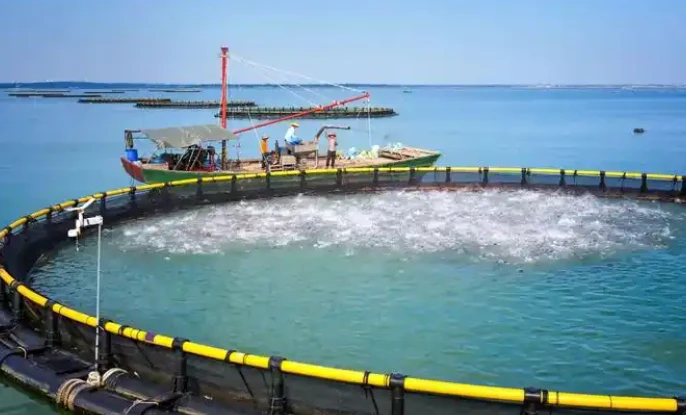
This is especially suitable for large-scale farms with high water flow and frequent batch changes. Moreover, MMO (Ru-Ir) anodes have low chlorine evolution potential and high current efficiency, producing more effective chlorine with the same energy consumption. For farms sensitive to electricity costs and operating year-round, this translates directly into measurable operational benefits.
Beyond microbial control, MMO (Ru-Ir) anode components are also key for organic matter oxidation and water purification. Residual feed, feces, and metabolic waste in aquaculture water release ammonia, nitrite, and various organic pollutants continually. When accumulated, these substances not only deplete dissolved oxygen but also can be toxic to aquatic animals, often causing disease outbreaks and water quality deterioration. The active chlorine produced during electrolysis, along with highly reactive oxidative intermediates formed on the anode, can oxidize and break down these pollutants, promoting the conversion of ammonia into harmless forms and helping maintain nitrogen cycle balance in the water.
This function is especially important in high-density, recirculating aquaculture systems, where water is reused, pollutants accumulate, and relying solely on biological filters is often insufficient for quickly handling the load. Electrolytic oxidation offers a fast and powerful supplemental treatment route. Combining MMO (Ru-Ir) anodes with biological filtration, protein separation, and other facilities can create a multi-stage purification setup, providing more buffer capacity and purification redundancy during feed peaks, limited water exchange, or sudden temperature fluctuations, preventing short-term water quality drops that could trigger aquaculture issues.
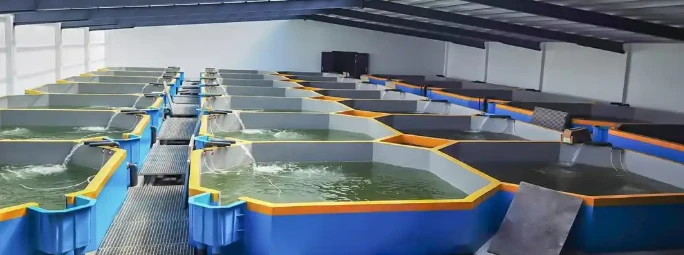
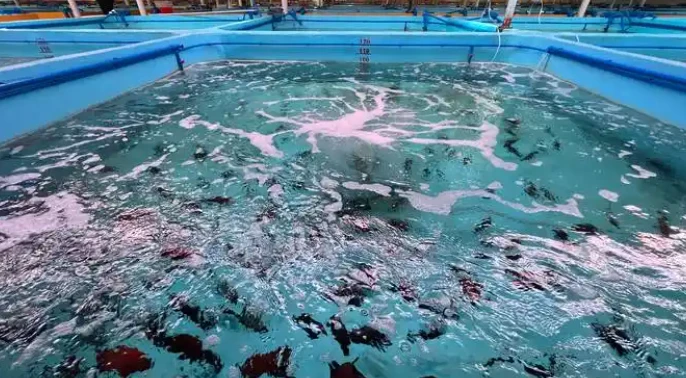
MMO (Ru-Ir) anode assembly for seawater aquaculture, algae spores and plankton in seawater can quickly multiply under sufficient light and rich nutrients, leading to water blooms or biofouling in aquaculture facilities. Overgrown algae compete with farmed animals for oxygen and space, and decaying algae may release toxins that worsen water quality. Biofouling on facility surfaces can clog nets, reduce water exchange, and increase cleaning work. The active chlorine environment produced by electrolysis can effectively inhibit the germination and growth of algae spores. Additionally, the locally high oxidative environment around the anode can suppress and remove attached organisms, helping reduce water blooms and significantly cut down on fouling on nets, pond walls, and pipes. For cage and pond farming, this means fewer net changes, less frequent pond cleaning, and lower reliance on chemicals. Long-term anti-fouling and anti-corrosion effects ensure smooth water flow throughout the farming cycle, providing farmed animals with a more stable and healthier growth environment.
Frequently Asked Questions
Is the coating adhesion suitable for alternating seawater immersion?
+
-
Our ruthenium-iridium MMO anodes use a gradient thermal decomposition coating process, which is different from ordinary single-layer spraying. This helps resist the risk of peeling caused by the expansion and contraction from alternating wet and dry seawater. We provide factory salt spray alternating test reports, making them suitable for long-term intermittent soaking in aquaculture and preventing early coating failure.
Will the substrate welds accelerate seawater corrosion?
+
-
The anode assembly welds use special titanium welding wire and argon arc welding, followed by pickling and passivation to remove welding embrittlement layers and stress points. The weld areas are also covered with protective transition layers, preventing preferential corrosion of welds, ensuring long-term use in seawater aquaculture environments.
Does the pre-assembled structure affect cross-border shipping?
+
-
Finished products come as pre-assembled integrated components. We can provide disassembled packaging or overall sealing according to customer requirements. Disassembled packaging lowers the chance of inspection on large items; overall packaging uses custom shockproof frames to secure electrical connectors, preventing lead loosening or coating scratches during transport.
How to protect the active coating in high-humidity sea transport?
+
-
Although the ruthenium-iridium coating is salt-resistant, long-term sealed high-humidity condensation can accelerate oxidation of the terminal connectors. All anodes are individually sealed in moisture-proof bags with desiccants. Outer boxes are made of salt-spray-resistant fumigated wood and labeled to avoid direct contact with the anode body, preventing glue residues from damaging the coating.
Will port storage cause performance degradation?
+
-
Short-term storage in a cool, shady place at the port does not affect electrochemical performance. If storage exceeds 14 days, it is recommended to check whether the packaging has gotten wet upon arrival. NAVI Titanium can provide arrival inspection guidelines so customers can dry-store the items after unpacking and avoid immersing them in seawater prematurely.
Hot Tags: mmo (ru-ir) anode assembly for seawater aquaculture, China mmo (ru-ir) anode assembly for seawater aquaculture manufacturers, suppliers, factory, plate titanium electrode, platinum oxide coated titanium plate anode, Powered Titanium Anode Rod, ruthenium oxide coated titanium tube anode, Titanium Anode Rod, Titanium Powered Anode Rod for Water Heater