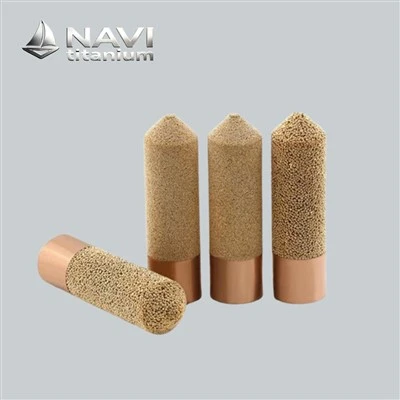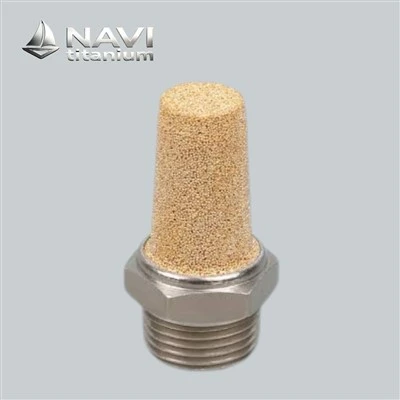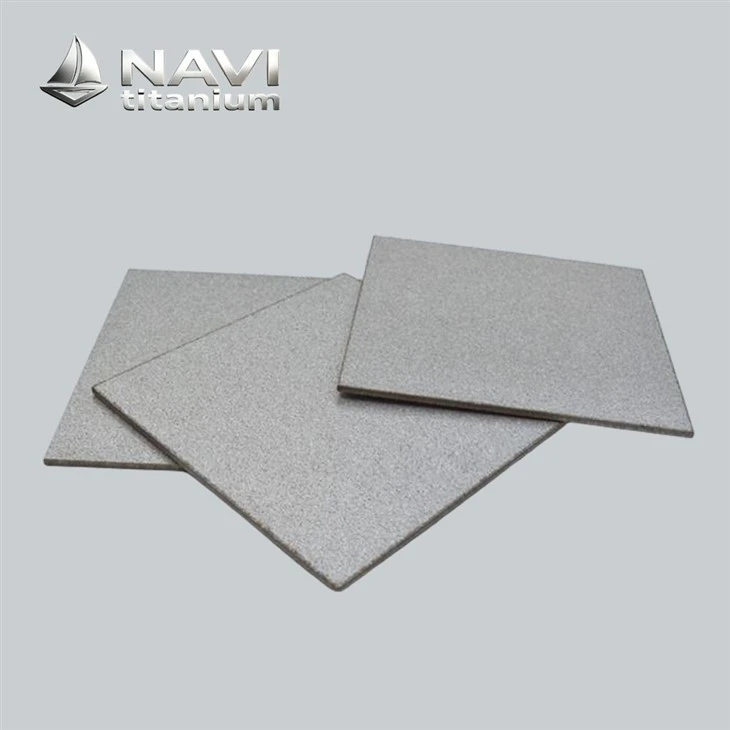


NAVI Titanium provides laser sintering titanium material for demanding applications where controlled fabrication and consistent material characteristics matter. Our operating principle is straightforward: honest specifications, disciplined process management, and transparent communication throughout every order. We view quality not as a final inspection result, but as a cumulative outcome shaped by raw-material selection, process records, dimensional verification, and batch-to-batch comparison. This philosophy encourages us to preserve traceable production data, disclose relevant technical deviations, and maintain clear acceptance criteria.
Solution of NAVI Titanium
NAVI Titanium integrates factory release review with a process-oriented quality system for titanium products used in precision manufacturing. For laser-based powder-bed processing, consistency in feedstock characteristics, layer formation, thermal history, dimensional accuracy, and final material condition can directly affect the reliability of the finished component. Industry guidance likewise emphasizes equipment qualification, process control, inspection, and documented manufacturing records for this type of production. ISO/ASTM guidance identifies these attributes as important quality characteristics for powder-bed-fused components.
Process-monitoring research shows that linking manufacturing signatures with final quality metrics can help identify variation and guide parameter optimization.


NAVI Titanium investigates localized thermal consolidation as a means of tailoring material morphology, dimensional characteristics, and interconnected passage formation. Focused energy delivery permits selective fusion along predefined trajectories, while layer-wise deposition enables gradual control of density and surface topology.


Application
Laser sintering titanium by NAVI Titanium enables precisely controlled gas diffusion and reactive-interface architectures for hydrogen-related flow systems, catalytic reactors, and electrochemical applications.
Laser-based fabrication by NAVI Titanium is particularly valuable for gas-flow assemblies requiring a carefully regulated passage pattern. A focused beam delivers thermal energy only along programmed trajectories, allowing material consolidation to occur selectively rather than across an entire surface at once. By adjusting beam power, scan velocity, hatch spacing, focal diameter, and layer thickness, manufacturers can manipulate local density and interstitial passage characteristics with considerably greater freedom than conventional thermal routes.
For gas diffusion duties, this approach enables gradual transitions between regions with different flow resistance. Such gradients can help distribute incoming gas more evenly before it enters a catalytic or reactive region, reducing preferential channels and localized velocity peaks. The thermal cycle also affects grain morphology, neck formation, residual stress, and dimensional change, making post-process heat treatment an important consideration for demanding assemblies. For purchasers, traceable build parameters and cross-sectional inspection are valuable because they link the final flow response to specific production settings. This makes the process attractive for hydrogen-related gas distribution, laboratory reactors, and other controlled-flow assemblies requiring repeatable gas permeation characteristics.
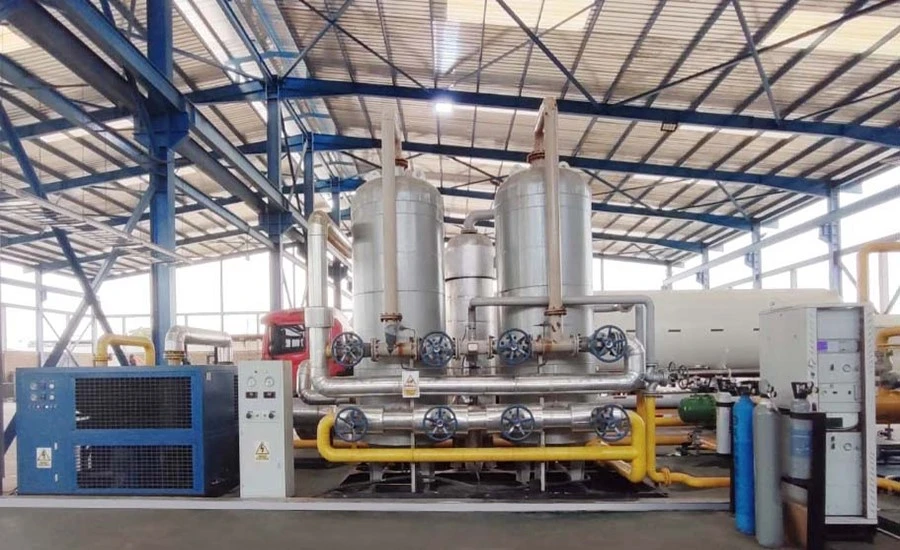
2. Catalyst & Electrochemical Reactor Internals

Laser-based fabrication offers distinctive advantages when an electrochemical or catalytic assembly requires a carefully tailored three-dimensional passage architecture. Instead of relying exclusively on uniform thermal exposure, a concentrated beam follows digitally defined paths, permitting localized consolidation and gradual changes in void fraction, channel orientation, and surface topology. These variables directly affect reactant transport, residence time, interfacial area, and pressure loss within a reactor.
For catalytic duties, beam energy density is especially important. Excessive input may enlarge local melt pools and reduce open passage volume, whereas insufficient energy can leave weakly bonded regions or irregular pathways. Scan strategy, hatch interval, layer thickness, and thermal accumulation must therefore be assessed together rather than treated as isolated settings. Fine control of these parameters can produce graded regions that transition from easier flow entry to greater contact intensity near the reactive interface. In electrochemical reactors, this may help balance reactant access with ionic transport and gas evacuation. Purchasers can therefore evaluate not only nominal dimensions but also build orientation, thermal history, cross-sectional morphology, and flow-test data when specifying assemblies for hydrogen generation, catalytic conversion, and laboratory-scale reaction platforms.
Purchasing guide

Quality control (QC)
Each production batch is accompanied by a documented material verification record covering chemical composition, batch identification, particle-size distribution, and relevant physical characteristics. For feedstock intended for layer-wise laser fabrication, these records are particularly important because variations in alloy chemistry or particle condition may influence powder spreading, energy absorption, melt-pool behavior, and the dimensional consistency of the resulting component.
The recorded data can be matched with the designated grade and purchasing specification, allowing technical teams to verify whether the supplied feedstock corresponds with the agreed material range before production begins.

Manufacturing Process
1. Feedstock Preparation & Particle Conditioning
The production route begins with carefully selected titanium alloy feedstock. Particle-size distribution, morphology, flow behavior, and cleanliness are assessed before processing. Classification and conditioning help maintain consistent powder spreading across the build platform, while batch identification keeps material records traceable throughout the manufacturing cycle.
2. Laser-Based Layer Formation
A thin powder layer is deposited across the build area before a focused laser selectively scans the programmed geometry. Localized energy input causes the particles to melt and consolidate along the designated scan path. After each exposure cycle, the platform is repositioned and another layer is spread, gradually forming the three-dimensional structure according to the digital model.
3. Energy & Thermal-Cycle Management
Laser power, scanning velocity, hatch spacing, layer thickness, beam diameter, and scan strategy are considered together rather than adjusted independently. NAVI Titanium evaluates the relationship between energy density and heat accumulation to reduce incomplete fusion, excessive melting, distortion, and internal discontinuities during repeated exposure cycles.
4. Cooling, Finishing & Dimensional Verification
After layer construction is completed, controlled cooling is followed by removal from the build platform and appropriate finishing operations. Depending on the geometry and intended service conditions, heat treatment, surface refinement, support removal, and dimensional correction may be incorporated.
Logistics Visibility & Handling Adaptation
For laser-fabricated sintering titanium, NAVI Titanium places emphasis on traceable dispatch preparation rather than treating logistics as a purely administrative stage. Before release, purchasers can receive clear carton photographs showing the external condition, identification marks, quantity arrangement, and protective configuration. A detailed Packing List can be provided alongside pre-dispatch confirmation, allowing purchasing and warehouse teams to verify specifications, quantities, labeling, and order references before the goods leave the facility. This is particularly useful for laser-processed parts because intricate geometries, thin sections, delicate edges, and localized surface features may require closer visual verification than conventional stock forms. NAVI Titanium can also align identification information between production records, commercial documents, and physical cartons, reducing ambiguity during receiving inspection. For overseas buyers managing multiple suppliers, this pre-dispatch visibility provides an additional checkpoint between final inspection and receipt. It also allows discrepancies in quantity, marking, or external protection to be identified before onward transportation begins, helping purchasing teams coordinate warehouse intake.

Packaging Adaptation for Storage & Installation

NAVI Titanium recognizes that laser-fabricated titanium parts may encounter very different handling environments after leaving the production site. Instead of applying one fixed packaging method to every order, the protective arrangement can be adjusted according to the purchaser's storage duration, transfer frequency, handling method, and terminal installation requirements. For parts featuring intricate geometries or localized surface characteristics, suitable spacing and cushioning can reduce contact between neighboring pieces during movement. Identification labels can also be arranged according to warehouse coding, batch separation, or installation sequence when requested. Where repeated transfers are expected, the outer configuration can prioritize easier counting and safer manual handling; for longer storage, greater attention can be given to moisture isolation, cleanliness retention, and enclosure integrity. NAVI Titanium can discuss these requirements before dispatch so that the chosen arrangement corresponds more closely with the purchaser's actual logistics chain. This approach is especially relevant for laser-fabricated items whose dimensional features and surface condition may require protection from impact, abrasion, contamination, or unnecessary repeated handling before they are finally installed.
Fine-Particle Retention & Regeneration Performance
Laser sintering titanium from NAVI Titanium enables controlled fine-particle retention through tailored pore-size distribution, predictable pressure-drop progression, and effective backwashing for demanding continuous-flow applications.
NAVI Titanium approaches fine-particle retention through a close relationship between laser energy input and the resulting pore-size distribution. Beam power, scanning speed, hatch spacing, layer thickness, and thermal accumulation can alter local consolidation, thereby affecting passage dimensions and their statistical distribution. For purchasing teams, a nominal pore value alone is insufficient; the relevant assessment should include mean opening, distribution width, maximum passage, and potential oversized pathways. A narrower distribution can provide more predictable particle interception, while excessive local variation may create preferential routes that allow smaller particulates to pass through. Particle loading should also be evaluated against the intended operating range because retained solids progressively occupy available passages and increase hydraulic resistance. NAVI Titanium can place emphasis on microscopic morphology assessment and flow testing so that purchasers can compare retained-particle performance with documented pore characteristics. This approach provides a more meaningful basis for specification approval, especially when fine particulates must be consistently captured without imposing excessive initial pressure loss across the assembly during continuous operation.

Pressure-Drop Evolution & Backwashing

For purchasers, the practical value of a fine-particle retention assembly depends not only on initial separation capability but also on how pressure drop evolves during particulate accumulation and subsequent backwashing. As retained solids progressively occupy available passages, flow resistance increases according to loading level, particle size, passage geometry, and surface topology. Laser processing parameters therefore deserve attention because local variations in consolidation can affect both initial resistance and the manner in which deposits accumulate. NAVI Titanium can evaluate pressure-drop trends alongside particle loading rather than relying on a single starting measurement. Backwashing introduces another important criterion: the retained layer must be removable without causing excessive deformation or deterioration of the functional passage network. Reverse-flow intensity, pulse duration, fluid direction, and cleaning frequency can be matched to the intended duty cycle. For procurement teams, useful qualification data may include clean-state pressure drop, loaded-state pressure drop, recovery percentage after backwashing, and repeated cleaning cycles. These indicators provide a clearer basis for estimating maintenance intervals, operating expenditure, and replacement frequency in continuous processing applications.
Powder Layer Behavior
For laser sintering titanium, NAVI Titanium treats powder-bed preparation as a decisive stage governing subsequent thermal response and final dimensional consistency. Particle-size distribution determines packing characteristics, while particle morphology, flowability, and apparent density affect how uniformly each layer is spread. Excessive variation may produce local gaps, uneven layer thickness, or fluctuating energy absorption during laser exposure. A controlled spreading sequence therefore establishes a repeatable foundation before beam scanning begins. Bed temperature is another key variable because preheating modifies thermal gradients and cooling kinetics, which can alter layer-to-layer bonding and residual stress. Oxidation must also be monitored during storage, handling, and repeated powder reuse, since surface chemistry can affect melting behavior and interparticle cohesion. From a procurement perspective, the critical chain is not simply raw material quality but powder state → spreading uniformity → laser interaction → interlayer bonding → finished-part consistency. NAVI Titanium can therefore place emphasis on particle characterization, lot traceability, layer-thickness verification, and reuse records, giving purchasers a clearer technical basis for qualification and batch comparison.

FAQ
1. How has the production equipment evolved over the years?
+
-
The production platform has progressed from basic laser forming systems toward more controlled beam-delivery and thermal-management configurations. Earlier generations primarily focused on basic layer formation, while newer platforms provide finer control over beam focus, scanning trajectory, energy input, layer deposition, and thermal monitoring.
2. What does the company's brand evolution mean for this product?
+
-
Brand evolution is reflected not only in visual identity but also in manufacturing philosophy, technical documentation, quality management, and customer communication. This progression helps transform individual fabrication experience into documented production knowledge.
3. Which laser parameters are most important when qualifying this product?
+
-
Laser power, scanning velocity, hatch spacing, focal diameter, layer thickness, and scanning strategy should be evaluated as an interconnected parameter set. Energy input that is too high may produce excessive melt-pool dimensions and unwanted dimensional changes, whereas insufficient input can cause incomplete bonding or irregular passage formation.
4. How does newer equipment affect batch-to-batch consistency?
+
-
Equipment upgrades can improve repeatability when machine calibration, beam monitoring, powder spreading, thermal control, and parameter recording are managed systematically. However, newer machinery alone does not guarantee identical results. Material condition, layer deposition, build orientation, thermal accumulation, and post-processing must remain within defined technical ranges.
5. How are technical standards maintained during the company's manufacturing evolution?
+
-
As production capability expands, technical standards should evolve from experience-based judgment toward documented criteria with measurable acceptance ranges. Key references may include particle-size distribution, layer thickness, dimensional tolerance, density, surface characteristics, internal morphology, and laser-processing records.
Hot Tags: laser sintering titanium, China laser sintering titanium manufacturers, suppliers, factory, Sintered Bronze Plate, Sintered Filter Elements, Sintered Metal Filter Cartridge, Sintered Metal Powder Filter, Sintered Stainless Steel, Titanium Filter