

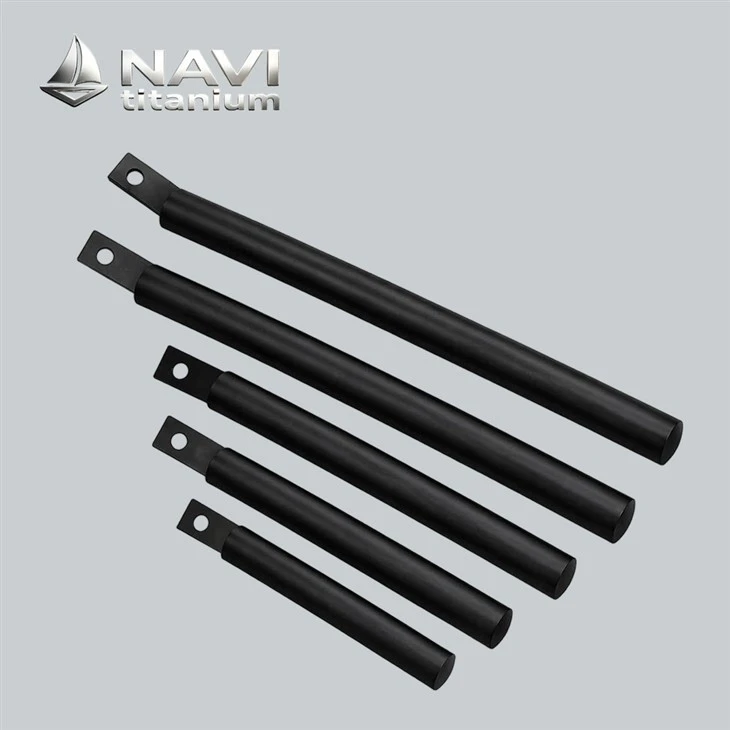
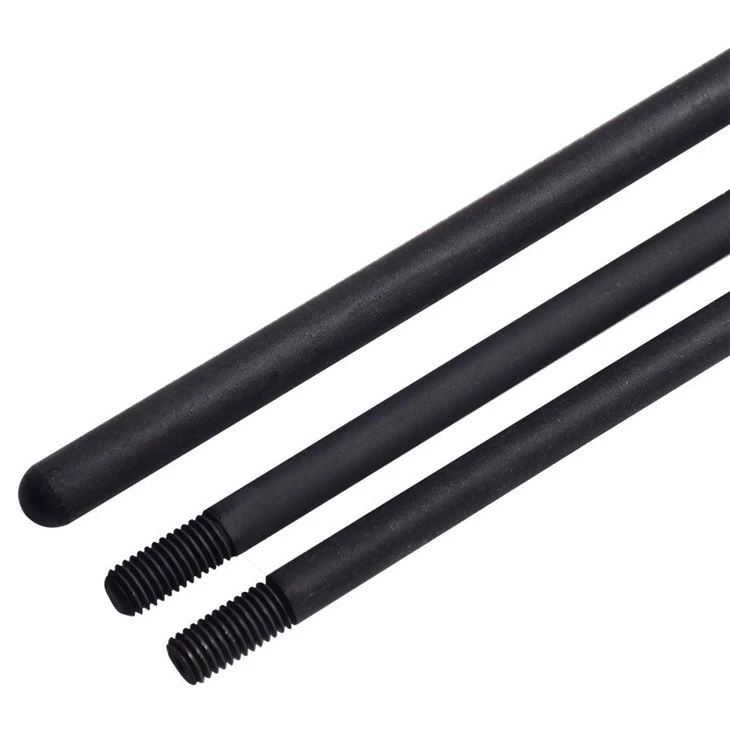
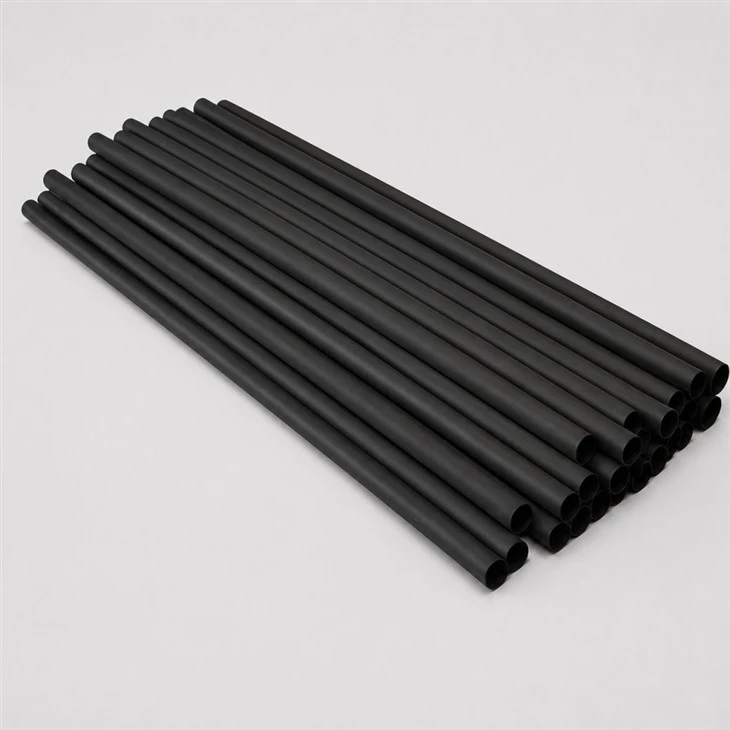
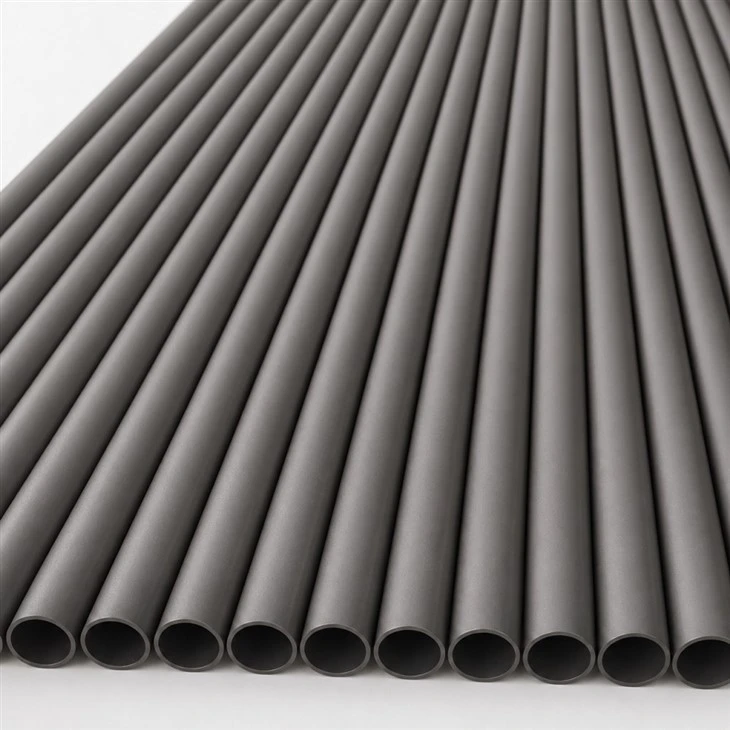

NAVI Titanium offers titanium anode for electrophoretic coating, helping control current distribution and paint deposition. Technical evaluation begins with bath chemistry screening, followed by electrical mapping and accelerated exposure trials to identify potential failure mechanisms. Prototype qualification then examines connection resistance, membrane clearance, and acid removal compatibility before dimensions are finalized. This staged assessment helps clarify application limits and reduces uncertainty before pilot approval and repeat purchasing decisions.
Solution of NAVI Titanium
NAVI Titanium follows a staged research approach for electrophoretic coating applications, beginning with bath chemistry review, current distribution analysis, and coating compatibility assessment. Technical trials examine catalytic activity, electrical resistance, and acid exposure response, with findings guiding subsequent prototype specifications.


For electrophoretic coating, NAVI Titanium emphasizes the relationship between catalytic activity, current distribution, and bath chemistry. Effective charge transfer must accompany controlled acid removal to maintain consistent resin deposition.
Application
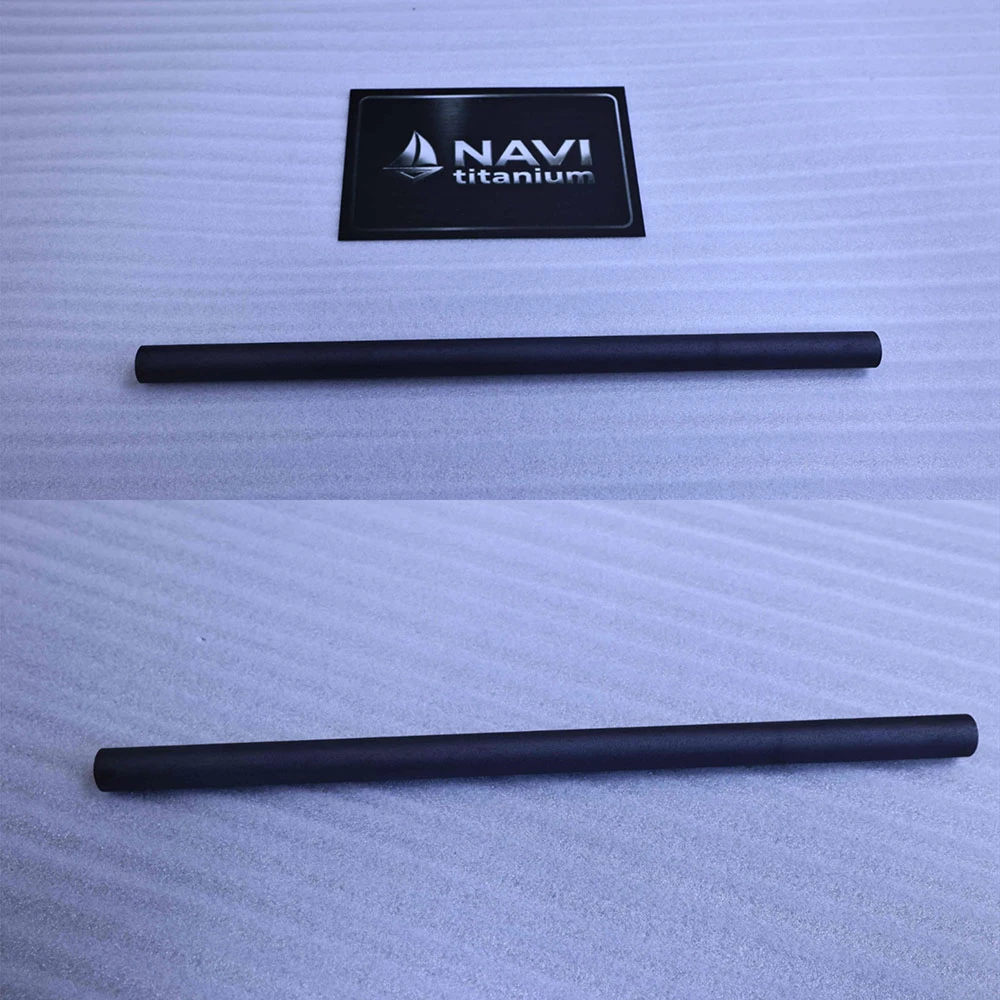
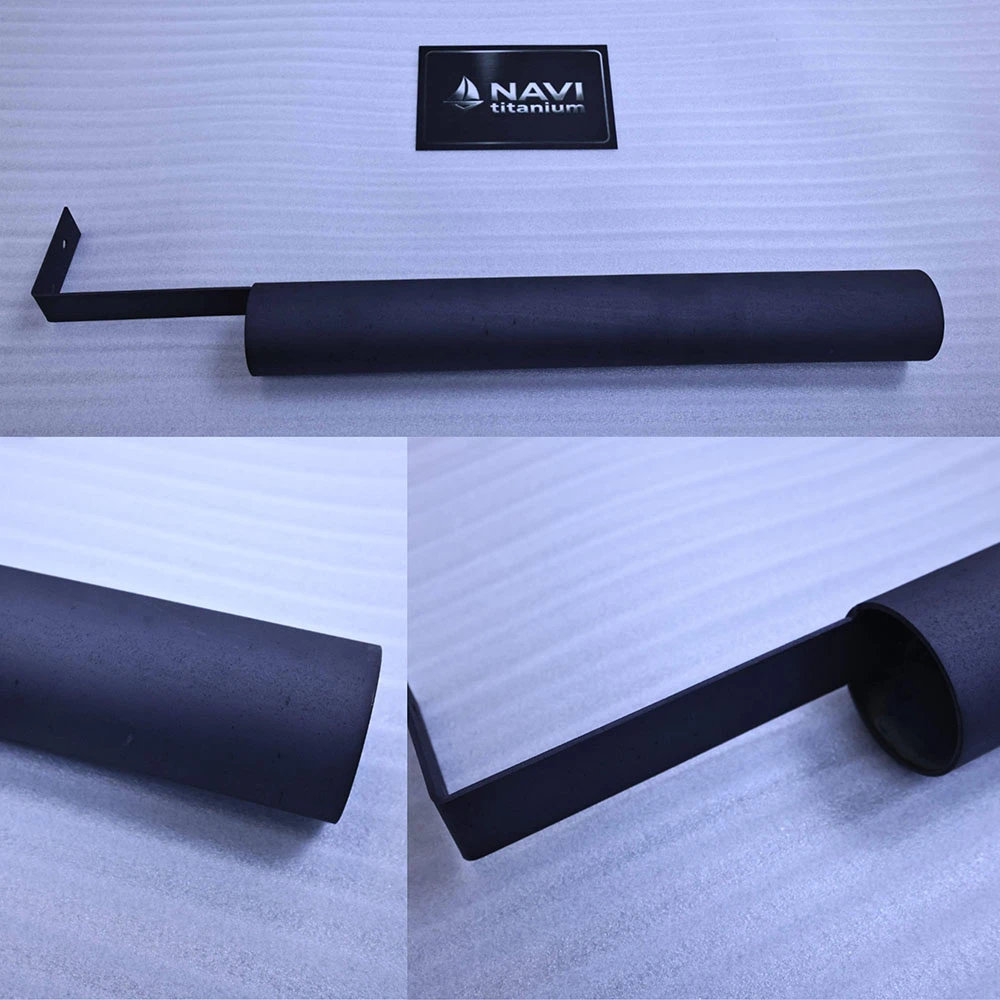
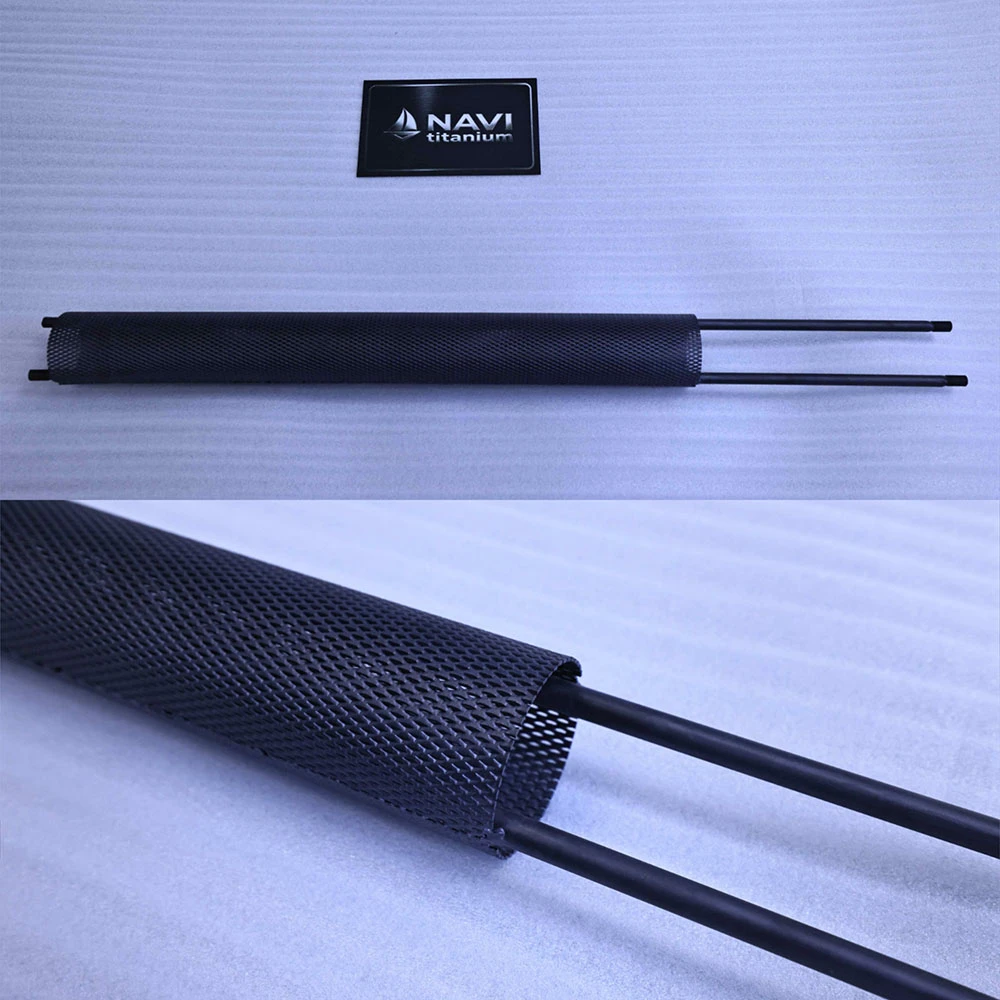
NAVI Titanium titanium anode for electrophoretic coating through uniform coverage of complex geometries and controlled bath acidity for consistent continuous operation.
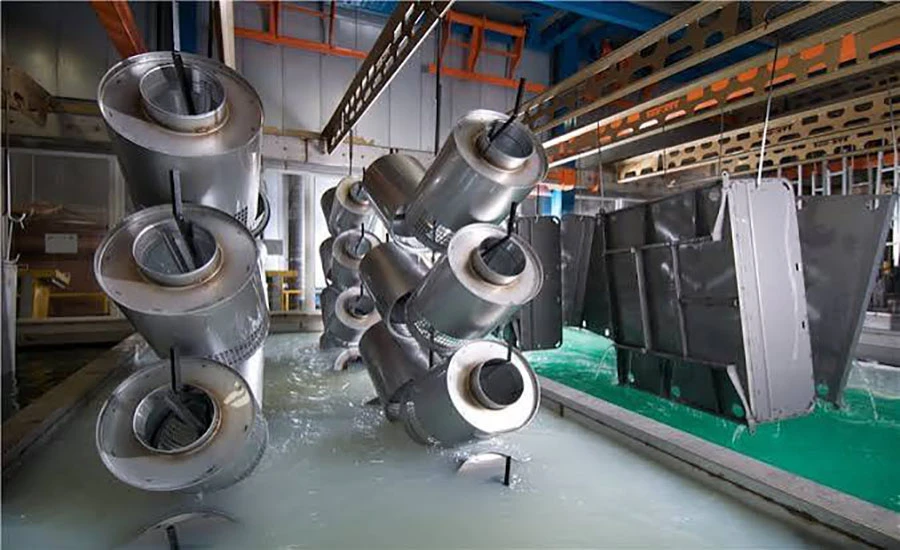
Cathodic electrophoretic coating is applied to automotive bodies, motorcycle frames, and hollow fabricated assemblies requiring corrosion protection across complex geometries. Charged resin particles migrate under an electric field and precipitate when cathodic reactions increase local pH. As the deposited film becomes electrically resistive, current progressively shifts toward less coated regions, assisting penetration into recessed cavities. However, this redistribution cannot fully compensate for unfavorable spacing, shielding, or restricted bath access. The geometry and placement of positive terminals therefore require assessment alongside applied voltage, immersion duration, and paint conductivity. Excessive current concentration near exposed edges can increase bubbling and local defects, while insufficient electrical access leaves cavities inadequately protected. Evaluation should compare thickness distributions at external faces, welded joints, enclosed channels, and drainage openings after curing. Cross sectional examination and adhesion testing can clarify whether apparent coverage corresponds to continuous film formation. For procurement teams, trials using actual part geometries provide stronger evidence than flat coupon results alone, particularly when coating uniformity and corrosion resistance must remain consistent across successive processing batches.
2. Bath Acidity and Continuous Operation Control
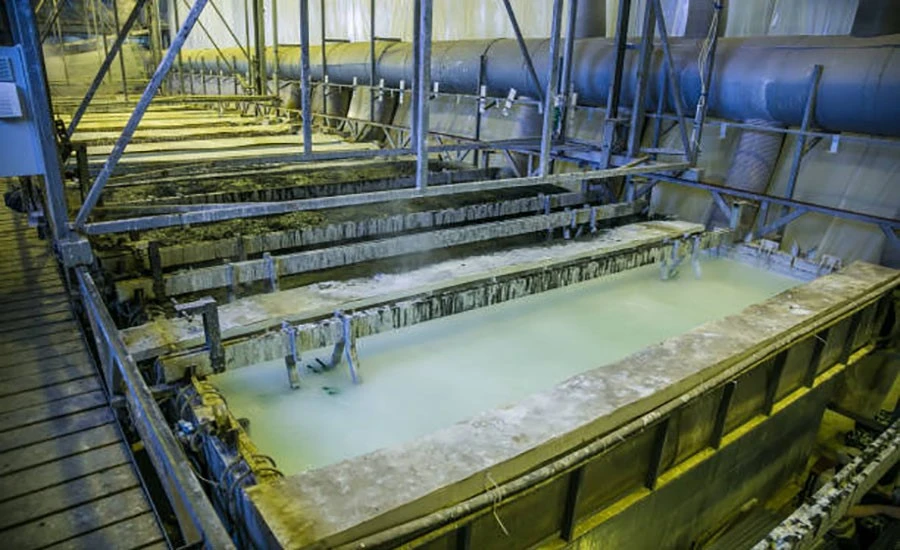
Continuous electrophoretic coating depends on maintaining a controlled relationship between ionic transport, acid removal, and electrical loading. During cathodic deposition, neutralizing acid counterions remain in the bath as resin precipitates onto immersed parts. Without sufficient removal, acid accumulation can shift pH and conductivity, altering deposition efficiency and the voltage required for consistent film formation. Membrane enclosed positive terminals allow these counterions to migrate into a separate circulating compartment, where controlled discharge limits acid accumulation. Performance depends on membrane resistance, active area, circulation rate, and the concentration gradient between compartments. Fouling or restricted circulation can increase electrical resistance and create uneven current distribution even when the rectifier setting remains unchanged. NAVI Titanium should track individual cell current, compartment conductivity, bath acidity, and coating thickness together. Changes in these measurements help distinguish paint chemistry drift from electrical deterioration. Acceptance trials should include sustained operation, controlled interruptions, and restart evaluation, establishing whether acid removal capacity remains compatible with coating throughput.
Purchasing guide

Quality control(QC)
Documented inspection results provide a measurable basis for assessing suitability for electrophoretic coating. Substrate composition, coating loading, dimensional measurements, and electrical continuity can be reviewed against agreed specifications, helping procurement and technical teams assess compatibility with membrane cells, current distribution requirements, and paint bath chemistry before installation.
| Certificate of Analysis | ||
| Titanium Base Material Suppliers: | Coating Precursor Suppliers: | COA of product: |
|
|
|
|


Manufacturing proces
Production begins with cutting and machining a titanium substrate to match the membrane cell geometry, allowing clearance for circulation and electrical connections. Degreasing and acid etching remove residues and establish a clean, textured interface for coating adhesion. An iridium based precursor is applied in thin layers, with repeated drying and furnace conversion creating a catalytic oxide coating. Controlling precursor concentration, application uniformity, and cumulative loading helps limit localized resistance and uneven current distribution. Connection areas remain protected during coating to preserve conductive contact. For electrophoretic coating, subsequent qualification evaluates coating adhesion, electrical continuity, and resistance to acidic exposure within the membrane compartment.


Protective Packaging for Active Coatings and Long Lengths
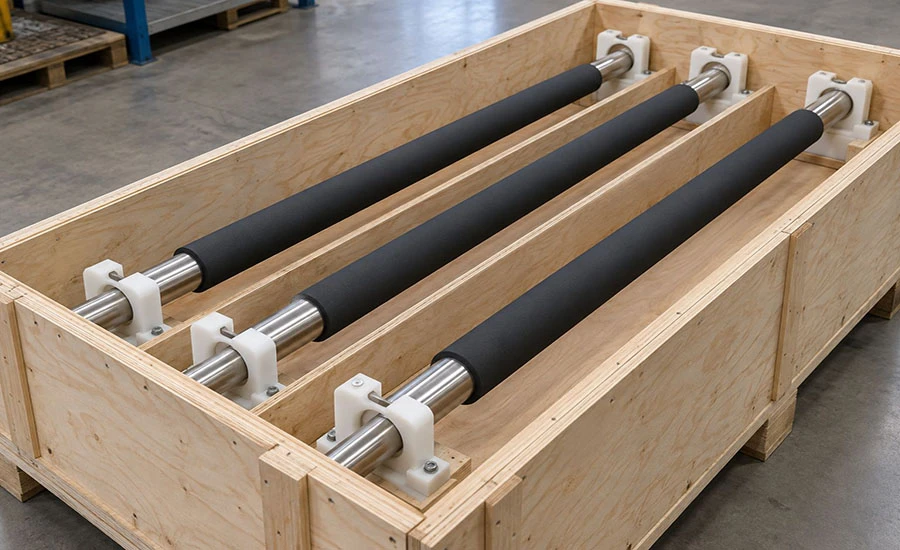
Long coated lengths require packaging that transfers transport loads through approved contact locations rather than through the catalytic coating. Support points should therefore align with uncoated ends, connection stems, or other drawing approved contact areas. Their spacing must account for length, mass, and bending sensitivity, since support only at opposite ends may permit excessive deflection during lifting or vehicle vibration. Contoured saddles with clean, nonabrasive liners can distribute contact pressure without concentrating force at narrow edges. Restraints should prevent axial sliding and rotation while avoiding excessive clamping force, especially near welded joints and electrical connections. Where several pieces share one crate, individual compartments help prevent collisions and simplify identification during unpacking. For electrophoretic coating installations, preserving straightness also helps maintain the intended clearance inside membrane cells. Buyers should confirm permitted contact locations, support spacing, restraint methods, and lifting orientation before dispatch. Photographs of the secured contents and an unpacking guide provide evidence that the agreed contact restrictions have been followed, helping receiving teams remove long pieces without introducing avoidable bending.
Suspended Clearance Around the Active Area
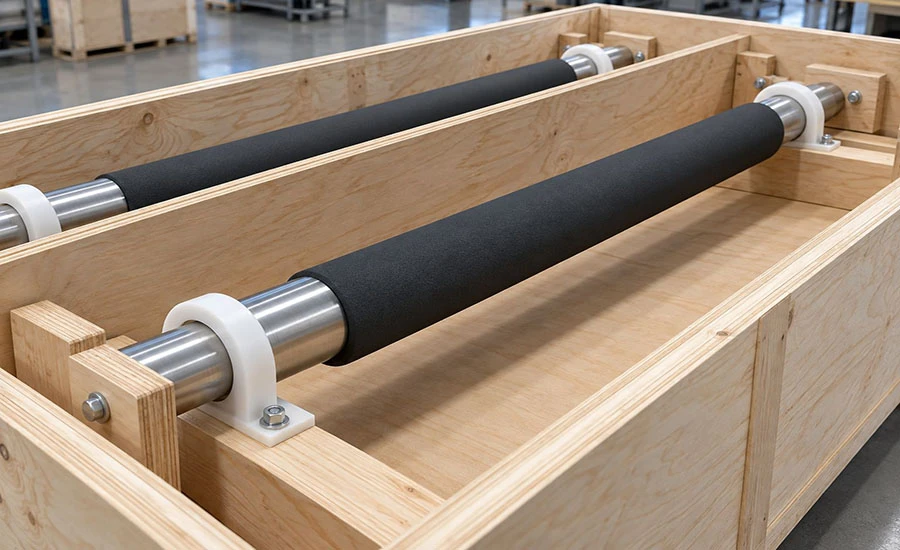
The catalytic coating should remain clear of surrounding packaging wherever contact could cause abrasion, indentation, or residue transfer. A suspended packing arrangement uses approved uncoated contact points to maintain a protective gap around the active area, reducing exposure to rubbing during transit. This clearance must allow for expected movement and cushioning compression; a gap visible before closure may disappear when stacking loads or vibration deform the enclosure. Protective partitions should therefore remain outside the movement envelope, while loose wrapping should be avoided where repeated rubbing could release fibers or particles. For long pieces, lateral restraints and additional supports must preserve clearance without pressing against the coating. Cleanliness matters because packaging residues may enter the membrane compartment during installation and complicate paint bath contamination control. Buyers can request confirmation of gap dimensions, liner cleanliness, permitted stacking loads, and transport validation appropriate to the shipment. Arrival checks should document coating marks, displaced restraints, and contact evidence before installation, allowing transport damage to be distinguished from later handling issues through clear photographic records.
Compatibility with Existing Tanks and Available Space
Before ordering replacements for an existing electrophoretic coating tank, buyers should confirm whether the intended installation is vertical, horizontal, or inclined. Orientation affects more than mounting convenience: it changes gravitational loading, venting requirements, drainage, and access to electrical connections. A length suitable for vertical suspension may require additional support when positioned horizontally to limit bending and preserve membrane clearance. Likewise, a membrane cell approved for upright use should not be rotated without checking its circulation and venting provisions. Procurement documentation should include the mounting angle, available insertion distance, connection direction, and clearance needed for removal. Photographs with dimensional references can help clarify obstructions that drawings omit, including overhead beams, adjacent pipe runs, and tank covers. Where access is restricted, buyers should discuss whether installation requires temporary removal of nearby fittings or a different connection layout. Confirming these details before fabrication reduces the risk of receiving a mechanically compatible replacement that cannot be inserted, secured, vented, or removed within the available space during planned shutdowns and subsequent maintenance visits at site.
Assessing Sidewall, Bottom, and Alternative Mounting Positions
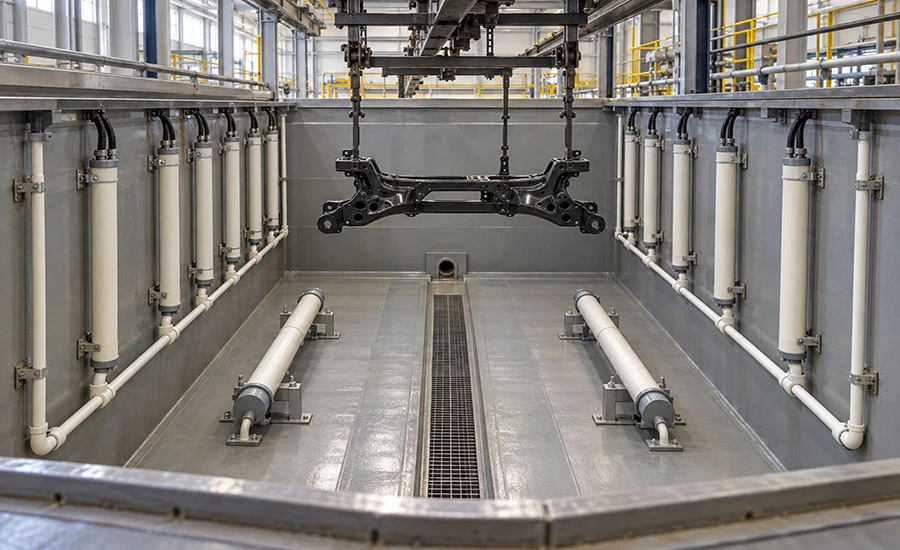
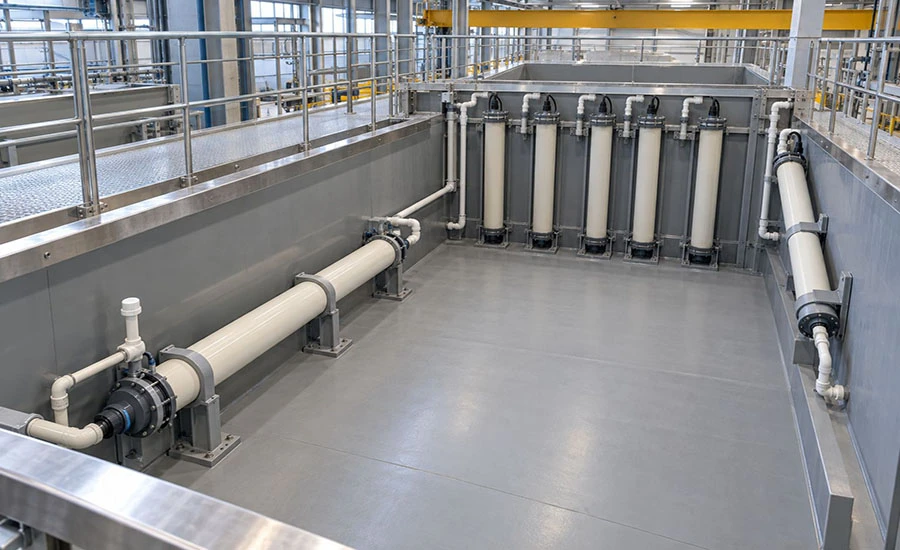
Selecting a mounting position inside an existing electrophoretic coating tank requires buyers to consider electrical coverage alongside physical clearance. Sidewall installation may offer convenient access, yet moving racks, suspended parts, and circulation pipe runs can restrict the usable corridor. Bottom installation introduces different constraints, including sediment accumulation, drainage access, collision risk, and the space required beneath passing assemblies. Other locations require checks against conveyor travel, loading envelopes, and cleaning access rather than assumptions based on an empty tank. NAVI Titanium requires the occupied tank layout, minimum moving clearances, mounting coordinates, and distances to nearby conductive objects. Position also affects the electric field, so relocating a replacement solely to simplify mounting may alter current distribution and coating thickness across recessed areas. Membrane housings, connection stems, and circulation fittings must all fit within the agreed installation envelope. Before purchase approval, a titanium anode manufacturer review and a gauge can verify access and mounting alignment. Recording the approved position then helps preserve repeatability when future replacements are ordered for the same coating line.
Delivery Scope and Interface Responsibilities
For a titanium anode for electrophoretic coating, purchasing scope should distinguish the coated body, a connected assembly, and a complete membrane cell. These options transfer different installation and verification responsibilities to the buyer. NAVI Titanium quotations should identify included parts, interface dimensions, electrical ratings, and acceptance criteria. A complete cell does not automatically include external circulation, rectification, or tank mounting hardware; exclusions require explicit agreement. Compatibility must address current capacity, membrane clearance, acid circulation, and sealing rather than dimensional fit alone.
| Delivery format |
Included items |
Buyer confirmation |
| Bare coated body | Coated body only | Existing contacts, supports, and membrane compatibility |
| Connected assembly | Coated body with agreed conductive connection | Joint resistance, current rating, and termination geometry |
| Complete membrane cell | Coated body, connection, membrane enclosure, and agreed fittings | Sealing, circulation requirements, mounting orientation, and external interfaces |
An agreed inclusion schedule prevents incomplete comparisons between quotations. Recording interface ownership and test responsibilities also reduces installation delays and clarifies whether acceptance concerns individual parts or the assembled cell.
FAQ
1. Can academic research partnerships help assess our coating requirements?
+
-
Joint studies with universities or research institutes can help investigate catalytic activity, coating adhesion, and acidic exposure response.
2. What information is needed for technical collaboration?
+
-
Useful inputs include bath chemistry, operating current, membrane cell drawings, connection details, and available installation space.
3. Can our preferred freight partner handle delivery?
+
-
Buyer nominated carriers can be considered once crate dimensions, gross weight, lifting points, and handling restrictions are confirmed. Responsibilities for collection, customs documentation, insurance, and damage reporting should be agreed before dispatch.
4. Can an independent laboratory verify agreed specifications?
+
-
Independent testing can be arranged against an agreed scope covering substrate composition, coating loading, adhesion, or electrical continuity.
5. How can industry association participation assist purchasing decisions?
+
-
Participation may provide access to technical exchanges, published guidance, and sector discussions. Purchasing approval should remain based on documented specifications, relevant test evidence, and compatibility with the intended electrophoretic coating process.
Hot Tags: titanium anode for electrophoretic coating, China titanium anode for electrophoretic coating manufacturers, suppliers, factory


