

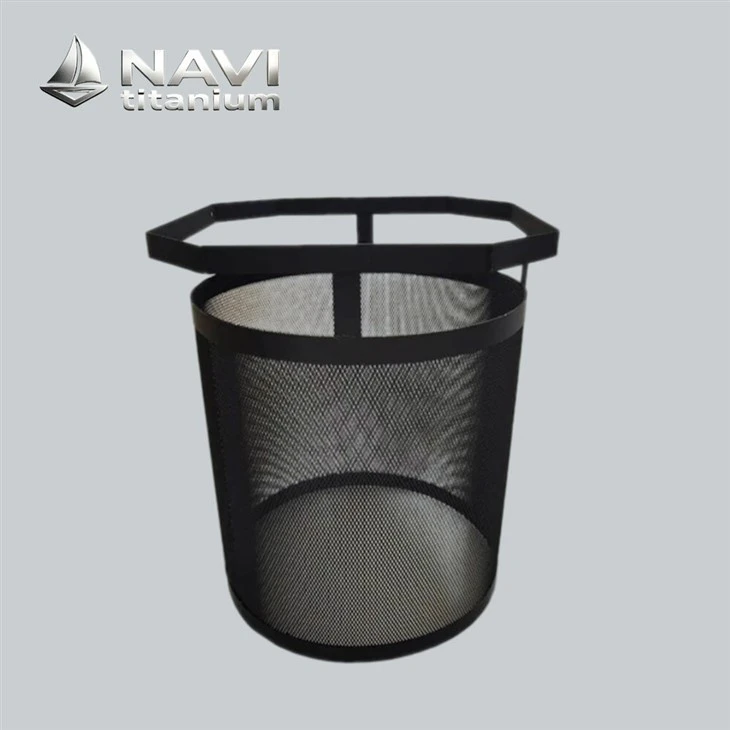


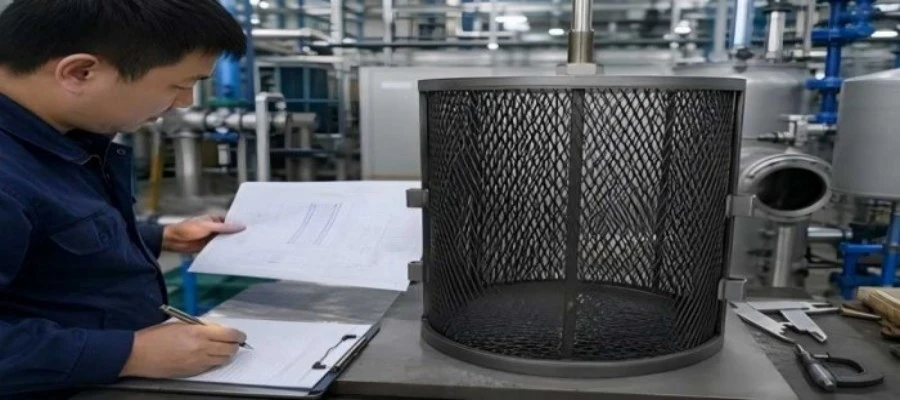
NAVI Titanium supplies the titanium basket for plating that holds anode balls, nuggets and offcuts inside an acid or alkaline tank while carrying rectifier current down into them. What a buyer feels sits downstream of that: how much of the anode metal is consumed before it is written off as scrap, how often a line halts for reloading, and how hard the rectifier has to push. Send tank drawings and current density, and all three become figures to plan against.
Solution of NAVI Titanium
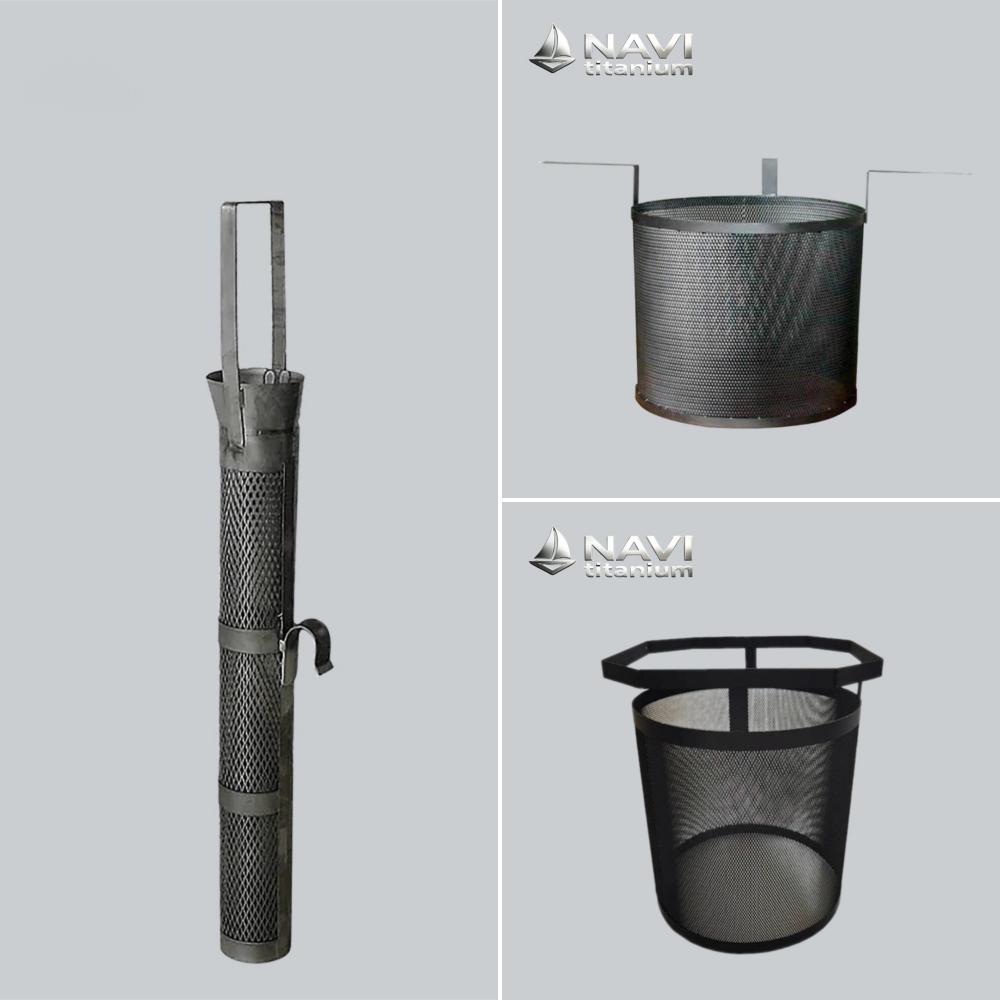
Plating baths attack metal much as seawater does: acid copper, nickel sulphamate, zinc, tin and cyanide solutions eat anything less noble than titanium, and a basket that corrodes feeds iron into chemistry that took years to balance. NAVI Titanium fabricates each titanium basket from commercially pure titanium, matching mesh aperture and open area to your anode size so dissolution stays even and current spreads over the full face instead of a handful of contact points. Hooks, frames and bag fixings all follow the tank. Sizes most held sit in the NAVI Titanium Advanced MMO Tiatnium Anode table below.


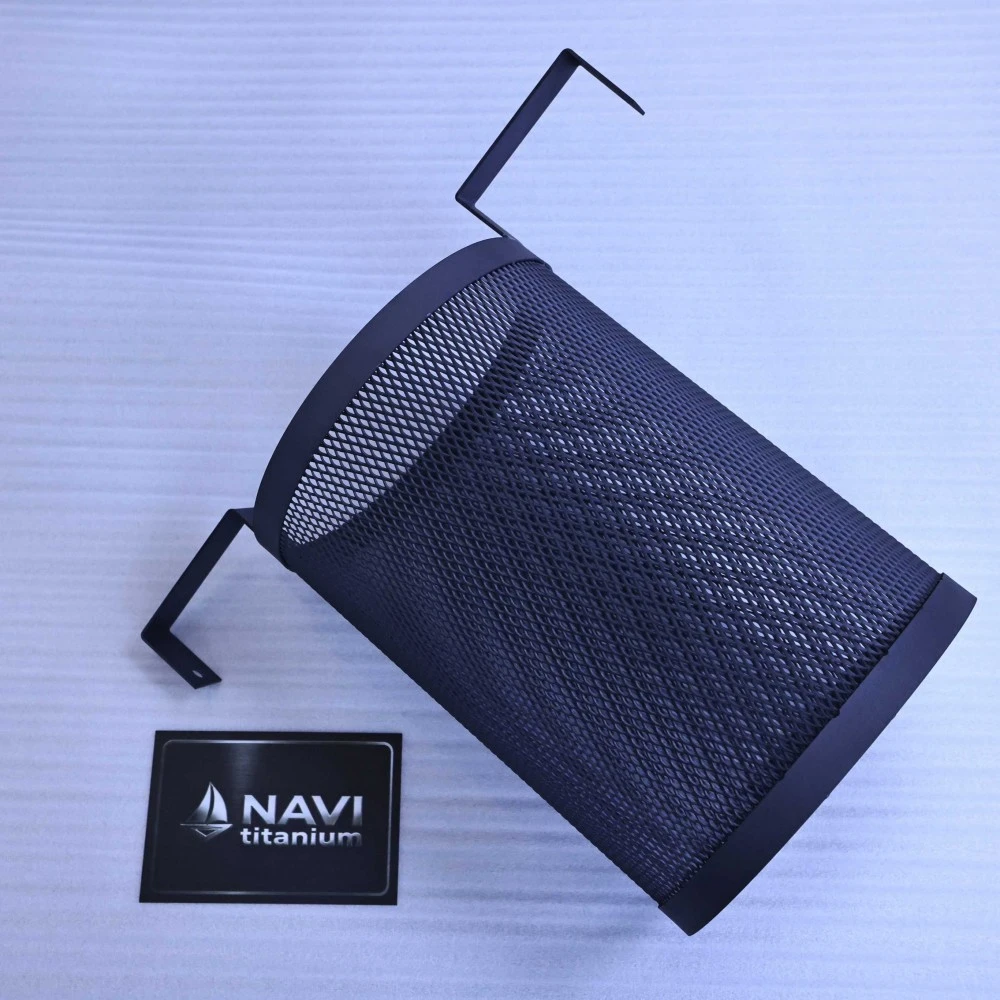
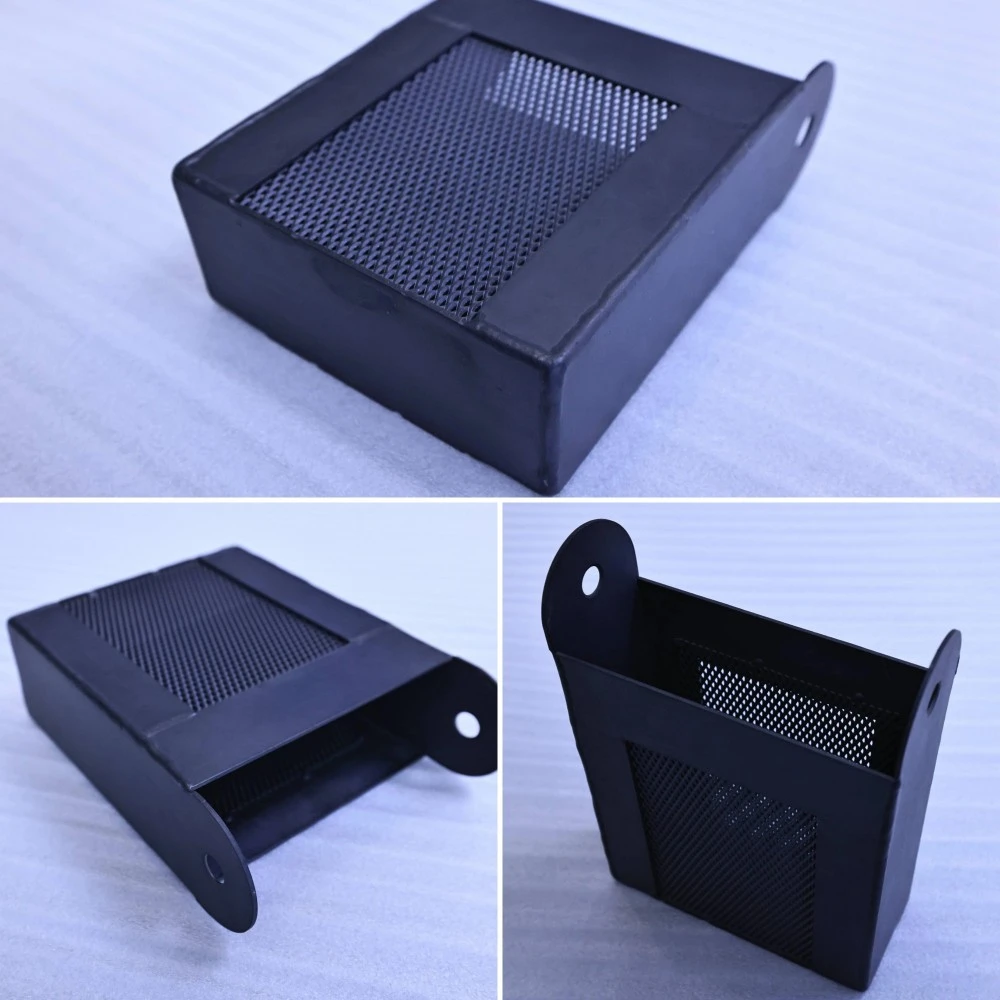
Sizes and hook shapes come off your drawing. Round baskets suit tank walls and corners; flat profiles suit tight anode-to-cathode gaps. We also build tapered bodies, stepped widths, twin-hook frames and mesh joined to a solid band, and perforated sheet replaces expanded mesh for small pieces. Send a STEP file with clearances and busbar height - that becomes the build drawing.
Application
Two jobs account for most of the baskets we ship, and both expose the same shortcut. Cheap baskets fail one of two ways: the mesh opens until nuggets drop through into the tank, or the top band thins at the liquid line and the basket folds during a reload. Both stop a line mid-shift, and both show warning signs first.
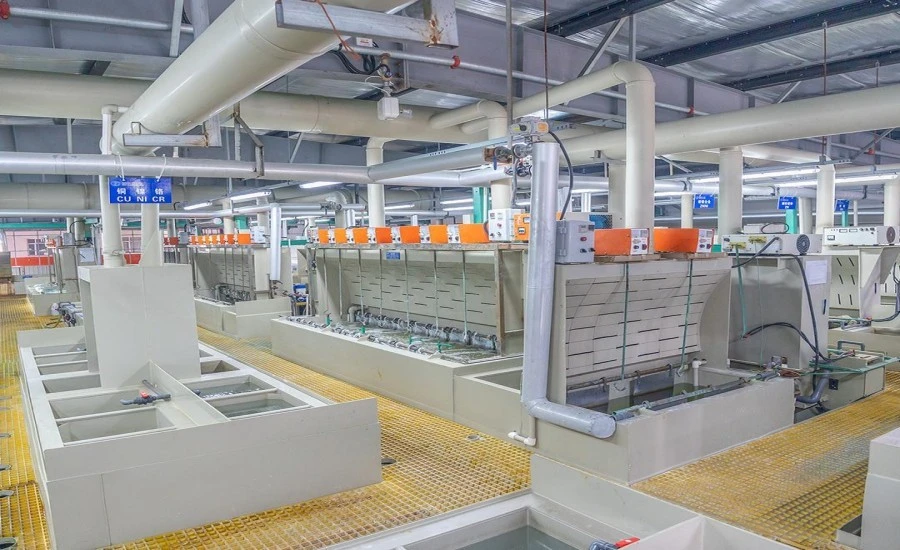
Decorative and Functional Rack Plating
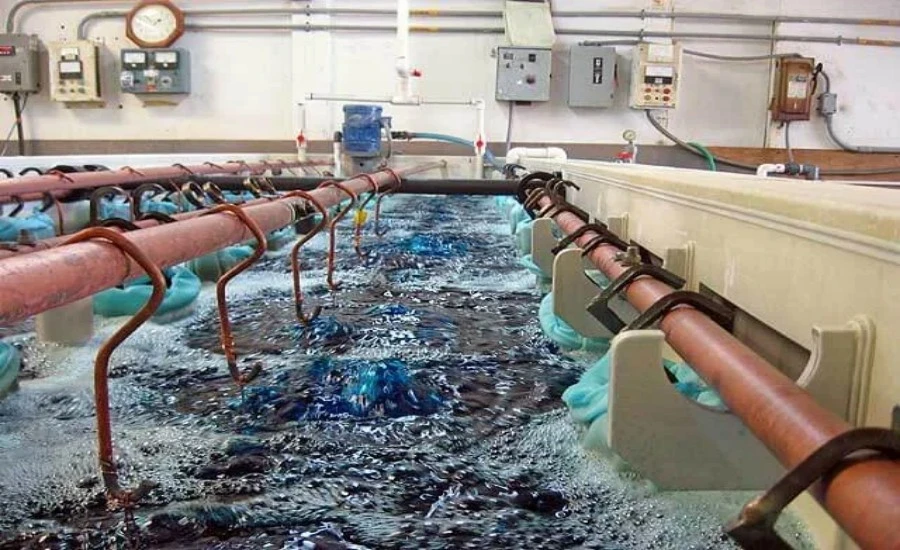
Rack plating shops running nickel, copper and zinc are the largest group of basket buyers, and their problem is rarely chemistry, but loading discipline. A rack line runs mixed part sizes, so anode demand swings, and baskets are pulled, emptied, refilled and returned while the tank stays live.
The titanium basket for plating design has to survive that handling: a hook bent back into shape a few times work-hardens and cracks, and a bag that bunches at the bottom traps sludge against the mesh, starving that section of anode area.
NAVI Titanium sizes the hook for the current the line actually draws, not the weight alone, and supplies bags cut to the basket rather than loose sheet. The result is a reload that takes minutes instead of an hour, no nuggets on the tank floor, and a basket that sits square to the rack after a year of handling by people in a hurry.
Acid Copper Plating for PCB and Electronics
Acid copper lines for printed circuit boards push baskets harder than most. Current densities are high, panels are large, and thickness tolerance is measured in single-digit percentages across a panel, so anode area and distribution become process variables, not hardware detail.
Baskets here are specified backwards from the panel: mesh open area is set so the copper ball bed stays in contact as it settles, and the basket is built to the tank so it sits square to the cathode along its full length. A basket that sags or hangs at an angle quietly changes the anode-to-cathode distance from top to bottom, and the thickness map shows it.
NAVI Titanium works from the tank drawing, the ball diameter and the rectifier rating, then supplies bags, titanium hook bolts and a recommended loading pattern. Lines that specify this way hold their voltage log flat instead of watching it climb every quarter.
Purchasing guide

Quality control(QC)
Every titanium basket leaves an ISO 9001 shop under a lot code covering the mill certificate, measured open area, weld inspection and trial-fit record. We would rather you read the record than take our word for it: press the button below to open our COA and check the actual figures for the batch we are building for you.
| Certificate of Analysis | ||
| Titanium Base Material Suppliers: | Coating Precursor Suppliers: | COA of product: |
|
|
|
|


Manufacturing Process
The titanium basket for plating has to survive three things at once - the chemistry, the weight of a full load of anode metal, and whoever reloads it at speed. The hand-offs below are where a poor basket usually gets made.
1. Drawing Released to the Shop
Nothing is cut from a catalogue size. Three lines are marked on your drawing before work starts: busbar height, solution level and the depth the basket must reach. That second line decides the design, because the strip sitting at the liquid line is where baskets actually die - vapour and condensate work on it from above while the bath works from below.
2. Sheet to Expanded Mesh
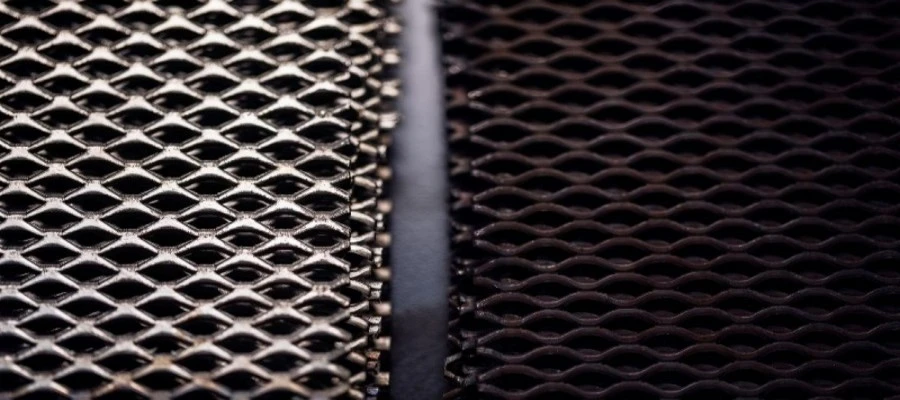
Grade 1 sheet is standard for the body, Grade 2 where a frame needs stiffness. Expanded mesh is preferred over woven because the metal stays continuous - every strand belongs to one sheet, so current has a path that does not depend on welds holding. Open area is set against the anode size: too open and pieces escape, too closed and the bath stops circulating through the bed.
3. Forming and the Top Band
Bodies are rolled or folded on radiused tooling; a sharp fold work-hardens titanium and cracks months later. Where the drawing puts the basket across the solution level, the top band is made from heavier gauge or doubled, since that strip takes attack from the vapour above and the bath below simultaneously and is the first thing to thin.
4. Hook and Frame Welding
Hooks are formed, not bent from bar, and welded along the full length of the strap rather than tacked at one point - the hook carries the current and the weight of a full load. Frames get continuous corner welds under argon shielding. Straw or blue tint on a weld is cut out and redone, because that colour means oxygen reached hot titanium.
5. Pickling, Rinsing and Iron Control
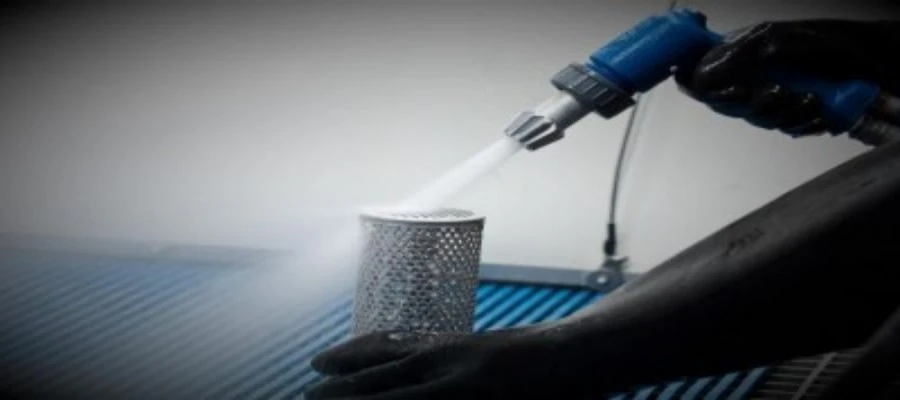
Bodies are pickled to strip surface iron picked up from tooling, then rinsed and dried. Titanium shares the shop with stainless work, so fixtures, brushes and racks are kept separate: a steel brush or a shared rack leaves iron on the surface, and that iron rusts in the bath and returns as contamination and staining on the work.
6. Trial Fit, Marking and Crating
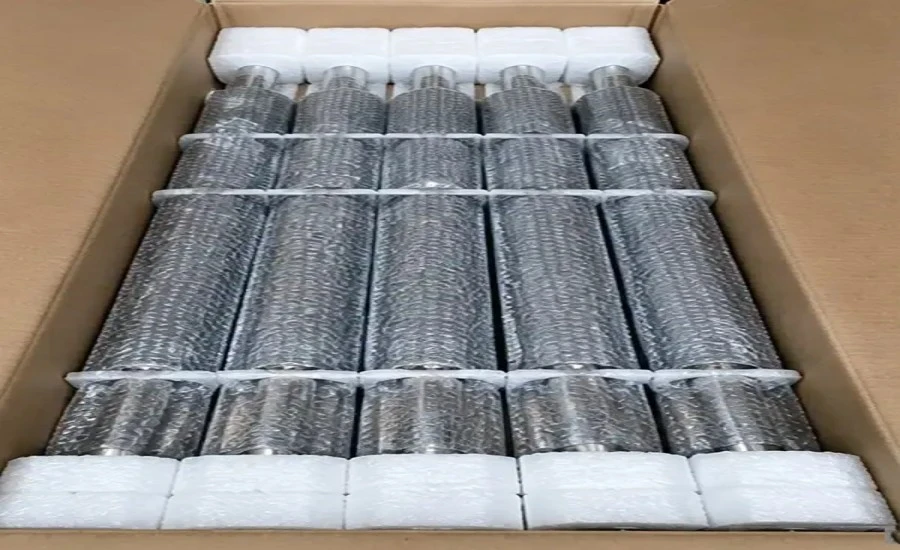
Each first-piece basket is dry-fitted to its hook and bag before the batch runs, then stamped with its lot code. Bags are supplied cut to the basket, since a bag that bunches traps sludge against the mesh. Crates are packed so hooks cannot punch into neighbours, and photographs of the packed order go out before dispatch.
NAVI Titanium Basket Material Comparison
The comparison below sets four basket materials side by side under real tank conditions - acid copper and nickel, two shifts a day, chloride in the make-up water. Replacement intervals come from [[CONFIRM: service records]] rather than a laboratory coupon test, so please read them as guidance only and confirm the figures against your own bath analysis before you finally specify.
|
Basket material |
Behaviour in an acid plating bath |
Ion contamination risk |
Carries current |
Typical replacement interval |
Anode metal utilisation |
|
Titanium Grade 1 (NAVI Titanium) |
Passive film holds; body unaffected by chloride and fluoride-free acid chemistry |
None; no metallic ion enters the bath |
Yes, as a conductor from hook to anode |
18–30 months |
High - nuggets and offcuts consumed to small residue |
|
Titanium Grade 1, MMO-coated working faces |
As above, with lower oxygen-evolution overpotential on coated faces |
None |
Yes |
24–36 months |
High |
|
Stainless steel 316L |
Pitting in chloride-bearing acid; crevice attack at welds |
Iron, chromium and nickel dissolve into the bath |
Yes, until section loss |
3–6 months |
Moderate - frequent change interrupts full consumption |
|
Copper |
Dissolves with the anode; section loss is continuous |
Copper loading drifts upward unpredictably |
Yes, initially |
1–3 months |
Low - basket itself becomes inventory noise |
|
Polypropylene / PVC |
Chemically resistant but deforms above [60–80 °C] |
None |
No - needs a separate titanium hanger |
12–18 months |
Moderate |
Why Plating Lines Standardise on NAVI Titanium
Case Records
Two recent orders show what buyers are trying to fix. A sanitary-ware plating shop in Ho Chi Minh City ran decorative copper and nickel and was replacing baskets every [[CONFIRM: months]] because the top band kept thinning at the solution level; the rebuild doubled that band and replaced a bent-bar hook with a formed strap, and the interval doubled [[CONFIRM: replace with the customer's own figure]].
A Pune automotive-components plater had the opposite complaint: baskets were lasting, but anode offcuts kept going back to remelt because the mesh could not hold them. We dropped to a finer aperture and supplied bags cut to basket, which let the line consume pieces it had been throwing away.
Both customers sent tank drawings first and received a dimensioned proposal within [[CONFIRM: days]]. Neither project needed a tank modification, which is usually the point - the titanium basket for plating has to fit the line as it stands.
Quality Evidence and Audit
Documentation is supplied as a complete package rather than on request. Each order carries the titanium mill certificate to EN 10204 3.1, a positive material identification reading on the sheet, measured open area on the first piece, weld inspection records and a dimensional report tied to the lot code stamped on the basket.
Buyers auditing us before their first order are welcome to the same floor: we share the welding fixtures, the pickling line and the packing bench, and accept third-party inspection from SGS, Bureau Veritas or TÜV at the customer's cost.
Drawings are held under NDA and are never reused for another quotation. If a delivered batch misses the drawing, the remake and its freight are ours, not a negotiation - that commitment is written into the order acknowledgement so purchasing has something to point at.
Sampling follows [[CONFIRM: AQL level]] with full inspection on every first piece.

What Customers Say
Feedback clusters around three remarks.
The first is about fit: titanium basket for plating arrive to the drawing, drop onto the existing busbar and need no shimming or bending, which matters when a line is converted during a weekend shutdown.
The second is about the voltage log - several customers report that bath voltage stopped drifting after they moved to baskets built to their tank rather than to a stock size, and the saving shows on the electricity bill, not in a brochure.
The third is about reloading: hooks that keep their shape and bags that fit mean the reload is a routine job instead of a repair. [[CONFIRM: replace this section with three authorised quotations, each with name, company, country and date; anonymous praise reads as invented and weakens the page.]]
Where a customer agrees to be named, we add tank layout and current density so the next buyer sees a comparable installation.
FAQ
1. How long does a titanium basket last, and how do I know when to replace it?
+
-
Service life depends far more on the liquid line than on the bath chemistry. Inspect three places at every reload: the top band at the solution level, the hook where it leaves the frame, and the mesh where the anode bed rests. Replace when the top band has visibly thinned, when the hook shows a crack or has been straightened more than once, or when mesh openings have stretched enough to let anode pieces through. Most shops keep one spare basket per ten in service so a withdrawal never becomes a line stoppage.
2. How do I choose mesh aperture and open area, and do I need an anode bag?
+
-
Work backwards from your smallest anode piece: the opening must be smaller than that piece after it has partly dissolved, or it will escape. Open area then sets how freely the bath circulates through the bed - too closed and ion flow starves locally, which shows as thin deposit opposite that section. Bags are recommended in almost every acid bath: they catch anode sludge before it reaches the work and they keep fines off the tank floor.
3. What maintenance should I avoid?
+
-
Three things damage baskets faster than any bath. Do not use hydrochloric acid or fluoride-containing cleaners on titanium, since fluoride attacks the passive film. Do not use steel brushes or share racks and fixtures with stainless work, because free iron left on the surface rusts and contaminates the bath. And do not pry stuck anode pieces out by levering against the mesh - soak the basket and empty it. Clean contact faces lightly and tighten the busbar joint to the stated torque.
4. Which documents and standards do buyers in different regions ask for?
+
-
North American buyers usually quote ASTM B265 for the sheet and expect inch dimensions with hook sizes to match their existing busbar. European buyers ask for EN 10204 3.1 mill certificates and, increasingly, REACH and RoHS statements on any accessory supplied with the basket. Japanese and Korean buyers work to JIS H4600 and specify mesh by count rather than by opening in millimetres. Buyers in Southeast Asia and India tend to weigh lead time and landed cost heaviest, so we quote both ex-works and delivered figures.
5. How does a custom order run, and what happens if a batch is wrong?
+
-
Send a tank drawing or a dimensioned sketch with anode type, ball diameter and rectifier current. We return a dimensioned proposal, then build one first piece for approval before the batch runs. Lead time and minimum quantity depend on how far the design sits from standard tooling - [[CONFIRM: standard lead time and MOQ]]. Every batch ships with mill certificate, dimensional report and lot code. If a delivered batch does not match the approved drawing, we remake it and cover the freight; the commitment is written into the order acknowledgement.
Hot Tags: titanium basket for plating, China titanium basket for plating manufacturers, suppliers, factory, DSA Coating Titanium Anode, electrochemical MMO titanium anode, MMO titanium anode electrode, perforated titanium anode, Platinum Plated Titanium Anode, Titanium Anode Plate


