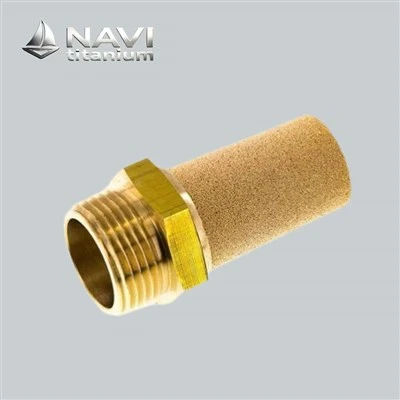
Sintered metal parts are components manufactured by powder metallurgy sintering and heating them below the material's melting point, allowing the particles to bond into a rigid structure with controlled porosity and dimensional stability. Depending on the operating environment, the elements can be processed into housings, covers, discs, sleeves, porous plates, protective caps, and other functional components. NAVI Titanium provides customized the metal parts for industrial equipment manufacturers, OEMs, and engineering projects, with material, dimensions, porosity, wall thickness, surface treatment, and machining adapted to specific requirements.

Solution of NAVI Titanium


NAVI Titanium supports OEM projects with sintered components developed around the customer's equipment design, installation space, and intended function. Our team can assist with material selection, prototype development, dimensional adjustment, and subsequent production based on the confirmed component specification.


Applications of Sintered Metal Parts
Sintered metal parts can serve different functional and structural purposes in industrial equipment, depending on the material, permeability structure, geometry, and processing method. Their combination of mechanical strength, controlled porosity, thermal resistance, and corrosion resistance makes them suitable for operating environments where conventional solid or plastic components may not provide the required performance. Typical conditions include protective housings, breathable covers, gas diffusion components, porous supports, pressure equalizing elements, acoustic protection, and filtration-related components.
Humidity sensors require exposure to surrounding air or water vapor to measure relative humidity accurately, while their internal sensing elements still need protection from dust, droplets, mechanical impact, and other environmental contaminants. The special housings provide a practical solution by combining a protective metal structure with interconnected pores that allow moisture-containing air to reach the sensor. The housing can therefore act as a breathable protective barrier without leaving the sensing element completely exposed. Stainless steel is commonly considered when corrosion resistance and mechanical durability are important, while titanium or nickel-based materials may be selected for more demanding environments. Pore size, thickness, open area, and housing geometry should be evaluated together because they influence airflow, moisture response, protection, and mechanical strength. These parameters also need to match the sensor's installation space and expected operating conditions. We can customize sintered metal housings according to sensor dimensions, installation requirements, operating conditions, and required porosity.

2. Housing for Temperature and Humidity Sensors

For temperature and humidity sensors used in industrial monitoring systems, the external housing needs to balance environmental protection with sufficient air exchange. A special housing can provide this balance by creating a controlled porous interface between the sensor and the surrounding environment. The porous structure permits air and water vapor to enter the sensing area while helping reduce direct exposure to dust, splashing water, and accidental contact. Housing geometry can be customized as a threaded cap, cylindrical cover, protective sleeve, or other shape according to the sensor assembly. Material selection depends on temperature, humidity, corrosion exposure, mechanical requirements, and installation conditions. Parameters such as pore size, porosity, wall thickness, dimensional tolerance, and surface finish should be considered during design. R&D researchers insists on prototype development and customized production for temperature and humidity sensor housings used in industrial equipment, environmental monitoring devices, HVAC systems, and other conditions.
Purchasing guide

Quality control (QC)


Typical Technical Requirements for Sintered Metal Parts
The performance and manufacturability of sintered metal parts depend on several interconnected specifications rather than a single parameter. Material selection, pore size, porosity, dimensions, wall thickness, tolerance, surface finish, operating temperature, corrosion conditions, and secondary machining should be considered according to the intended application. For customized components, these technical criteria may vary significantly between sensor housings, porous supports, protective covers, gas diffusion parts, and filtration-related components. The following table summarizes the main technical specifications that customers should consider when specifying or developing the parts, only for reference.
| Items | Considerations | Items | Considerations |
| Material | SS304, SS316, SS316L, Titanium, Nickel, Nickel Alloys | Tolerance | Based on component geometry and machining requirements |
| Component Type | Housing, Cap, Sleeve, Disc, Plate, Tube, Cover | Surface Finish | As-sintered, machined, polished, or customized |
| Pore Size | Customized according to air, gas, vapor, or filtration | Operating Temperature | Selected according to material and application |
| Porosity | Typically controlled according to functional requirements | Corrosion Resistance | Determined by material and working environment |
| Thickness | Customized according to strength and permeability | Secondary Processing | CNC machining, drilling, threading, cutting, etc. |
| Dimensions | OEM drawings, samples, or specified dimensions | Application | Sensors, gas diffusion, protective covers, filtration, equipment components |
Raw Material Quality Control for Sintered Metal Parts
Raw material selection is the starting point for producing consistent sintered metal parts. Researchers selects metal materials according to the required material grade, particle characteristics, chemical composition, permeability structure, mechanical performance, and operating environment. Common material options include stainless steel, titanium, nickel, and nickel-based alloys. The selected materials must be compatible with the intended forming and sintering process to achieve the required component performance and support stable production. For customized parts, material selection is also evaluated against the final application, including temperature, pressure, corrosion exposure, mechanical load, and required service life. This helps ensure that the product characteristics are suitable not only for the sintering process but also for the finished component. Material selection is also considered in relation to machining, surface treatment, dimensional specifications, and other secondary processing needs. By reviewing these factors before production, the R&D team can establish an appropriate material basis for different component designs and help maintain consistent performance across prototypes and subsequent production batches.


Before production, incoming raw materials are inspected according to established quality requirements. Material grade, chemical composition, particle characteristics, and relevant supplier documentation are reviewed to verify conformity with specified requirements. Materials that do not meet the required specifications are not released for production. Depending on the material and application, inspection requirements may include verification of the material designation, materials characteristics, and supporting quality documentation. These controls help reduce variations in raw material properties that could affect sintering behavior, porosity, dimensional stability, mechanical properties, and the consistency of finished components during subsequent processing. Incoming inspection records are retained as part of the production quality documentation, providing a basis for material identification and traceability. This controlled release process allows the manufacturing team to begin forming and sintering with verified raw materials rather than relying only on supplier declarations, supporting more stable production results for customized porous metal products.
For customized sintered metal filters, raw material control is also connected with the complete manufacturing process. Material information and inspection records are maintained for traceability, while production requirements are reviewed before forming and sintering begin. The selected material is matched with the required component dimensions, permeability structure, mechanical properties, operating conditions, and secondary processing requirements. During production, the original material specifications provide a reference for evaluating subsequent processing results and final component quality. This approach is particularly important for OEM components, where small differences in material characteristics can influence dimensional consistency, porosity, strength, or machining performance. By managing raw materials from the initial stage, technician establishes a controlled foundation for forming, sintering, machining, surface treatment, and final inspection. The process supports both prototype development and batch manufacturing, helping customers obtain sintered metal components with more consistent material characteristics and performance.


Raw material batch consistency is an important consideration when customized sintered metal parts move from prototype production to repeated manufacturing. We maintains material identification and batch information throughout the production process so that the selected raw material can be linked to the corresponding components and production records. When repeat orders are placed, previous material specifications, batch records, and quality requirements can be referenced to support consistent material selection and processing conditions. This is particularly useful for OEM and long-term supply projects, where stable raw material characteristics can help reduce variations between different production batches. By controlling material selection, incoming inspection, identification, and traceability together, NAVI Titanium provides a more controlled raw material foundation for customized sintered components and supports reliable production continuity as order quantities and manufacturing cycles increase. For repeat production, these records also provide useful references when reviewing material-related issues, confirming previous specifications, or preparing subsequent manufacturing orders.
FAQ
1. What are sintered porous parts used for?
-
Sintered metal parts are used for protective housings, sensor covers, gas diffusion components, porous supports, filtration components, and other industrial equipment parts where controlled porosity, mechanical strength, and environmental resistance are required.
2. What materials are available for customized sintered elements?
-
Common materials include stainless steel, titanium, nickel, and nickel-based alloys. Material selection can be customized according to temperature, corrosion exposure, mechanical requirements, pore structure, and the intended application.
3. Can NAVI Titanium customize sintered metal parts according to drawings?
-
Yes. We can manufacture customized the products according to customer drawings, specifications, or samples. Dimensions, material, pore size, thickness, geometry, tolerances, and secondary machining can be evaluated according to the application.We
4. Can sintered metal components be used as sensor housings?
-
Yes. Sintered housings can be used for humidity sensors and temperature-humidity sensors. Their controlled porous structure allows air and moisture exchange while providing mechanical and environmental protection for sensitive internal components.
5. How should I specify requirements for a sintered metal element?
-
Customers can provide the application, material, dimensions, pore size, porosity, thickness, operating temperature, pressure, corrosion environment, and required secondary processing. Drawings or samples can also help NAVI Titanium evaluate the design.
Hot Tags: sintered metal parts, China sintered metal parts manufacturers, suppliers, factory, high porosity metal filter tube, porous metal filter media, Sintered Bronze Air Muffler, sintered metal filter, Sintered Metal Filter Cartridge, Sintered Porous Filter